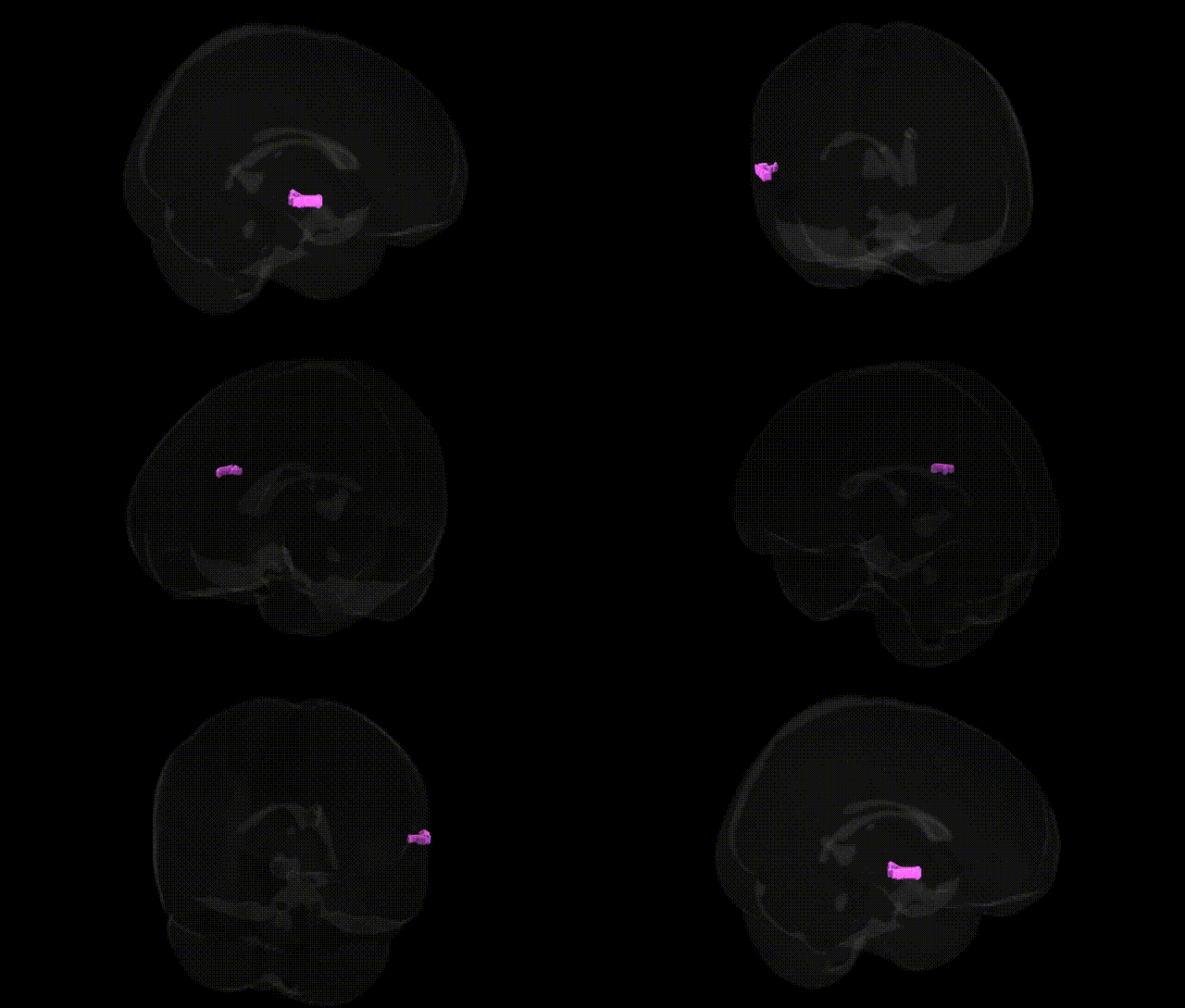
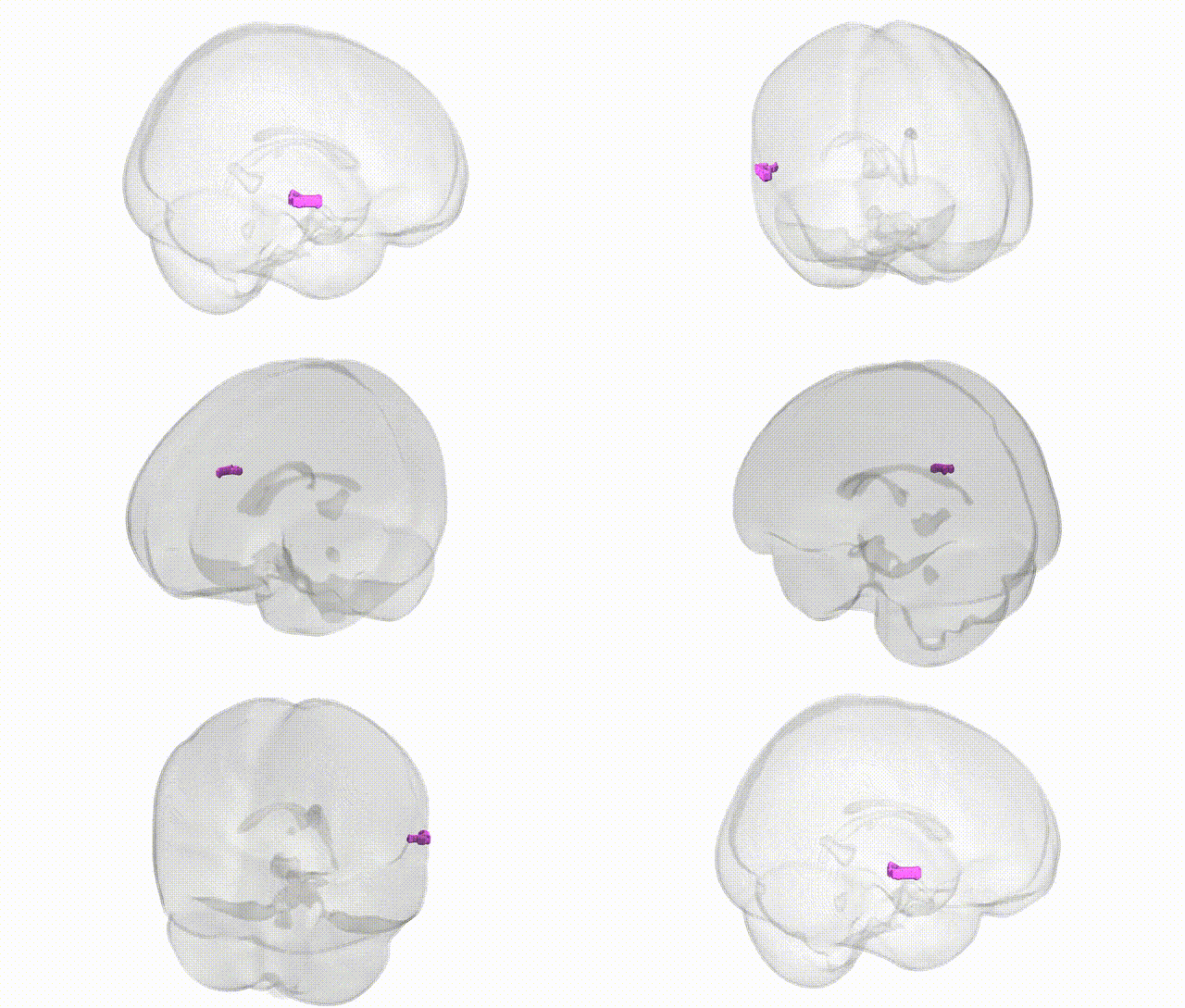
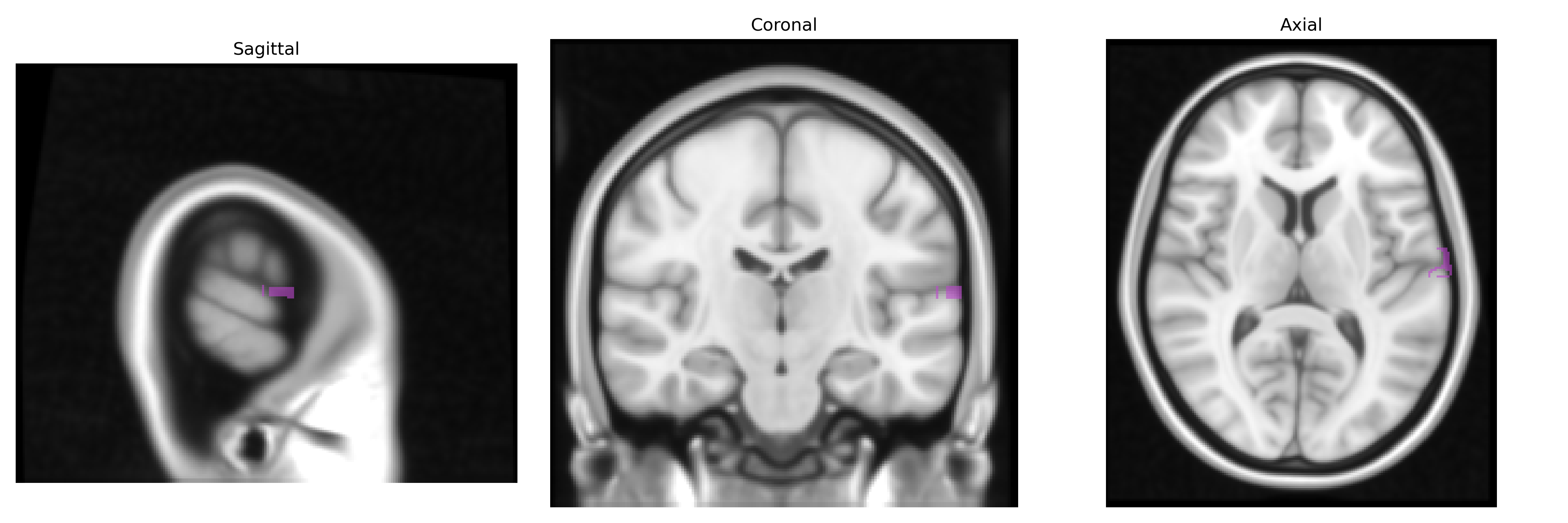
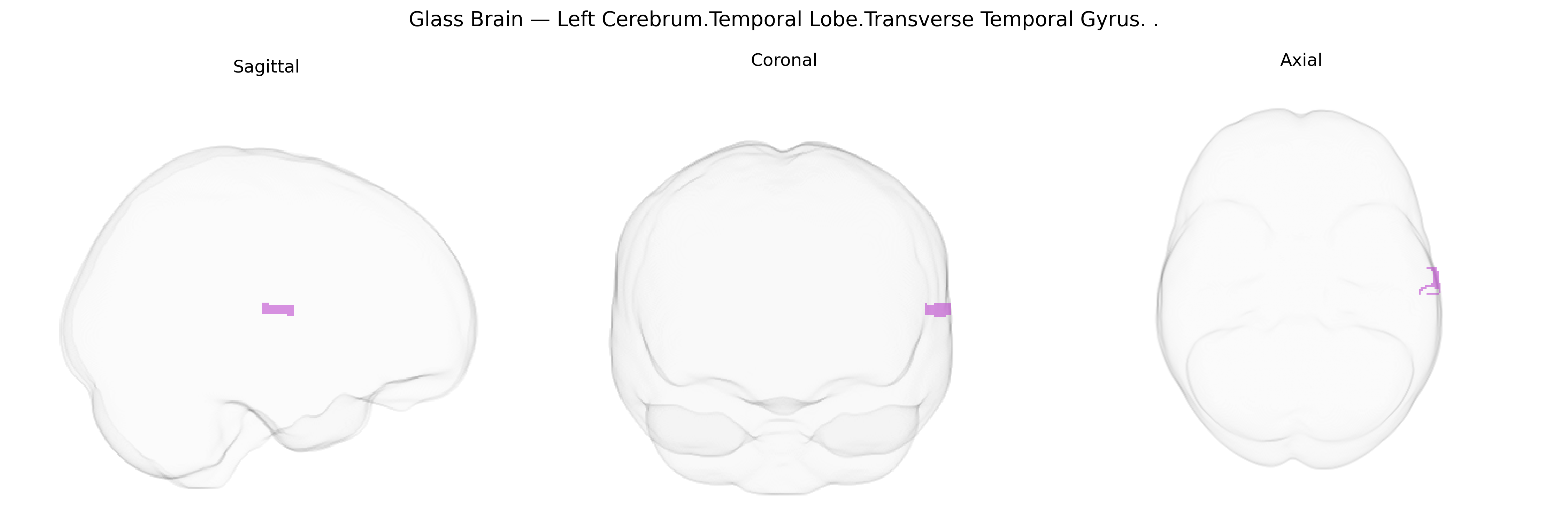
The bilateral Left Cerebrum.Temporal Lobe.Transverse Temporal Gyrus corresponds to Heschl’s gyrus, a short, obliquely oriented cortical convolution buried within the lateral sulcus on the superior surface of the temporal lobe, forming the core of primary auditory cortex (Brodmann areas 41 and parts of 42). It receives highly organized thalamocortical projections from the medial geniculate nucleus, preserving tonotopic organization for frequency processing, and plays a central role in early-stage auditory perception, including basic analysis of sound intensity, frequency, and temporal patterns. Bilaterally, it contributes to the neural basis of speech and music perception, with the left hemisphere often showing specialization for language-related acoustic features and phonemic processing, while interacting extensively with surrounding auditory association areas and multimodal networks. Transverse temporal gyus
The bilateral transverse temporal gyrus (Heschl’s gyrus) is a primary auditory cortex region whose genetic associations largely emerge from GWAS and imaging-genetics studies linking cortical thickness, surface area, and gyrification to common variants in genes involved in brain development, synaptic function, and myelination (e.g., variants near MIR137, CADM2, and genes in Wnt and axon guidance pathways in large ENIGMA and UK Biobank analyses). Structural and functional measures of this region have been associated with polygenic risk for schizophrenia, autism spectrum disorder, and major depressive disorder, reflecting broader neurodevelopmental and synaptic genetic architectures rather than region-specific single-gene effects. GWAS of musical aptitude and pitch perception have implicated loci near GATA2, PCDH7, and other neurodevelopmental genes that show effects on auditory cortical morphology and activation, including in the transverse temporal gyrus, though findings are generally small-effect and distributed. Tinnitus and auditory processing traits have shown suggestive associations between risk variants in glutamatergic, GABAergic, and calcium-channel genes and altered structure or connectivity of Heschl’s gyrus in imaging-genetics studies, but robust region-specific GWAS hits are limited. Overall, the genetic architecture of this Talairach-defined region is highly polygenic and shared with broader cortical and neuropsychiatric traits, with the most consistent findings involving genes regulating cortical development, synaptic plasticity, and sensory processing rather than unique, isolated associations.
Overview generated by GPT-4o (2026).
Region ID: 728
Hemisphere: bilateral
Atlas: Talairach labels 1mm
Full Quality Version: Download MP4
Full Quality Version: Download MP4
Wali Sidiqyar*, Gaurav Rudravaram*, Elyssa M. McMaster, Trent M. Schwartz, Adam M. Saunders, Kurt G. Schilling, Bennett A. Landman "Introducing SPINS: A Shared Public Visualization Library of Neuroanatomical Structures." Medical Imaging with Deep Learning- short paper
This resource is licensed under CC0 1.0 Universal (Public Domain).