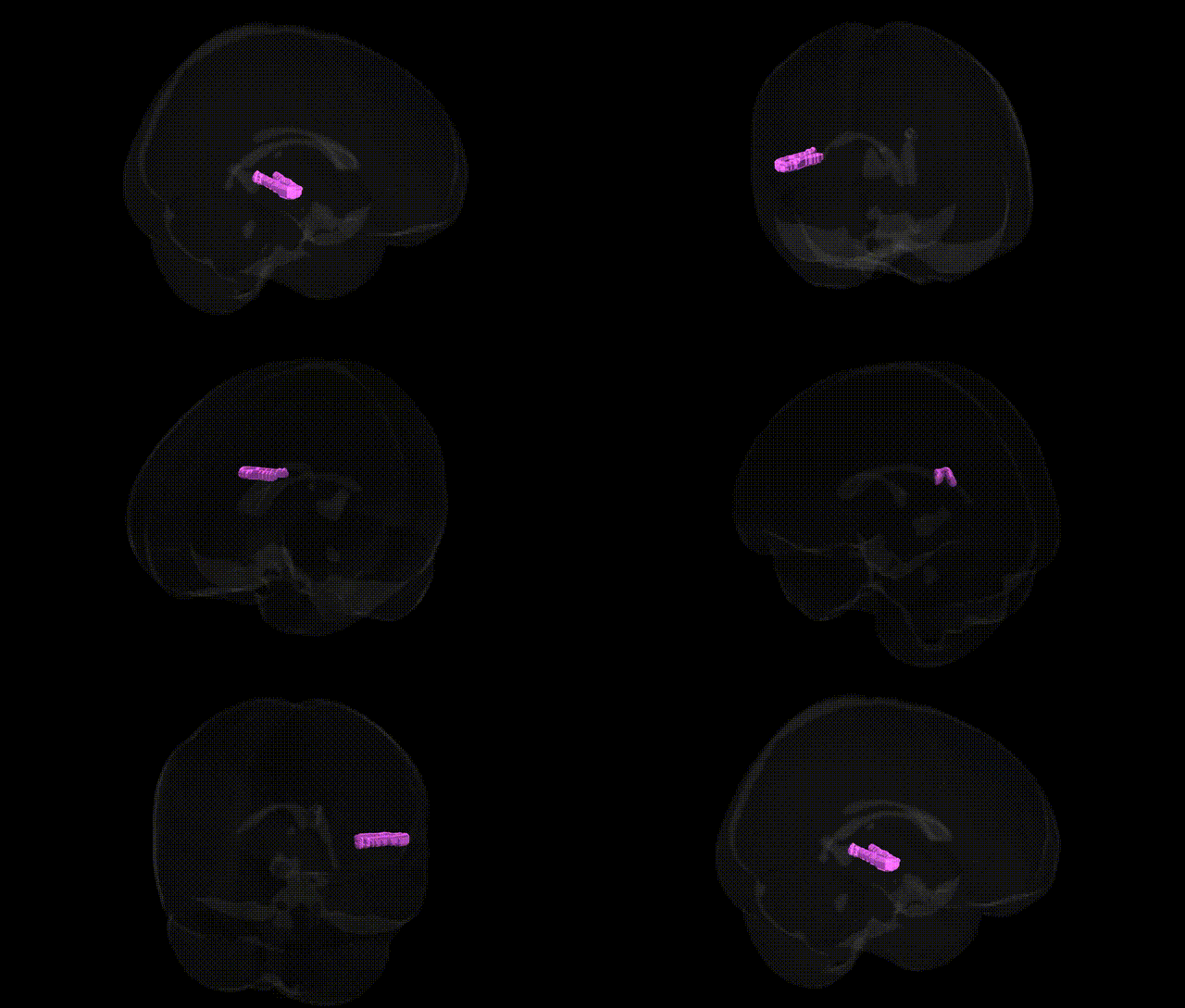
The bilateral Left Cerebrum.Temporal Lobe.Transverse Temporal Gyrus.Gray Matter.Brodmann area 41 corresponds primarily to the primary auditory cortex, located deep within the lateral sulcus on the superior surface of the superior temporal gyrus (Heschl’s gyrus). This region receives dense thalamocortical projections from the medial geniculate body and is crucial for the initial cortical processing of acoustic information, including sound frequency, intensity, and temporal patterns, forming the basis for more complex auditory perception such as speech and music in adjacent auditory association areas (e.g., Brodmann area 42 and posterior superior temporal cortex). Cytoarchitectonically, Brodmann area 41 is characterized by a granular appearance with a prominent internal granular layer (layer IV) and well-developed koniocortical features typical of primary sensory cortices. There is no direct Wikipedia article specifically for “Brodmann area 41” in this precise context; a closely related and encompassing structure is Primary auditory cortex.
The bilateral left transverse temporal gyrus (Brodmann area 41; primary auditory cortex) has been implicated in several genetic and GWAS-based associations, primarily through studies of cortical thickness, surface area, and volume in large imaging-genetics cohorts (for example ENIGMA and UK Biobank), which identify common variants near genes involved in neurodevelopment, synaptic function, and axon guidance (such as MIR137, GRIN2A, TBR1, and multiple loci on chromosomes 3p, 8q, and 17q) as contributors to interindividual variation in this region’s gray matter. GWAS of schizophrenia, bipolar disorder, and major depressive disorder show polygenic overlap with structural alterations in BA41, and imaging-genetics work links disease risk alleles in genes including CACNA1C, ZNF804A, and NRGN to reduced transverse temporal gyrus volume or altered asymmetry, consistent with broader auditory and language-network vulnerability. Rare variants and copy number variants associated with autism spectrum disorder and language impairment (for example 16p11.2 CNVs and FOXP2 pathway genes) have been tied to abnormal development of superior and transverse temporal gyri, while GWAS of hearing function and speech perception highlight loci near genes involved in hair-cell and central auditory pathway development that show structural or functional correlates in primary auditory cortex. In addition, multivariate GWAS of brain-wide cortical morphology indicate that BA41 shares genetic architecture with adjacent superior temporal regions involved in phonological processing and auditory hallucinations, providing a mechanistic link between distributed polygenic risk for neuropsychiatric disorders and structural differences in this specific temporal lobe subregion.
Overview generated by GPT-4o (2026).
Region ID: 720
Hemisphere: bilateral
Atlas: Talairach labels 1mm
Full Quality Version: Download MP4
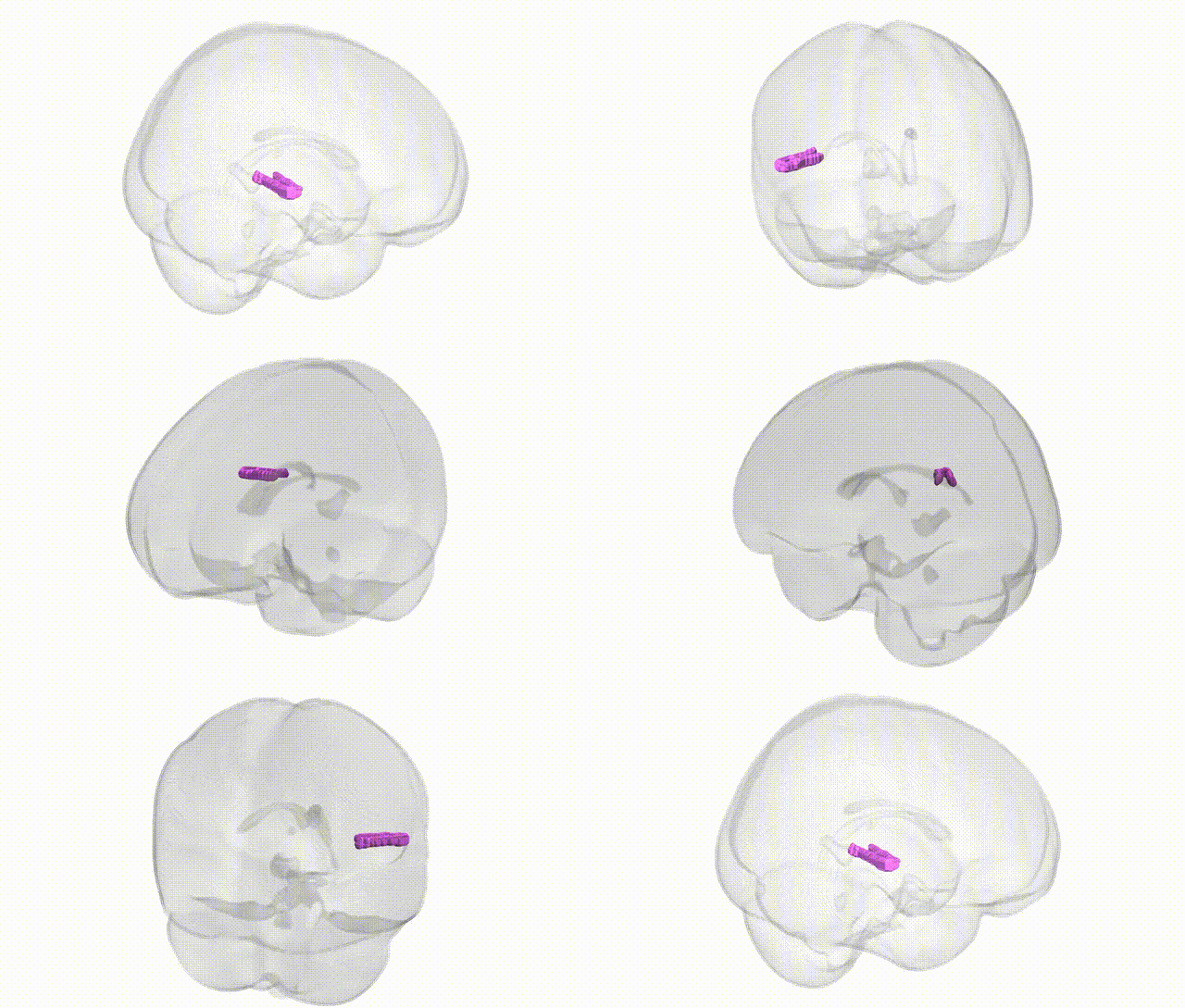
Full Quality Version: Download MP4
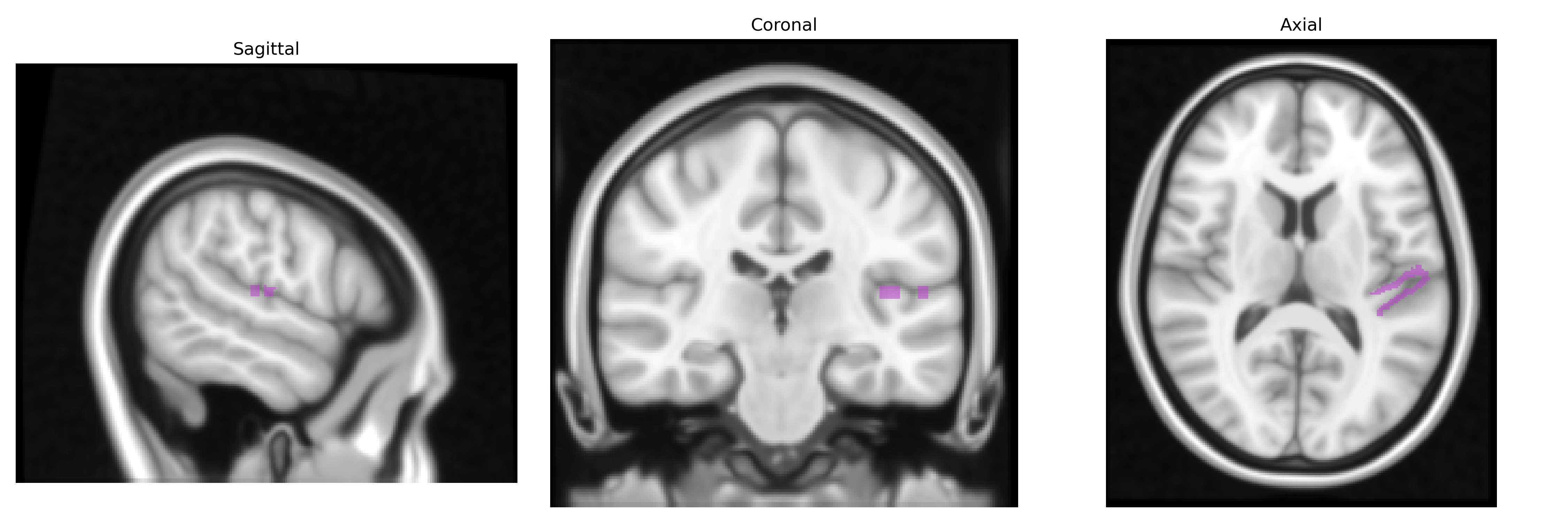
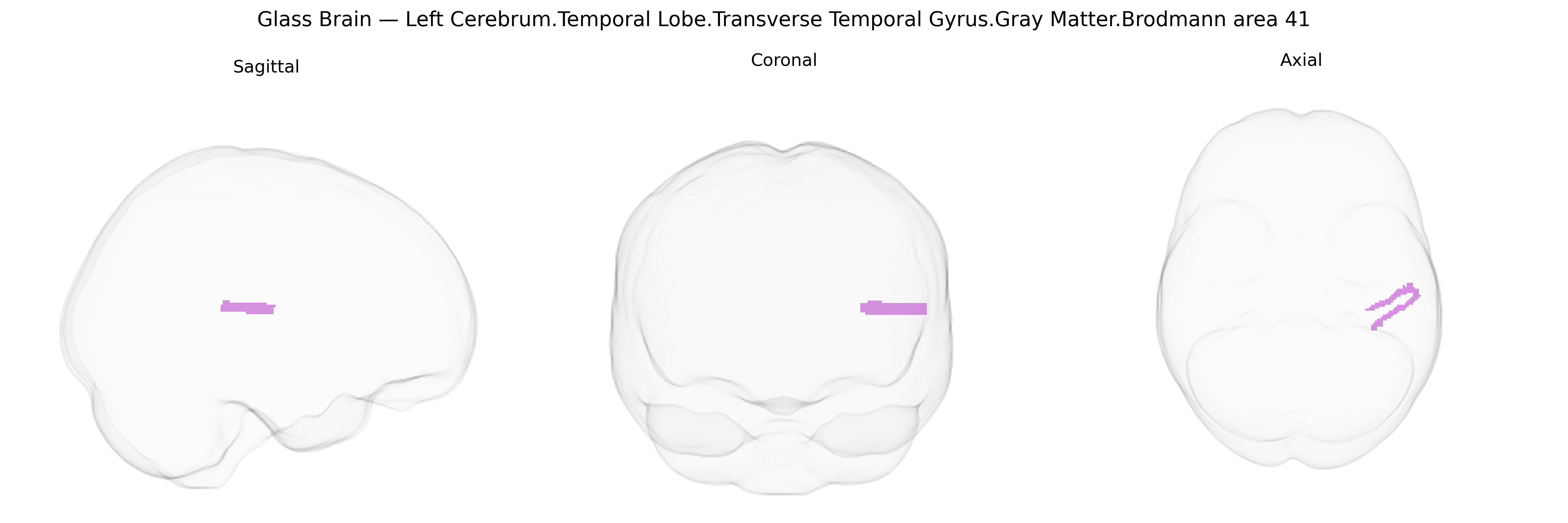
Wali Sidiqyar*, Gaurav Rudravaram*, Elyssa M. McMaster, Trent M. Schwartz, Adam M. Saunders, Kurt G. Schilling, Bennett A. Landman "Introducing SPINS: A Shared Public Visualization Library of Neuroanatomical Structures." Medical Imaging with Deep Learning- short paper
This resource is licensed under CC0 1.0 Universal (Public Domain).