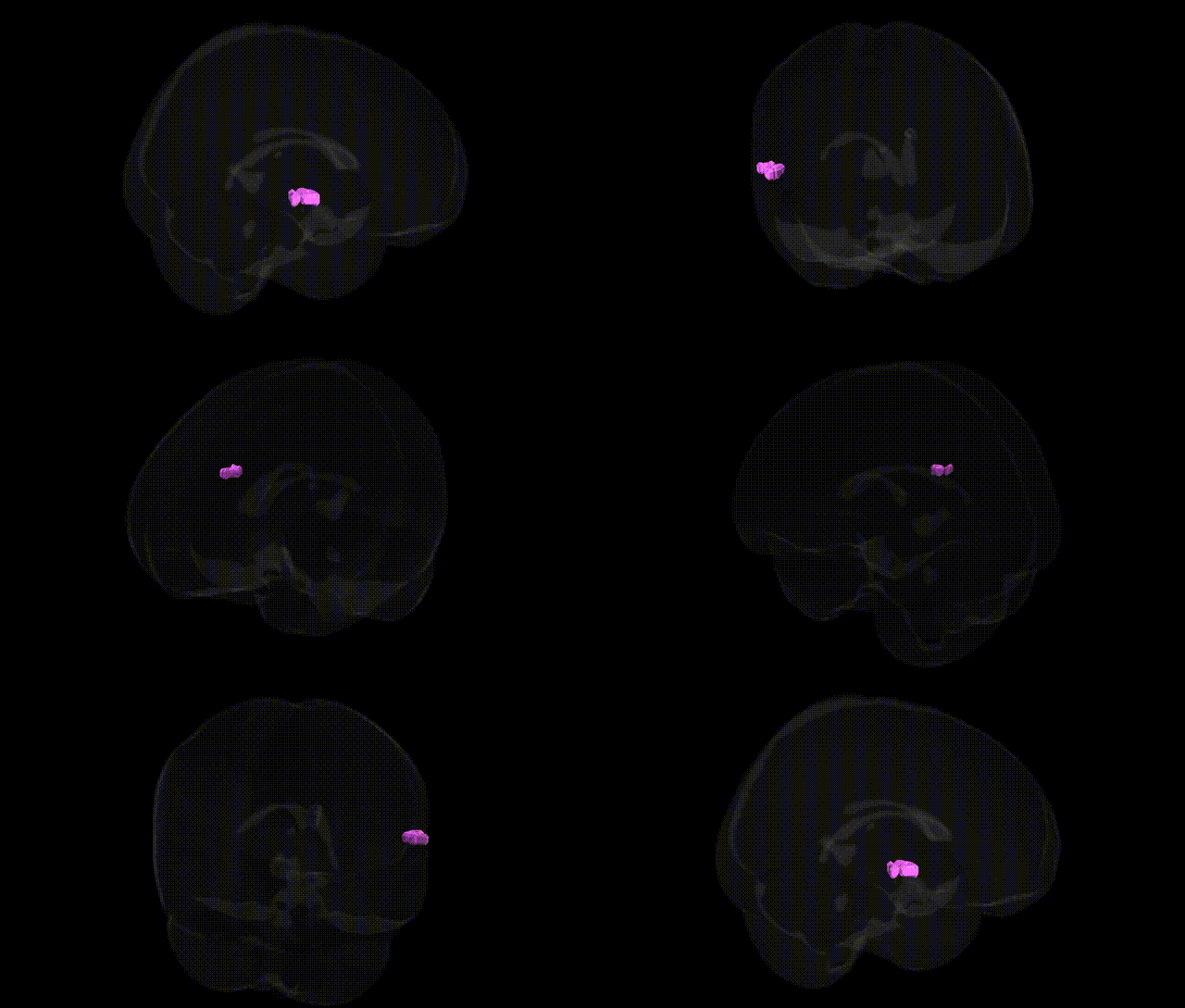
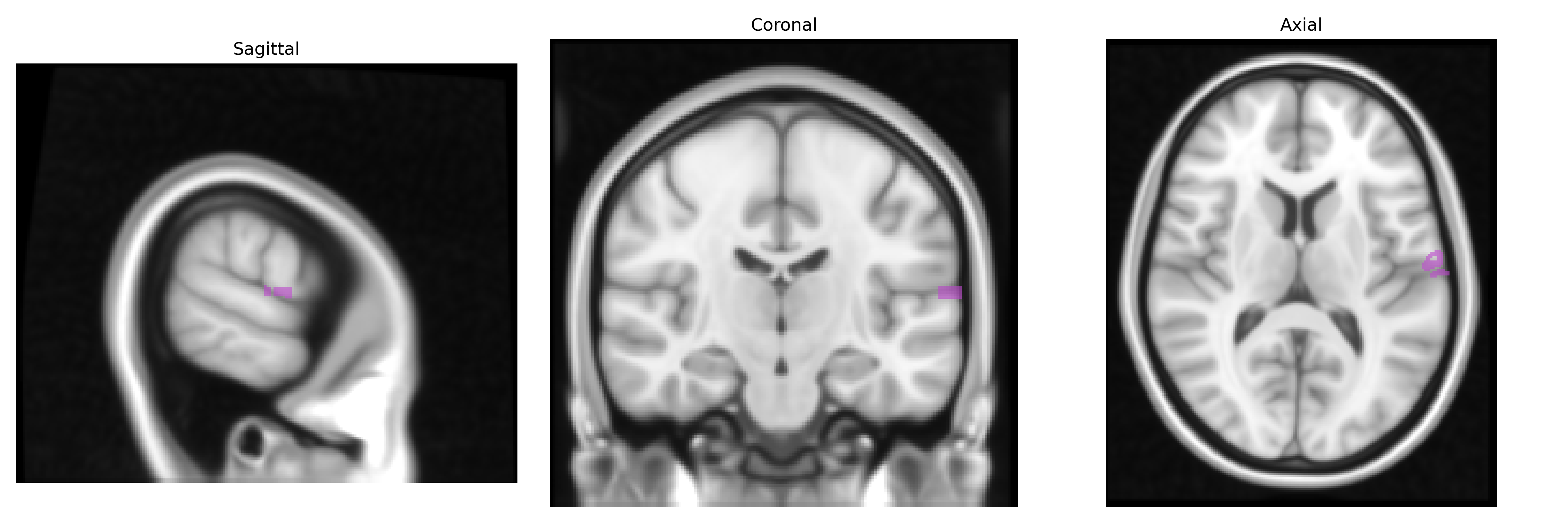
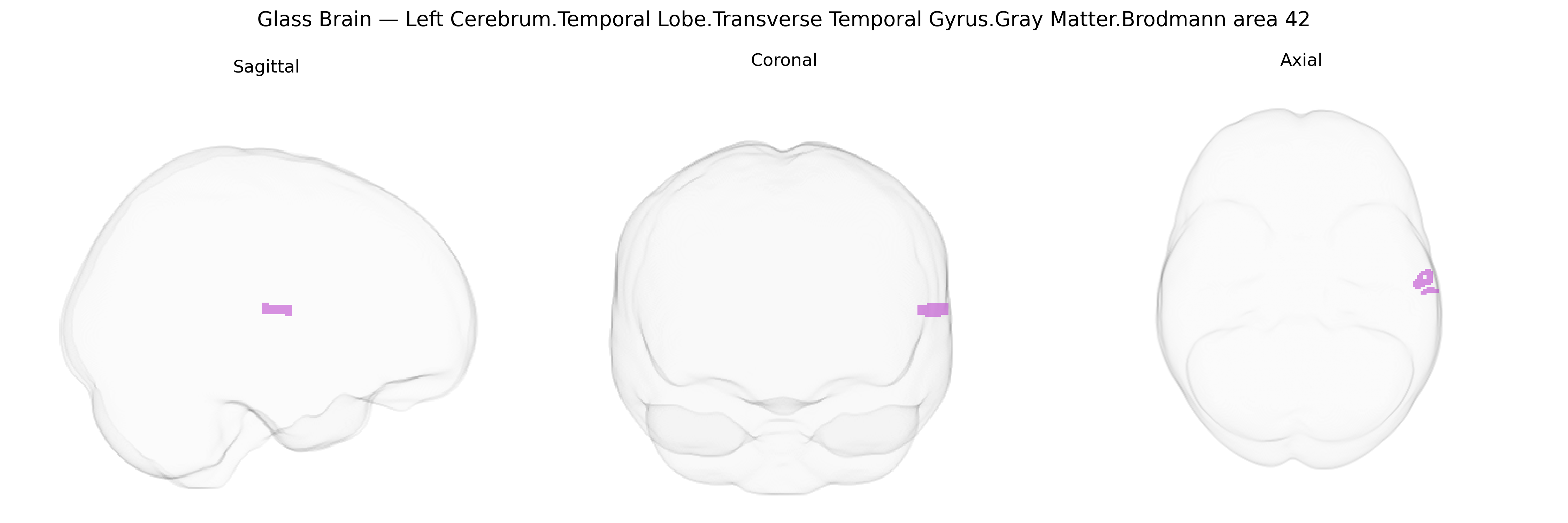
The bilateral Left Cerebrum.Temporal Lobe.Transverse Temporal Gyrus.Gray Matter.Brodmann area 42 corresponds to a segment of the primary auditory cortex located on the superior surface of the temporal lobe within the transverse (Heschl’s) gyri, immediately adjacent to and partly interdigitated with Brodmann area 41. This cytoarchitectonically defined field is characterized by a granular cortical pattern and dense thalamocortical input from the medial geniculate nucleus, supporting higher-order auditory processing, including analysis of complex acoustic patterns such as speech and environmental sounds. In the Talairach 1 mm atlas, this region is mapped bilaterally in the dorsal temporal cortex, forming part of the core and belt auditory areas that contribute to sound perception, auditory discrimination, and the integration of auditory information with language-related regions in the superior temporal gyrus. There is no direct link for Brodmann area 42; a related structure is Heschl’s gyrus.
The bilateral left transverse temporal gyrus (Brodmann area 42), a core auditory association region, has been implicated in genetic studies primarily through its involvement in language, reading, and auditory processing phenotypes rather than region-specific GWAS hits. Twin and heritability studies indicate moderate to high genetic influence on superior and transverse temporal gyrus morphology (cortical thickness, surface area, and volume), with genome-wide analyses of cortical structure identifying associations between variants in genes related to neurodevelopment (e.g., microtubule and axon guidance genes), synaptic function, and cortical patterning and structural measures in the superior/transverse temporal regions, although often reported at the lobar or superior temporal gyrus level rather than BA42 specifically. GWAS of language and reading abilities, dyslexia, and phonological processing have linked genes such as CNTNAP2, DCDC2, KIAA0319, and ROBO1 to functional and structural variation in left perisylvian and superior temporal regions that include BA42, and imaging-genetics work has connected FOXP2 pathway genes and other language-related loci with altered activation or anatomy in this auditory cortex. Structural and functional abnormalities of the superior and transverse temporal gyri show genetic correlations with schizophrenia, bipolar disorder, and autism spectrum disorder in large consortia (e.g., ENIGMA), where risk loci in synaptic, glutamatergic, and calcium-channel genes correlate with cortical thinning or volume reductions in these regions. Additional associations involve tinnitus, musical aptitude, and auditory hallucinations, in which variants in genes affecting auditory pathway development and neurotransmission have been related to altered activity or structure in Heschl’s gyrus and adjacent BA42, though these links are typically described at the level of the primary and secondary auditory cortex rather than the Talairach-defined BA42 region alone.
Overview generated by GPT-4o (2026).
Region ID: 729
Hemisphere: bilateral
Atlas: Talairach labels 1mm
Full Quality Version: Download MP4
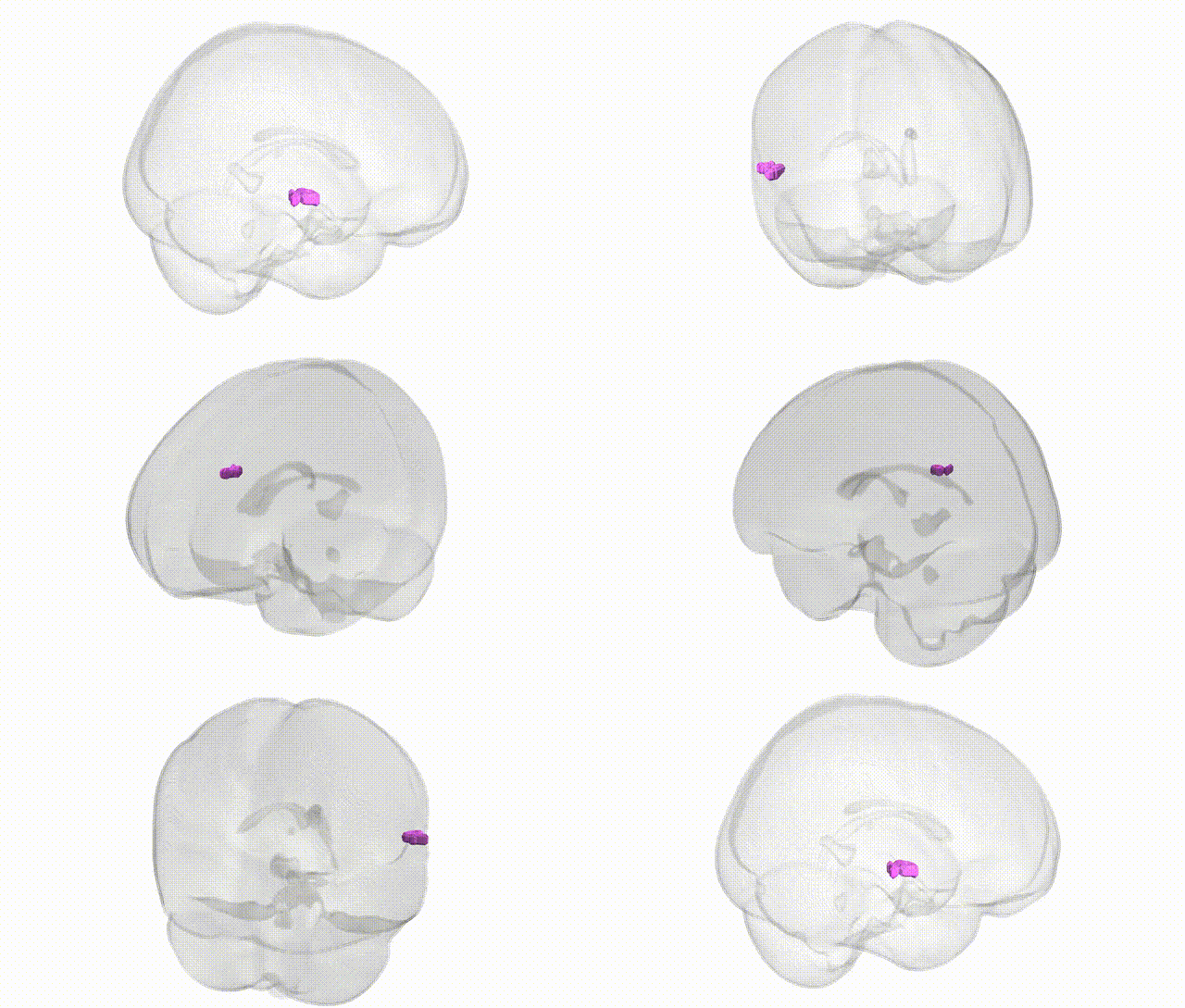
Full Quality Version: Download MP4
Wali Sidiqyar*, Gaurav Rudravaram*, Elyssa M. McMaster, Trent M. Schwartz, Adam M. Saunders, Kurt G. Schilling, Bennett A. Landman "Introducing SPINS: A Shared Public Visualization Library of Neuroanatomical Structures." Medical Imaging with Deep Learning- short paper
This resource is licensed under CC0 1.0 Universal (Public Domain).