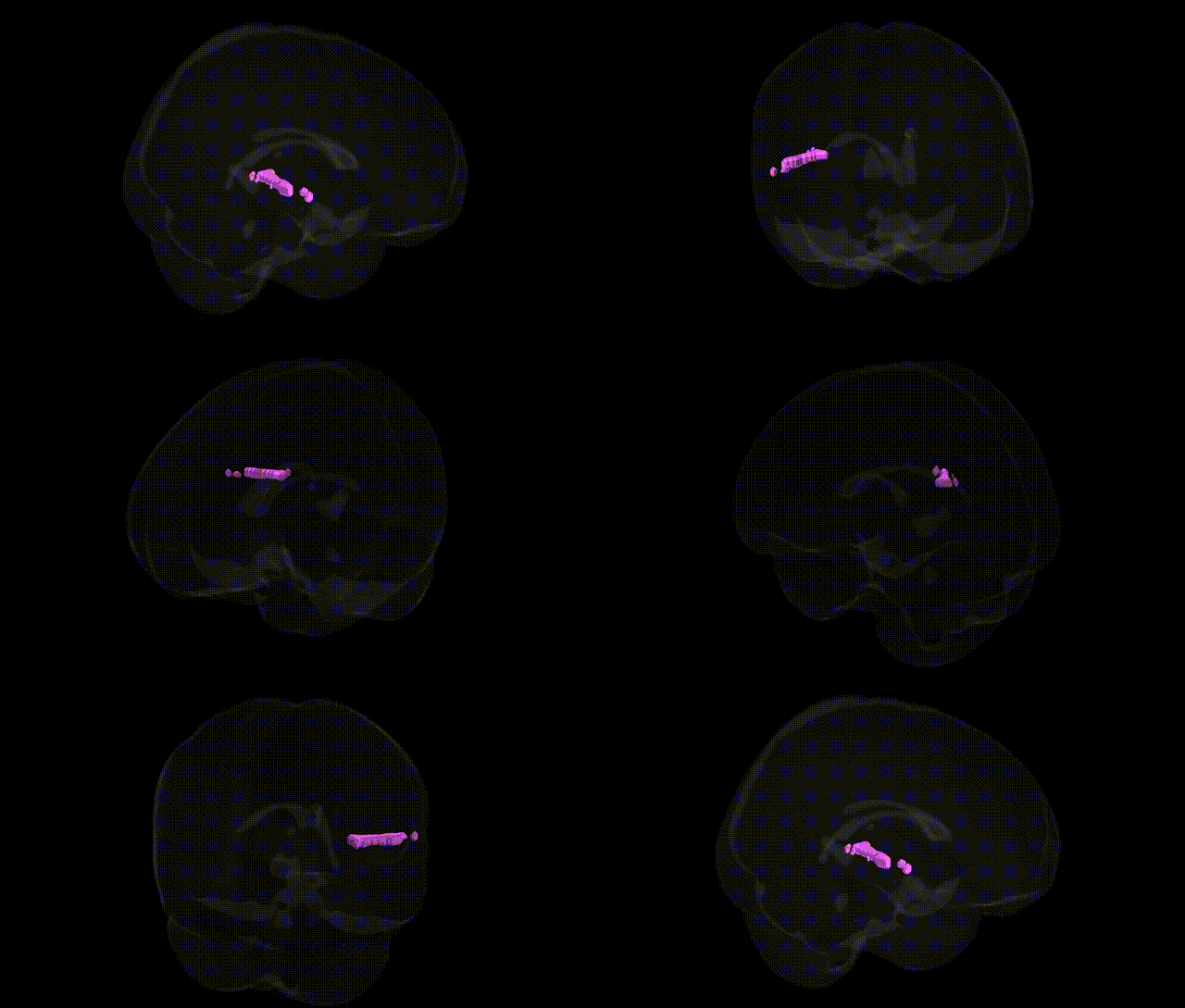
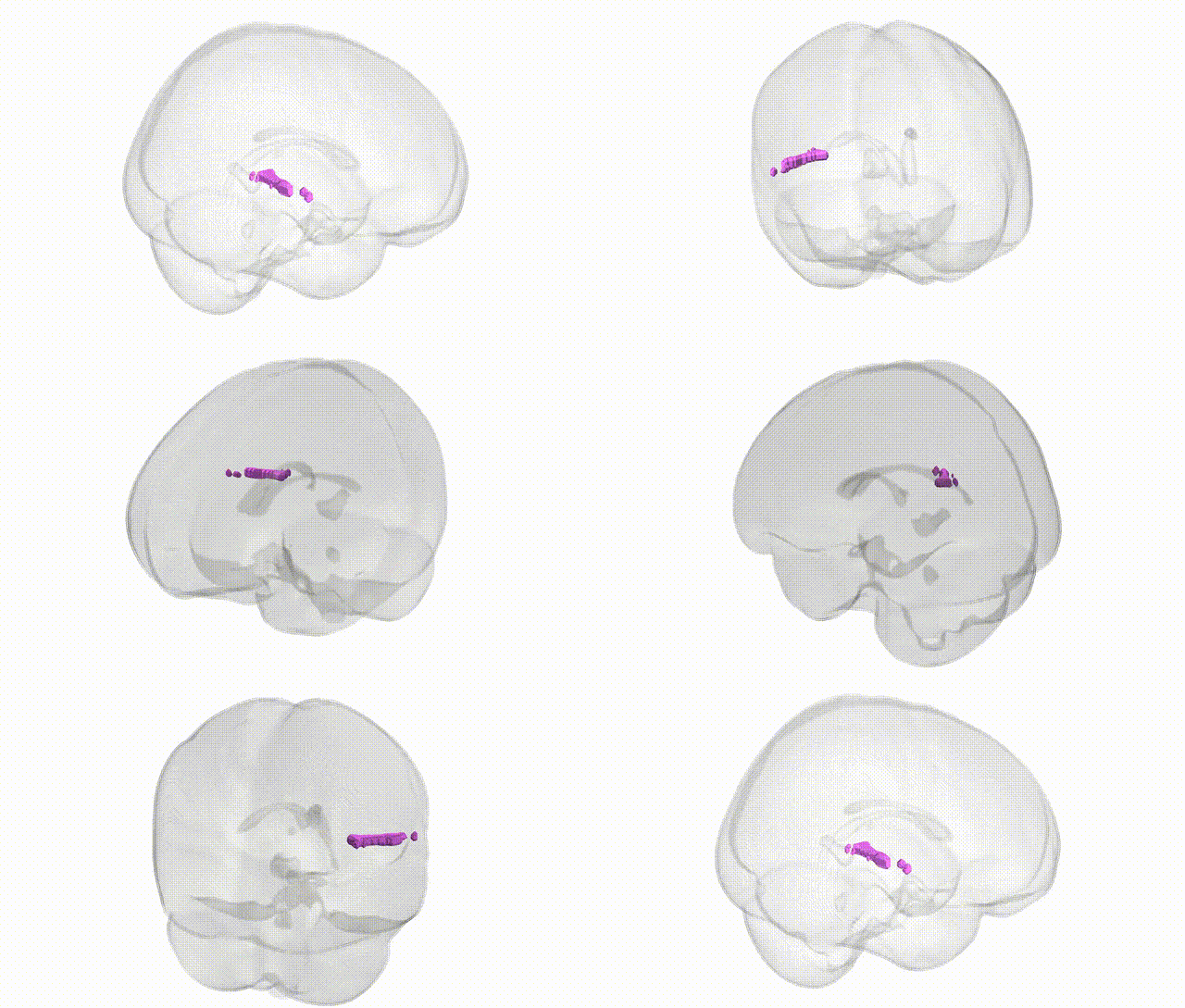
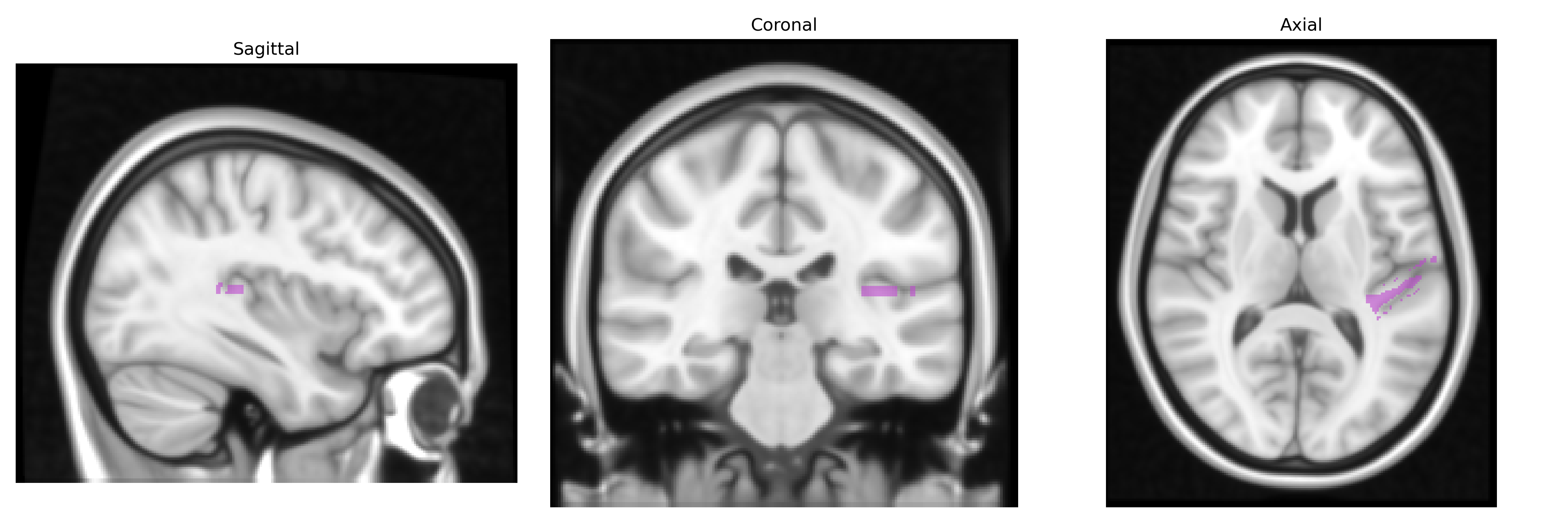
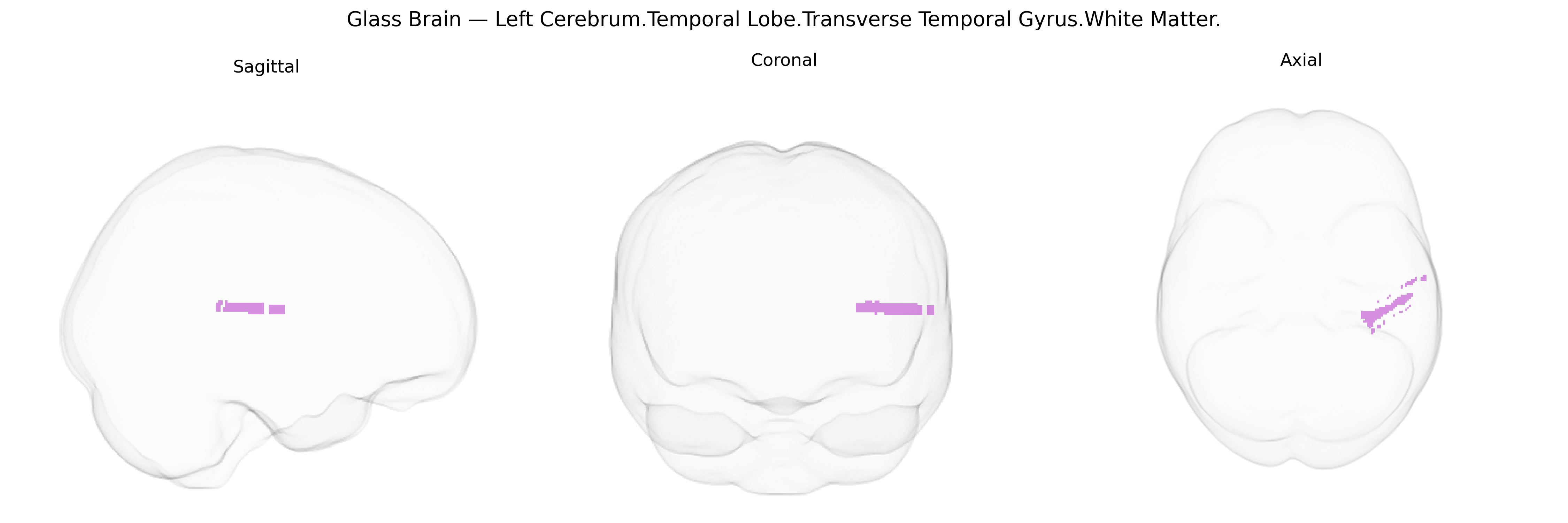
The bilateral Left Cerebrum.Temporal Lobe.Transverse Temporal Gyrus.White Matter refers to the subcortical myelinated fiber pathways underlying Heschl’s gyrus (transverse temporal gyrus) in the superior temporal plane of the temporal lobe, within the primary auditory cortex region. These white matter tracts carry afferent and efferent auditory information between the medial geniculate nucleus of the thalamus, primary auditory cortex, association auditory cortices, and broader temporal–parietal networks involved in sound processing, speech perception, and higher-order auditory integration. As part of the left temporal lobe’s language-dominant circuitry in most individuals, these fibers contribute to the transmission of rapid acoustic and phonological information critical for speech and language, while also supporting bilateral auditory perception and integration with multimodal cortical areas. There is no direct Wikipedia article for this precise white matter label; a closely related cortical structure is Transverse temporal gyrus.
The bilateral left Transverse Temporal Gyrus white matter (primary auditory cortex region) has been implicated in genetic studies of auditory processing, language, psychosis, and neurodevelopmental traits, although most GWAS map to broader temporal lobe or superior temporal gyrus/white-matter phenotypes rather than this subregion specifically. Large imaging-genetics consortia (e.g., ENIGMA, UK Biobank) have shown that temporal lobe white-matter microstructure and volume exhibit significant SNP-based heritability and are influenced by common variants near genes involved in axon guidance, myelination, and synaptic function, such as CNTNAP2, NRG1, and DISC1, with some loci overlapping risk for schizophrenia and bipolar disorder. Schizophrenia GWAS have implicated temporal white-matter alterations, including auditory and language pathways connecting Heschl’s/transverse temporal regions, in association with variants in complement (C4) and glutamatergic genes; similar pathways are implicated in genetic risk for auditory hallucinations and psychosis-related traits. Autism spectrum disorder and language impairment studies highlight genes like FOXP2, CNTNAP2, and DCDC2, which are associated with structural and functional differences in temporal auditory/language cortices and their white-matter tracts (e.g., arcuate fasciculus), likely affecting connectivity of the transverse temporal gyrus. Polygenic risk for educational attainment and cognitive performance also associates with temporal white-matter integrity, whereas Alzheimer’s disease and frontotemporal dementia genetic risk (e.g., APOE, MAPT) correlate with temporal lobe white-matter changes, though not uniquely with this gyrus. Overall, genetic associations for the transverse temporal gyrus white matter are inferred largely from broader temporal and auditory-network imaging-genetics and psychiatric GWAS, rather than from region-specific loci uniquely identified for this Talairach-defined area.
Overview generated by GPT-4o (2026).
Region ID: 717
Hemisphere: bilateral
Atlas: Talairach labels 1mm
Full Quality Version: Download MP4
Full Quality Version: Download MP4
Wali Sidiqyar*, Gaurav Rudravaram*, Elyssa M. McMaster, Trent M. Schwartz, Adam M. Saunders, Kurt G. Schilling, Bennett A. Landman "Introducing SPINS: A Shared Public Visualization Library of Neuroanatomical Structures." Medical Imaging with Deep Learning- short paper
This resource is licensed under CC0 1.0 Universal (Public Domain).