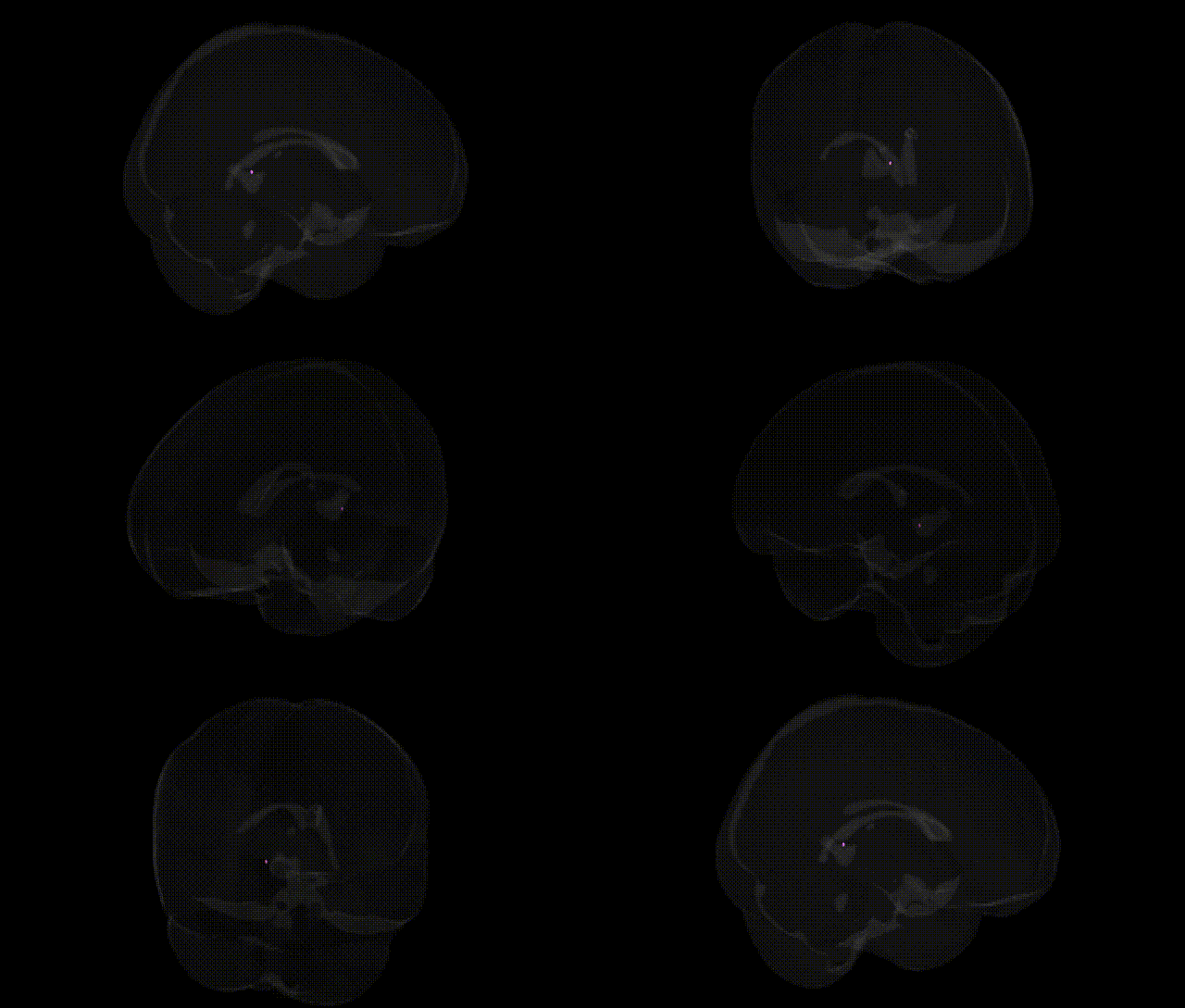
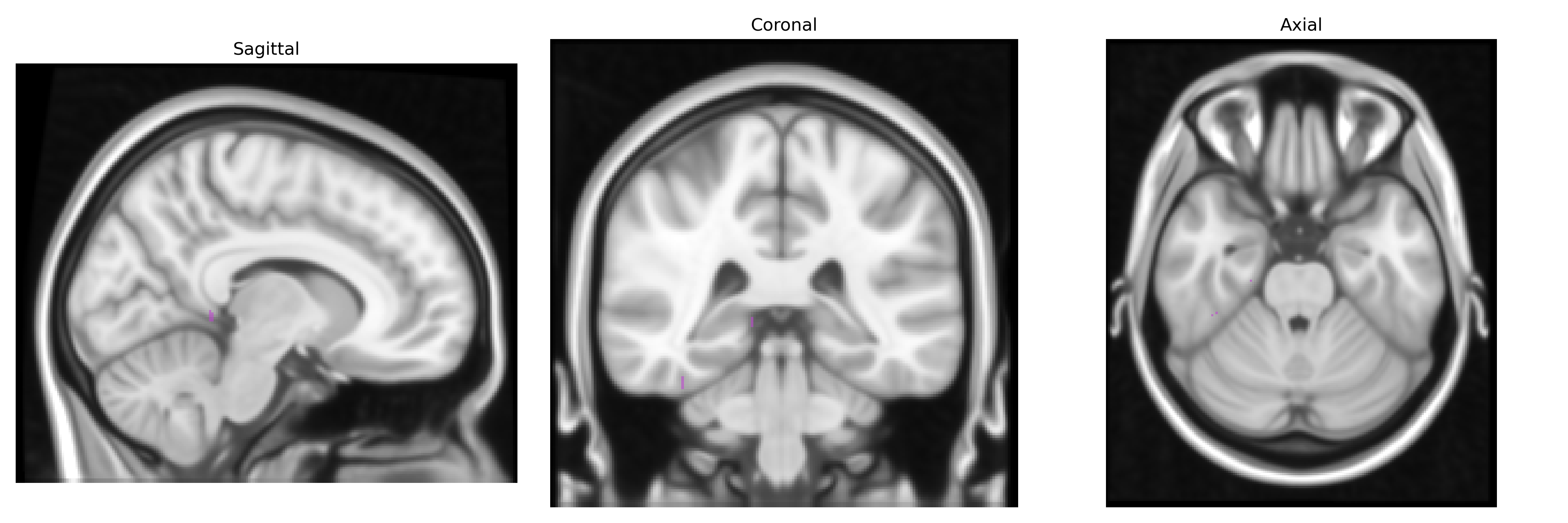
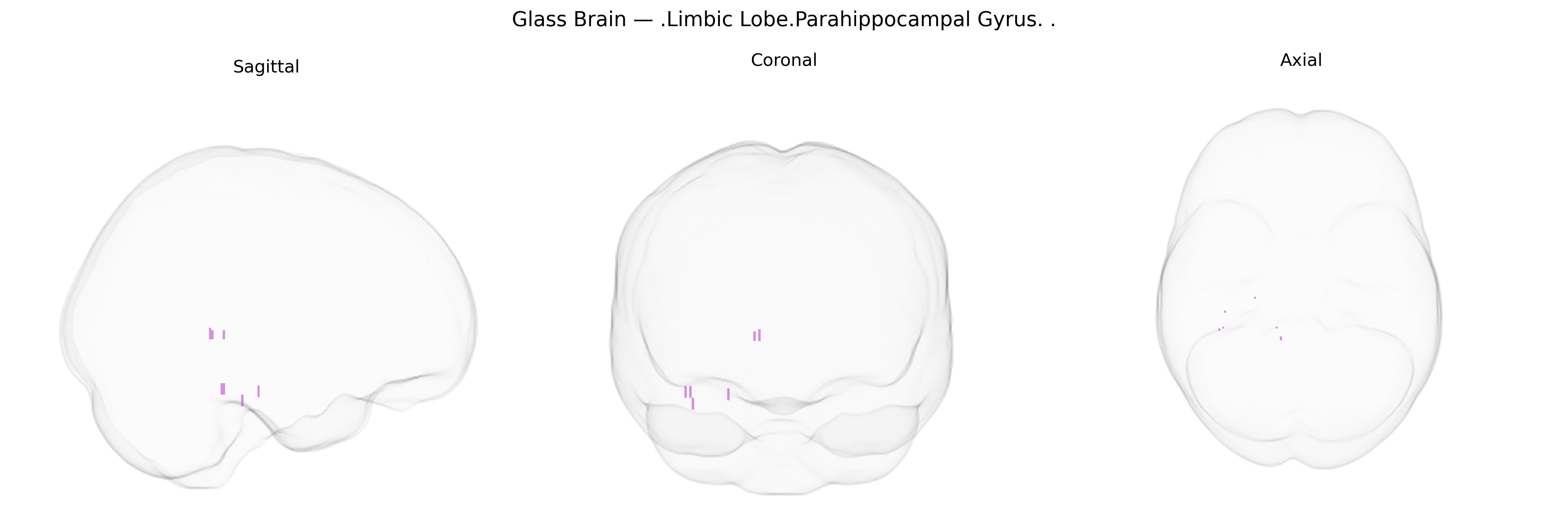
The bilateral limbic lobe parahippocampal gyrus is a cortical structure of the medial temporal lobe that forms part of the limbic system, extending from the hippocampal formation posteriorly toward the isthmus of the cingulate gyrus and bordering the collateral sulcus. It consists mainly of allocortex and periallocortex (including entorhinal and perirhinal cortices) and is heavily interconnected with the hippocampus, amygdala, and association cortices. Functionally, the parahippocampal gyrus is critical for episodic memory encoding and retrieval, contextual and spatial processing, and scene perception, integrating multimodal sensory information with hippocampal circuitry to support navigation and memory for environments and events. Pathology in this region is implicated in temporal lobe epilepsy, Alzheimer’s disease, and other neurodegenerative and psychiatric conditions through disruption of medial temporal lobe memory networks. Parahippocampal gyrus
Genetic associations involving the bilateral parahippocampal gyrus implicate this limbic region in a range of neuropsychiatric and cognitive phenotypes, with GWAS and imaging-genetics studies highlighting polygenic influences on its structure and function rather than single-gene effects. Variants in genes related to synaptic plasticity, neurodevelopment, and tau/amyloid processing (such as APOE, CLU, CR1, BIN1, and PICALM) have been associated with parahippocampal atrophy, altered connectivity, and susceptibility to Alzheimer’s disease and other dementias, while schizophrenia and bipolar disorder GWAS have linked common risk loci (e.g., in major histocompatibility complex regions, CACNA1C, and other calcium-channel or glutamatergic pathway genes) to volume and activation changes in this region. Imaging GWAS from large consortia (including ENIGMA and UK Biobank) show that parahippocampal thickness and volume are heritable traits influenced by distributed loci involved in neuronal migration, axon guidance, and myelination, and that polygenic scores for major depression, anxiety, and post-traumatic stress symptoms correlate with altered parahippocampal morphology and connectivity. Additionally, genetic variants tied to episodic memory performance, spatial navigation, and general cognitive ability show effects that partially map onto parahippocampal structure and functional activation, underscoring this region as a key intermediate phenotype linking complex polygenic architectures to memory, emotion regulation, and risk for neurodegenerative and psychiatric disorders.
Overview generated by GPT-4o (2026).
Region ID: 126
Hemisphere: bilateral
Atlas: Talairach labels 1mm
Full Quality Version: Download MP4
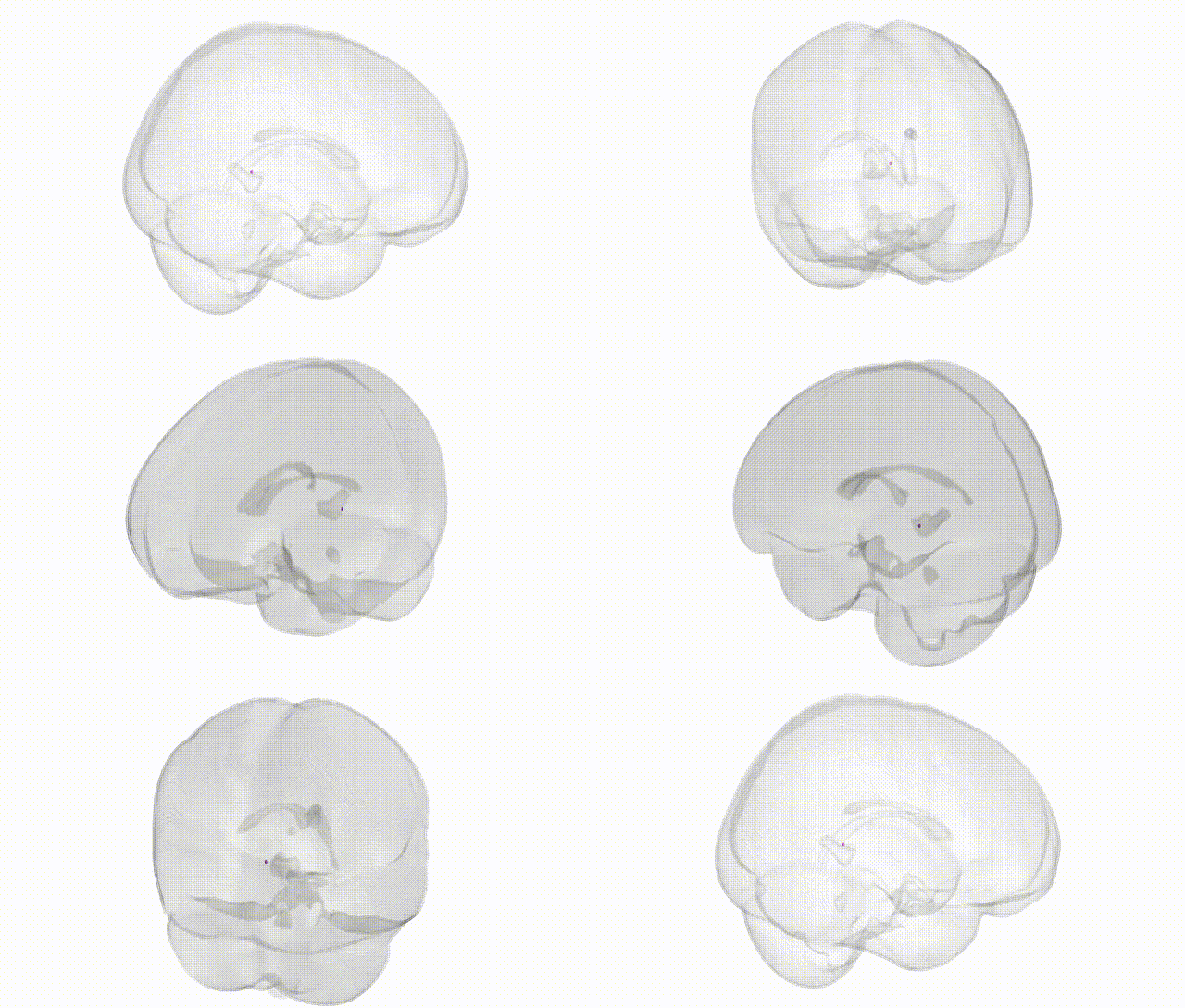
Full Quality Version: Download MP4
Wali Sidiqyar*, Gaurav Rudravaram*, Elyssa M. McMaster, Trent M. Schwartz, Adam M. Saunders, Kurt G. Schilling, Bennett A. Landman "Introducing SPINS: A Shared Public Visualization Library of Neuroanatomical Structures." Medical Imaging with Deep Learning- short paper
This resource is licensed under CC0 1.0 Universal (Public Domain).