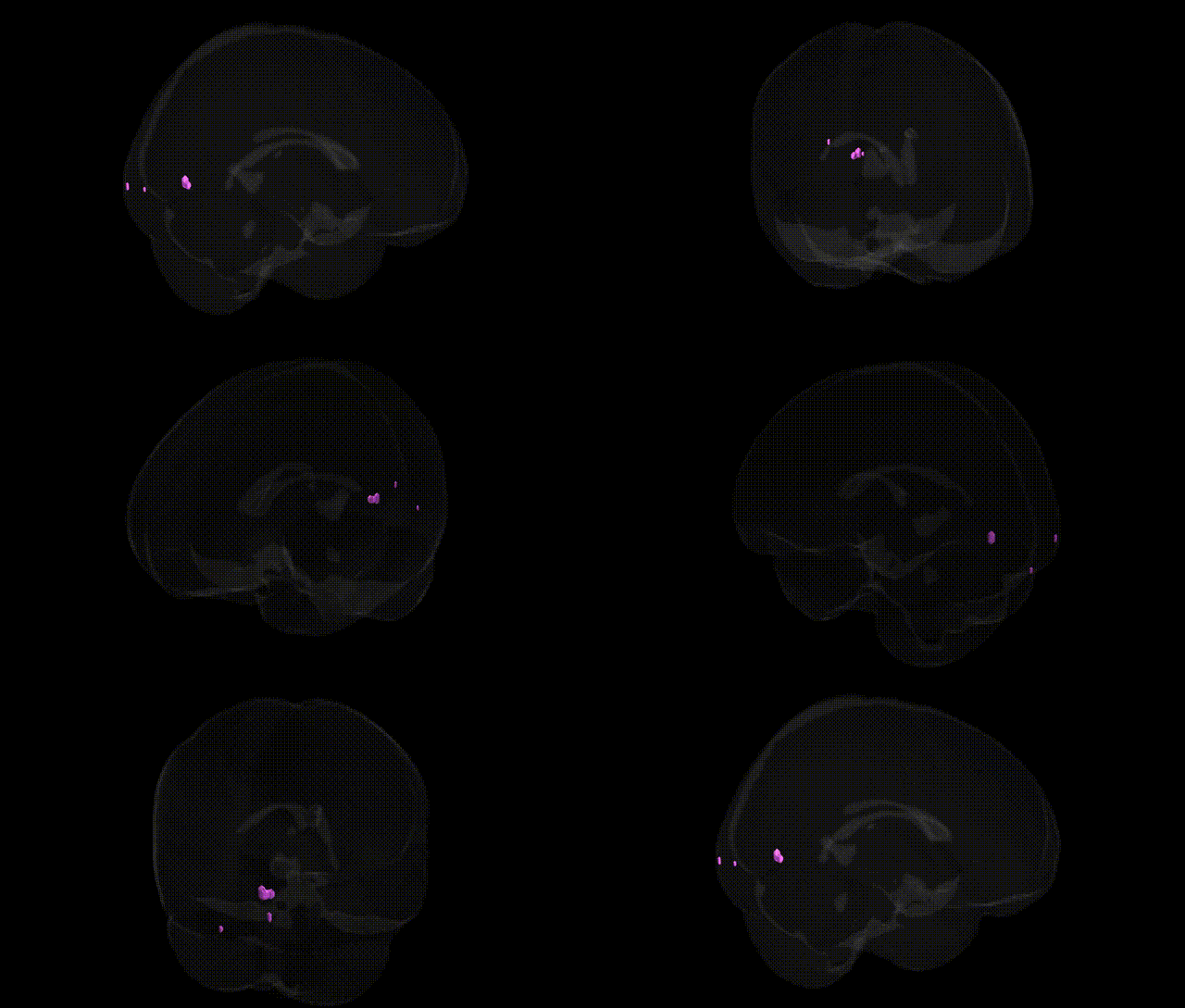
The bilateral lingual gyrus is a paired cortical structure located on the ventromedial surface of the occipital lobe, extending into the posterior medial temporal region and lying inferior to the calcarine sulcus. It is primarily supplied by branches of the posterior cerebral artery and is cytoarchitectonically associated with visual association cortices (notably Brodmann areas 18 and 19), with some posterior portions bordering primary visual cortex (area 17). Functionally, the lingual gyrus is implicated in higher-order visual processing, including analysis of complex shapes, letters, words, and scenes, as well as aspects of visual memory and imagery; it has also been associated with color processing and reading-related tasks. Bilateral involvement often emerges in neuroimaging studies of visual pattern recognition, language-related visual tasks, and visual memory retrieval. Lingual gyrus
The bilateral lingual gyrus, a ventral occipital structure involved in visual processing, reading, and imagery, has been repeatedly implicated in genetic studies of brain structure and function, particularly through imaging genetics and GWAS of brain morphology and cognitive traits. Large-scale neuroimaging GWAS (e.g., ENIGMA and UK Biobank) have identified common variants near genes such as HMGA2, KIAA0586, and DDR2, among others, associated with occipital and lingual cortical thickness, surface area, and volume, suggesting polygenic influences on this region’s development. Functional MRI genetics work has linked variants in COMT, BDNF (Val66Met), APOE, and CNTNAP2 to altered lingual gyrus activation during visual memory, language, and emotional processing tasks. In psychiatric and neurodevelopmental disorder genetics, the lingual gyrus frequently emerges as a structurally or functionally altered node in schizophrenia, major depression, bipolar disorder, autism spectrum disorder, and ADHD endophenotype studies, where polygenic risk scores for these conditions correlate with changes in occipital/lingual anatomy or activation, though associations are typically indirect and highly polygenic. GWAS of reading ability, dyslexia, and face/object recognition have also reported lingual gyrus involvement as a downstream neural correlate of variants in genes implicated in neuronal migration and synaptic plasticity (e.g., DCDC2, KIAA0319, ROBO1), supporting a genetically influenced role in visual word form and higher-order visual processing. Overall, genetic associations with the bilateral lingual gyrus are distributed across many loci with small effects, reflecting its participation in widely polygenic networks underlying visual cognition, language, and vulnerability to common psychiatric and cognitive traits.
Overview generated by GPT-4o (2026).
Region ID: 239
Hemisphere: bilateral
Atlas: Talairach labels 1mm
Full Quality Version: Download MP4
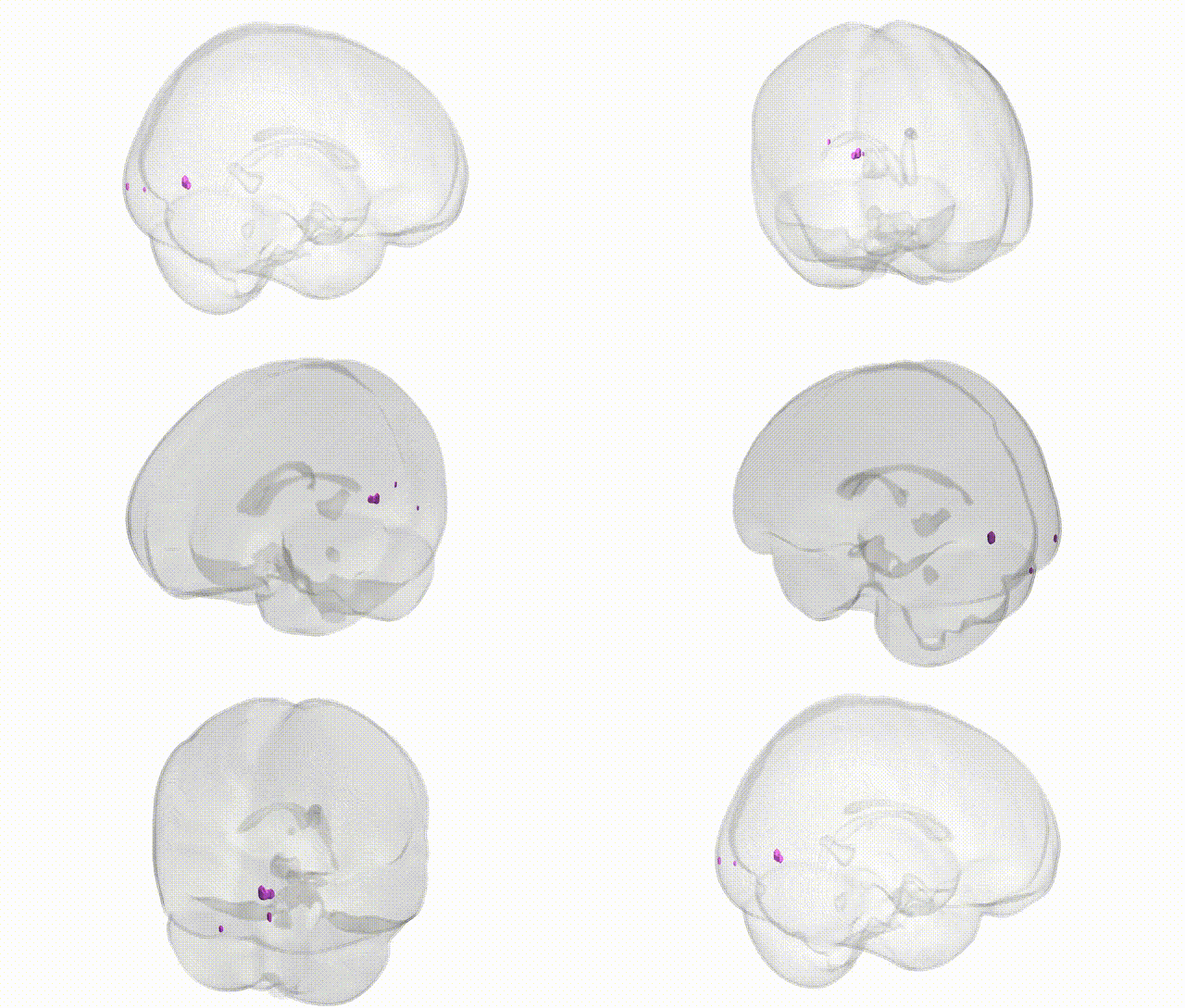
Full Quality Version: Download MP4
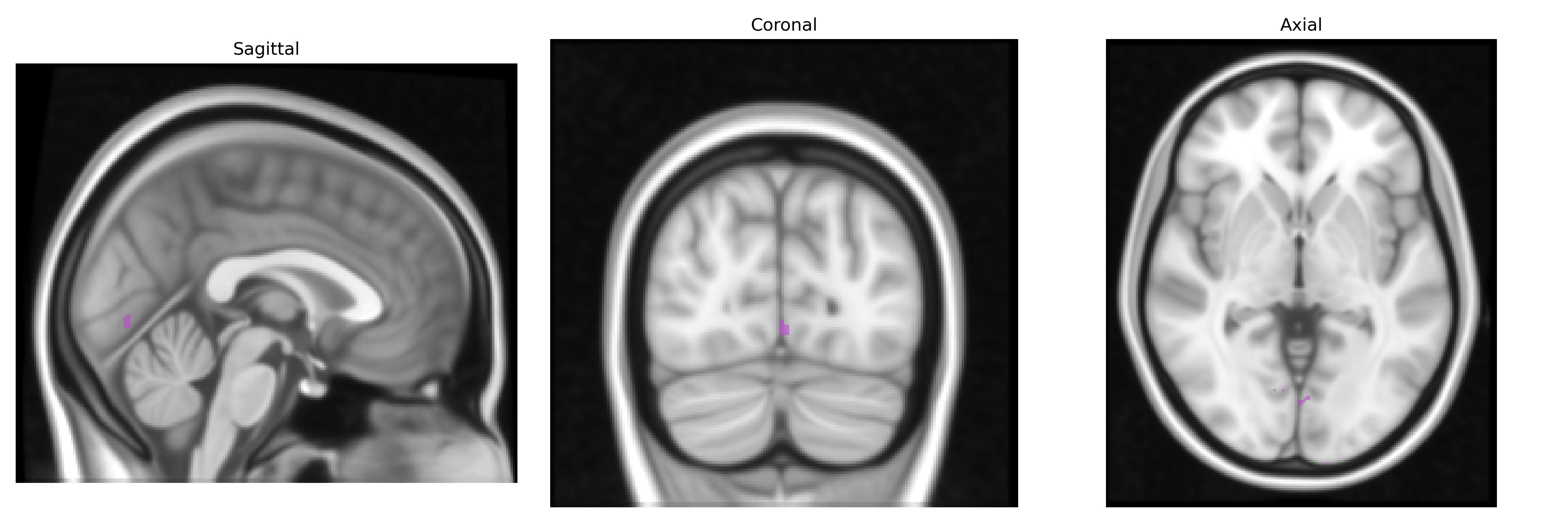
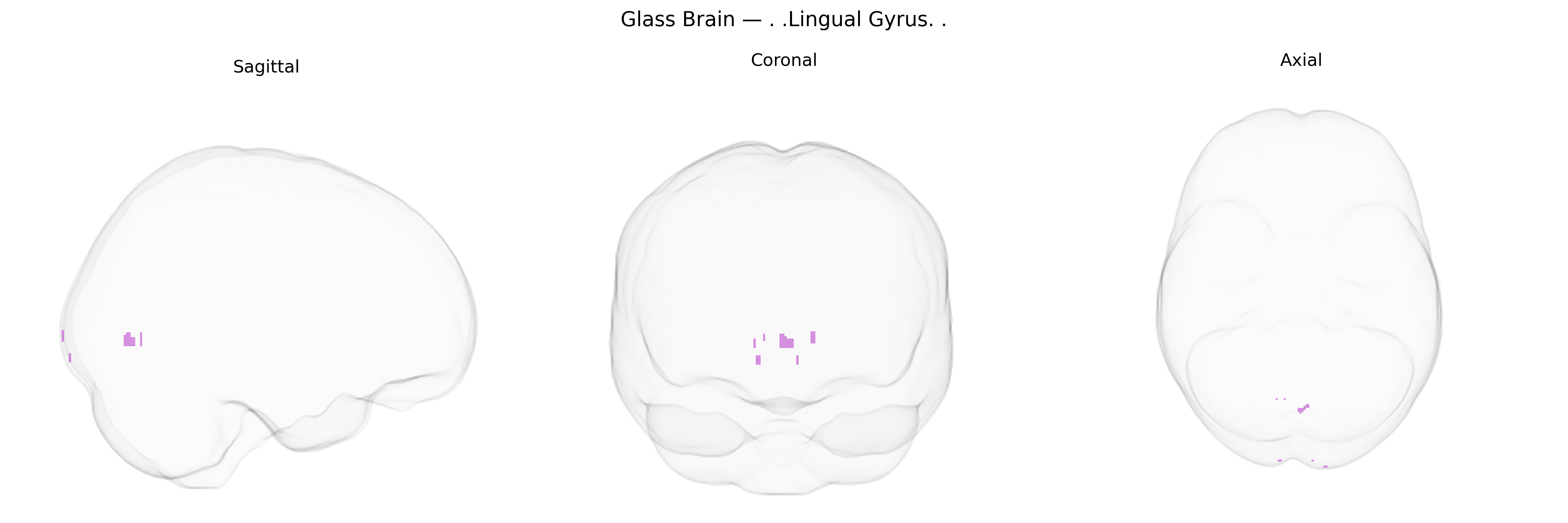
Wali Sidiqyar*, Gaurav Rudravaram*, Elyssa M. McMaster, Trent M. Schwartz, Adam M. Saunders, Kurt G. Schilling, Bennett A. Landman "Introducing SPINS: A Shared Public Visualization Library of Neuroanatomical Structures." Medical Imaging with Deep Learning- short paper
This resource is licensed under CC0 1.0 Universal (Public Domain).