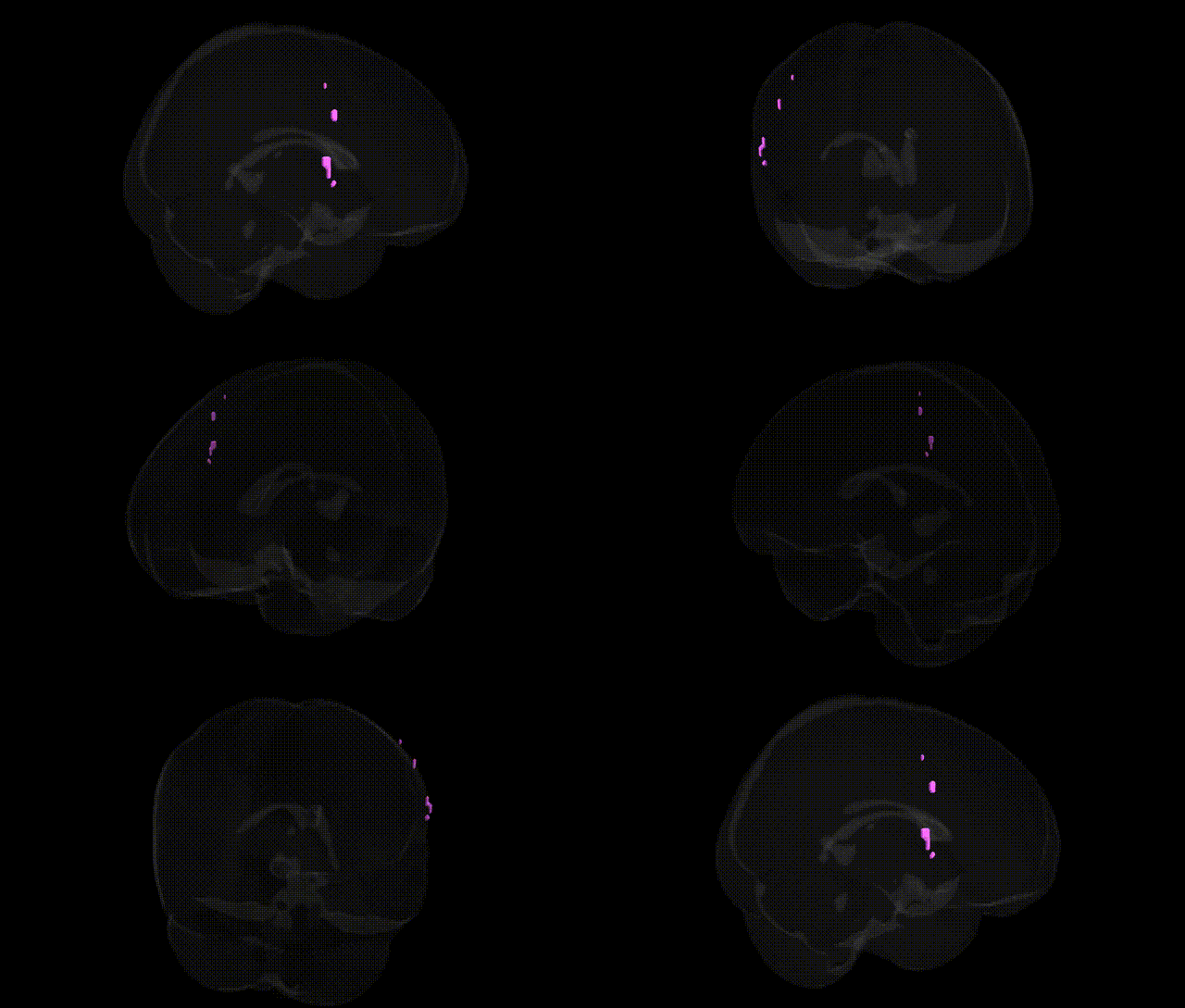
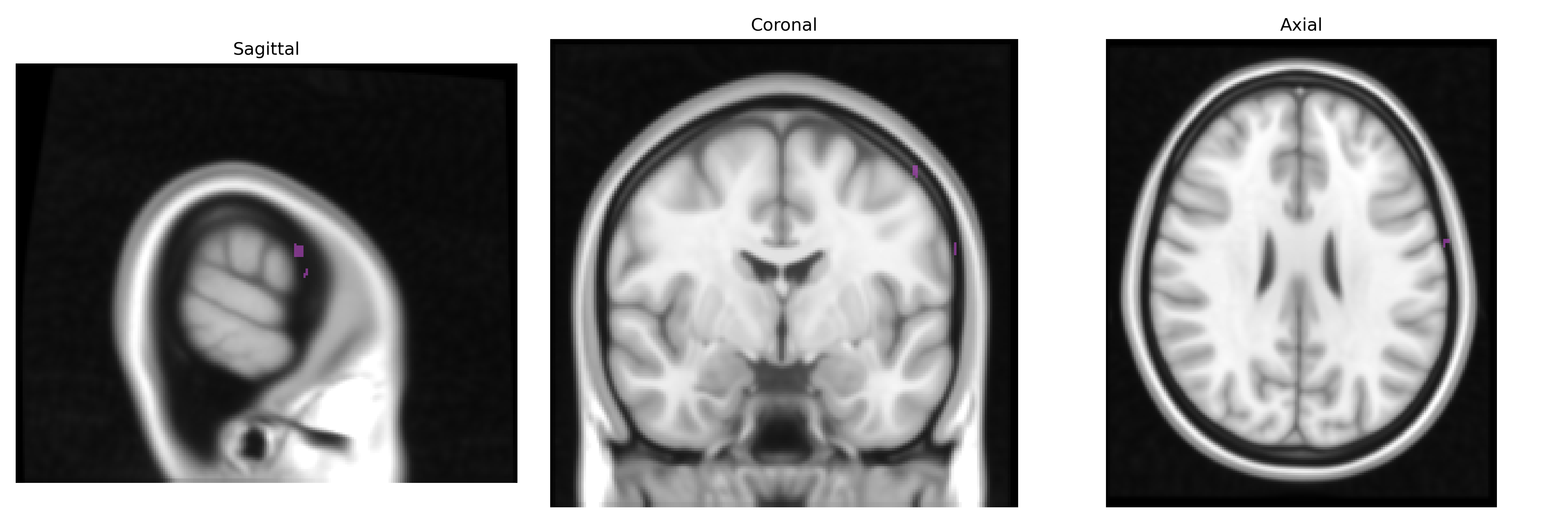
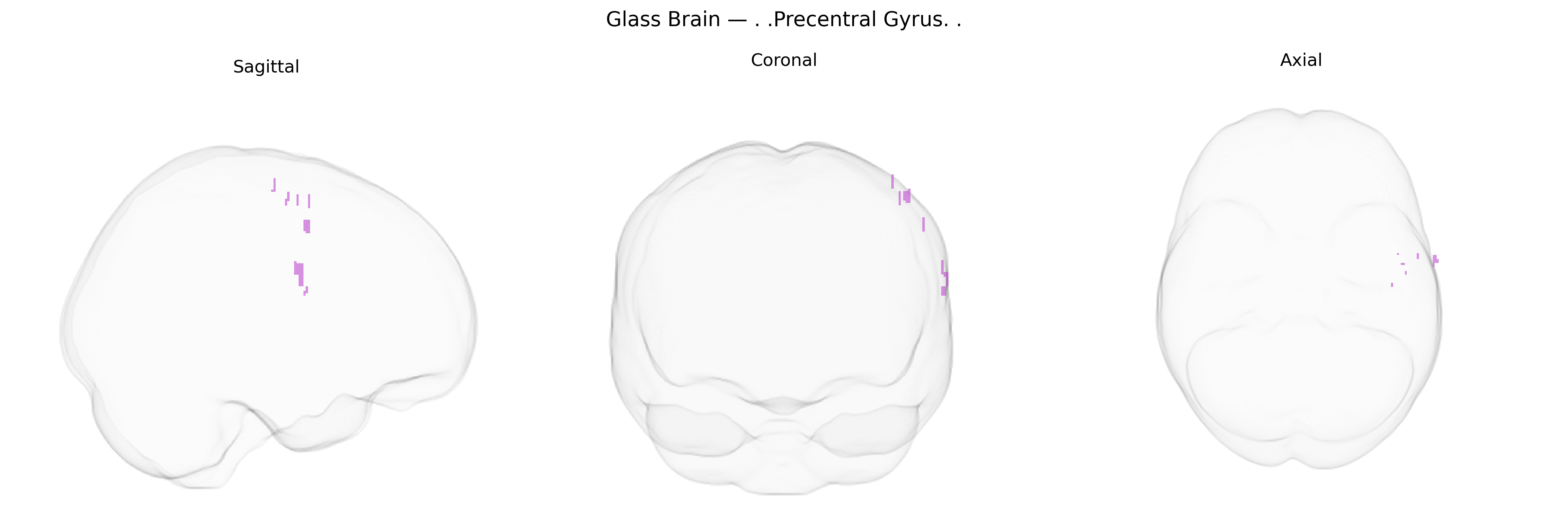
The bilateral precentral gyrus is a cortical region located in the frontal lobe immediately anterior to the central sulcus, corresponding mainly to Brodmann area 4 and constituting the primary motor cortex. It contains a somatotopic representation of the contralateral body, with neurons organized in a motor homunculus that governs voluntary movement initiation and fine motor control, particularly of the face and distal limbs. This gyrus receives modulatory inputs from premotor and supplementary motor areas, as well as subcortical structures such as the basal ganglia and cerebellum, and sends descending corticospinal and corticobulbar projections that synapse on spinal and brainstem motor neurons. Bilateral integrity of the precentral gyrus is crucial for coordinated, purposeful movement, and lesions can lead to motor deficits such as weakness, spasticity, or paralysis in specific body regions depending on the somatotopic area affected.
The bilateral precentral gyrus, corresponding largely to primary motor cortex, has been implicated in genetic studies of motor function, neurodevelopmental and neuropsychiatric traits, and neurodegenerative disease. GWAS of brain imaging phenotypes (e.g., ENIGMA and UK Biobank) have identified common variants associated with cortical thickness, surface area, and activation of the precentral gyrus, including loci near genes involved in neuronal development and synaptic function such as CENPW, DHFR, and variants in the 17q21 region. Genetic influences on motor skill, hand dexterity, and reaction time have been partly mediated through structural and functional variation in this region. Neurodevelopmental disorder studies link autism spectrum disorder and ADHD polygenic risk to altered precentral gyrus morphology and connectivity, while schizophrenia and bipolar disorder GWAS-based imaging genetics show associations between polygenic risk scores and precentral cortical measures. In neurodegeneration, ALS and frontotemporal dementia research has highlighted motor cortex involvement, with variants in genes such as C9orf72, SOD1, TARDBP, and FUS contributing to vulnerability of corticospinal neurons in the precentral gyrus. Furthermore, GWAS of traits like general cognitive ability, educational attainment, and risk-taking behavior have shown correlated genetic architectures with precentral gyrus structure and activation, indicating that this motor region participates in broader genetically influenced sensorimotor and cognitive networks.
Overview generated by GPT-4o (2026).
Region ID: 837
Hemisphere: bilateral
Atlas: Talairach labels 1mm
Full Quality Version: Download MP4
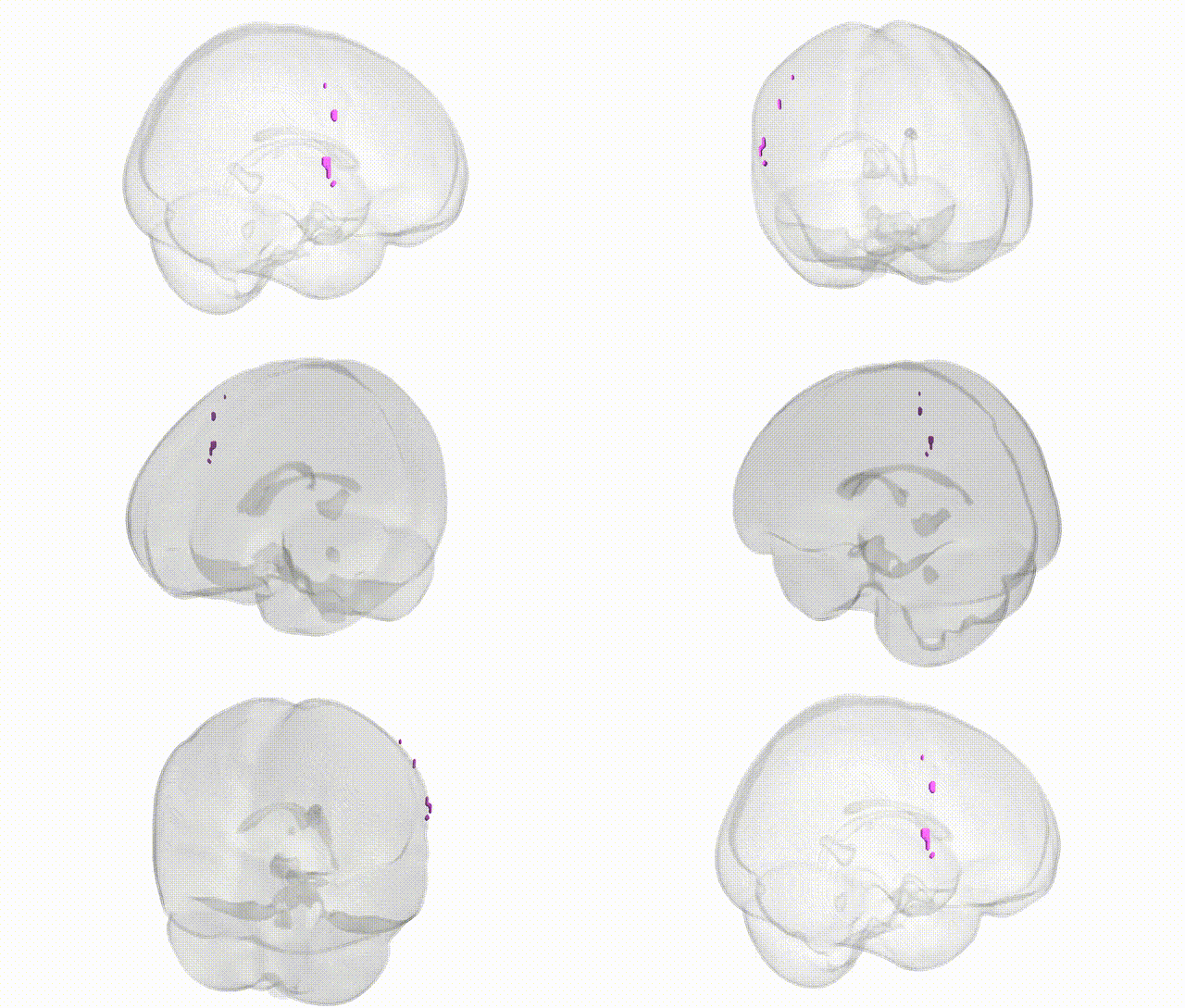
Full Quality Version: Download MP4
Wali Sidiqyar*, Gaurav Rudravaram*, Elyssa M. McMaster, Trent M. Schwartz, Adam M. Saunders, Kurt G. Schilling, Bennett A. Landman "Introducing SPINS: A Shared Public Visualization Library of Neuroanatomical Structures." Medical Imaging with Deep Learning- short paper
This resource is licensed under CC0 1.0 Universal (Public Domain).