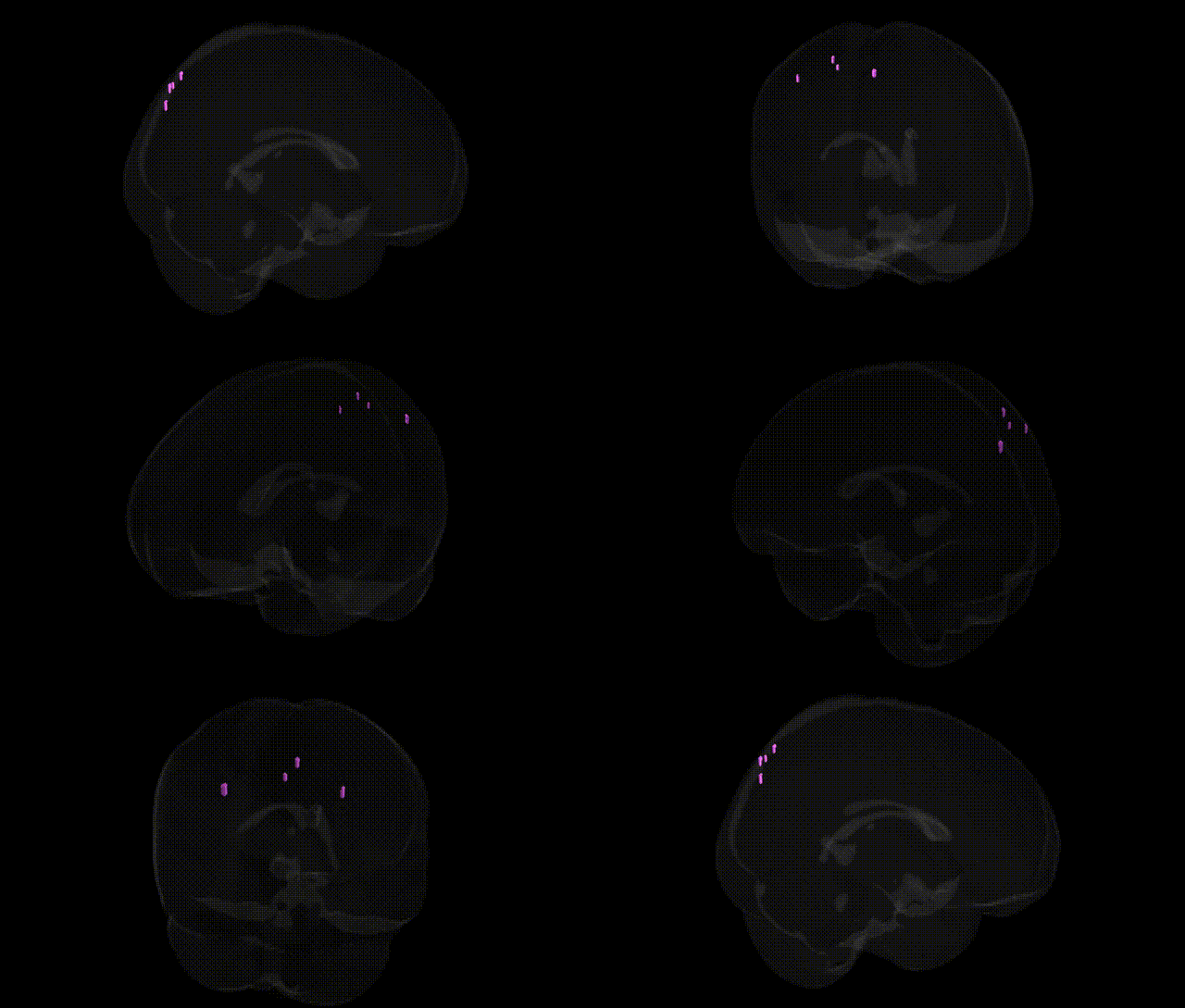
The bilateral precuneus is a medial parietal lobe structure located on the posteromedial surface of the cerebral hemisphere, bordered anteriorly by the marginal branch of the cingulate sulcus, posteriorly by the parieto‑occipital sulcus, and inferiorly by the subparietal sulcus. It corresponds roughly to Brodmann area 7 and is a major hub in the default mode network, with extensive reciprocal connections to frontal, parietal, temporal, and limbic regions as well as subcortical structures. Functionally, the precuneus is implicated in visuospatial processing, mental imagery, episodic memory retrieval, self-referential and introspective processes, and aspects of consciousness and awareness. Neuroimaging studies show robust activation during rest and internally directed cognition, while structural and functional alterations of the precuneus have been associated with neurodegenerative disorders, psychiatric conditions, and disturbances of consciousness. Precuneus
The bilateral precuneus, as defined in the Talairach labels 1 mm atlas, has been repeatedly implicated in genetic studies through its roles in default mode network function, visuospatial imagery, self-referential processing, and memory, with structural and functional variation influenced by common polymorphisms and polygenic risk. GWAS of brain imaging phenotypes (e.g., ENIGMA, UK Biobank) have identified associations between precuneus cortical thickness, surface area, and connectivity and loci near genes involved in neurodevelopment, synaptic function, and myelination, including variants in or near genes such as MSRA, MAPT, APOE, and those in calcium channel and glutamatergic pathways. Polygenic risk scores for Alzheimer’s disease, schizophrenia, major depressive disorder, autism spectrum disorder, and attention-deficit/hyperactivity disorder show associations with altered precuneus volume or default mode connectivity, consistent with this region’s vulnerability in neurodegeneration and psychosis-related network dysconnectivity. APOE ε4 status and other AD-related risk variants have been linked to hypometabolism, atrophy, and amyloid burden in the precuneus, while schizophrenia and bipolar disorder risk loci contribute to structural and functional alterations in this region as part of broader default mode and frontoparietal network abnormalities. In addition, GWAS of cognitive traits (intelligence, educational attainment, episodic memory) and personality (e.g., neuroticism) have identified overlapping genetic architectures with precuneus morphology and activation, suggesting that common genetic variation influencing higher-order cognition and internal mentation partly exerts its effects through the bilateral precuneus.
Overview generated by GPT-4o (2026).
Region ID: 1013
Hemisphere: bilateral
Atlas: Talairach labels 1mm
Full Quality Version: Download MP4
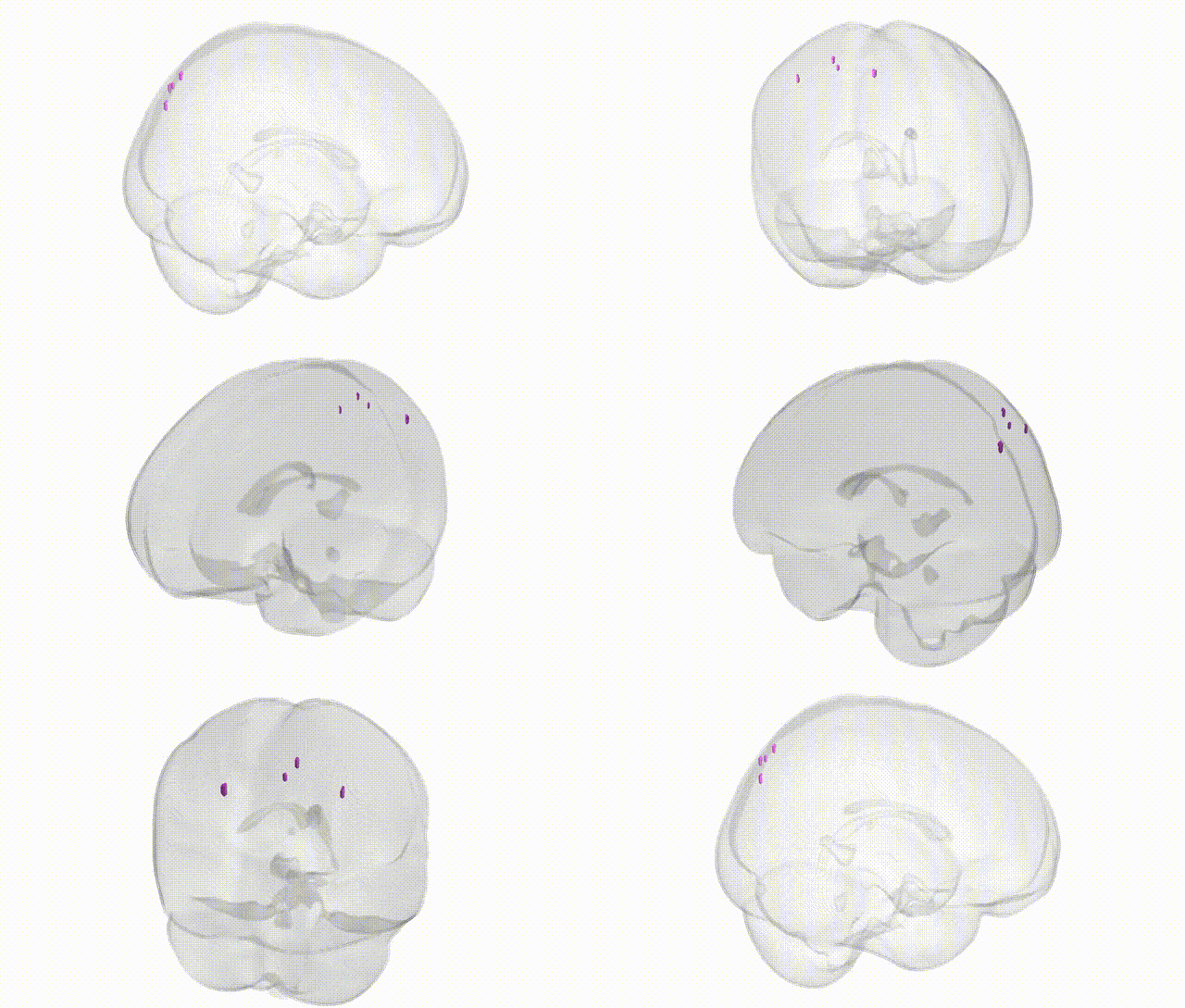
Full Quality Version: Download MP4
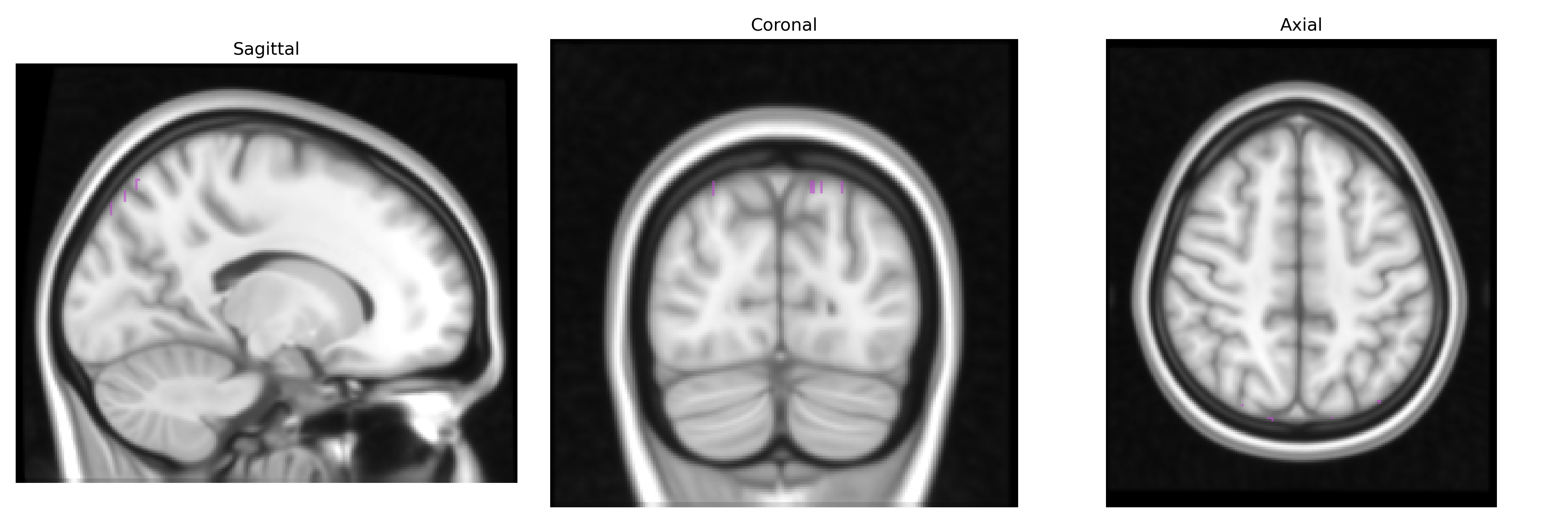
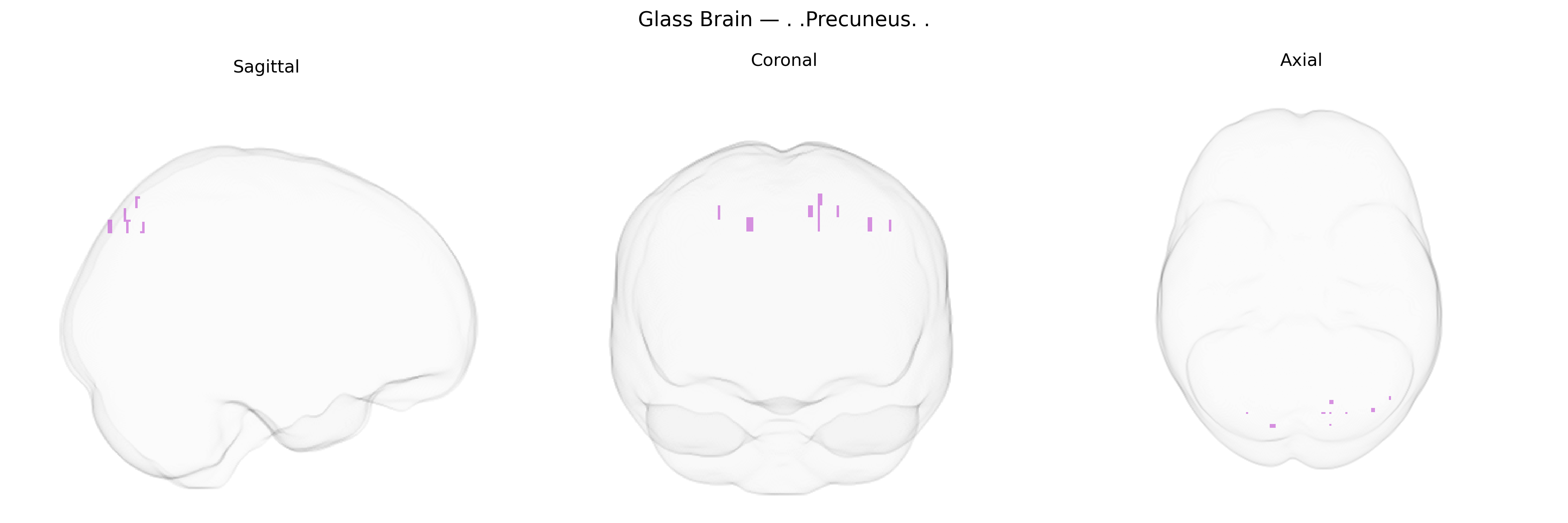
Wali Sidiqyar*, Gaurav Rudravaram*, Elyssa M. McMaster, Trent M. Schwartz, Adam M. Saunders, Kurt G. Schilling, Bennett A. Landman "Introducing SPINS: A Shared Public Visualization Library of Neuroanatomical Structures." Medical Imaging with Deep Learning- short paper
This resource is licensed under CC0 1.0 Universal (Public Domain).