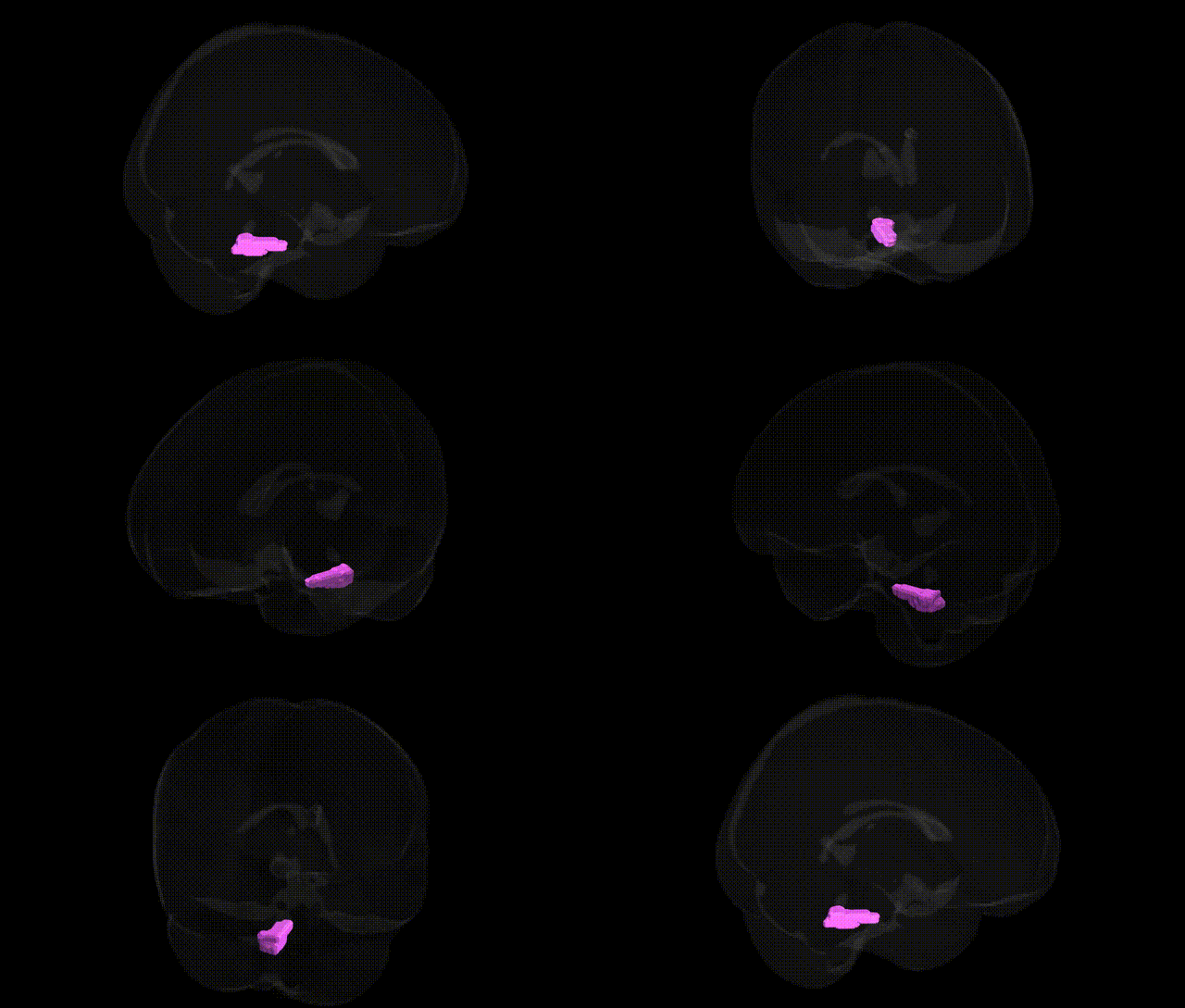
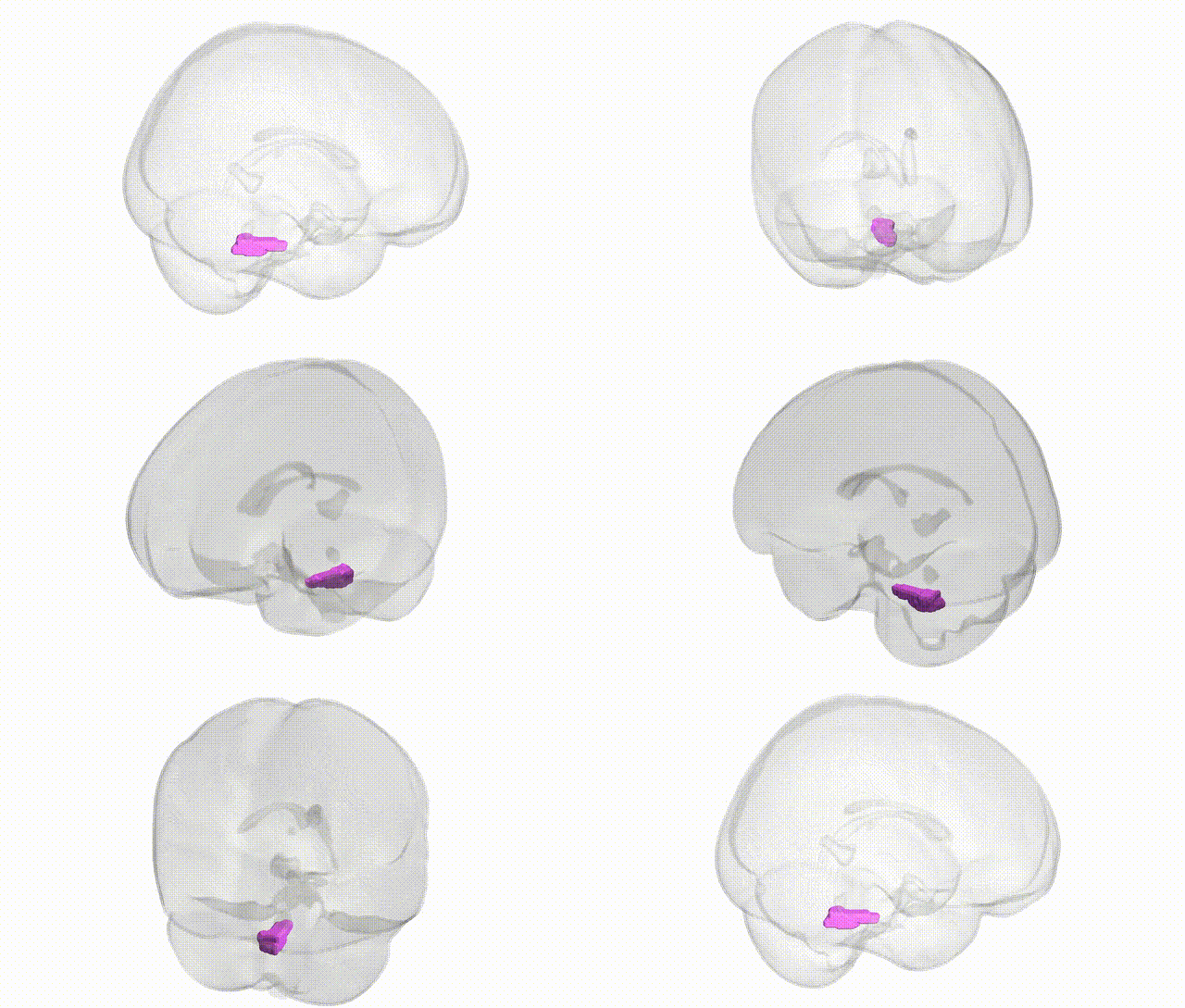
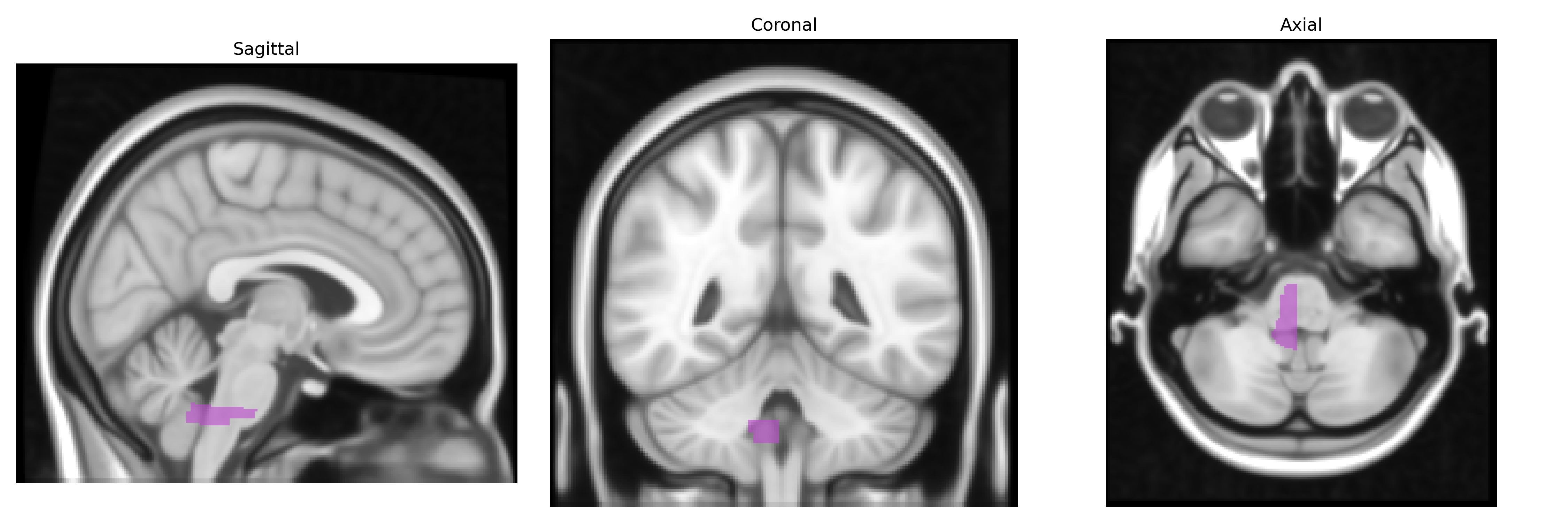
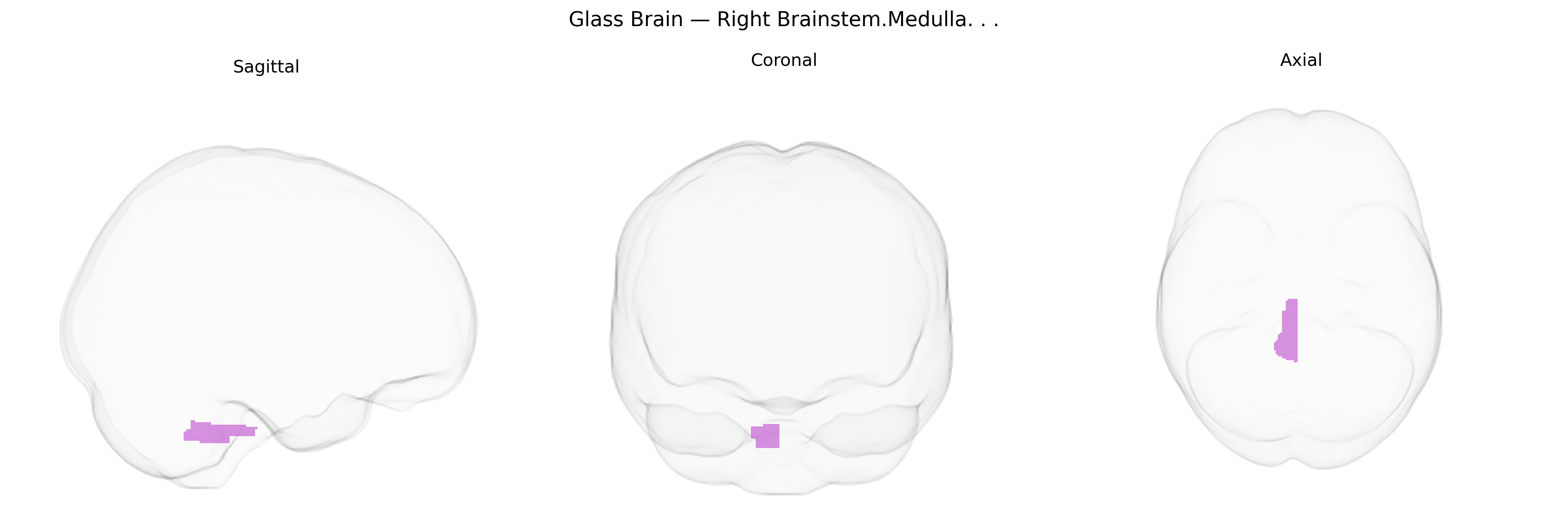
The bilateral Right Brainstem.Medulla, as labeled in the Talairach 1 mm atlas, corresponds to the portion of the medulla oblongata located on the right side of the brainstem, extending from the pontomedullary junction to the spinal cord. This region contains critical autonomic nuclei and pathways involved in cardiovascular and respiratory regulation, as well as nuclei for cranial nerves IX–XII that mediate functions such as swallowing, vocalization, and tongue movements. Major ascending and descending tracts, including components of the corticospinal, dorsal column–medial lemniscal, and spinothalamic systems, traverse this territory, supporting somatosensory transmission and motor control. The reticular formation within this area contributes to arousal and basic life-sustaining reflexes, making the medulla essential for homeostatic maintenance and survival. There is no direct Wikipedia article for “Right Brainstem.Medulla”; a related structure is the Medulla oblongata.
The bilateral right medulla (brainstem medulla) has relatively few region-specific genetic association findings, but several genetic and GWAS-based lines of evidence implicate it in autonomic, respiratory, and cardiovascular traits, as well as neurodegenerative and neurodevelopmental disorders that affect brainstem circuitry. Variants in genes influencing serotonin and norepinephrine signaling (such as SLC6A4, MAOA, and adrenergic receptor genes) have been linked to alterations in medullary centers involved in blood pressure regulation, stress response, and respiratory control, often inferred from functional or structural imaging–genetics work rather than Talairach-based ROI analyses per se. Large imaging GWAS consortia (e.g., ENIGMA, UK Biobank) have identified polygenic influences on total brainstem volume and subcomponent morphology, implicating widespread neurodevelopmental pathways (axon guidance, synaptic development, and myelination genes), although fine-grained associations with the right medulla specifically remain coarse. Mendelian and GWAS data on sudden infant death syndrome (SIDS), central sleep apnea, congenital central hypoventilation syndrome (PHOX2B mutations), and blood pressure or heart-rate–related traits converge on medullary autonomic nuclei, suggesting genetically mediated vulnerability in this region’s circuitry. Additionally, neurodegenerative disorders with prominent medullary involvement—such as Parkinson’s disease, multiple system atrophy, and amyotrophic lateral sclerosis—show GWAS hits in genes related to alpha-synuclein handling (SNCA), protein aggregation, and neuroinflammation, with imaging and neuropathological studies indicating that part of the genetic risk manifests through early or preferential degeneration of medullary structures, though current data usually treat the medulla as part of broader brainstem or hindbrain phenotypes rather than isolating the right medulla as a distinct GWAS target.
Overview generated by GPT-4o (2026).
Region ID: 6
Hemisphere: bilateral
Atlas: Talairach labels 1mm
Full Quality Version: Download MP4
Full Quality Version: Download MP4
Wali Sidiqyar*, Gaurav Rudravaram*, Elyssa M. McMaster, Trent M. Schwartz, Adam M. Saunders, Kurt G. Schilling, Bennett A. Landman "Introducing SPINS: A Shared Public Visualization Library of Neuroanatomical Structures." Medical Imaging with Deep Learning- short paper
This resource is licensed under CC0 1.0 Universal (Public Domain).