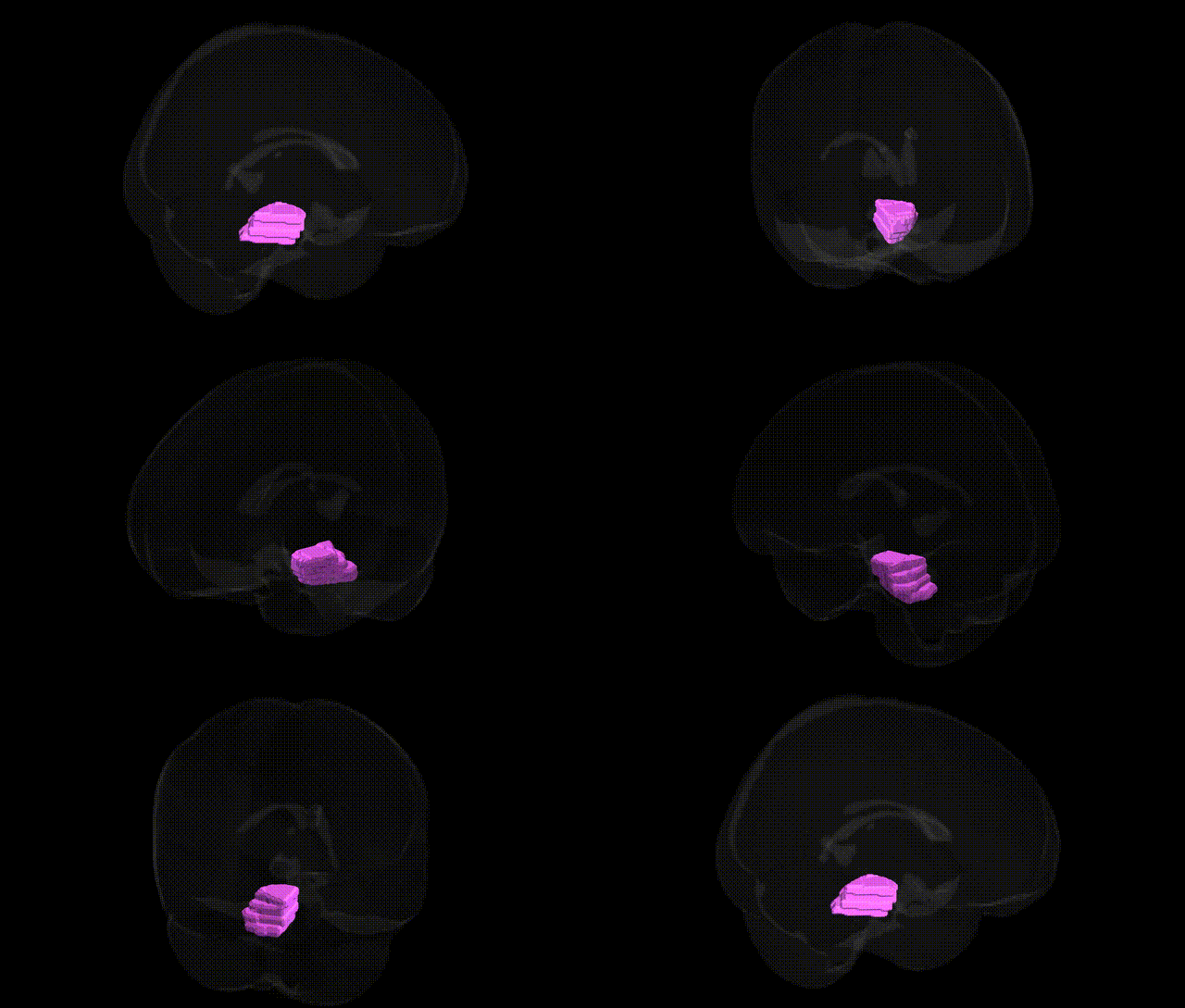
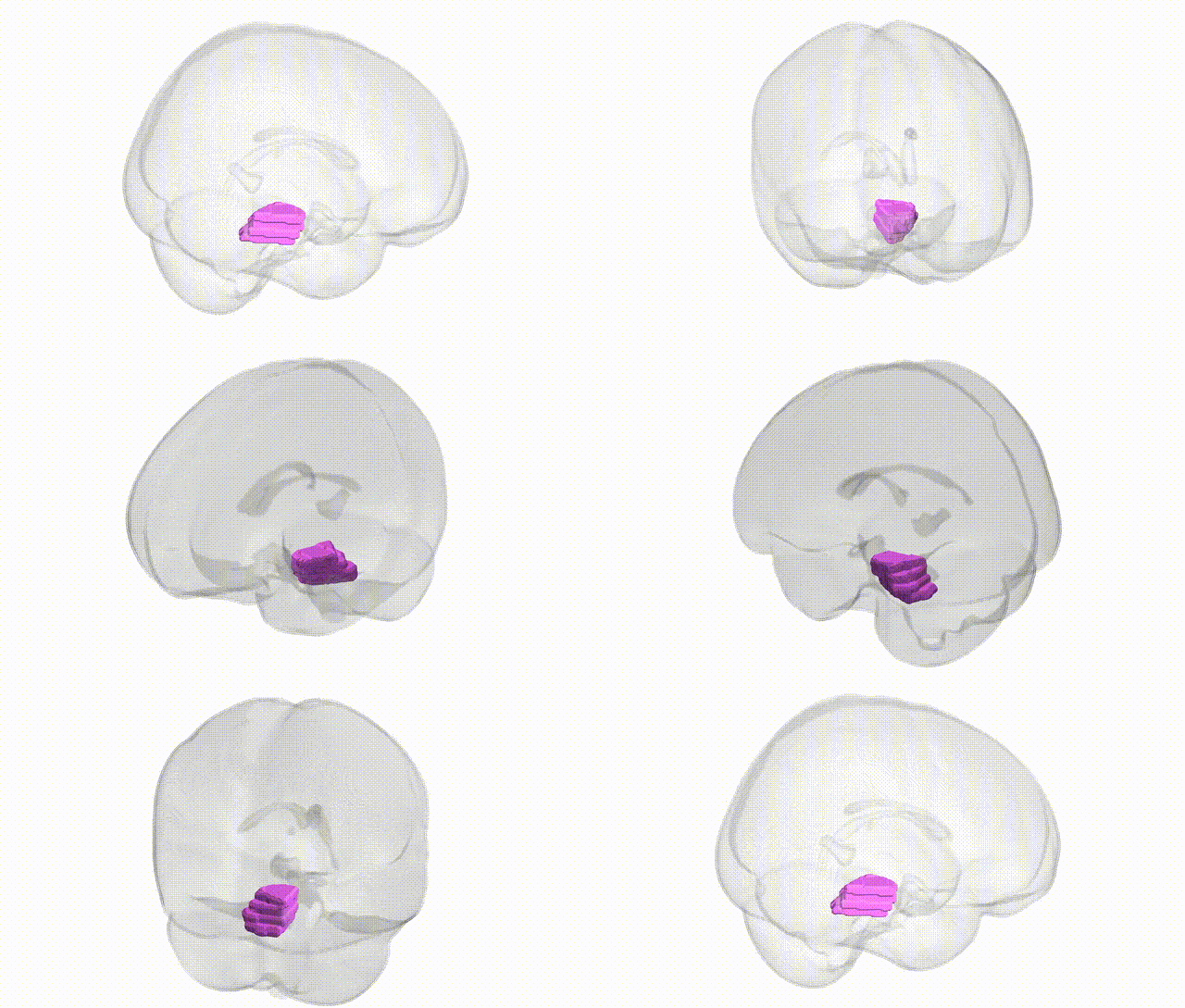
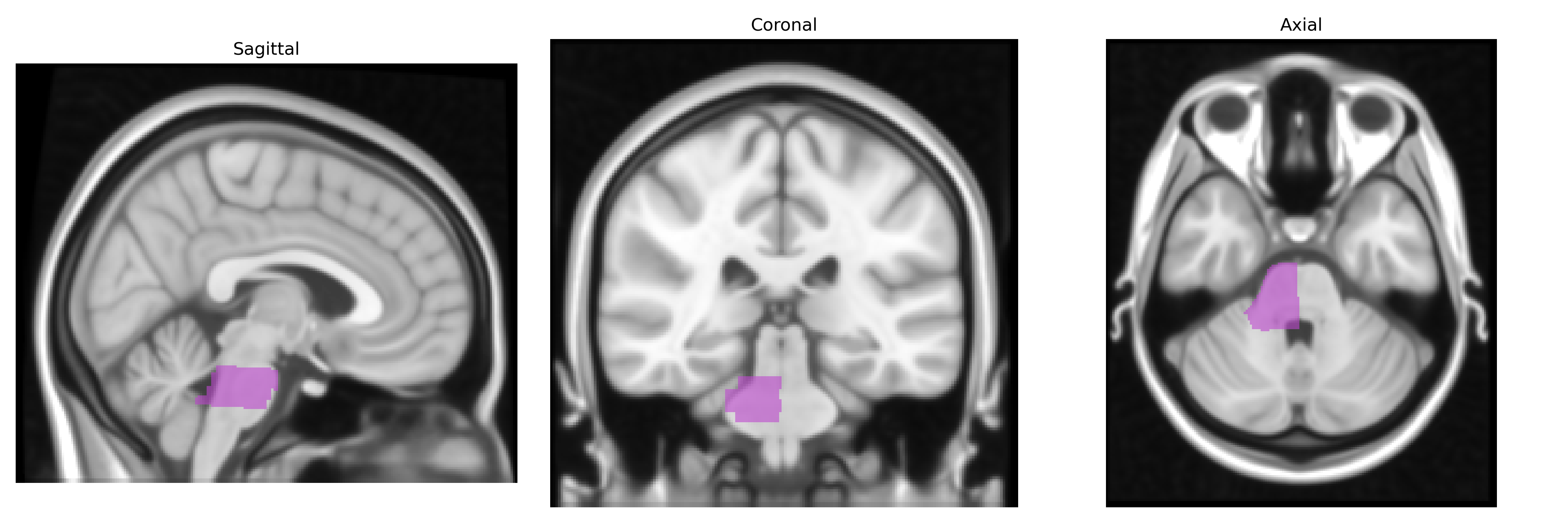
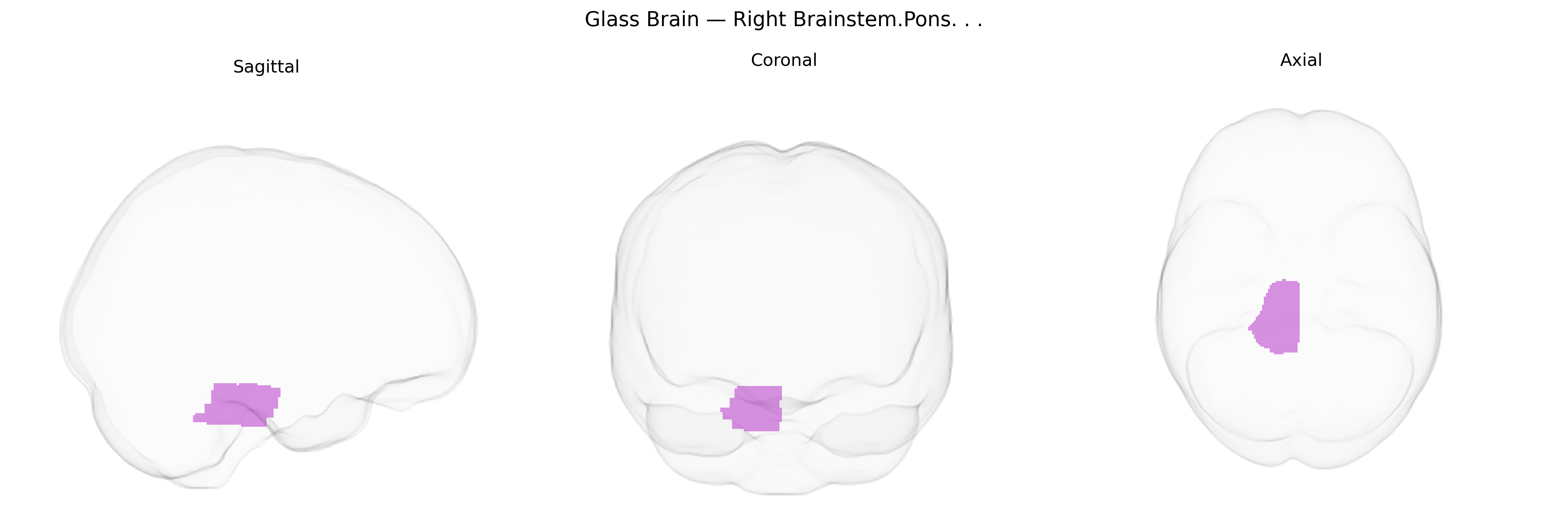
The bilateral right brainstem pons is the segment of the brainstem situated between the midbrain and medulla oblongata, forming a prominent ventral bulge that contains critical ascending and descending fiber tracts and multiple cranial nerve nuclei (notably V–VIII). It serves as a major relay between the cerebral cortex and cerebellum via the pontine nuclei and middle cerebellar peduncles, integrating motor commands and coordinating posture, balance, and fine movement. The pons also houses components of the reticular formation that regulate arousal, sleep–wake cycles, and respiratory patterning, and it contributes to sensory processing (including somatosensory and auditory pathways) and facial motor control. Functionally, it is essential for autonomic regulation, basic life-sustaining reflexes, and the coordination of complex sensorimotor behaviors. Pons
Genetic associations specifically targeting the bilateral right brainstem/pons region, as defined in the Talairach 1 mm atlas, are indirect and generally derived from imaging genetics, brainstem volumetric GWAS, and disorder-focused studies rather than from region-specific locus mapping. Large-scale neuroimaging GWAS (e.g., ENIGMA, UK Biobank) have identified variants in genes involved in neurodevelopment and axon guidance (such as FOXP2, CNTN4, and ROBO family genes) and in general brain morphometry (including loci near HMGA2, KIAA0586, and MAPT) that influence brainstem or pontine volume and microstructure, although effects are typically distributed across multiple brain regions. Clinically, genetic studies of disorders with prominent pontine or brainstem involvement—such as multiple sclerosis, neurodegenerative ataxias, central pontine myelinolysis susceptibility, and certain forms of epilepsy and sleep-disordered breathing—implicate diverse loci related to myelination, immune regulation (e.g., HLA region variants), and channelopathies rather than genes uniquely tied to the right pons. Rare monogenic conditions (e.g., some spinocerebellar ataxias, Alexander disease, or mitochondrial disorders) can show pronounced pontine and broader brainstem pathology, but their genetic architecture affects widespread neuroanatomy rather than specifically the bilateral right pons. Overall, current evidence suggests that genetic influences on this Talairach-defined region primarily reflect broader neurodevelopmental, neurovascular, and neurodegenerative pathways rather than discrete, region-exclusive genetic associations.
Overview generated by GPT-4o (2026).
Region ID: 72
Hemisphere: bilateral
Atlas: Talairach labels 1mm
Full Quality Version: Download MP4
Full Quality Version: Download MP4
Wali Sidiqyar*, Gaurav Rudravaram*, Elyssa M. McMaster, Trent M. Schwartz, Adam M. Saunders, Kurt G. Schilling, Bennett A. Landman "Introducing SPINS: A Shared Public Visualization Library of Neuroanatomical Structures." Medical Imaging with Deep Learning- short paper
This resource is licensed under CC0 1.0 Universal (Public Domain).