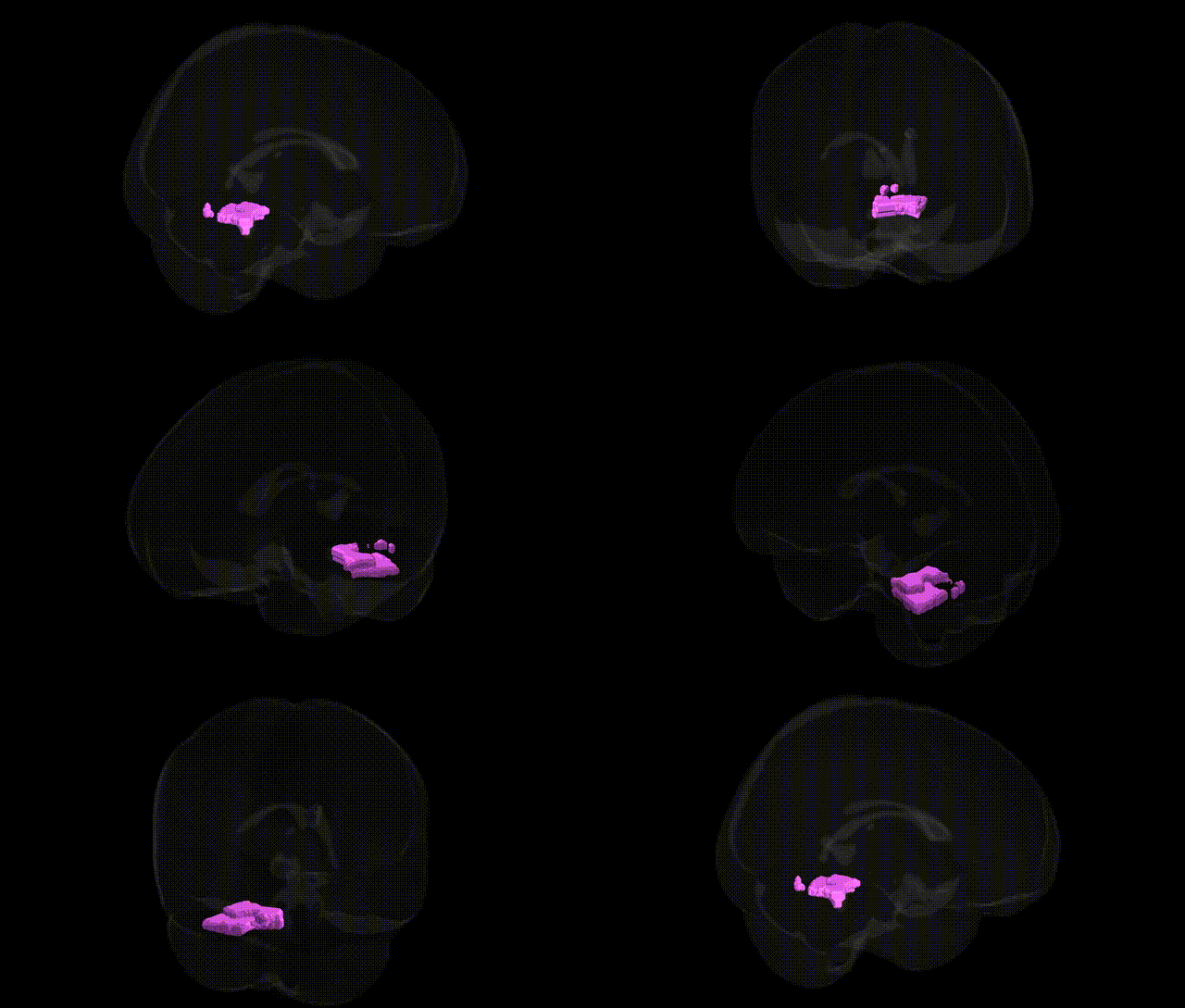
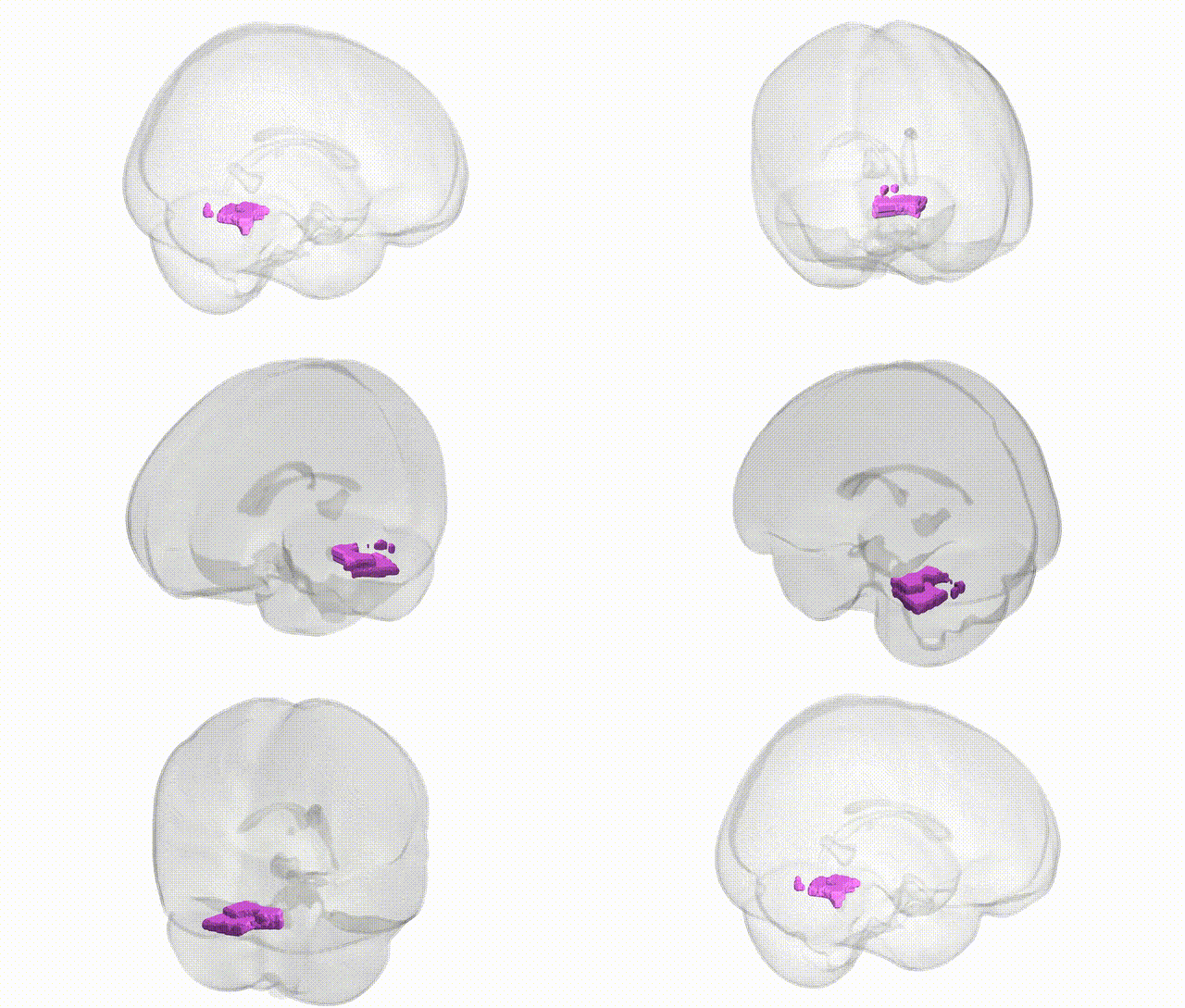
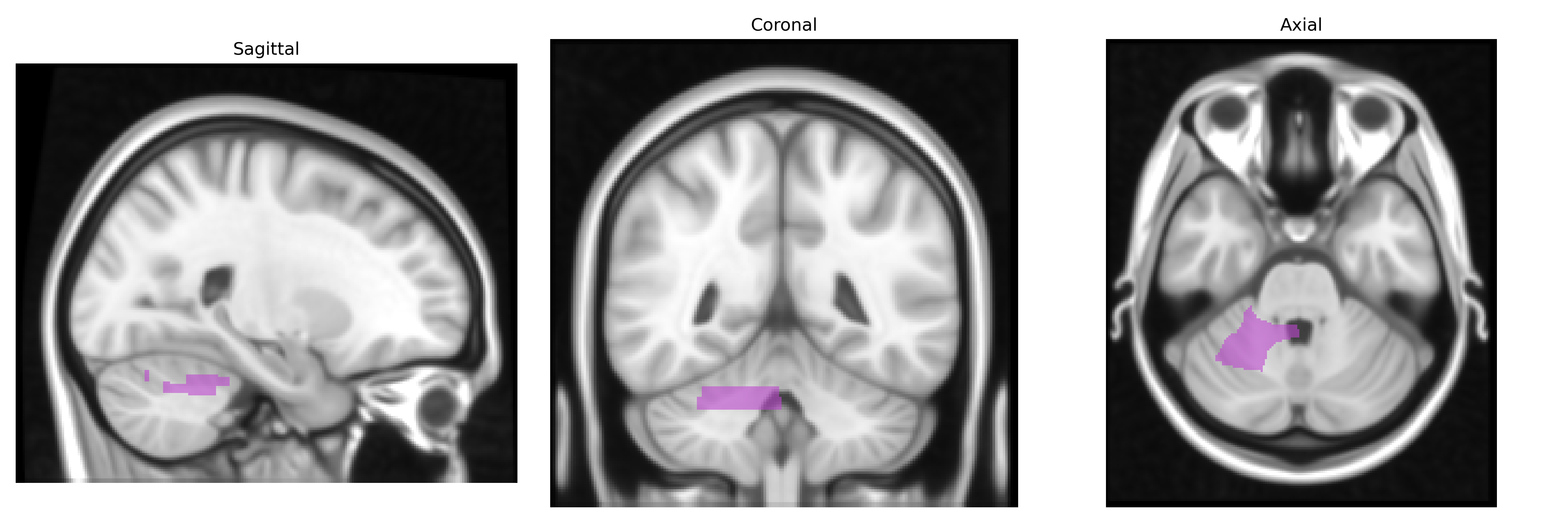
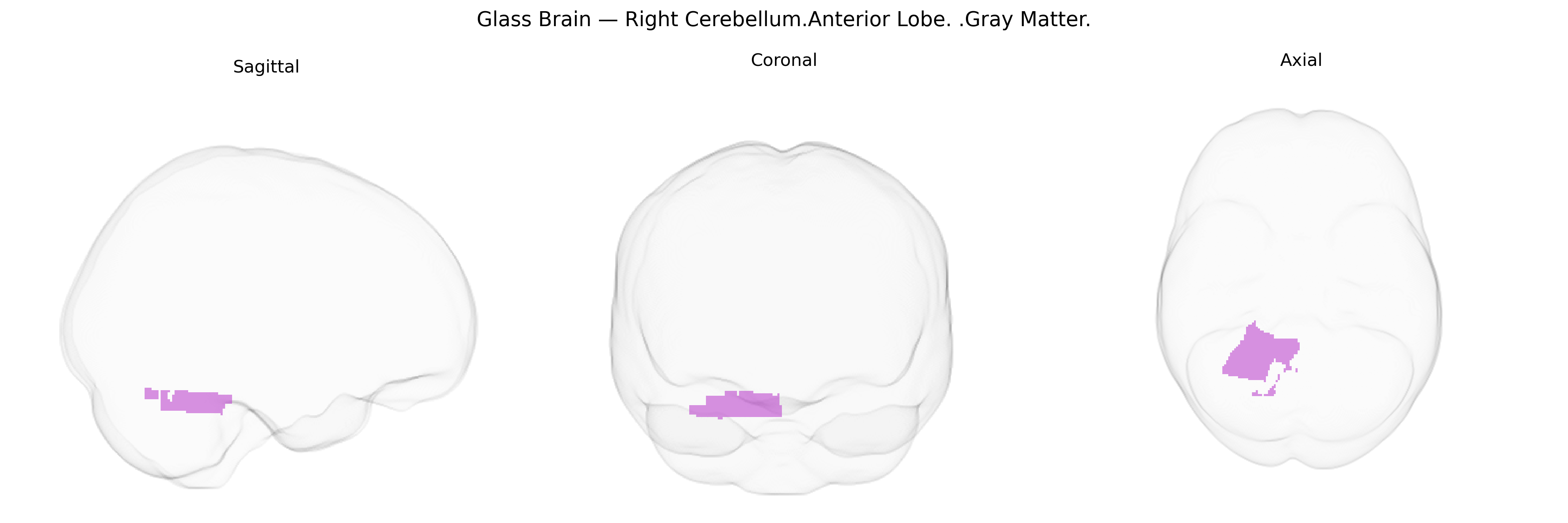
The bilateral Right Cerebellum, Anterior Lobe, Gray Matter corresponds to the cortical gray matter of the anterior portion of the right cerebellar hemisphere, encompassing primarily lobules I–V, which are heavily involved in the regulation of muscle tone, posture, and coordination of ongoing limb movements through its connections with spinal and brainstem pathways. This region receives dense proprioceptive input from the spinal cord via spinocerebellar tracts and participates in error correction and fine-tuning of motor commands, contributing to smooth, coordinated, and adaptive movements, particularly of the ipsilateral limbs. Functionally, it is associated with the spinocerebellum (or anterior lobe syndrome when damaged), and lesions here can lead to gait ataxia, dysmetria, and impaired stance and balance. There is no direct link for this exact Talairach-defined label; a related structure is the Cerebellum.
The bilateral right cerebellar anterior lobe gray matter (Talairach 1 mm Atlas) has been implicated in several genetic and GWAS-based associations, although findings are often reported at the level of broader cerebellar or lobular regions rather than this exact parcel. Large-scale imaging–genetics consortia (e.g., ENIGMA, UK Biobank) have shown that cerebellar gray matter volume and thickness are highly heritable and influenced by common variants in genes related to neurodevelopment, synaptic signaling, and axon guidance (such as those in neurodevelopmental pathways and calcium-channel–related genes), with multiple genome-wide significant loci affecting total cerebellar and anterior lobe volumes. GWAS of psychiatric and neurodevelopmental disorders—including schizophrenia, major depressive disorder, bipolar disorder, autism spectrum disorder, and ADHD—have repeatedly implicated cerebellar structural alterations, and polygenic risk scores for these conditions correlate with variation in cerebellar gray matter, including anterior lobe regions involved in motor timing and cognitive control. In movement and ataxia-related conditions, monogenic and polygenic forms of spinocerebellar ataxia, as well as genes involved in Purkinje cell function and glutamatergic signaling, are associated with structural and functional changes in anterior cerebellar territories. Cerebellar involvement has also emerged in GWAS of cognitive traits (e.g., general intelligence, educational attainment) and complex behaviors, where variants affecting cerebellar structure or connectivity partly mediate the relationship between genotype and performance, suggesting that the right anterior cerebellar lobe participates in genetically influenced networks subserving motor, cognitive, and affective functions.
Overview generated by GPT-4o (2026).
Region ID: 87
Hemisphere: bilateral
Atlas: Talairach labels 1mm
Full Quality Version: Download MP4
Full Quality Version: Download MP4
Wali Sidiqyar*, Gaurav Rudravaram*, Elyssa M. McMaster, Trent M. Schwartz, Adam M. Saunders, Kurt G. Schilling, Bennett A. Landman "Introducing SPINS: A Shared Public Visualization Library of Neuroanatomical Structures." Medical Imaging with Deep Learning- short paper
This resource is licensed under CC0 1.0 Universal (Public Domain).