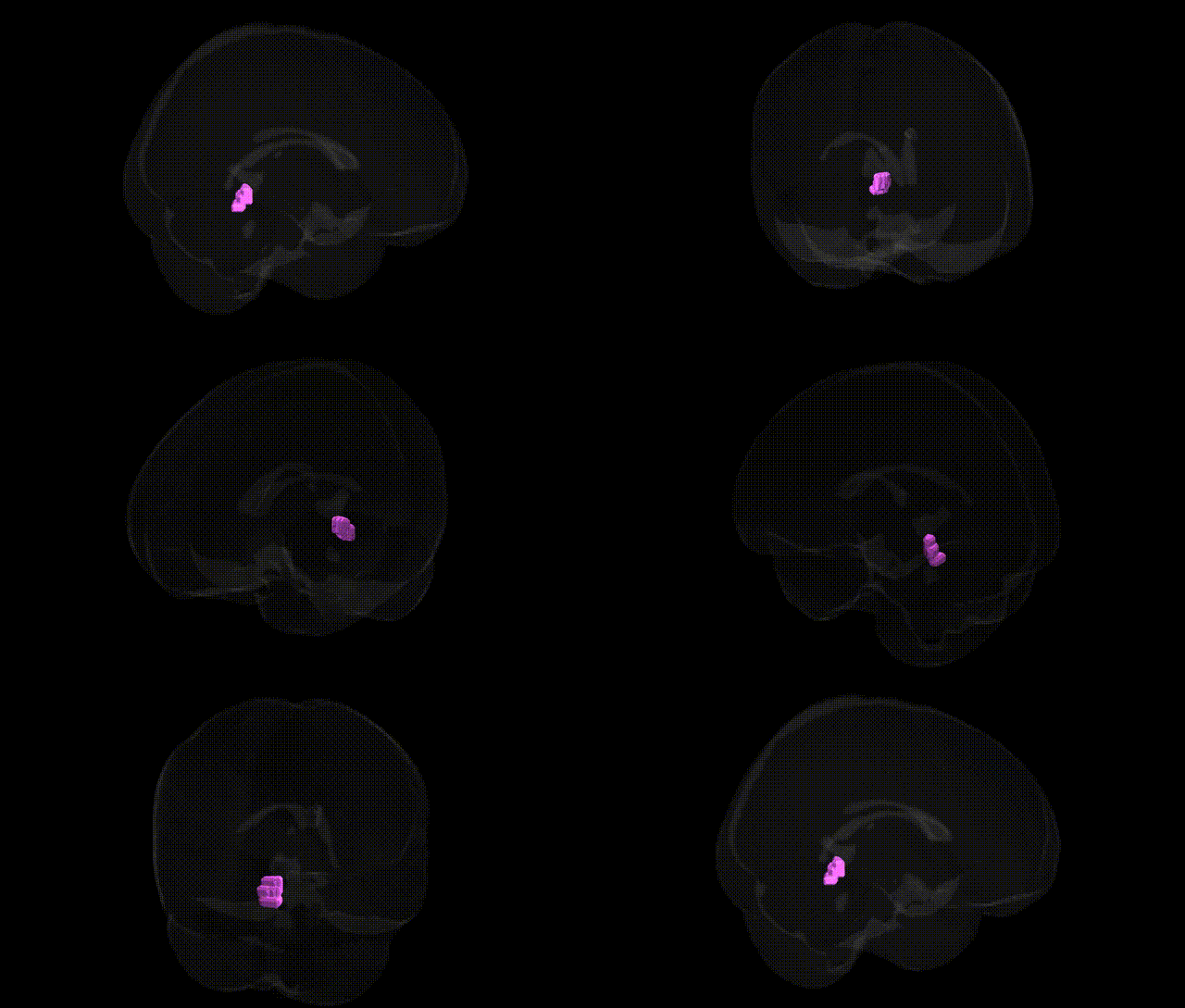
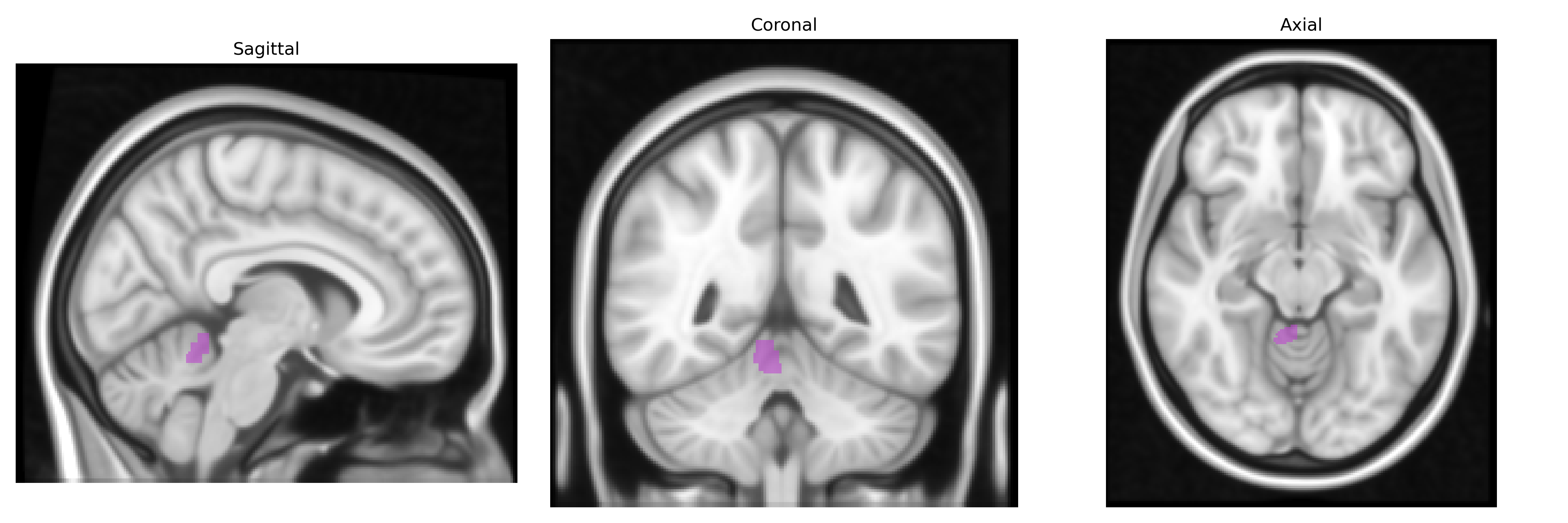
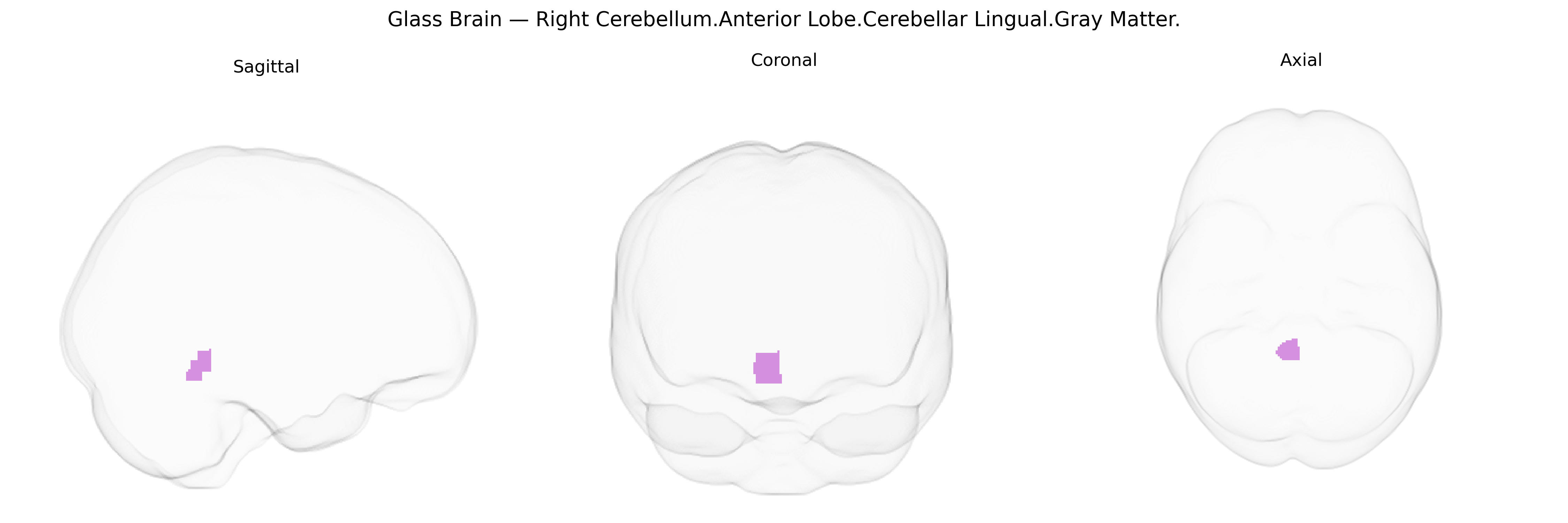
The bilateral Right Cerebellum.Anterior Lobe.Cerebellar Lingual.Gray Matter corresponds to cortical gray matter within the lingula of the anterior lobe of the right cerebellar hemisphere. The lingula is a small, tongue-shaped lobule on the superior surface of the cerebellum, situated anterior to the central lobule and closely associated with the primary fissure. As part of the anterior lobe, this region is primarily involved in the regulation and coordination of limb and trunk movements, integrating proprioceptive input from the spinal cord to fine-tune motor execution, posture, and balance. Its gray matter contains the cerebellar cortex layers (molecular, Purkinje cell, and granular), which contribute to cerebellar circuitry underlying motor learning and adaptive control. There is no direct link; related structure: Cerebellum.
The bilateral Right Cerebellum.Anterior Lobe.Cerebellar Lingual.Gray Matter region, as defined in the Talairach 1 mm atlas, falls within the anterior cerebellar territory implicated in motor coordination, sensorimotor integration, and increasingly recognized cognitive and affective functions. While no GWAS has targeted this precise micro-anatomical label, large imaging-genetics studies such as ENIGMA and UK Biobank consistently show that cerebellar gray matter volume and morphology, including anterior lobule regions, are highly heritable and influenced by common variants in genes involved in neurodevelopment, synaptic plasticity, and cytoskeletal organization (for example, polygenic influences spanning loci near KIAA0319, BDNF, and CNTNAP2 in relation to cerebellar and cortical structure). GWAS of total cerebellar volume and subregional measures have identified associations with psychiatric and neurodevelopmental traits—especially schizophrenia, bipolar disorder, ADHD, and autism spectrum disorder—where polygenic risk scores for these conditions correlate with cerebellar gray matter alterations that often include anterior midline and lingual/lobular regions. Cerebellar gray matter, including anterior lobe segments, has also been linked genetically to cognitive performance, educational attainment, and motor skill traits via shared polygenic architectures, and rare variant and Mendelian studies (for example, in CACNA1A, ATXN1/2/3 in spinocerebellar ataxias) demonstrate that disruption of cerebellar development and Purkinje cell function can preferentially affect anterior cerebellar zones. Overall, current genetic evidence supports a substantial heritable component for structure and function in this region, with convergent polygenic influences from neurodevelopmental, psychiatric, and motor coordination pathways, even though no single gene or variant has been uniquely or specifically tied to the “Cerebellar Lingual” subregion label itself.
Overview generated by GPT-4o (2026).
Region ID: 212
Hemisphere: bilateral
Atlas: Talairach labels 1mm
Full Quality Version: Download MP4
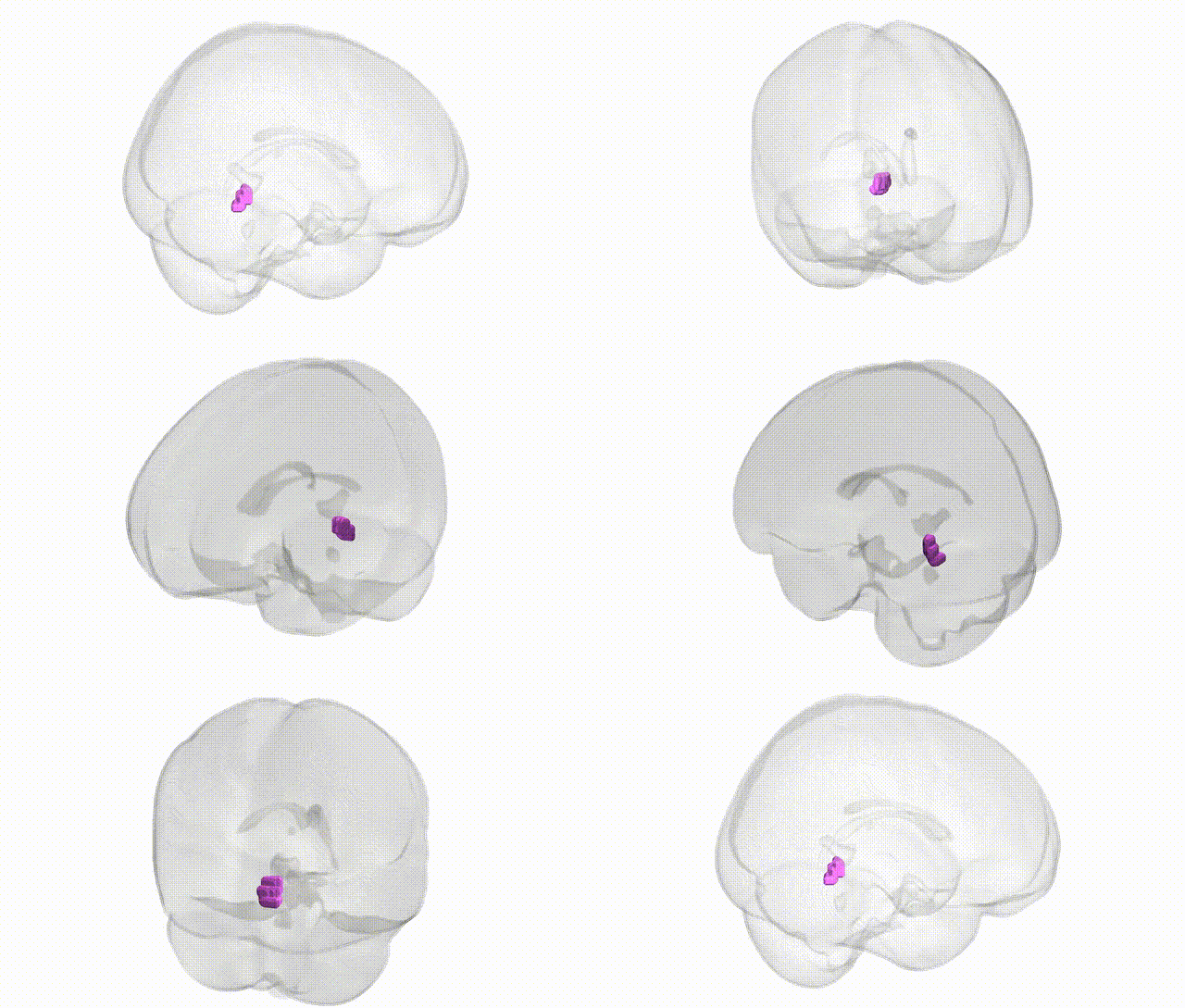
Full Quality Version: Download MP4
Wali Sidiqyar*, Gaurav Rudravaram*, Elyssa M. McMaster, Trent M. Schwartz, Adam M. Saunders, Kurt G. Schilling, Bennett A. Landman "Introducing SPINS: A Shared Public Visualization Library of Neuroanatomical Structures." Medical Imaging with Deep Learning- short paper
This resource is licensed under CC0 1.0 Universal (Public Domain).