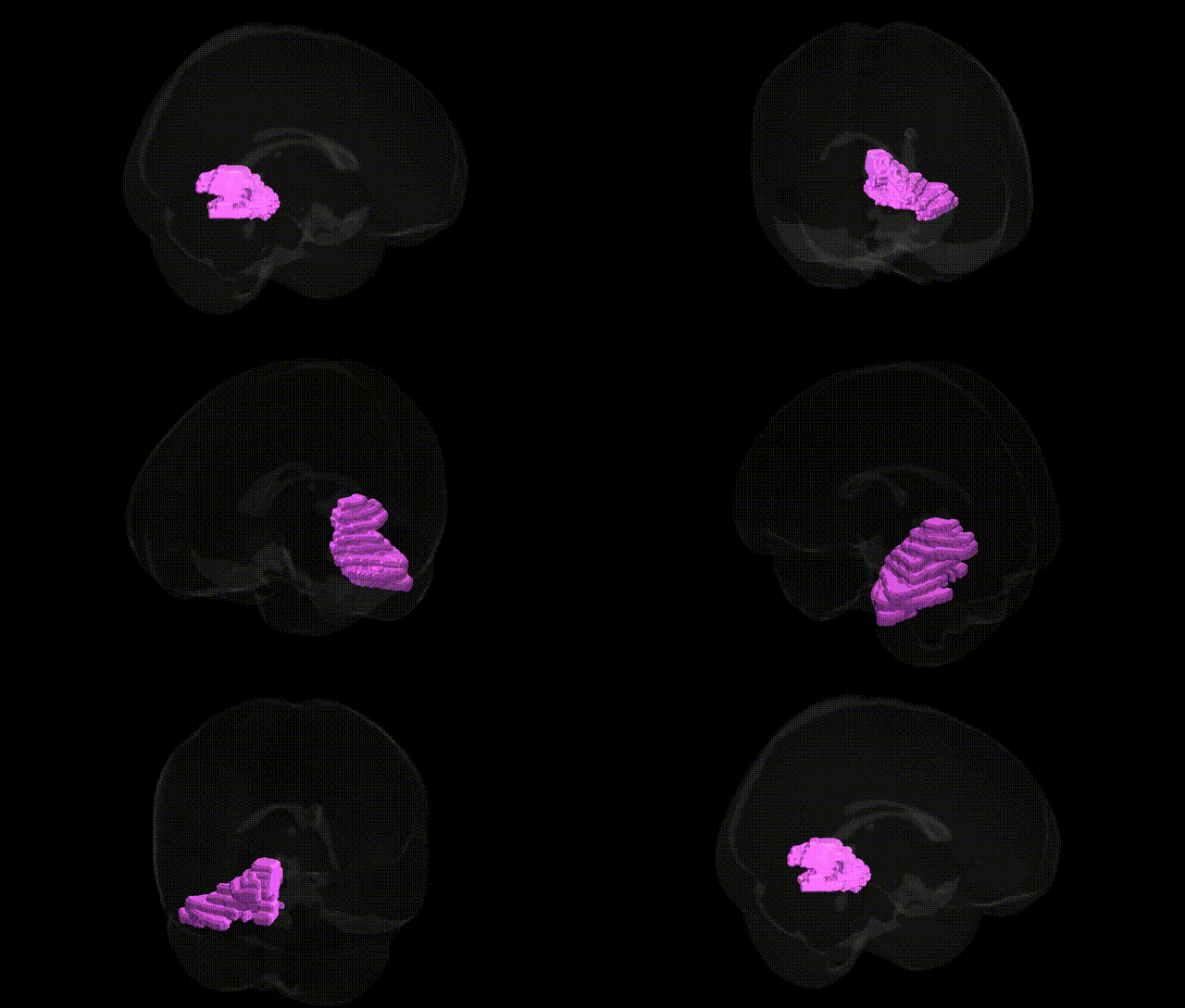
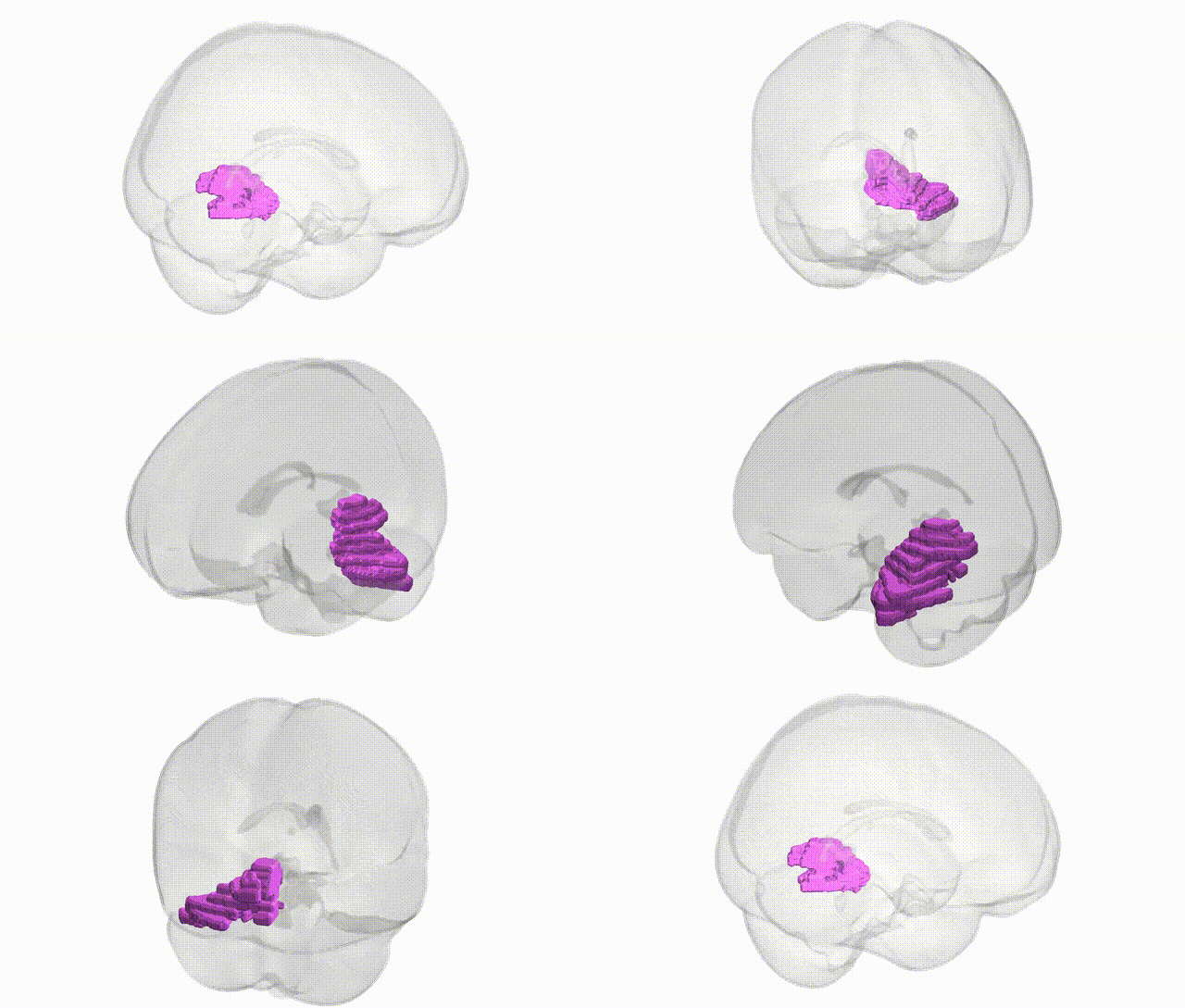
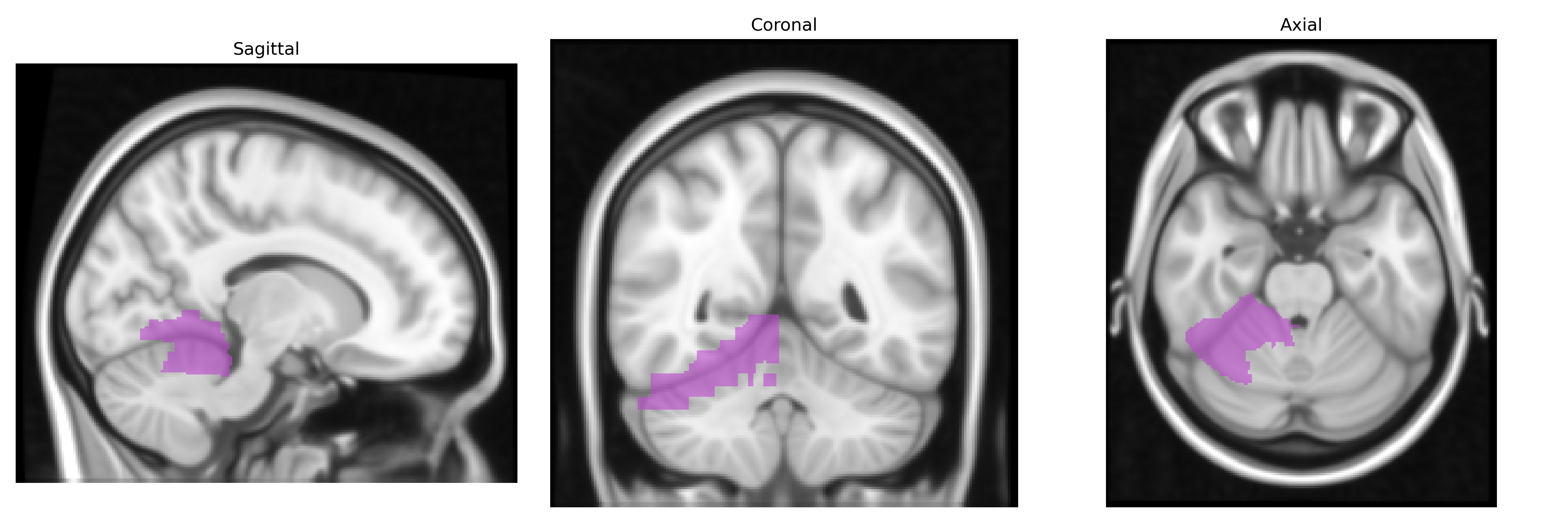
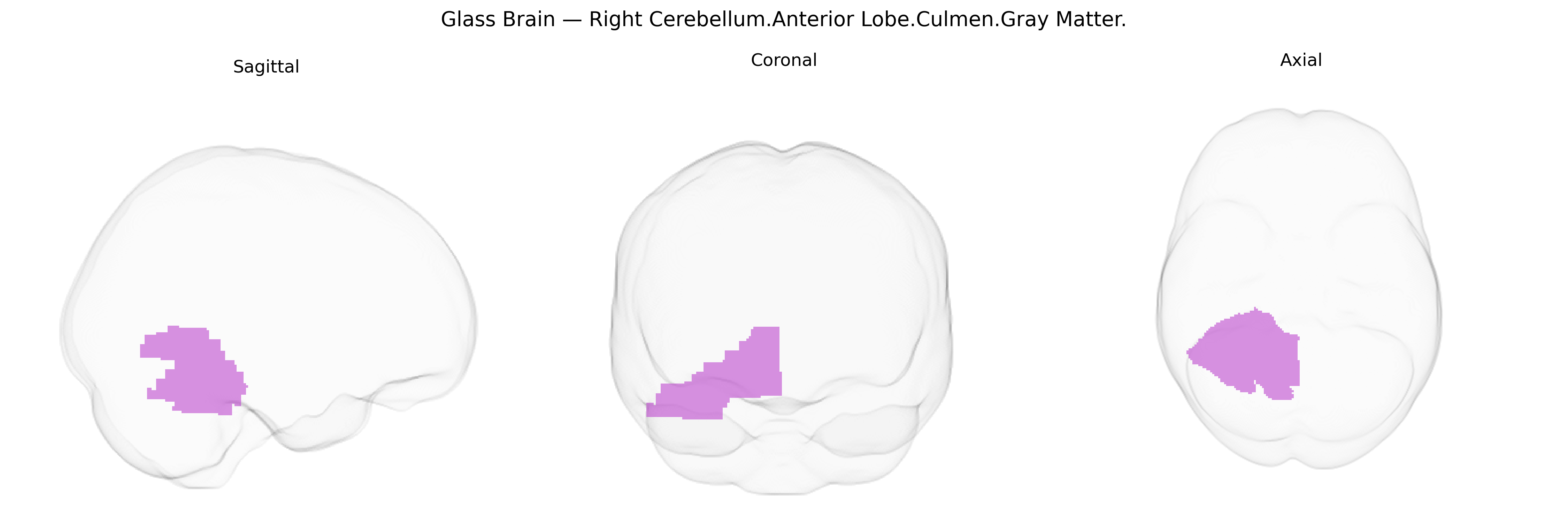
The bilateral Right Cerebellum.Anterior Lobe.Culmen.Gray Matter corresponds to the gray matter of the culmen, a superior portion of the anterior lobe of the cerebellum involved in motor coordination, posture, and the fine-tuning of ongoing movements. As part of the spinocerebellum, this region receives somatosensory input from the body and plays a key role in regulating muscle tone, adjusting limb and axial movements, and contributing to error correction during motor execution. Functionally, the culmen participates in integrating sensory feedback with motor commands to maintain balance and smooth, accurate motion. There is no direct Wikipedia article for this exact label, but it is part of the Cerebellum.
The bilateral right cerebellar anterior lobe (culmen, gray matter) from the Talairach 1 mm atlas falls within a broader cerebellar domain that has been implicated in multiple genetic and GWAS findings, though few studies target this parcel specifically. Large-scale imaging genetics consortia (e.g., ENIGMA, UK Biobank) have identified numerous common variants associated with cerebellar volume and morphology, including loci near genes such as KIAA0586, DLG4, and FOXP2, which influence neurodevelopmental and synaptic processes and show effects on cerebellar gray matter structure. Mendelian disorders affecting cerebellar development, such as Joubert syndrome and some forms of spinocerebellar ataxia, involve genes (e.g., AHI1, ATXN1–3, CACNA1A) that produce pronounced structural changes encompassing the anterior lobe and culmen. GWAS of psychiatric and cognitive traits report genetic correlations between cerebellar volume and schizophrenia, major depression, bipolar disorder, and general cognitive ability, suggesting shared polygenic influences that extend to this region. Furthermore, cerebellar anterior lobe involvement in motor control and sensorimotor integration aligns with genetic findings in movement disorders (e.g., dystonia, essential tremor) where implicated genes affect cerebellar circuitry, though spatially precise mapping to the right anterior culmen remains limited. Overall, current evidence supports a polygenic architecture in which many neurodevelopmental, synaptic, and ion-channel genes jointly modulate structure and function of the cerebellar anterior lobe, with downstream relevance to motor, cognitive, and psychiatric phenotypes.
Overview generated by GPT-4o (2026).
Region ID: 89
Hemisphere: bilateral
Atlas: Talairach labels 1mm
Full Quality Version: Download MP4
Full Quality Version: Download MP4
Wali Sidiqyar*, Gaurav Rudravaram*, Elyssa M. McMaster, Trent M. Schwartz, Adam M. Saunders, Kurt G. Schilling, Bennett A. Landman "Introducing SPINS: A Shared Public Visualization Library of Neuroanatomical Structures." Medical Imaging with Deep Learning- short paper
This resource is licensed under CC0 1.0 Universal (Public Domain).