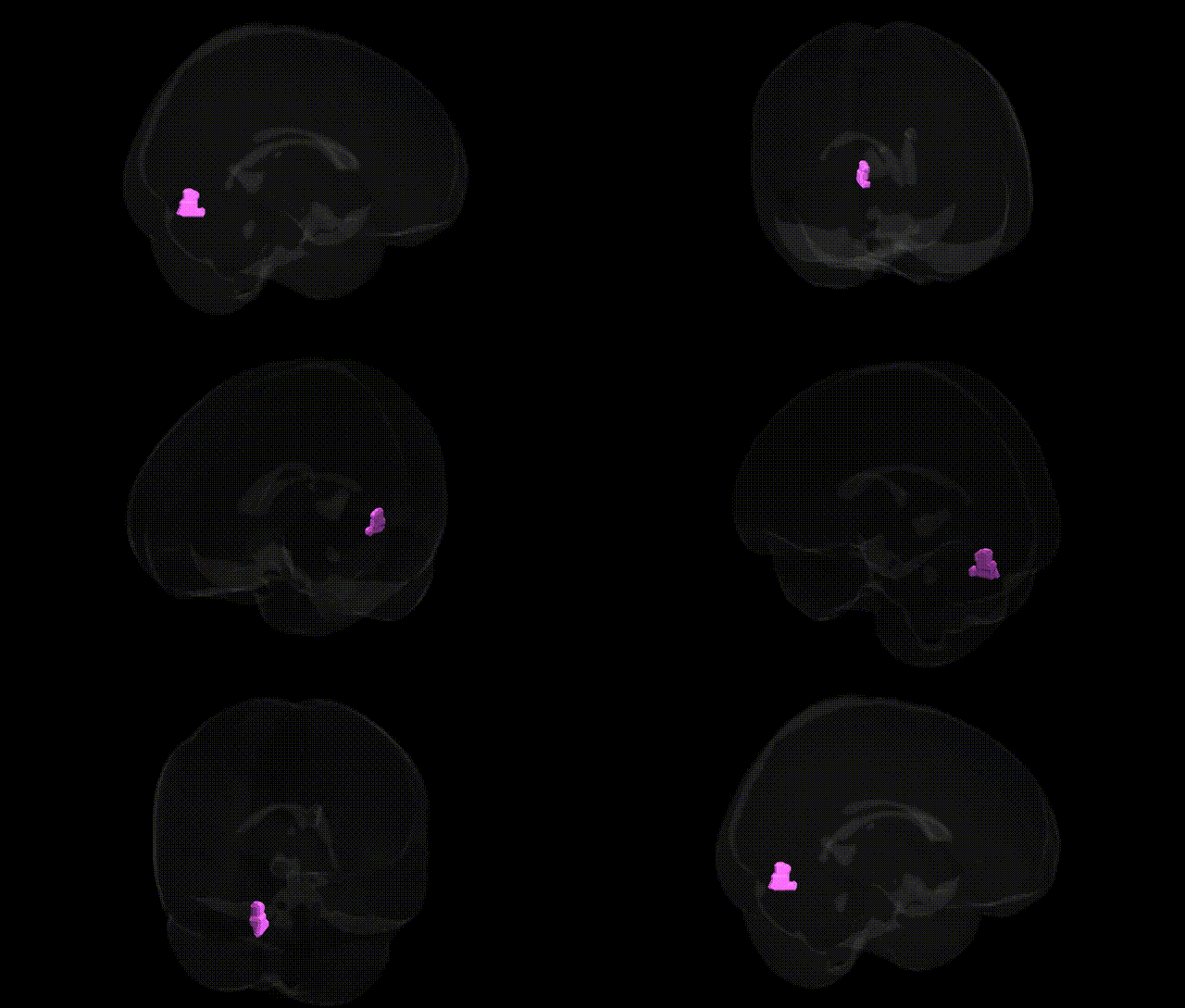
The bilateral Right Cerebellum, Posterior Lobe, Declive of Vermis, Gray Matter refers to the gray matter portion of the declive (also called lobule VI of the vermis) within the posterior lobe of the cerebellum, situated along the midline vermis but extending functionally and anatomically into adjacent hemispheric tissue on the right side. This region is part of the spinocerebellum and plays roles in coordination of posture, gait, and fine-tuning of ongoing movements, as well as contributing to oculomotor control and aspects of cognitive processing such as attention and timing. Neuronal circuitry here integrates mossy and climbing fiber inputs, projecting via deep cerebellar nuclei to brainstem and thalamic targets that modulate motor cortex and related networks. There is no direct link for the declive of vermis, but it is a subregion of the Cerebellum.
The bilateral Right Cerebellum, Posterior Lobe, Declive of Vermis gray matter (as defined in the Talairach 1 mm atlas) has not been a primary focus of gene-mapping studies, but converging evidence from imaging genetics and GWAS of brain structure and neuropsychiatric traits implicates this and adjacent posterior cerebellar regions in several polygenic networks. Large-scale brain morphology GWAS (e.g., ENIGMA and UK Biobank) have identified common variants in genes involved in neurodevelopment, synaptic function, and axon guidance—such as those in pathways including MAPK, Wnt, and axon growth/adhesion genes—associated with cerebellar volume and surface measures that encompass the posterior lobe and vermis. Variants in genes linked to neurodevelopmental and psychiatric disorders (including autism spectrum disorder, schizophrenia, major depression, and ADHD) show enriched effects on cerebellar gray matter, with posterior vermis and declive often highlighted in structural and functional MRI endophenotypes. Additionally, cerebellar vermis and posterior lobe measures have been reported as intermediate phenotypes in genetic studies of mood disorders, alcohol use disorder, and coordination/ataxia syndromes, although these typically reference broader lobular or vermal regions rather than the declive subregion alone. Overall, the genetic architecture of this area appears to be highly polygenic and shared with other cerebellar and cortical territories, with no single gene uniquely or specifically tied to the Declive of Vermis but multiple GWAS signals implicating general neurodevelopmental and synaptic pathways influencing its gray matter structure and function.
Overview generated by GPT-4o (2026).
Region ID: 160
Hemisphere: bilateral
Atlas: Talairach labels 1mm
Full Quality Version: Download MP4
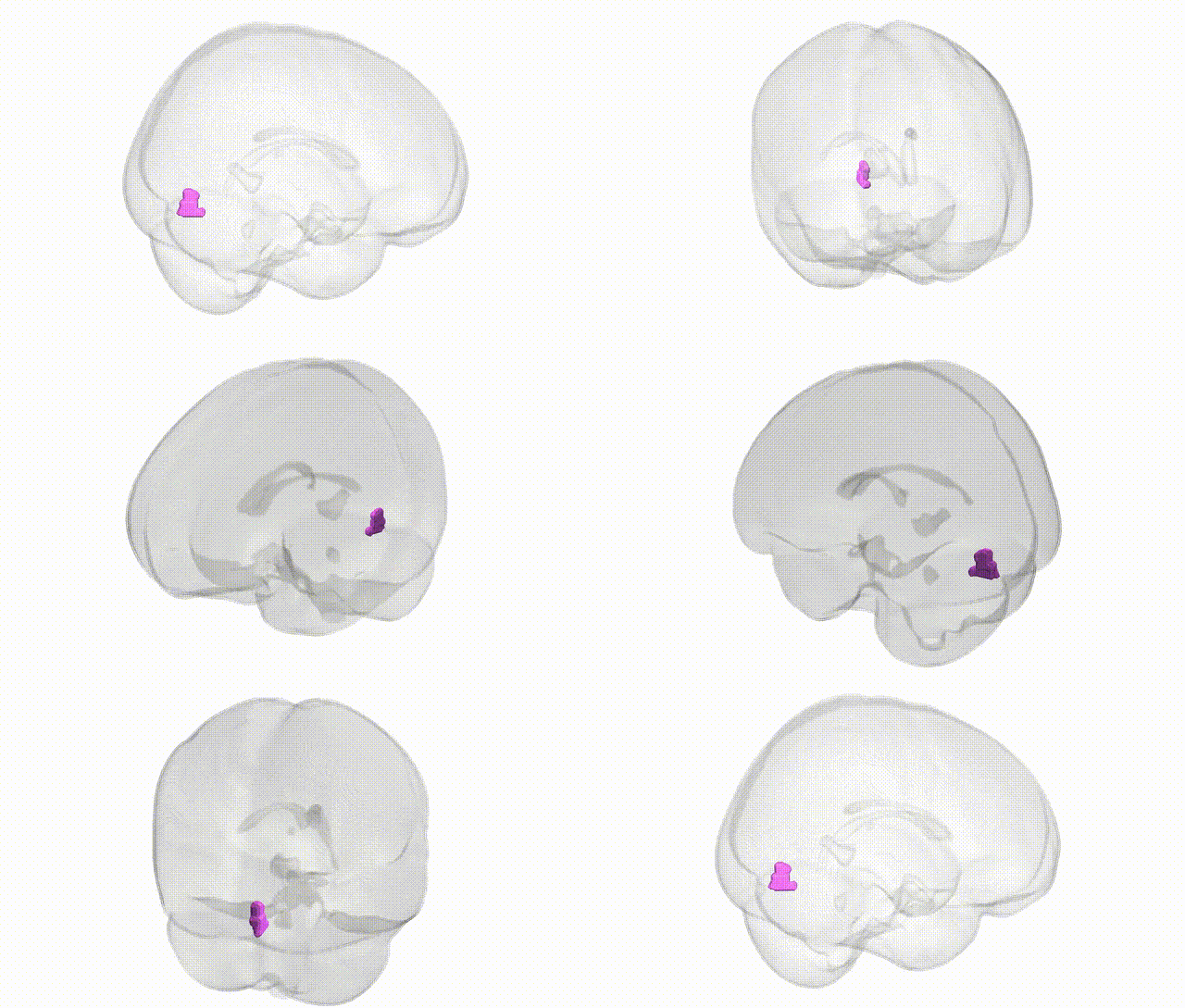
Full Quality Version: Download MP4
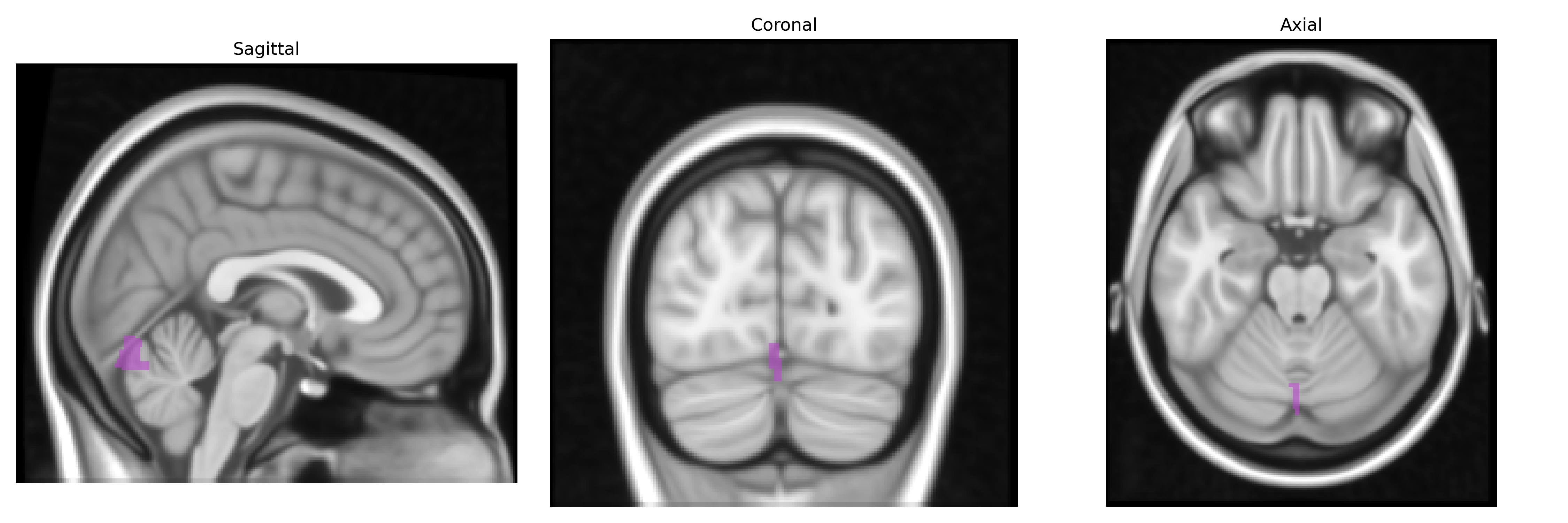
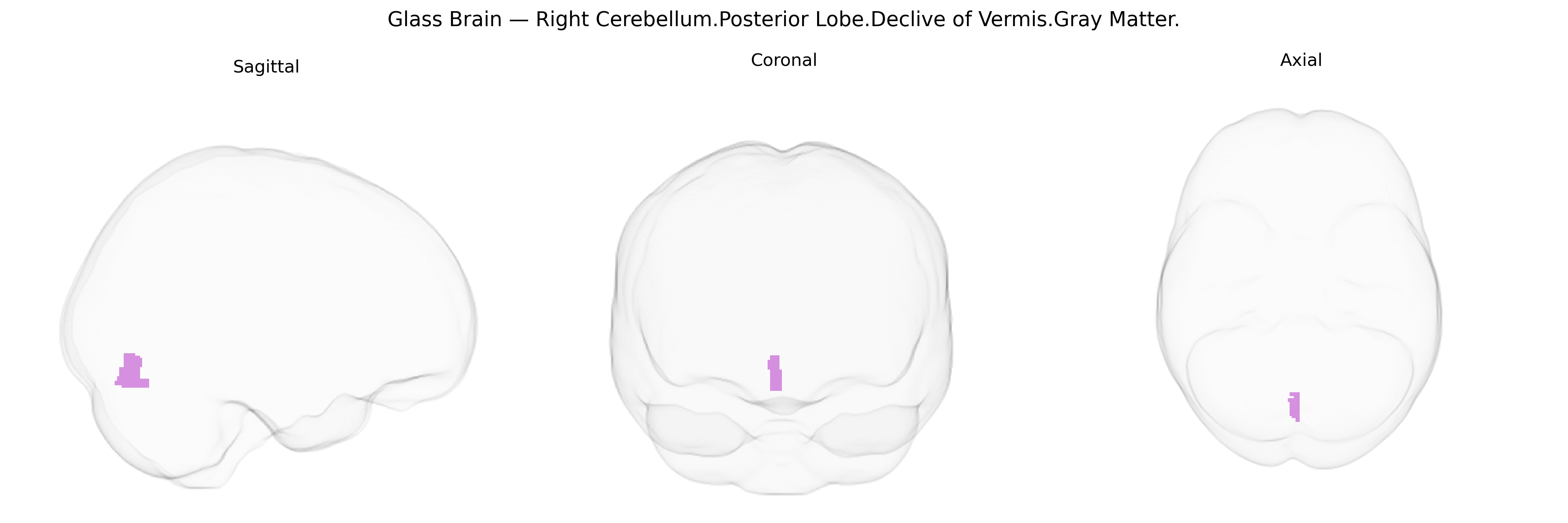
Wali Sidiqyar*, Gaurav Rudravaram*, Elyssa M. McMaster, Trent M. Schwartz, Adam M. Saunders, Kurt G. Schilling, Bennett A. Landman "Introducing SPINS: A Shared Public Visualization Library of Neuroanatomical Structures." Medical Imaging with Deep Learning- short paper
This resource is licensed under CC0 1.0 Universal (Public Domain).