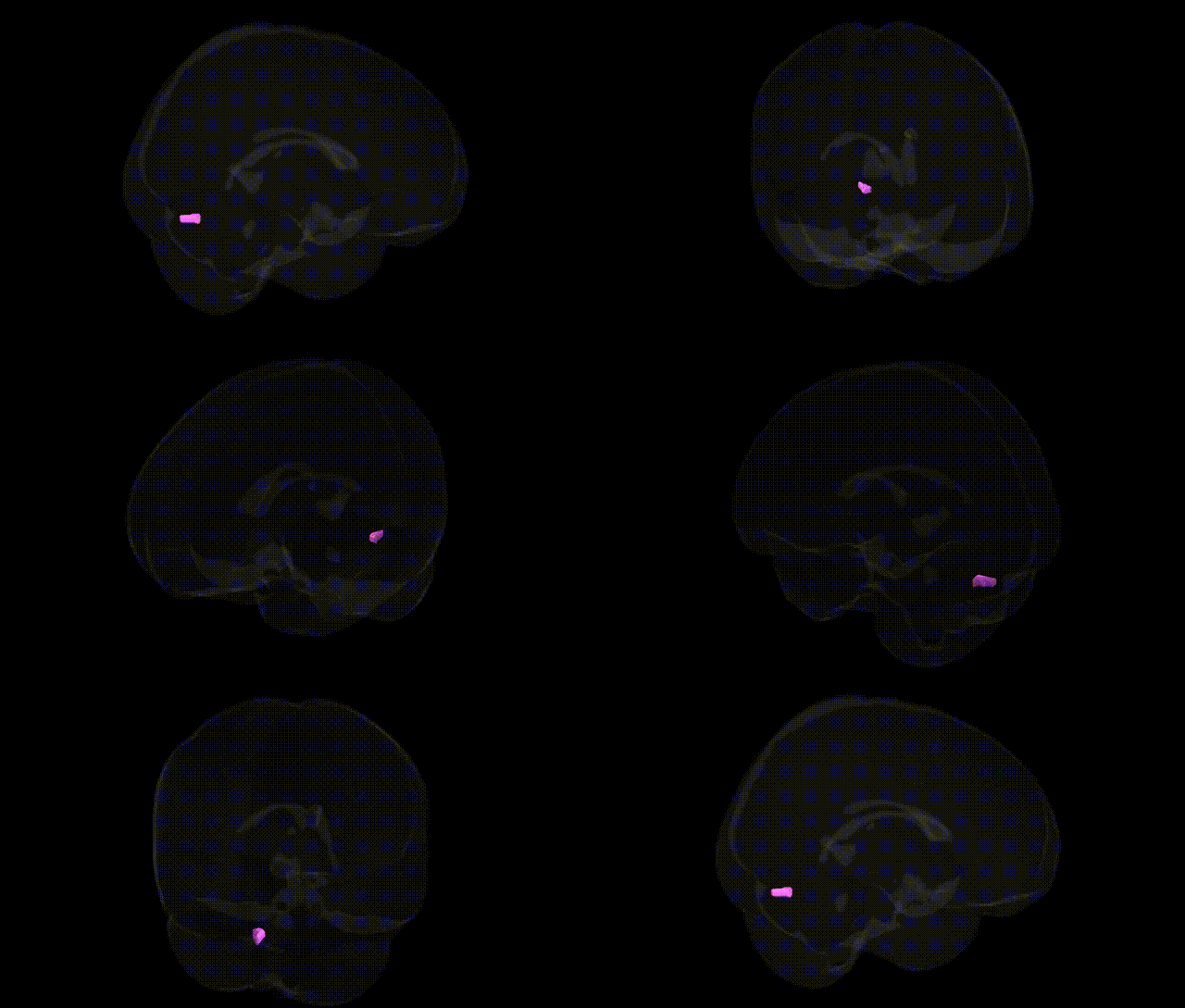
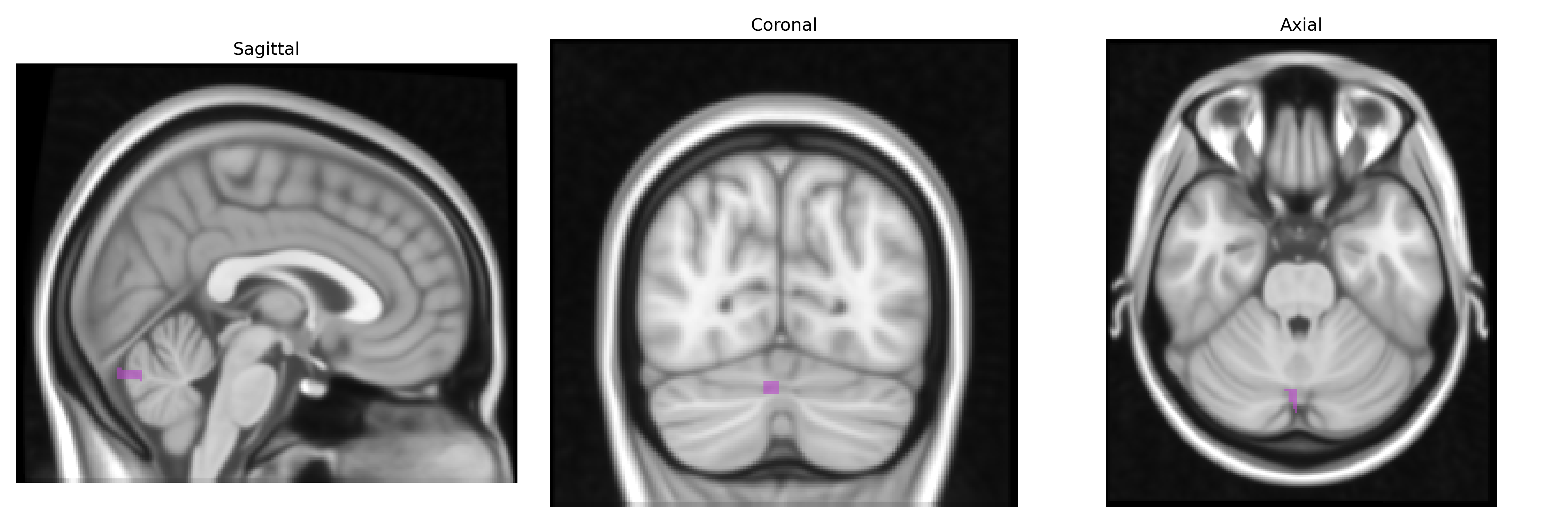
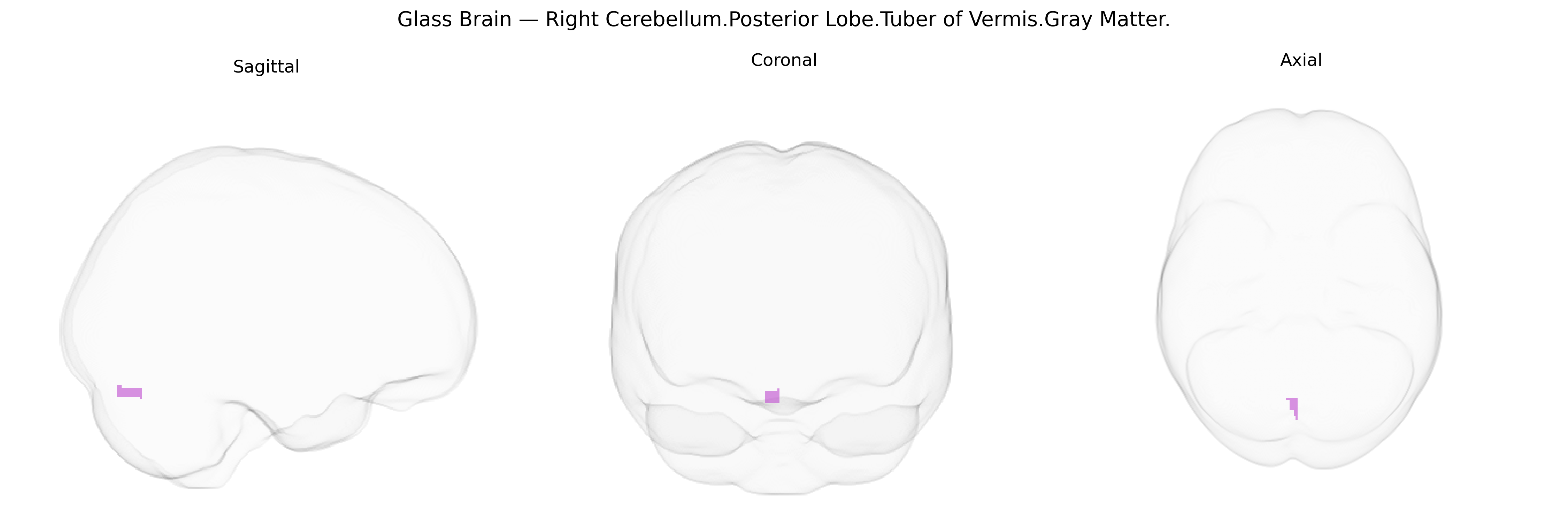
The Right Cerebellum, Posterior Lobe, Tuber of Vermis, Gray Matter refers to a midline cerebellar structure located within the posterior lobe of the cerebellum, specifically the “tuber” portion of the vermis, with the designation “right” indicating its association with right-sided hemispheric cerebellar circuitry in the Talairach 1 mm Atlas. This region consists of cerebellar cortical gray matter and is involved in the fine coordination of movement, postural control, and aspects of motor timing, integrating somatosensory and proprioceptive input to modulate descending motor pathways. Functionally, the posterior vermis, including the tuber, participates in regulating axial musculature and balance and is also implicated in higher-order functions such as aspects of cognition and affect through its connections with brainstem nuclei and thalamocortical networks. There is no direct Wikipedia article for the “Tuber of Vermis,” but it is part of the Cerebellar vermis.
The bilateral Right Cerebellum, Posterior Lobe, Tuber of Vermis, Gray Matter region—part of the posterior vermis and hemispheric cerebellar cortex—has been implicated indirectly in several genetic and GWAS-based findings, though few studies report this fine-grained Talairach-defined area specifically. Large-scale imaging–genetics consortia such as ENIGMA and UK Biobank have shown that gray matter volume, surface, and microstructure in posterior cerebellar regions, including the vermis and adjacent lobules (often encompassing Crus I/II and lobule VII), are heritable and influenced by polygenic variation, with enriched effects in genes involved in neurodevelopment, synaptic function, and neuronal migration (for example, variants in genes related to axon guidance and neurogenesis). GWAS of brain morphometry have identified common variants in loci such as KCNK2, genes in the MAPT region, and multiple neurodevelopmental pathway genes associated with total and regional cerebellar volume, which likely extend to posterior vermis territory given its inclusion in cerebellar parcellations used in those studies. Clinically, genetic syndromes and variants affecting cerebellar development (e.g., mutations in genes like FOXC1, RELN, and others implicated in cerebellar hypoplasia and midline malformations) can involve the cerebellar vermis and posterior lobes, contributing to ataxia, developmental delay, and cognitive–affective symptoms; in parallel, polygenic risk for psychiatric conditions such as schizophrenia, bipolar disorder, and major depression has been associated in imaging–genetics work with structural and functional alterations in posterior cerebellar regions, including vermal and hemispheric gray matter that overlap with this atlas-defined area, supporting a genetically influenced role of the posterior cerebellum in higher-order cognitive and affective processes.
Overview generated by GPT-4o (2026).
Region ID: 115
Hemisphere: bilateral
Atlas: Talairach labels 1mm
Full Quality Version: Download MP4
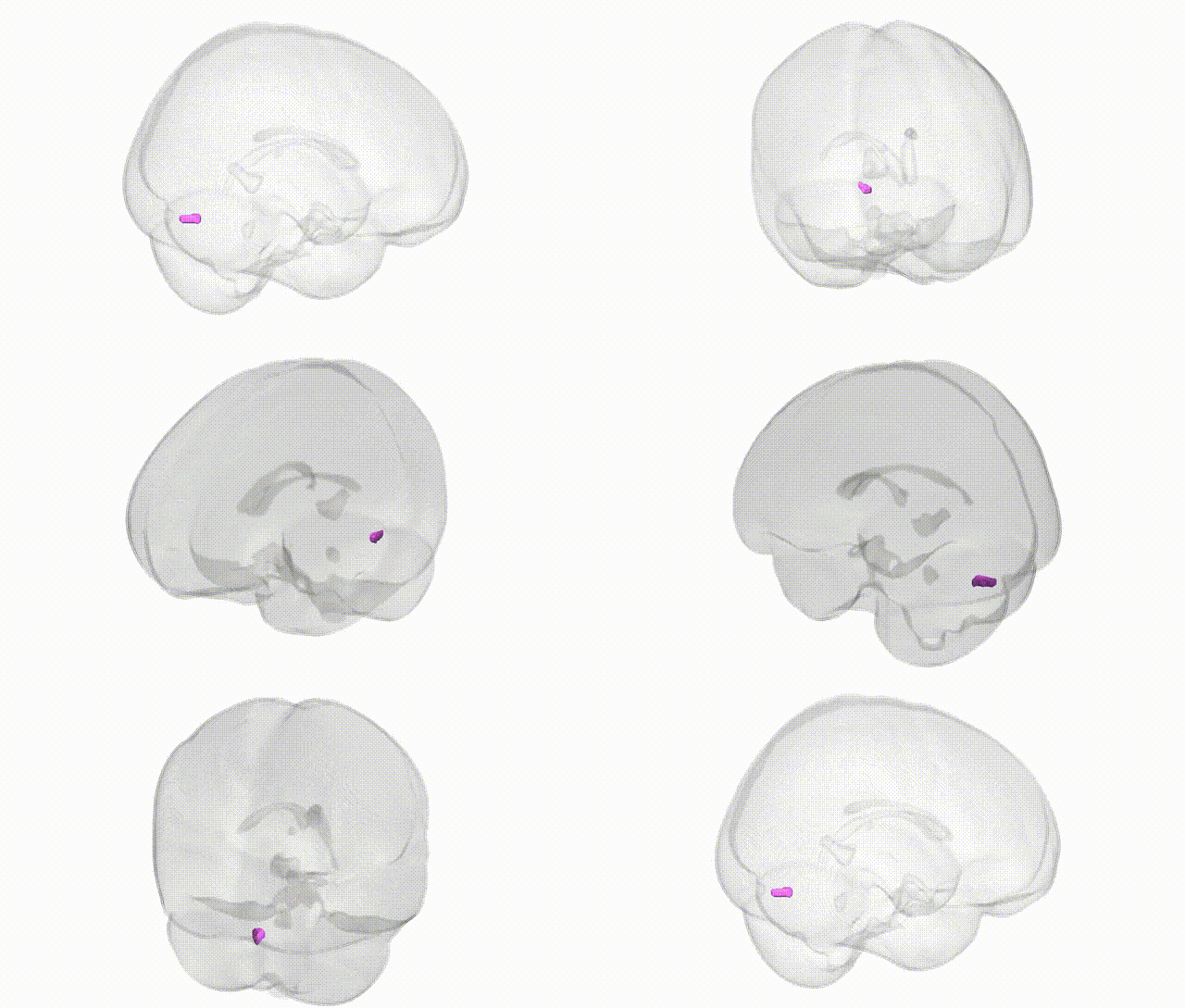
Full Quality Version: Download MP4
Wali Sidiqyar*, Gaurav Rudravaram*, Elyssa M. McMaster, Trent M. Schwartz, Adam M. Saunders, Kurt G. Schilling, Bennett A. Landman "Introducing SPINS: A Shared Public Visualization Library of Neuroanatomical Structures." Medical Imaging with Deep Learning- short paper
This resource is licensed under CC0 1.0 Universal (Public Domain).