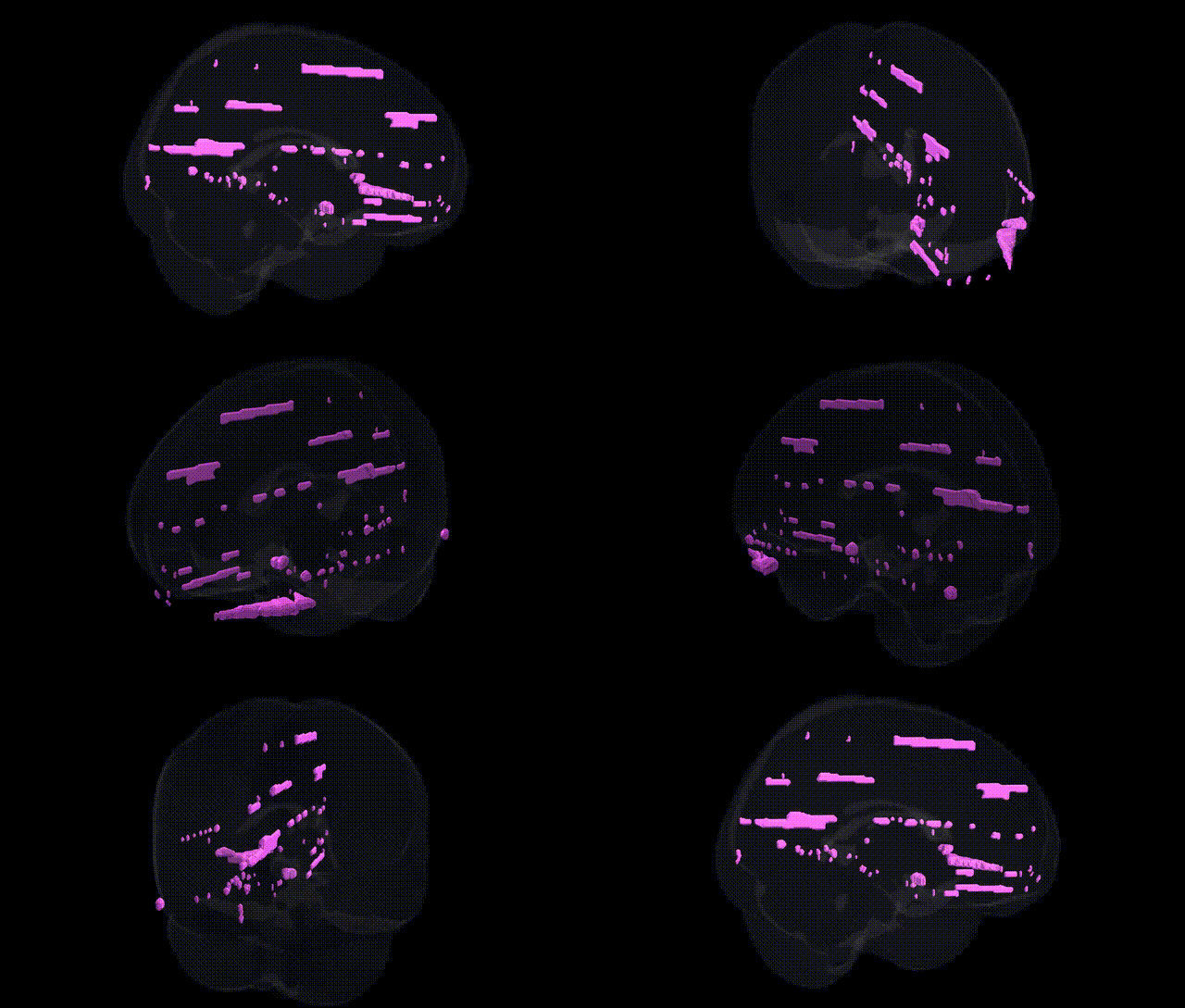
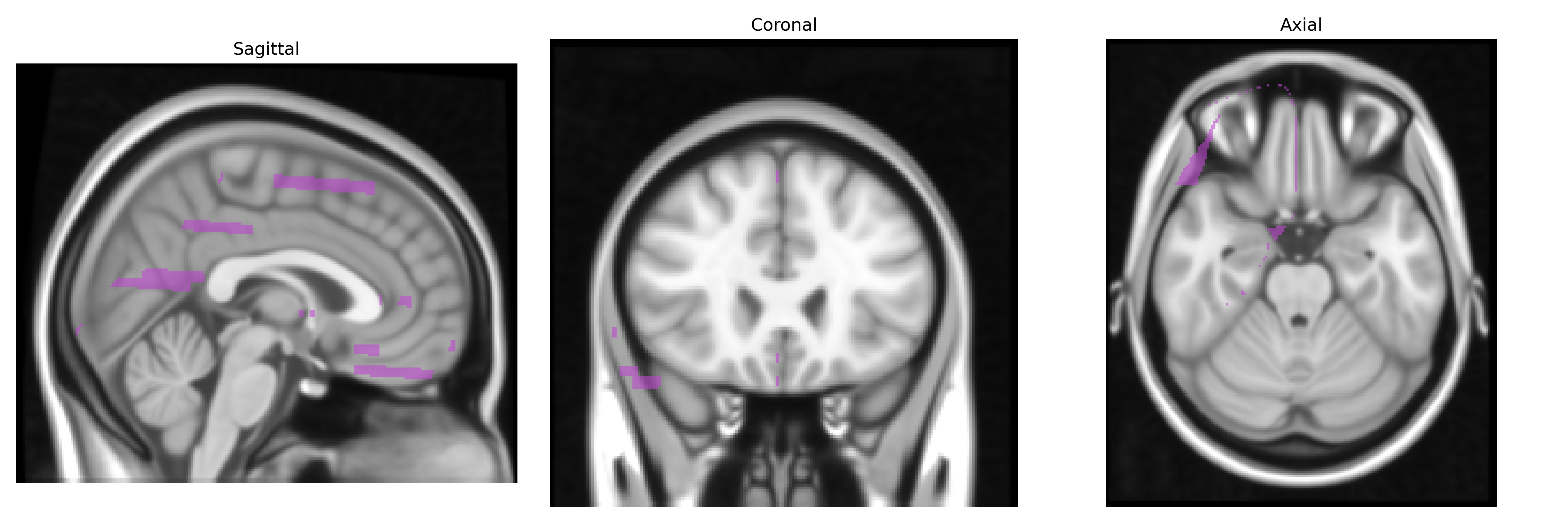
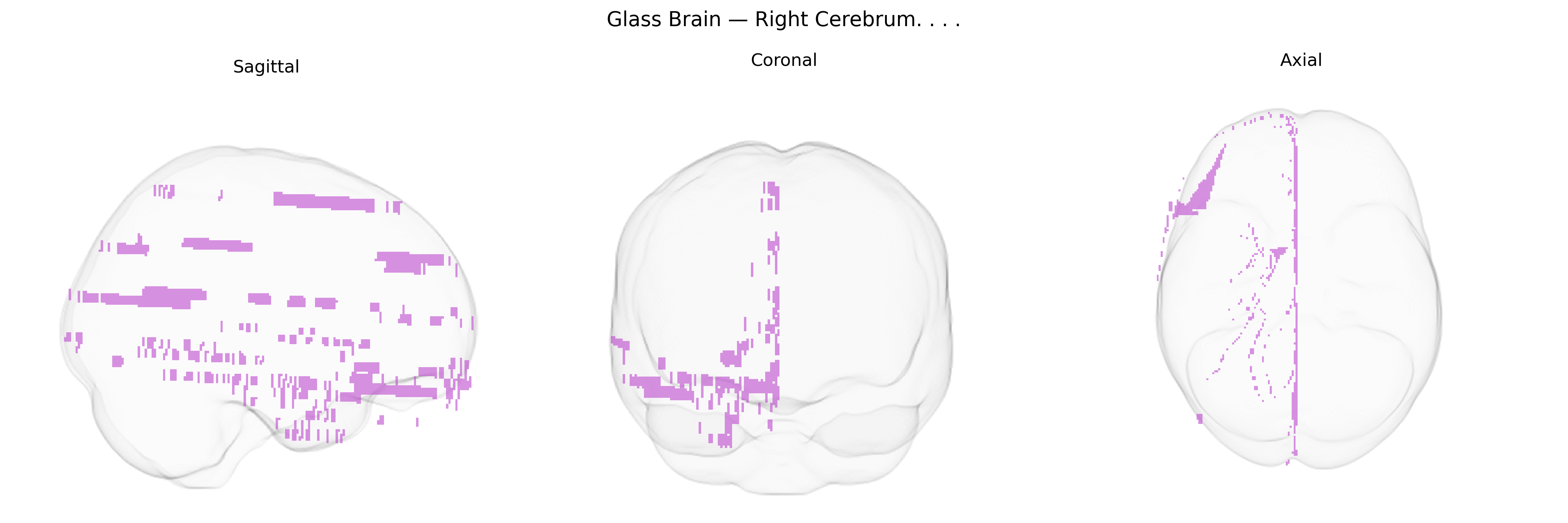
The bilateral right cerebrum refers to the right cerebral hemisphere considered as a whole, encompassing all major cortical and subcortical structures on the right side of the brain, including the frontal, parietal, temporal, and occipital lobes, as well as deep nuclei such as the basal ganglia and limbic components. Functionally, the right cerebrum is broadly associated with visuospatial processing, aspects of attention and awareness (particularly left-sided spatial attention), nonverbal and emotional communication, music perception, and holistic or integrative processing of sensory information, while also participating in motor control and sensory integration via contralateral (left-sided) body representation. In Talairach-based atlases, labeling the bilateral right cerebrum provides a gross anatomical classification that can be further subdivided into more specific gyri, sulci, lobes, and functional regions for detailed neuroimaging and neuroanatomical analyses. Cerebrum
Genetic associations involving the bilateral right cerebrum as a whole (rather than specific subregions) are largely indirect, reflecting lateralized brain structure, connectivity, and function captured in GWAS of brain MRI phenotypes and neuropsychiatric disorders. Large consortia such as ENIGMA and UK Biobank have identified common variants near genes involved in neurodevelopment (e.g., LRRK2, HMGA2, DLG2, MAPT, and genes in the Wnt and axon-guidance pathways) that influence global and hemispheric measures of cortical surface area, thickness, white-matter microstructure, and total brain volume, including right-hemisphere–dominant metrics. Polygenic risk for schizophrenia, bipolar disorder, major depression, and autism spectrum disorder shows associations with altered right-hemispheric cortical and subcortical morphology (e.g., right temporal and frontal regions) and with asymmetry patterns, suggesting that distributed genetic liability affects bilateral cerebral organization. Variants in FOXP2 and other language-related genes have been linked to right-hemisphere contributions to speech, prosody, and auditory processing, while genes implicated in handedness and brain asymmetry (e.g., PCSK6, LRRTM1) influence left–right cerebral lateralization more broadly. Additionally, GWAS of cognitive traits and educational attainment implicate many of the same neurodevelopmental genes that modulate global right and left cerebral structure, indicating that genetic architecture of cognition, psychiatric risk, and brain morphology converges on bilateral cerebral networks that include the right cerebrum.
Overview generated by GPT-4o (2026).
Region ID: 48
Hemisphere: bilateral
Atlas: Talairach labels 1mm
Full Quality Version: Download MP4
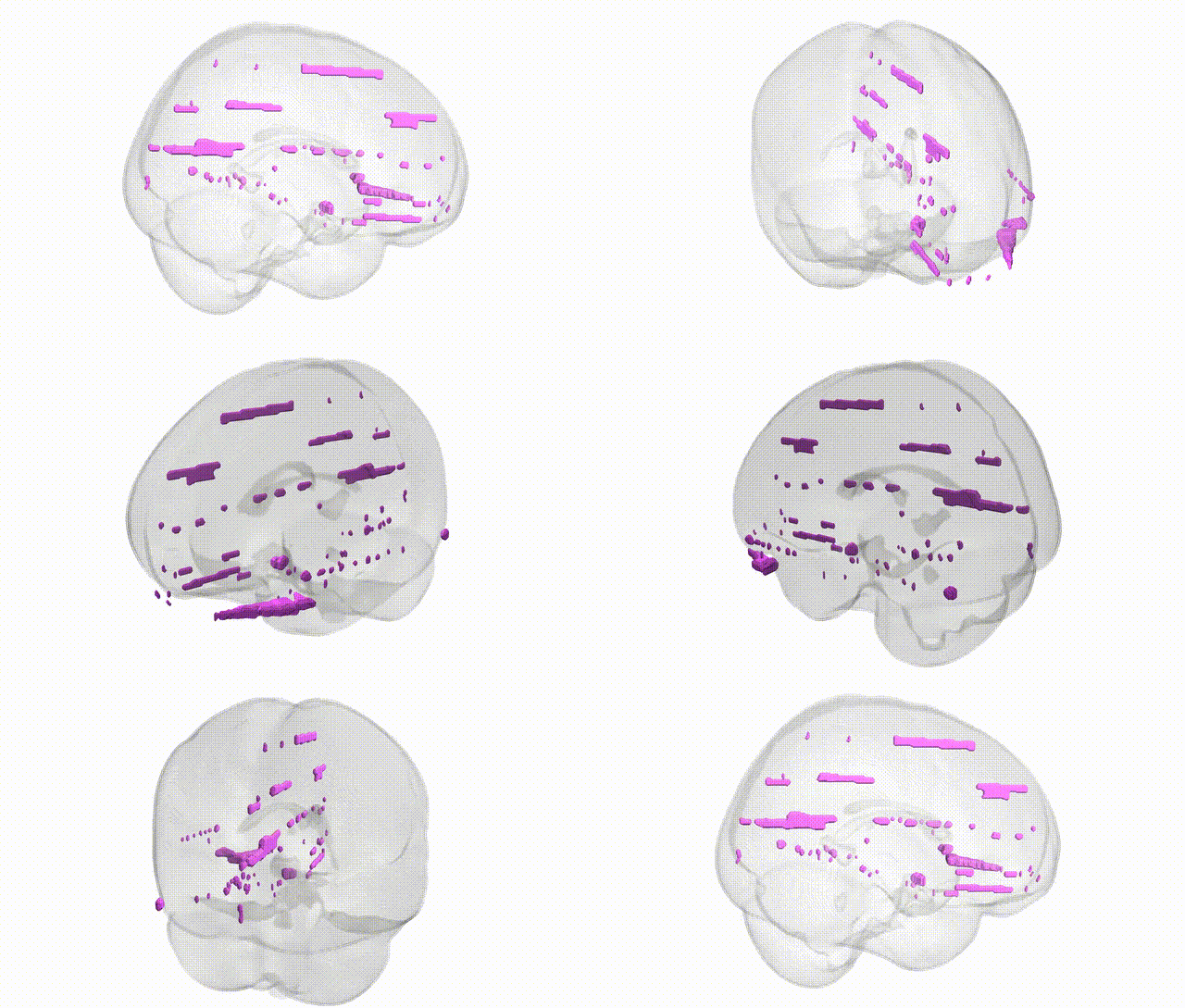
Full Quality Version: Download MP4
Wali Sidiqyar*, Gaurav Rudravaram*, Elyssa M. McMaster, Trent M. Schwartz, Adam M. Saunders, Kurt G. Schilling, Bennett A. Landman "Introducing SPINS: A Shared Public Visualization Library of Neuroanatomical Structures." Medical Imaging with Deep Learning- short paper
This resource is licensed under CC0 1.0 Universal (Public Domain).