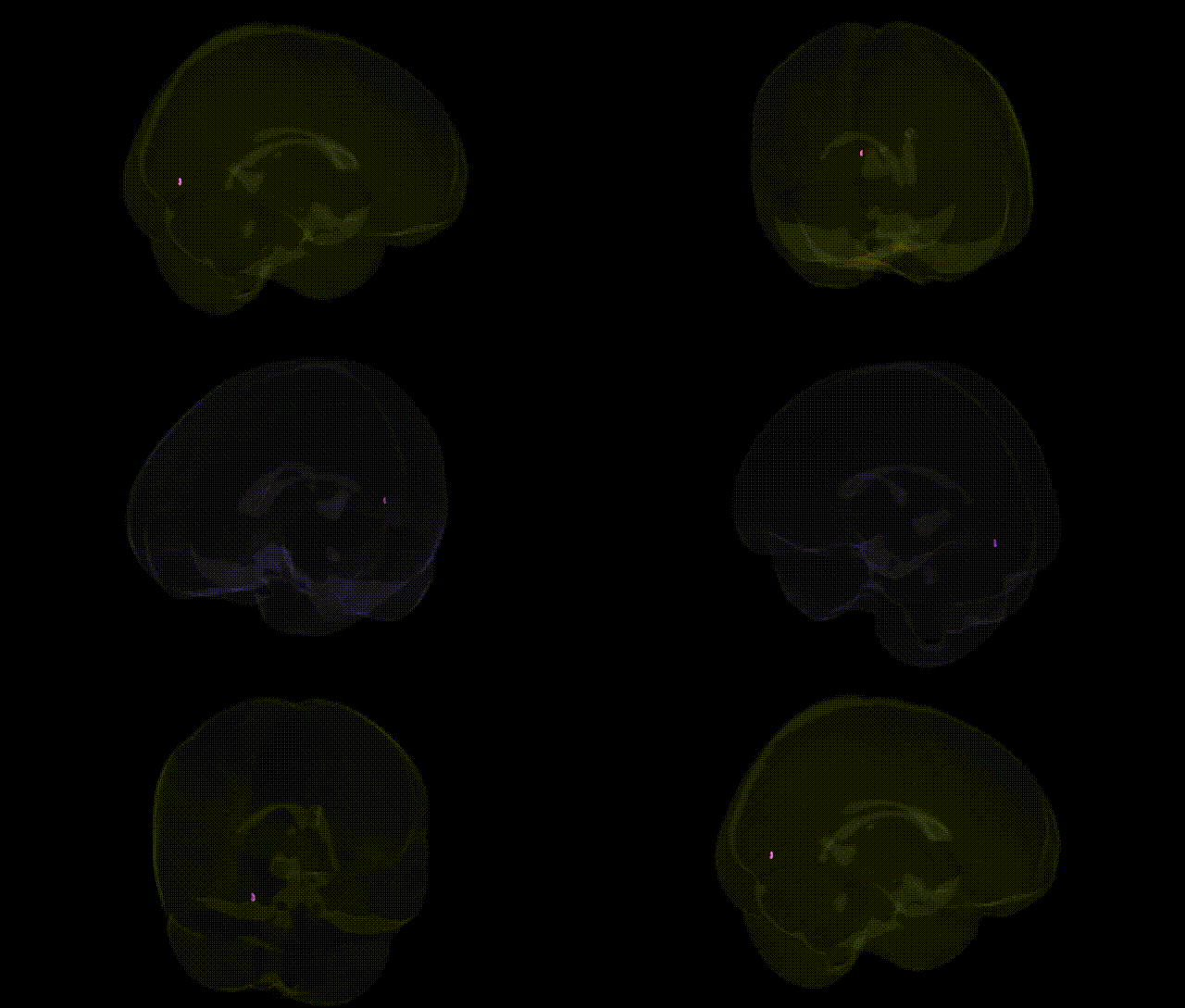
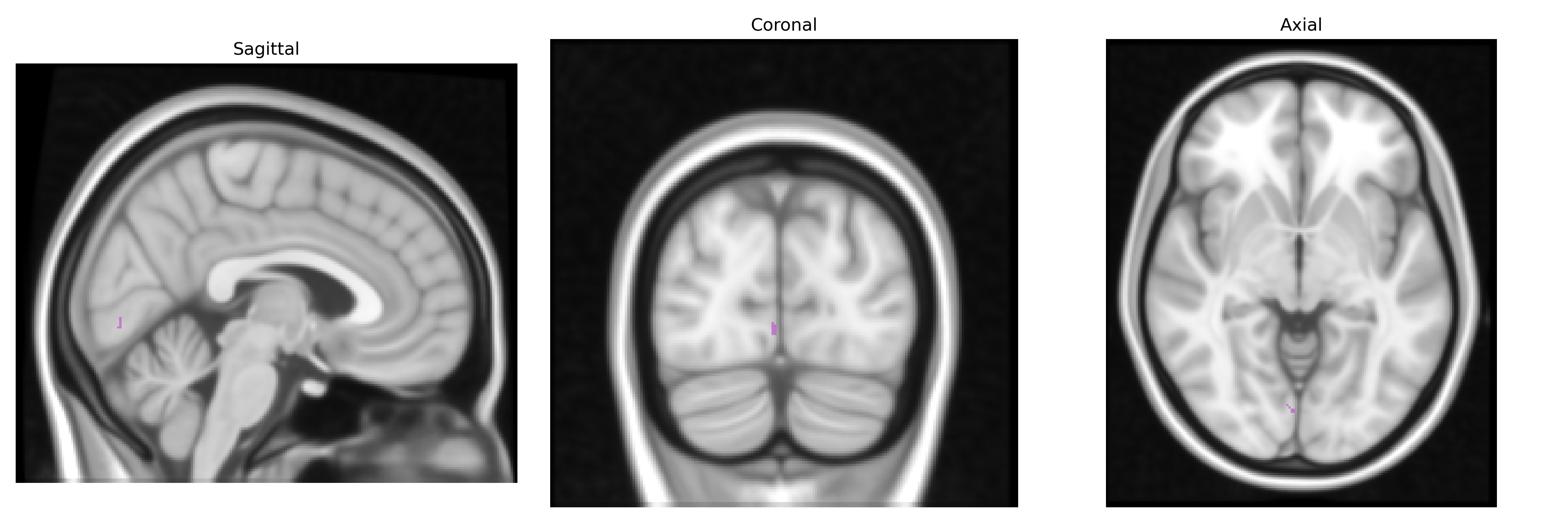
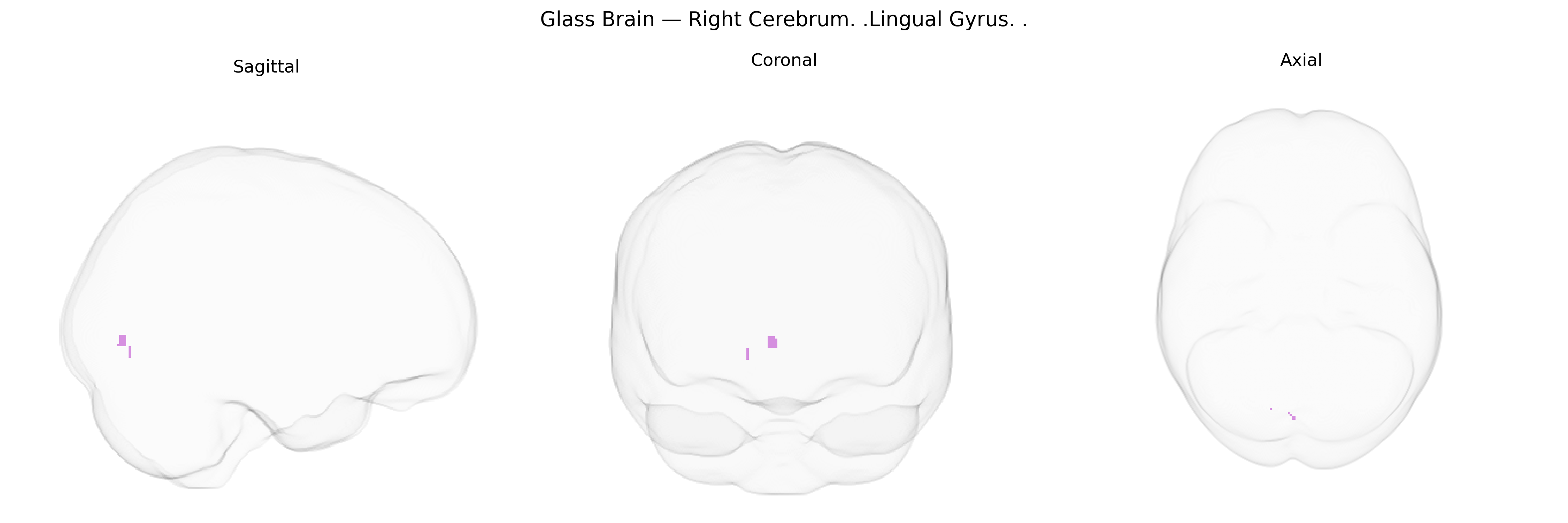
The bilateral Right Cerebrum Lingual Gyrus is a medial occipitotemporal cortical region located on the ventral surface of the occipital lobe, extending anteriorly into the posterior temporal lobe and bounded dorsally by the calcarine sulcus and ventrally by the collateral sulcus. It participates in early and higher-order visual processing, including encoding of complex visual patterns, word and letter form recognition, and aspects of visual memory, and is frequently implicated in tasks involving reading and visual imagery. Functional imaging studies show robust activation during processing of visually presented words and scenes, and lesions involving this region can contribute to visual field defects and alexia-like syndromes. Lingual gyrus
The bilateral right lingual gyrus has been repeatedly implicated in imaging genetics and GWAS of brain structure, function, and disease, although associations are typically reported at the level of occipital or visual cortex rather than this subregion alone. Large-scale brain MRI GWAS (e.g., ENIGMA and UK Biobank) have identified heritable variation in lingual gyrus volume, cortical thickness, and surface area, with significant loci near genes involved in neurodevelopment, synaptic function, and axonal guidance (such as variants in and around genes like HMGA2, MAPT, and others contributing to global and regional cortical metrics), though specific right-lateralized effects are less consistently reported. Polygenic risk for schizophrenia, bipolar disorder, and major depressive disorder has been associated with altered activation and morphology in the lingual gyrus in multimodal studies, and autism spectrum disorder and ADHD genetic risk scores have been linked to atypical occipital/lingual activation during visual and attention tasks. GWAS of cognitive and visual traits, including reading ability, visual memory, and face/scene perception, often show effects in occipital–temporal regions encompassing the lingual gyrus, and migraine and visual aura–related genetic risk have been associated with structural and functional differences in this region. Overall, genetic associations point to the right lingual gyrus as a heritable visual and higher-order perceptual hub whose structure and function reflect polygenic influences shared with psychiatric, neurodevelopmental, and cognitive traits, although few studies isolate this Talairach-defined region as a sole primary endpoint.
Overview generated by GPT-4o (2026).
Region ID: 318
Hemisphere: bilateral
Atlas: Talairach labels 1mm
Full Quality Version: Download MP4
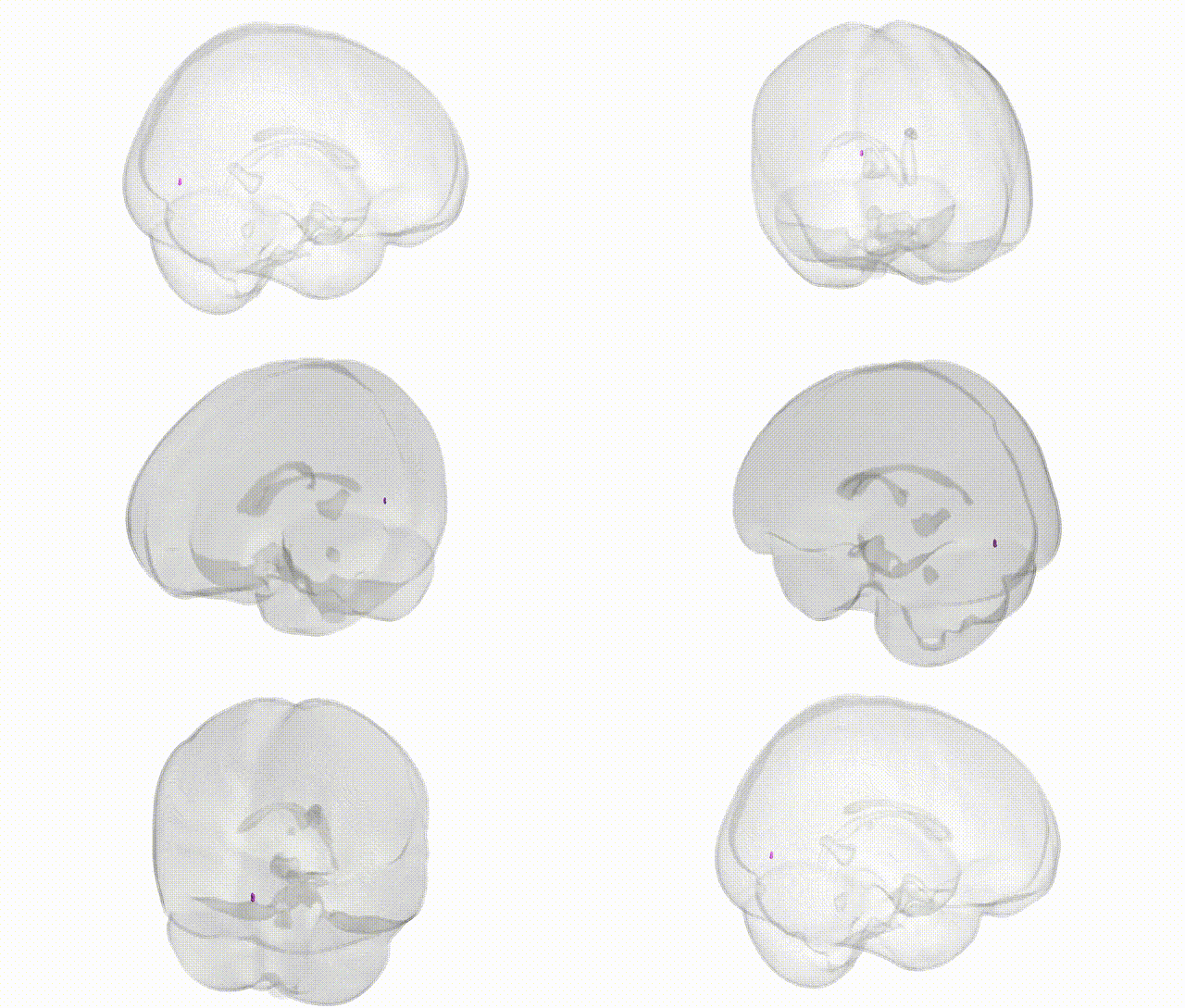
Full Quality Version: Download MP4
Wali Sidiqyar*, Gaurav Rudravaram*, Elyssa M. McMaster, Trent M. Schwartz, Adam M. Saunders, Kurt G. Schilling, Bennett A. Landman "Introducing SPINS: A Shared Public Visualization Library of Neuroanatomical Structures." Medical Imaging with Deep Learning- short paper
This resource is licensed under CC0 1.0 Universal (Public Domain).