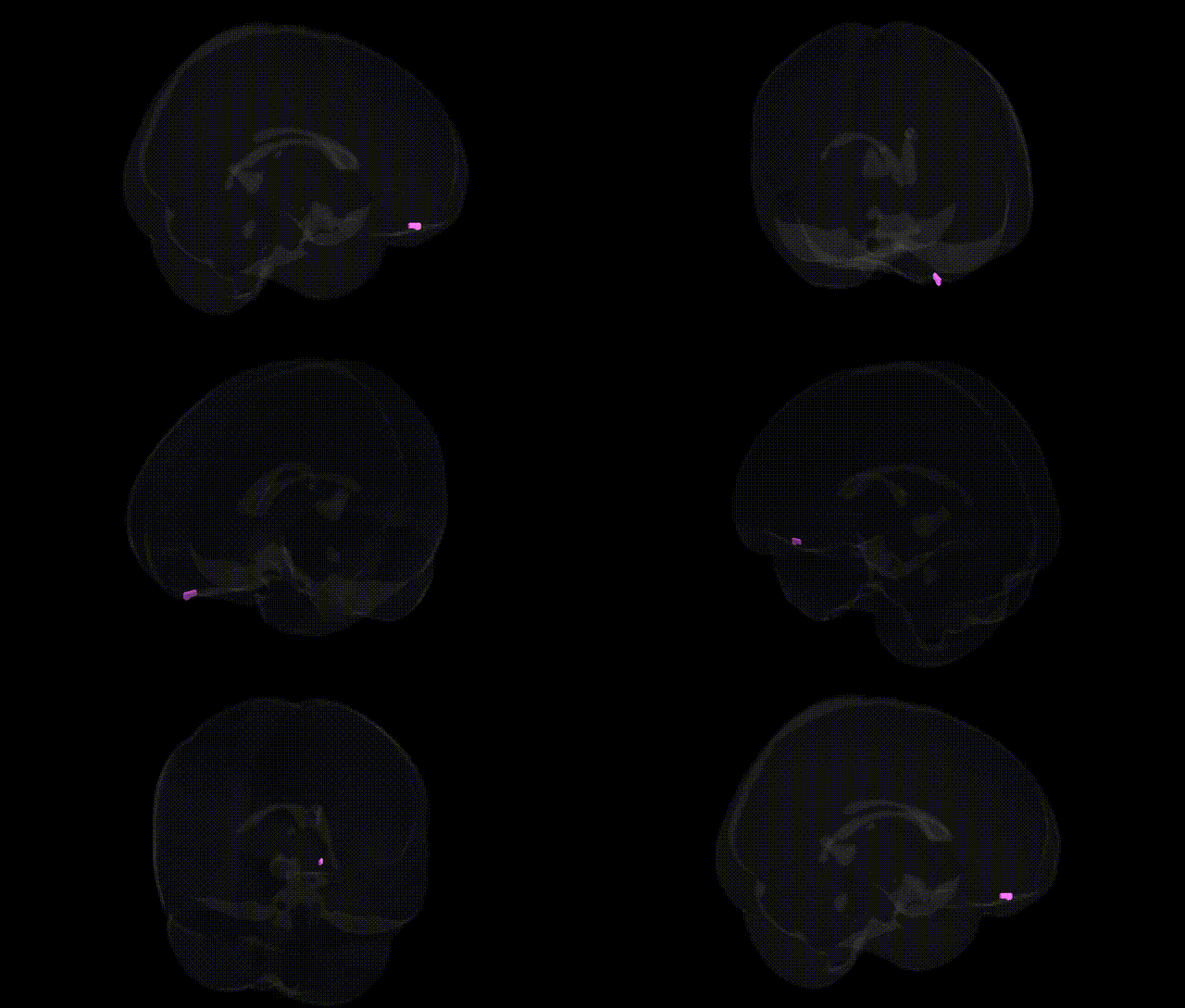
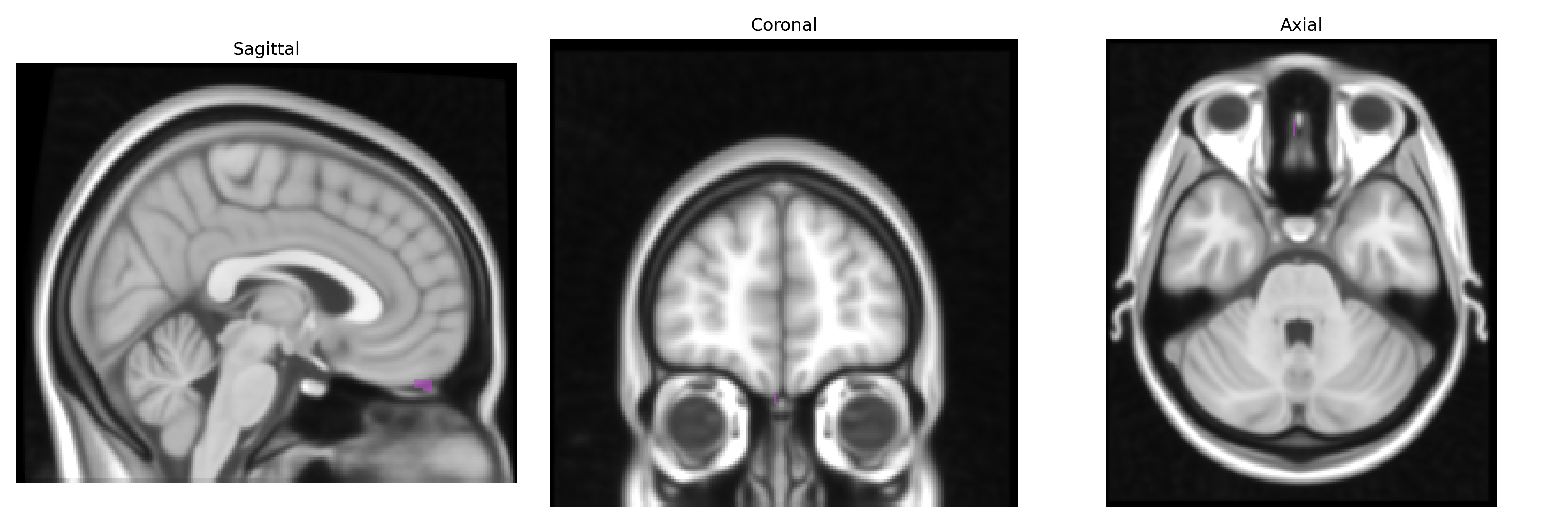
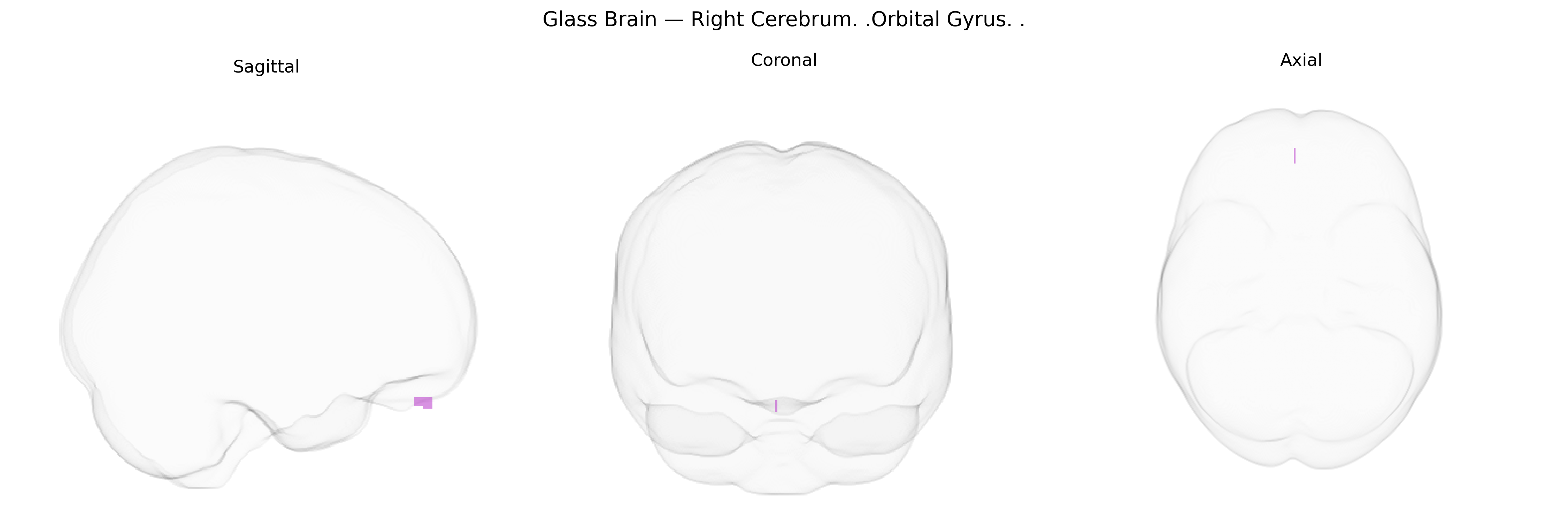
The bilateral Right Cerebrum, orbital gyrus, corresponds primarily to the orbitofrontal cortex, a ventral prefrontal region located on the inferior surface of the frontal lobe, resting atop the orbits. In the Talairach 1 mm Atlas, this area encompasses portions of the medial, lateral, and anterior orbital gyri, which receive dense multimodal sensory input (including olfactory and gustatory) and are heavily interconnected with limbic structures such as the amygdala and hippocampus. Functionally, the orbital gyri are implicated in reward valuation, decision-making, emotional regulation, and adaptive social behavior, integrating sensory, affective, and contextual information to guide goal-directed actions and behavioral inhibition. There is no direct link for “orbital gyrus”; a closely related and encompassing structure is the Orbitofrontal cortex.
Genetic associations specifically pinpointing the bilateral right orbital gyrus (Right Cerebrum, Orbital Gyrus, Talairach 1 mm) are relatively sparse, but converging imaging genetics and GWAS evidence implicates this ventral prefrontal region—often grouped within orbitofrontal cortex—in a range of neuropsychiatric and behavioral phenotypes. Large-scale brain MRI GWAS consortia (e.g., ENIGMA, UK Biobank) have identified common variants in genes such as HMGA2, IGF1, and microtubule- or synapse-related loci that influence orbitofrontal cortical thickness and surface area, while polygenic scores for educational attainment, intelligence, and major psychiatric disorders show associations with structural variation in orbitofrontal regions that include the orbital gyrus. Candidate-gene and smaller imaging-genetic studies link serotonin (e.g., SLC6A4), dopamine (e.g., DRD2, COMT), and BDNF polymorphisms to functional and structural differences in orbital/medial prefrontal cortices, supporting roles in reward valuation, decision-making, and emotional regulation. Clinically, genetic risk for major depressive disorder, bipolar disorder, schizophrenia, obsessive–compulsive disorder, and substance use disorders has been associated with altered orbitofrontal–orbital gyrus structure or activation, and rare copy-number variants or pathogenic mutations contributing to frontotemporal dementia and related syndromes can also affect this region, although most findings implicate broader orbitofrontal networks rather than the right orbital gyrus in isolation.
Overview generated by GPT-4o (2026).
Region ID: 200
Hemisphere: bilateral
Atlas: Talairach labels 1mm
Full Quality Version: Download MP4
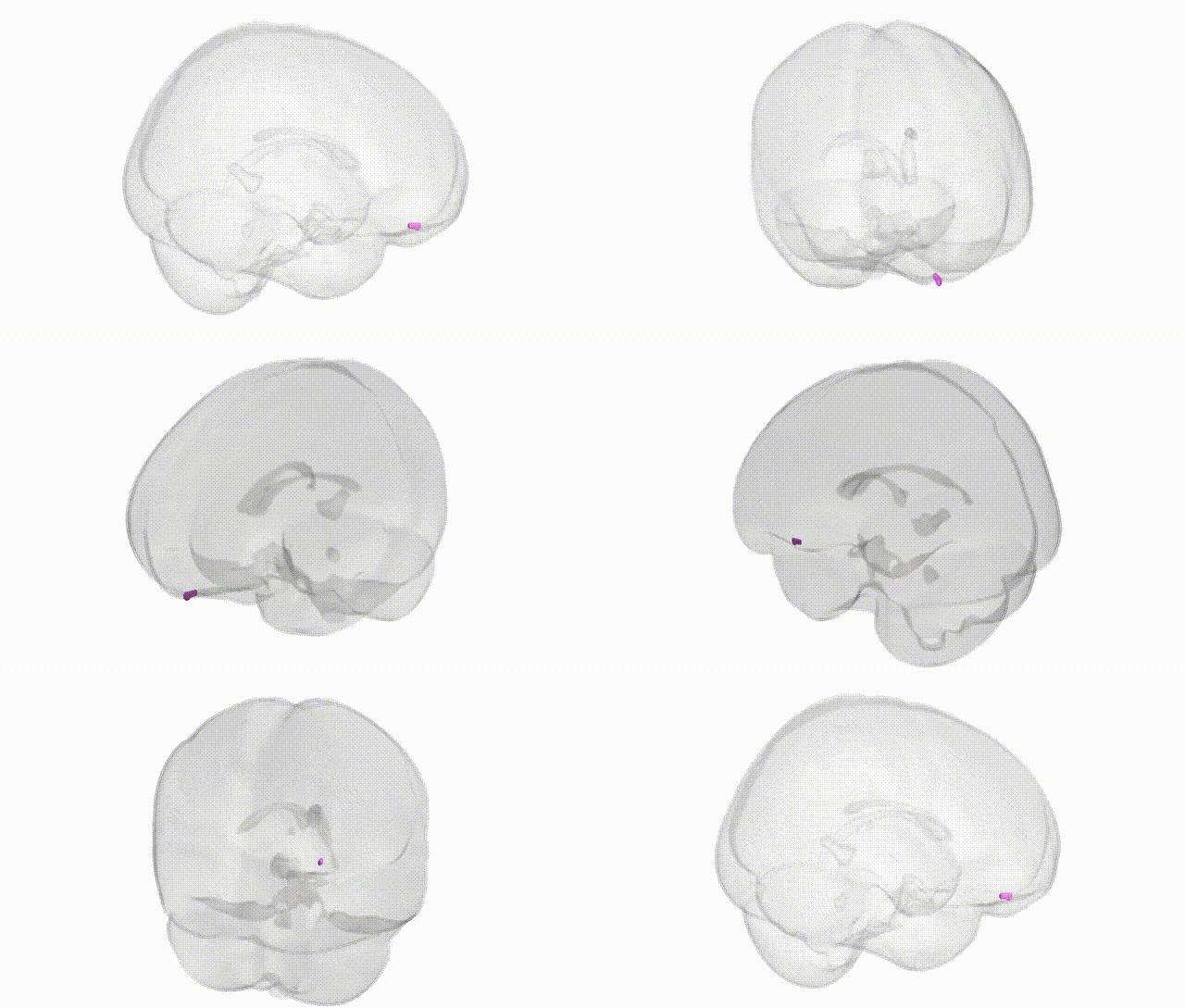
Full Quality Version: Download MP4
Wali Sidiqyar*, Gaurav Rudravaram*, Elyssa M. McMaster, Trent M. Schwartz, Adam M. Saunders, Kurt G. Schilling, Bennett A. Landman "Introducing SPINS: A Shared Public Visualization Library of Neuroanatomical Structures." Medical Imaging with Deep Learning- short paper
This resource is licensed under CC0 1.0 Universal (Public Domain).