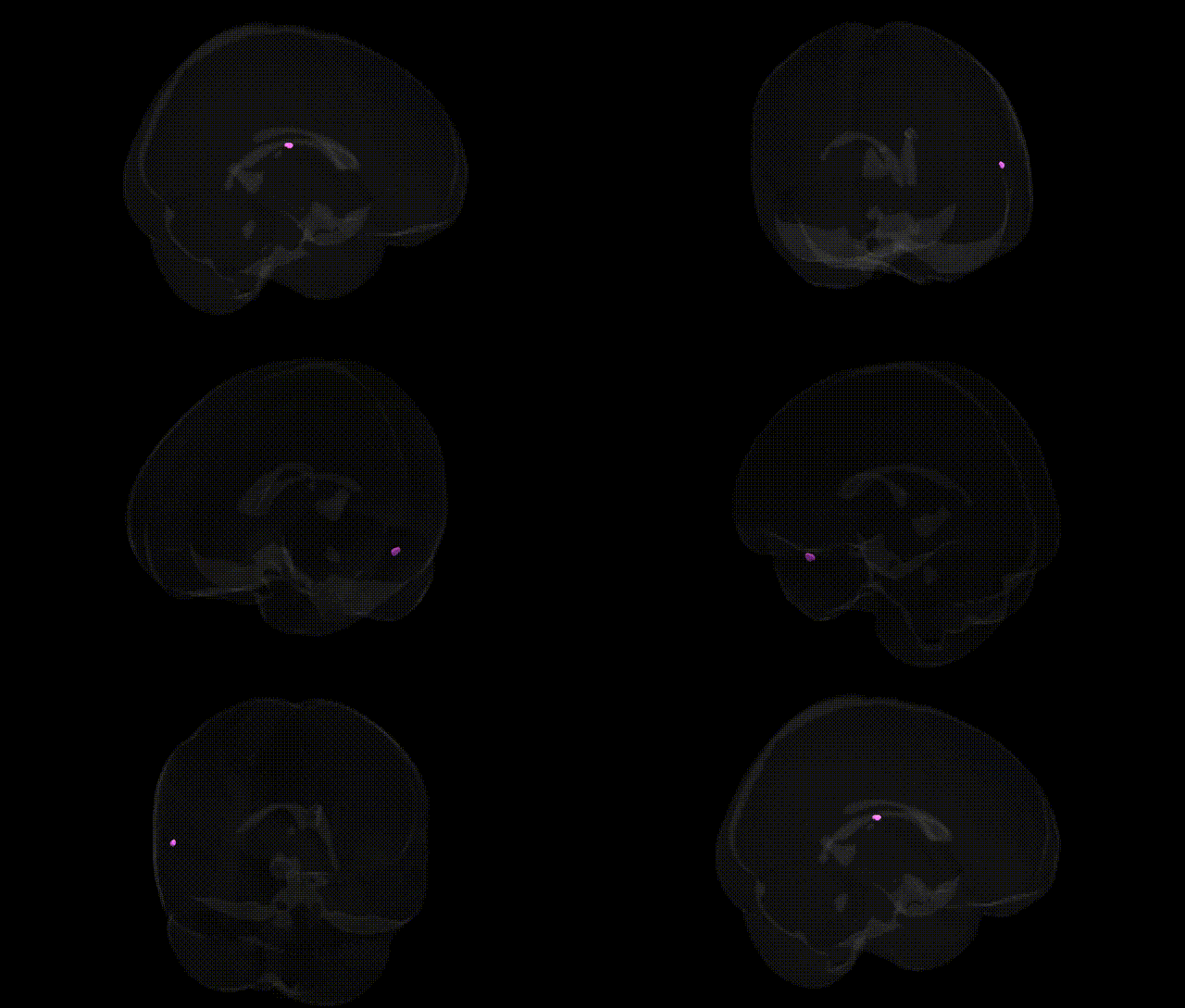
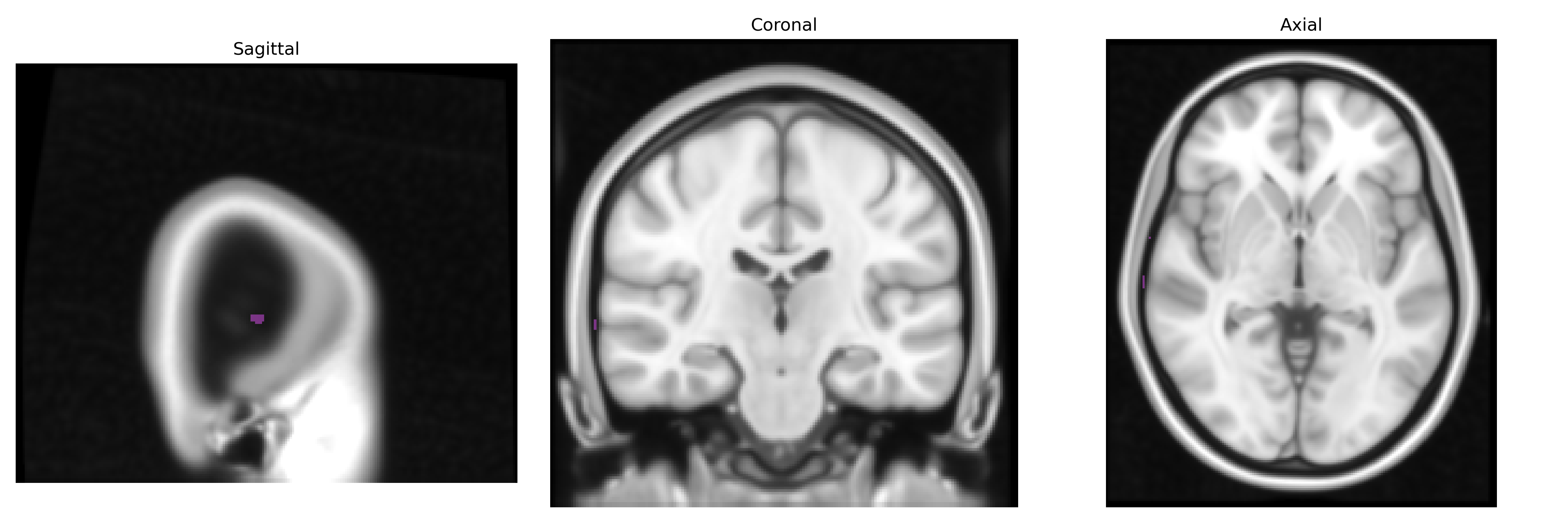
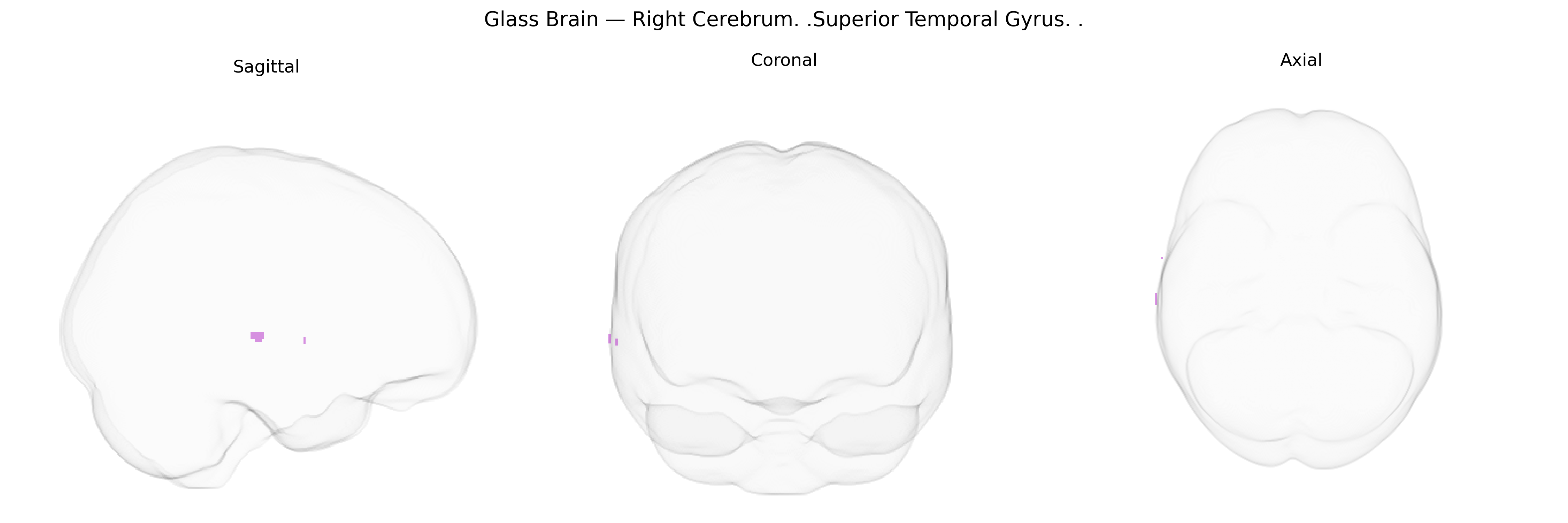
The bilateral Right Cerebrum Superior Temporal Gyrus (STG) is a cortical region of the temporal lobe situated on the superior aspect of the temporal cortex, bordered superiorly by the lateral (Sylvian) fissure and inferiorly by the superior temporal sulcus. It encompasses primary and association auditory areas, including Heschl’s gyrus medially, and participates in processing complex auditory stimuli, language (especially prosody and aspects of speech perception in the right hemisphere), and multimodal integration of auditory with visual and somatosensory inputs. The right STG is further implicated in social cognition, emotional processing of sounds (such as music and affective prosody), and contributes to networks involved in attention and higher-order perceptual functions. Superior temporal gyrus
The bilateral right superior temporal gyrus (STG) has been implicated in multiple genetic and GWAS-based associations, particularly in relation to language, social cognition, and neuropsychiatric phenotypes. Imaging genetics studies show that common variants in FOXP2, CNTNAP2, and KIAA0319, genes involved in speech and language and neurodevelopmental processes, are associated with structural and functional variation in temporal lobe regions including the right STG. Large-scale GWAS of cortical thickness and surface area (e.g., ENIGMA consortium) identify loci near genes such as CENPW, HMGA2, and various synaptic and axon-guidance genes that influence temporal cortex morphology, with some effects specifically noted in superior temporal areas. The right STG is frequently implicated in GWAS and candidate gene studies of schizophrenia and autism spectrum disorder, where risk variants in genes like NRG1, GRIN2A, and CNTNAP2 have been associated with altered STG volume, cortical thickness, or activation during social and auditory processing tasks. Additionally, polygenic risk scores for schizophrenia, bipolar disorder, and major depression have been correlated with structural and functional measures in the superior temporal cortex, including right-lateralized regions, suggesting that distributed genetic liability for psychiatric disorders partly manifests in this area. GWAS of tinnitus, musical aptitude, and auditory processing also highlight temporal-lobe-related genetic architecture, with several implicated variants modulating activity or morphology in the superior temporal auditory cortex, although precise lateralized right STG effects are less consistently reported. Overall, convergent genetic evidence links the right STG to language and auditory traits, social cognition, and liability to major neurodevelopmental and psychiatric disorders via networks of neurodevelopmental, synaptic, and transcriptional regulatory genes.
Overview generated by GPT-4o (2026).
Region ID: 577
Hemisphere: bilateral
Atlas: Talairach labels 1mm
Full Quality Version: Download MP4
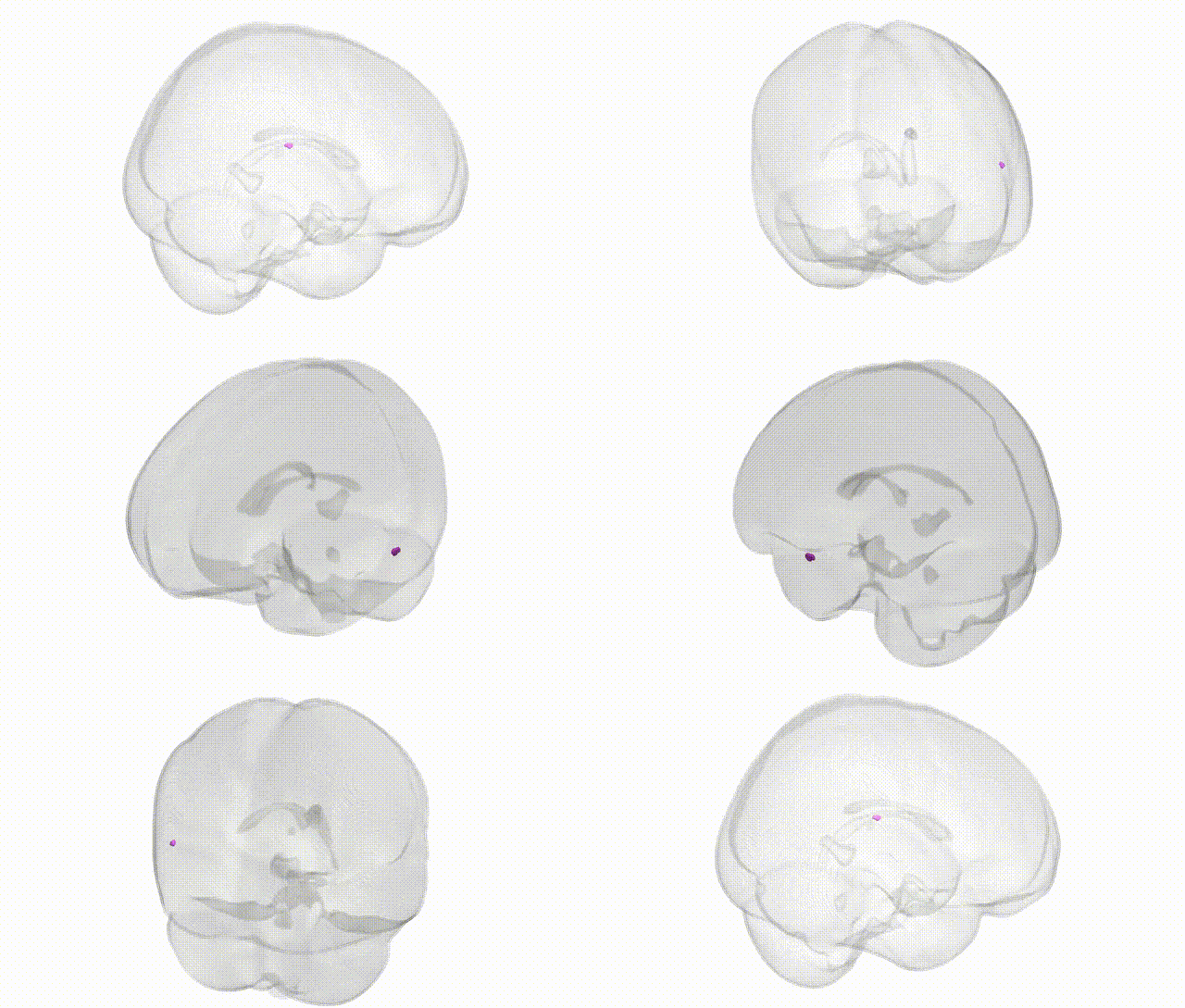
Full Quality Version: Download MP4
Wali Sidiqyar*, Gaurav Rudravaram*, Elyssa M. McMaster, Trent M. Schwartz, Adam M. Saunders, Kurt G. Schilling, Bennett A. Landman "Introducing SPINS: A Shared Public Visualization Library of Neuroanatomical Structures." Medical Imaging with Deep Learning- short paper
This resource is licensed under CC0 1.0 Universal (Public Domain).