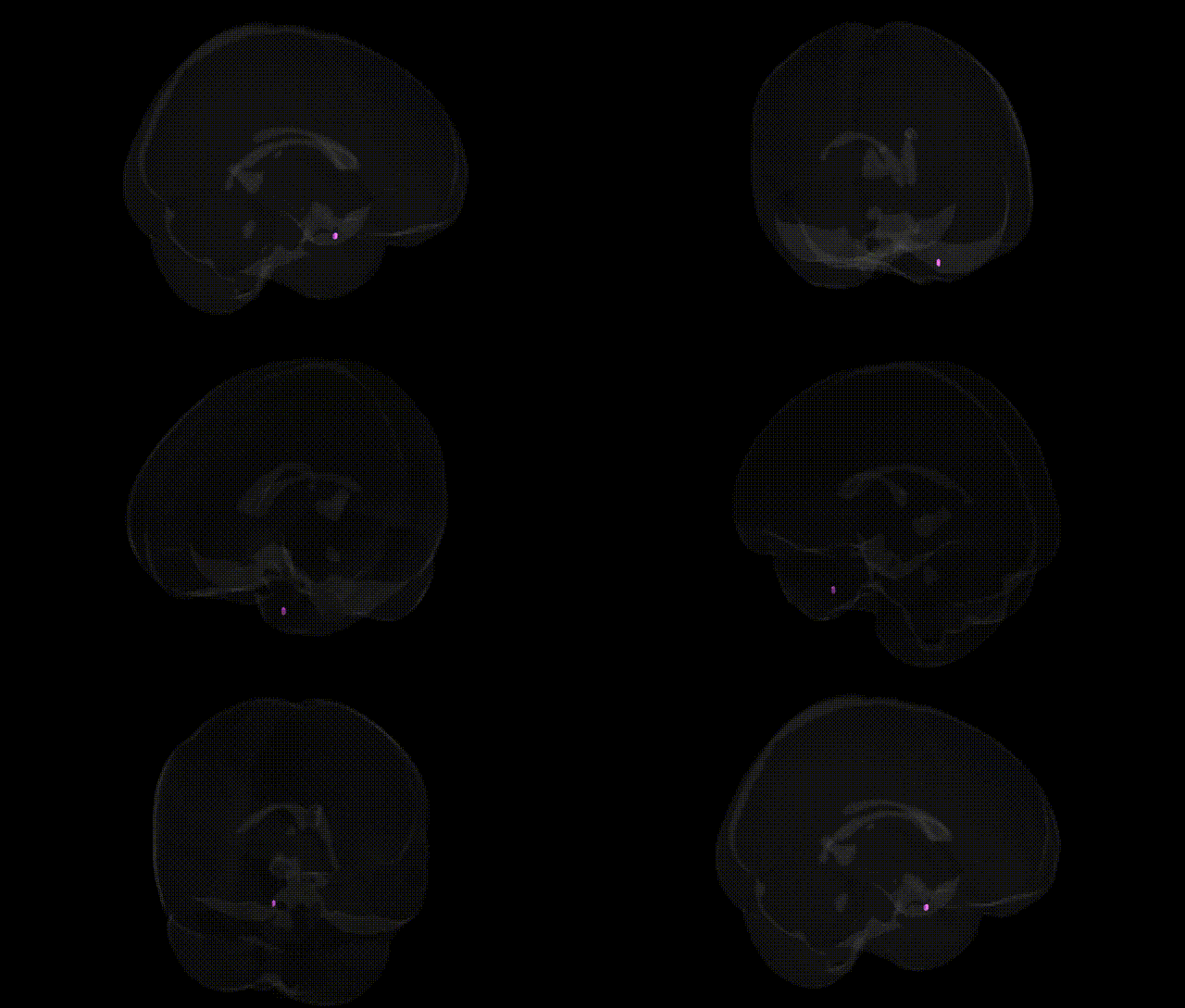
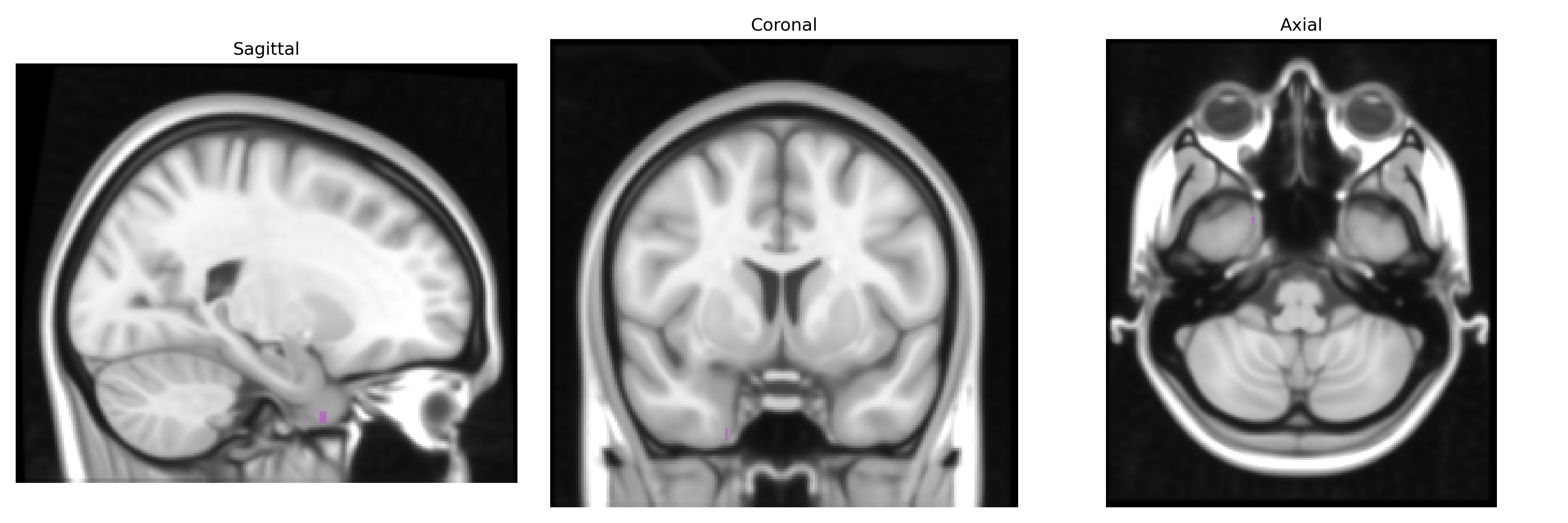
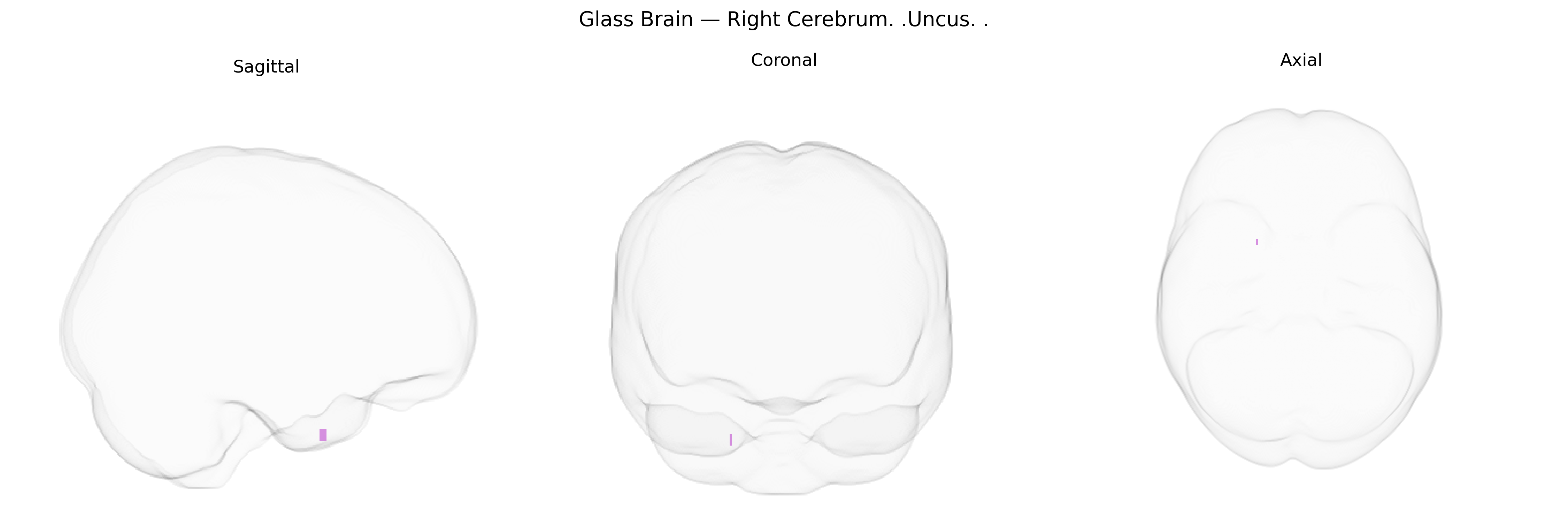
The bilateral right cerebrum uncus is a medial temporal lobe structure forming the anterior extremity of the parahippocampal gyrus and overlying the amygdaloid complex, situated at the mesial aspect of the temporal pole and bordering the hippocampal formation and entorhinal cortex. It participates in limbic circuitry related to olfaction, emotion, and memory integration, with close anatomical and functional ties to the amygdala and hippocampus, and is frequently implicated in temporal lobe epilepsy, particularly in mesial temporal sclerosis. Vascular supply derives predominantly from branches of the posterior cerebral artery, and its deep location near the tentorial edge makes it relevant in uncal herniation syndromes, where displacement can compress the brainstem and cranial nerves. There is no direct Wikipedia article specifically for the “uncus” as a standalone page; a closely related structure is the Parahippocampal gyrus.
The uncus, a medial temporal lobe structure encompassing parts of the piriform cortex and amygdalo-hippocampal complex, is genetically implicated largely through studies of these overlapping regions rather than through uncus-specific GWAS. Variants in genes related to synaptic plasticity and neurodevelopment—such as BDNF (e.g., Val66Met), COMT, and DISC1—have been associated with structural and functional alterations in medial temporal and limbic regions that include the uncus, particularly in the context of schizophrenia, major depressive disorder, bipolar disorder, and anxiety disorders. GWAS of hippocampal and amygdala volume (using large neuroimaging-genetics cohorts like ENIGMA and UK Biobank) have identified loci in or near genes such as HMGA2, DPP4, SLC39A8, and others that influence medial temporal morphology, which likely extend to uncus anatomy given shared developmental and connectivity patterns. Epilepsy genetics is also relevant: variants in genes such as LGI1, DEPDC5, and SCN-family genes have been linked to temporal lobe epilepsy, with the uncus frequently involved in seizure onset or propagation, although not isolated as a distinct GWAS target. Olfactory processing and emotional memory—key uncus functions—have been indirectly tied to genetic variation in olfactory receptor genes and serotonergic/dopaminergic signaling genes, but current large-scale GWAS and imaging-genetic studies typically report associations at the level of broader medial temporal or limbic structures rather than specifically labeling the bilateral right cerebrum uncus as a unique genetic phenotype.
Overview generated by GPT-4o (2026).
Region ID: 58
Hemisphere: bilateral
Atlas: Talairach labels 1mm
Full Quality Version: Download MP4
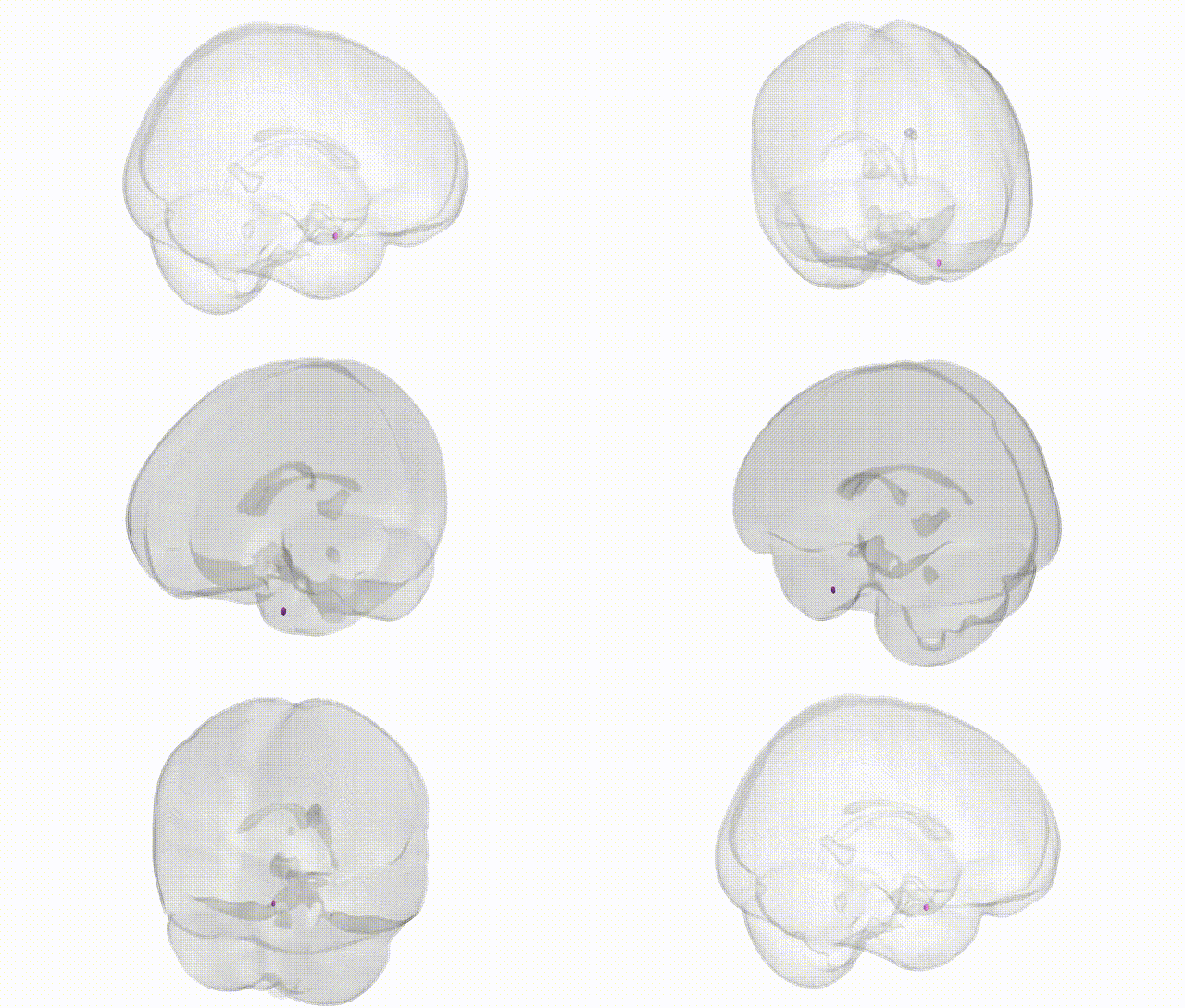
Full Quality Version: Download MP4
Wali Sidiqyar*, Gaurav Rudravaram*, Elyssa M. McMaster, Trent M. Schwartz, Adam M. Saunders, Kurt G. Schilling, Bennett A. Landman "Introducing SPINS: A Shared Public Visualization Library of Neuroanatomical Structures." Medical Imaging with Deep Learning- short paper
This resource is licensed under CC0 1.0 Universal (Public Domain).