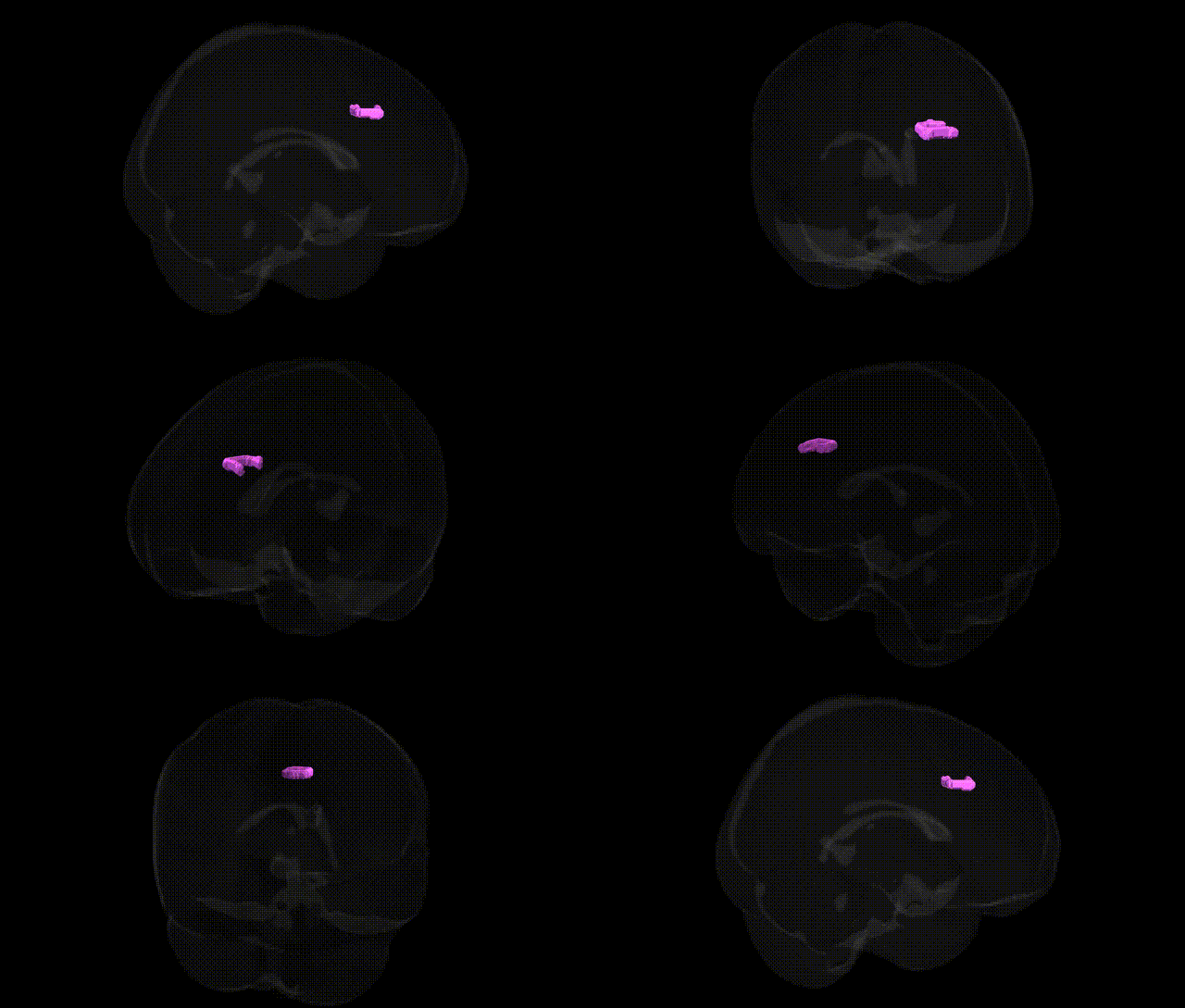
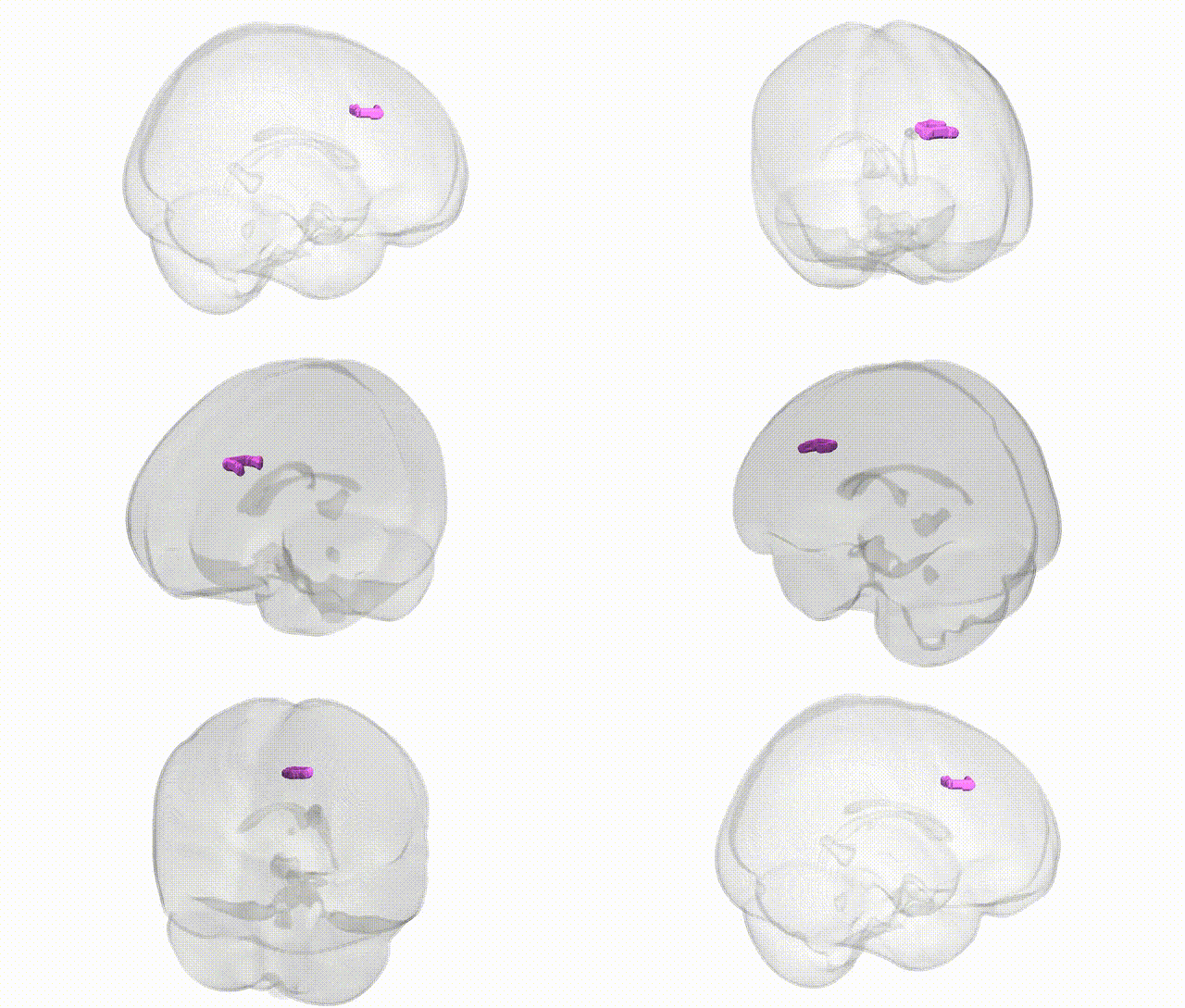
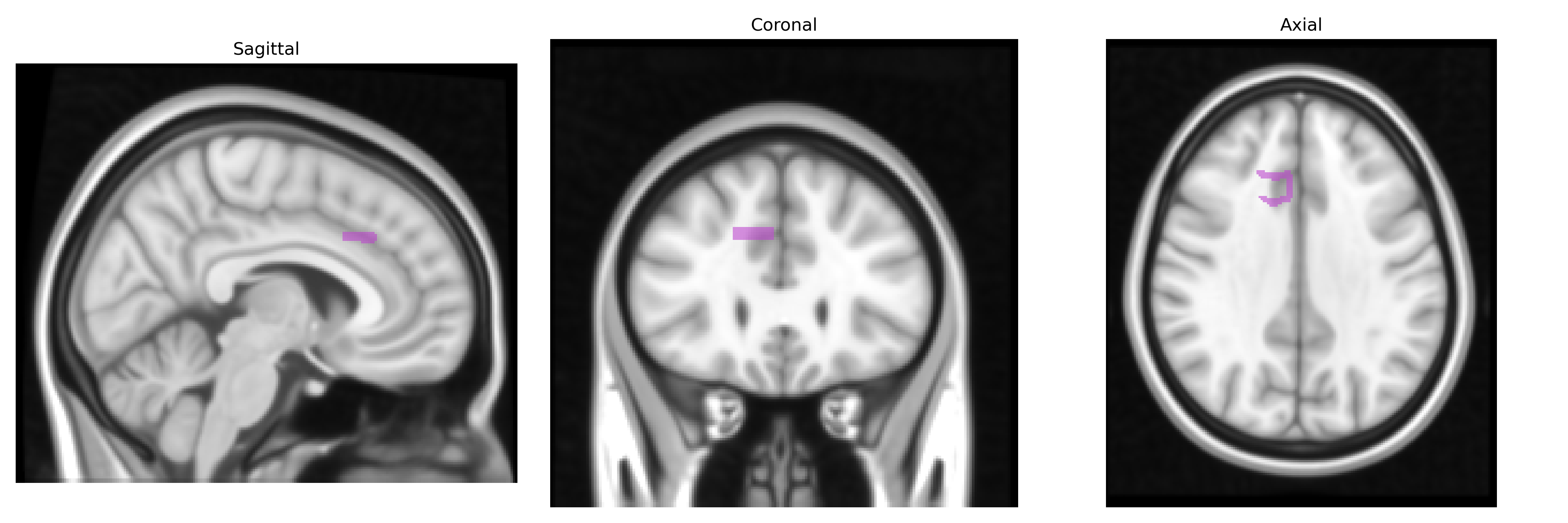
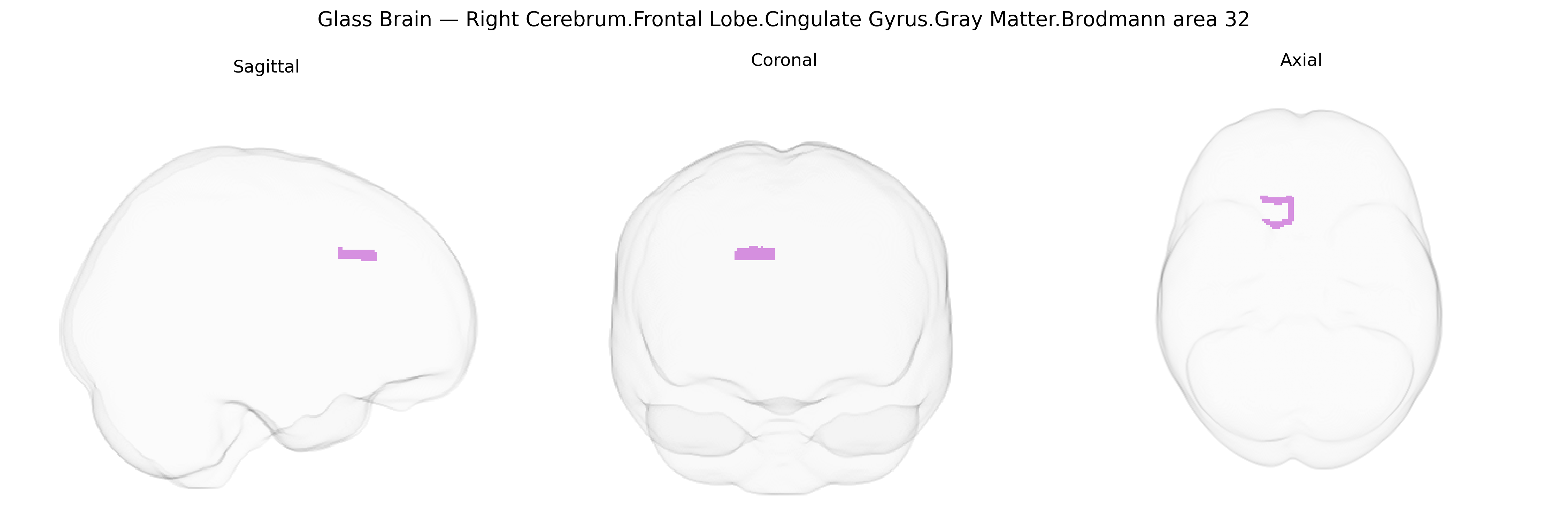
Bilateral Right Cerebrum.Frontal Lobe.Cingulate Gyrus.Gray Matter.Brodmann area 32 corresponds to a medial prefrontal sector of the anterior cingulate cortex involved in high-level integration of cognitive, emotional, and autonomic processes. Histologically agranular, this region receives extensive input from limbic structures (including the amygdala and hippocampal formation) and association cortices, and projects to prefrontal, premotor, and subcortical autonomic centers. Functionally, Brodmann area 32 has been implicated in conflict monitoring, decision-making under uncertainty, evaluation of outcomes, error detection, and regulation of affective responses, as well as modulation of visceromotor and neuroendocrine activity. Its location in the medial frontal lobe along the dorsal anterior cingulate gyrus places it within networks subserving cognitive control, motivation, and aspects of social and self-referential processing. Brodmann area 32
Brodmann area 32 (dorsal anterior cingulate / medial prefrontal cortex) has been repeatedly implicated in genetic and GWAS-based studies linking structural, functional, and connectivity variation of this region to a range of neuropsychiatric and cognitive traits. Imaging-genetics work shows that common variants in genes affecting glutamatergic and monoaminergic signaling (e.g., COMT, SLC6A4, DRD2/DRD4, GRM3), neurodevelopment (e.g., DISC1, NRG1), and synaptic plasticity (e.g., BDNF Val66Met) are associated with BA32 gray-matter volume, cortical thickness, or activation during tasks involving cognitive control, error monitoring, and emotion regulation. GWAS and large-scale neuroimaging consortia (e.g., ENIGMA, UK Biobank) have identified polygenic influences on anterior cingulate/midline frontal morphology and connectivity, with loci near genes involved in neuronal proliferation, myelination, and immune function contributing to individual differences. BA32-related structure and function show heritable alterations in major depression, anxiety disorders, schizophrenia, bipolar disorder, obsessive-compulsive disorder, and post-traumatic stress disorder, and have been linked genetically and phenotypically to traits such as neuroticism, risk of suicidality, impulsivity, and cognitive performance. Additionally, variants influencing inflammatory pathways (e.g., MHC region) and stress-response systems (e.g., FKBP5, CRHR1) have been connected to BA32 functional reactivity to stress and negative affect, underscoring this region’s role as a key genetically modulated hub in mood, cognitive control, and stress-related psychopathology.
Overview generated by GPT-4o (2026).
Region ID: 1008
Hemisphere: bilateral
Atlas: Talairach labels 1mm
Full Quality Version: Download MP4
Full Quality Version: Download MP4
Wali Sidiqyar*, Gaurav Rudravaram*, Elyssa M. McMaster, Trent M. Schwartz, Adam M. Saunders, Kurt G. Schilling, Bennett A. Landman "Introducing SPINS: A Shared Public Visualization Library of Neuroanatomical Structures." Medical Imaging with Deep Learning- short paper
This resource is licensed under CC0 1.0 Universal (Public Domain).