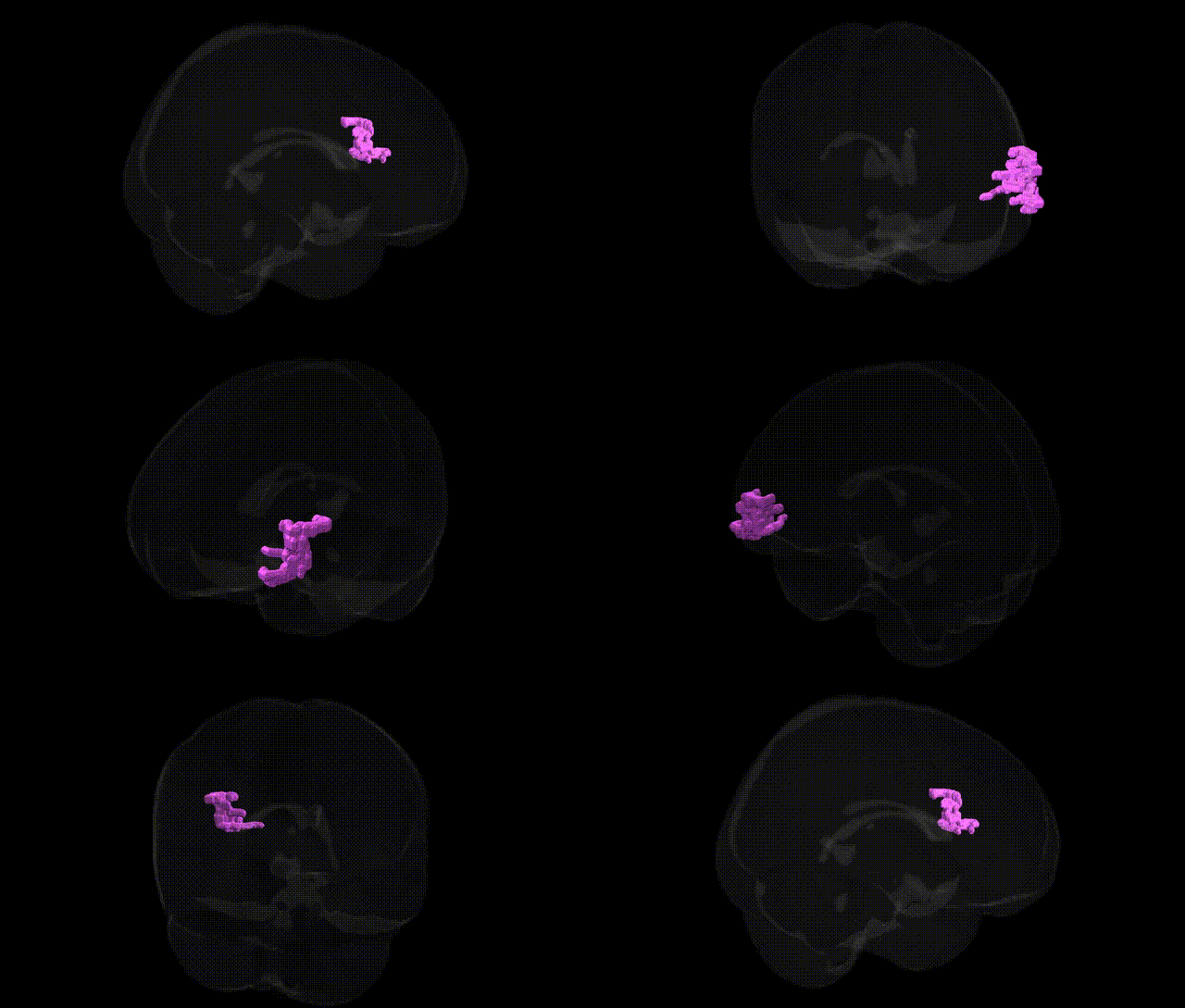
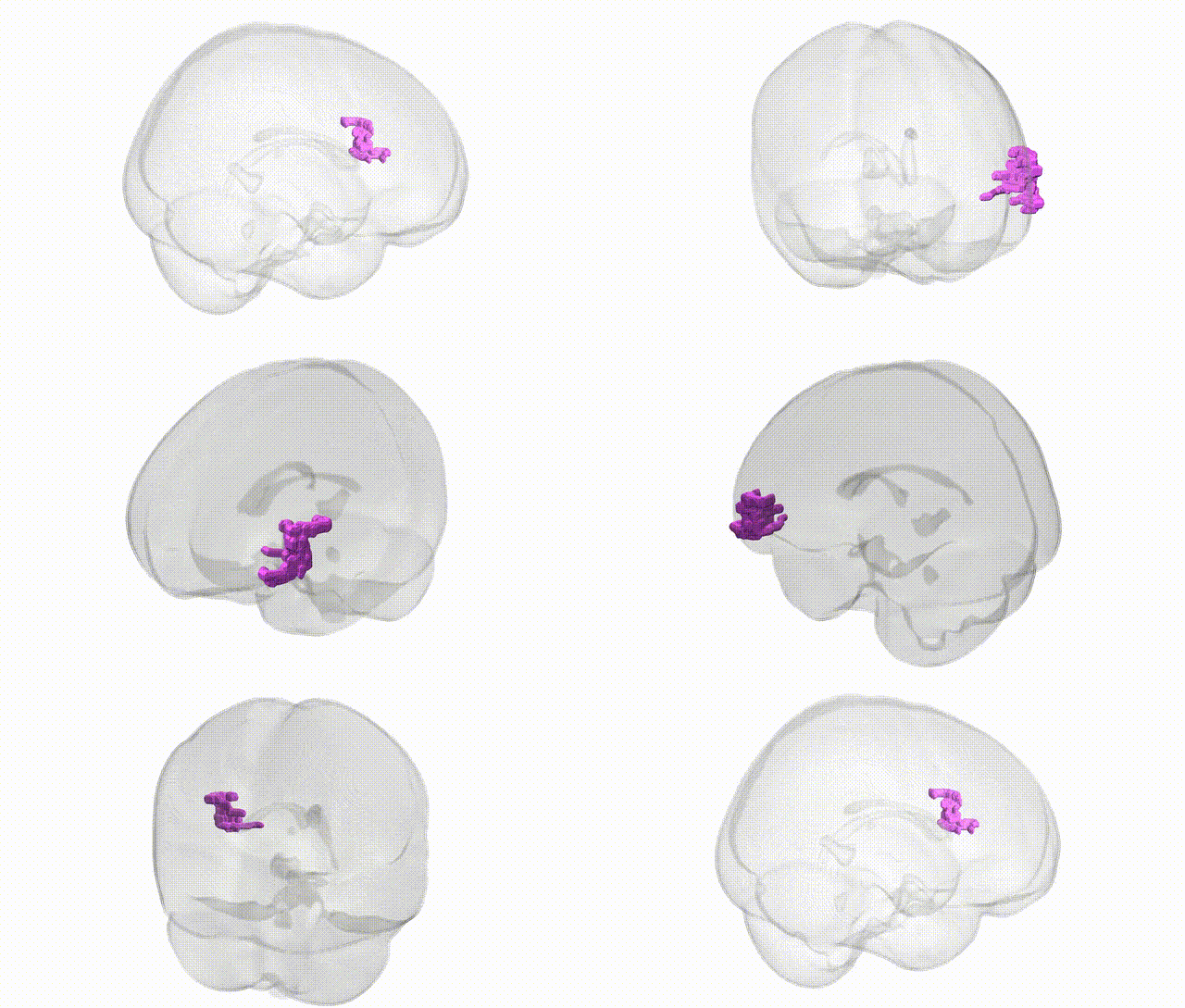
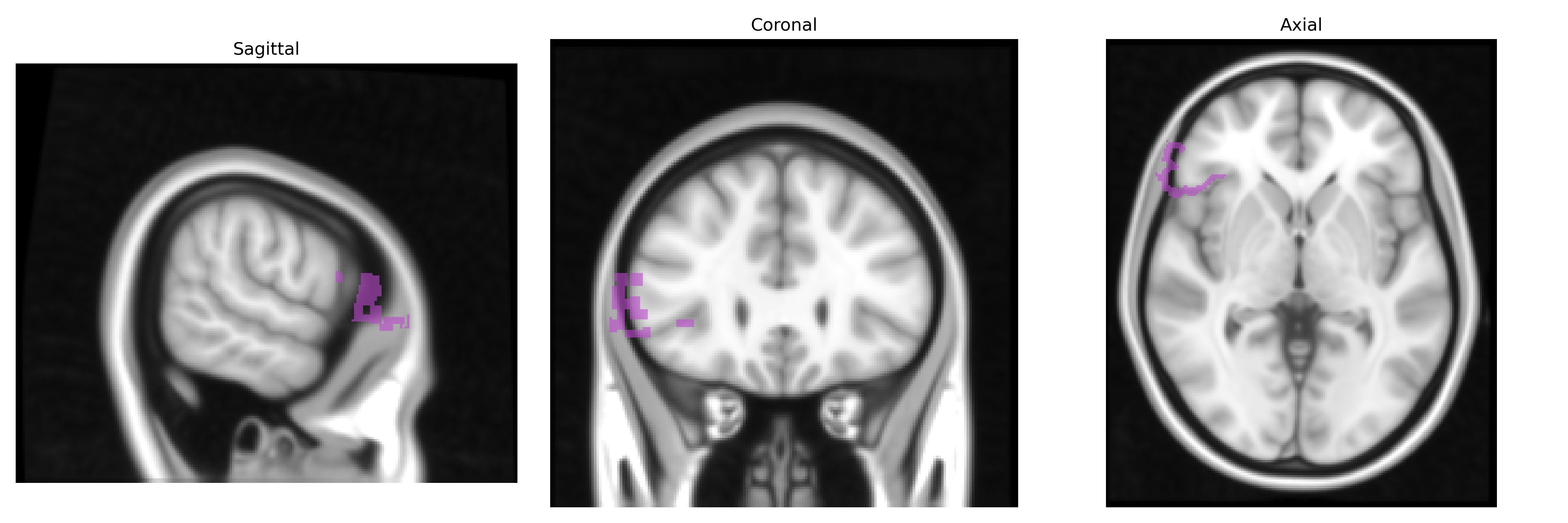
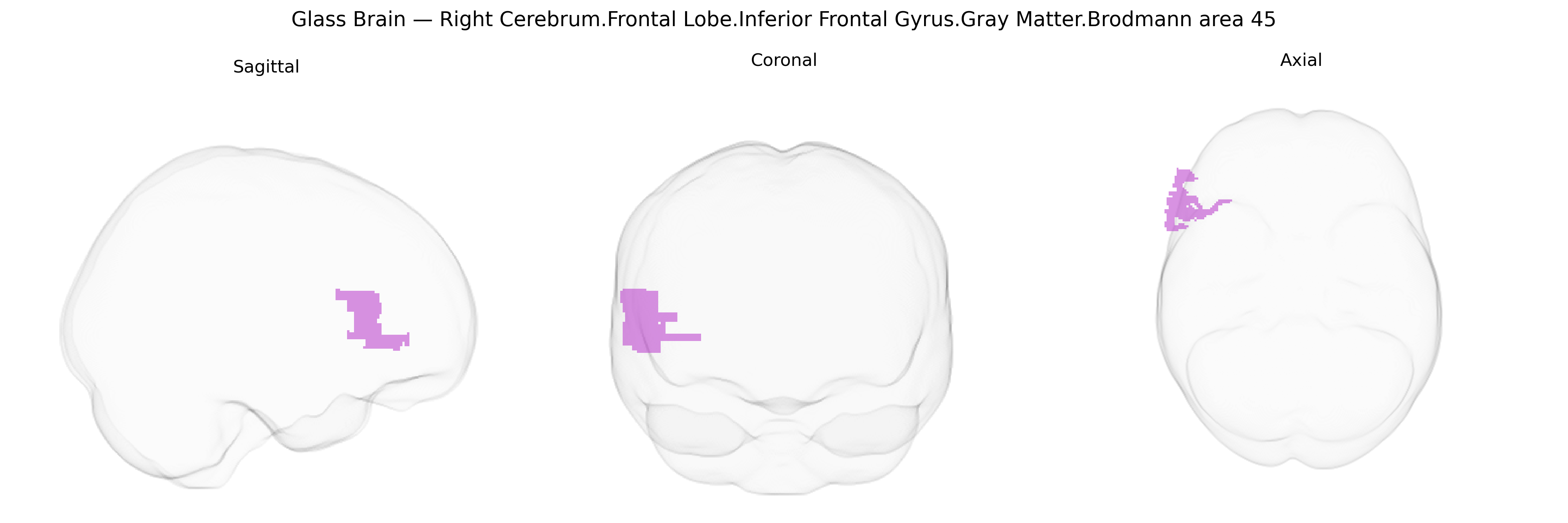
The bilateral Right Cerebrum.Frontal Lobe.Inferior Frontal Gyrus.Gray Matter.Brodmann area 45 corresponds to a portion of the inferior frontal gyrus known functionally as part of the ventrolateral prefrontal cortex, and in the left hemisphere forms a major component of Broca’s area, critical for language production, syntactic processing, and aspects of semantic retrieval. Cytoarchitectonically, Brodmann area 45 is characterized by a granular frontal cortex with distinct laminar organization, lying anterior to premotor regions and adjacent to other language-related areas such as BA44. Functionally, BA45 is implicated in controlled retrieval of verbal information, selection among competing representations, and higher-order executive processes including working memory and cognitive control over language and action. It is also involved in various multimodal integration tasks and contributes to social cognition through evaluation and interpretation of complex verbal and contextual cues. Brodmann area 45
Genetic associations involving the bilateral right inferior frontal gyrus (IFG), particularly Brodmann area 45 as defined in the Talairach 1 mm atlas, largely emerge from imaging-genetics and GWAS of cortical morphology, language, and impulse-control–related traits rather than from region-specific GWAS alone; variants in genes such as FOXP2, CNTNAP2, DCDC2, KIAA0319, and ROBO1 have been repeatedly implicated in language, speech, and reading phenotypes whose neural substrates include BA45/IFG, while large consortia (e.g., ENIGMA, UK Biobank) have linked polygenic influences on cortical thickness and surface area in frontal language regions to common variants near genes involved in neurodevelopment (e.g., microtubule, axon guidance, and synaptic genes). The IFG/BA45 has also been implicated in GWAS of cognitive performance and educational attainment, with polygenic scores for these traits correlating with gray-matter metrics in this region, and in studies of psychiatric and neurodevelopmental disorders—most notably schizophrenia, autism spectrum disorder, ADHD, and major depressive disorder—where risk variants (for example in CACNA1C, GRIN2B, NRXN1, and other synaptic and calcium-channel genes) show downstream associations with altered IFG structure or activation during tasks involving response inhibition, language, and emotion regulation. Additional imaging-genetics work has linked polygenic risk for substance use, behavioral disinhibition, and externalizing traits to differences in right IFG volume and activation, consistent with its role in cognitive control; however, no single variant or locus is uniquely or specifically tied to right BA45, and current evidence reflects distributed polygenic effects influencing frontal-lobe development, connectivity, and function rather than a discrete “BA45 gene.”
Overview generated by GPT-4o (2026).
Region ID: 603
Hemisphere: bilateral
Atlas: Talairach labels 1mm
Full Quality Version: Download MP4
Full Quality Version: Download MP4
Wali Sidiqyar*, Gaurav Rudravaram*, Elyssa M. McMaster, Trent M. Schwartz, Adam M. Saunders, Kurt G. Schilling, Bennett A. Landman "Introducing SPINS: A Shared Public Visualization Library of Neuroanatomical Structures." Medical Imaging with Deep Learning- short paper
This resource is licensed under CC0 1.0 Universal (Public Domain).