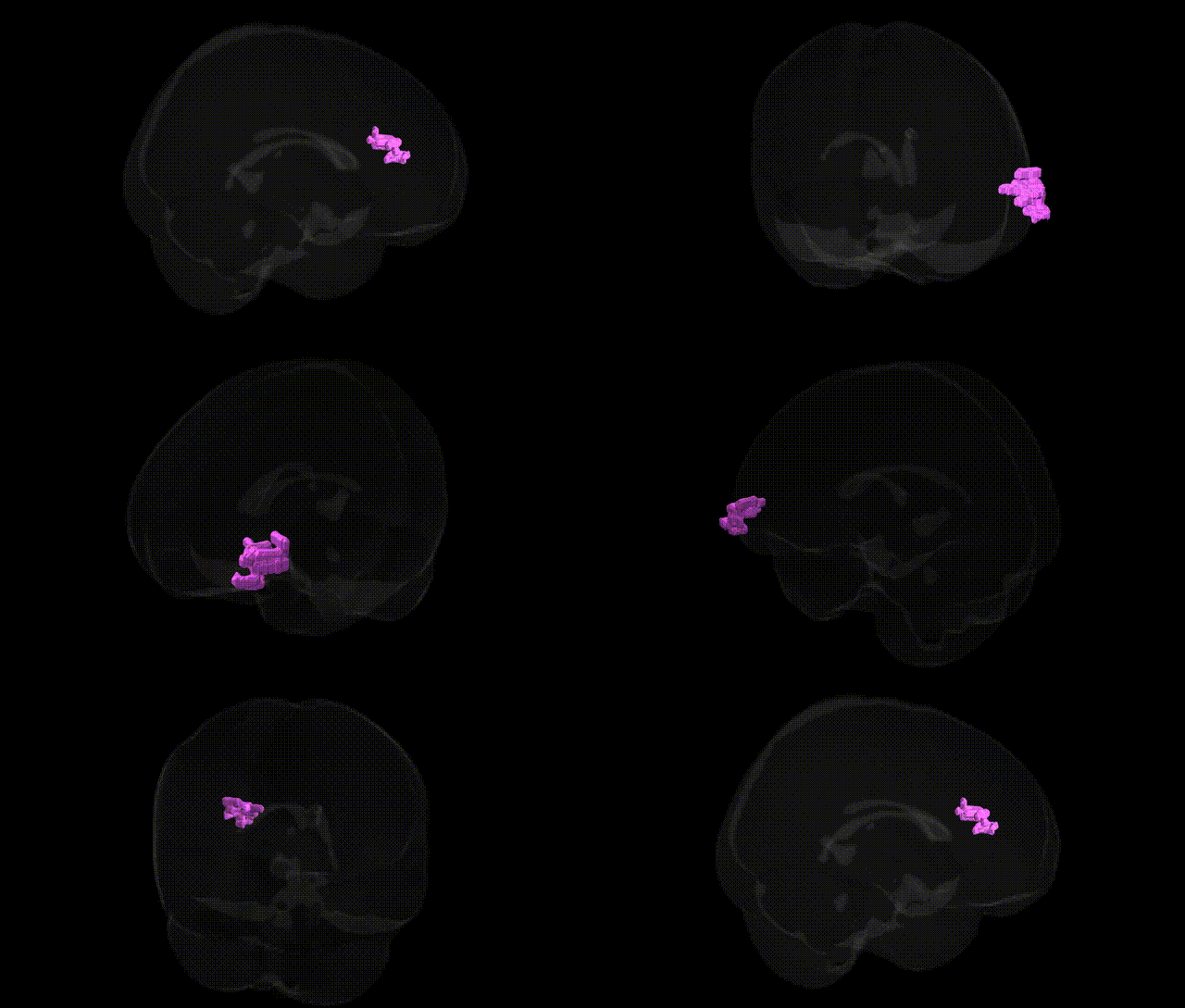
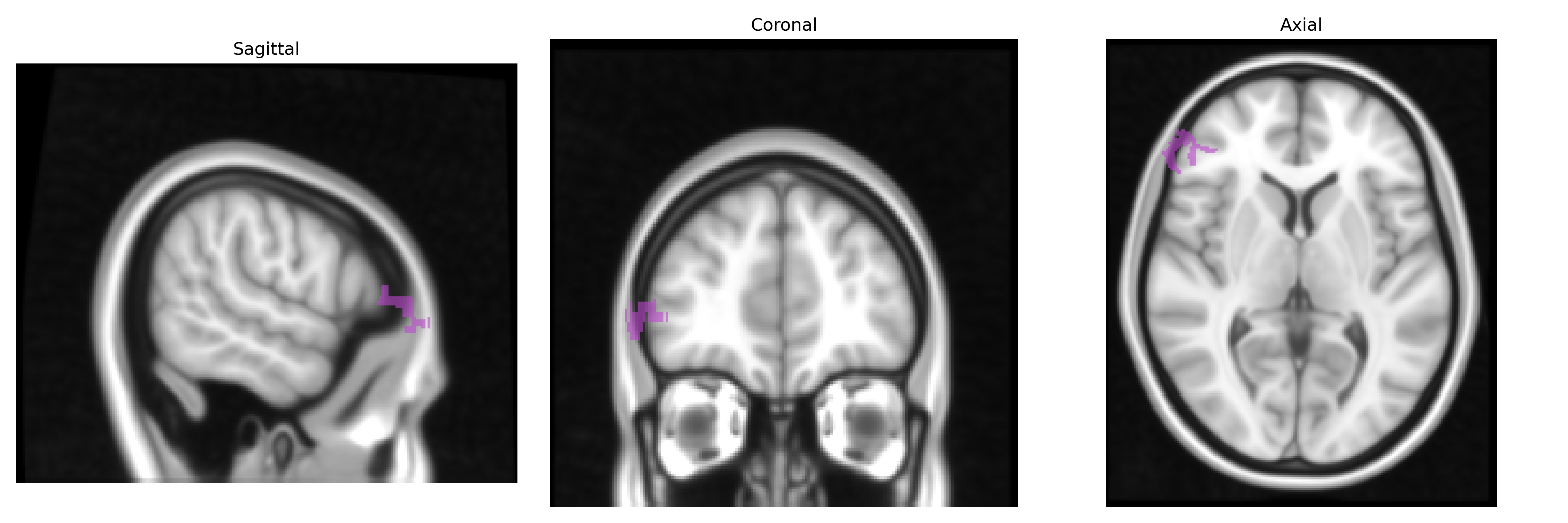
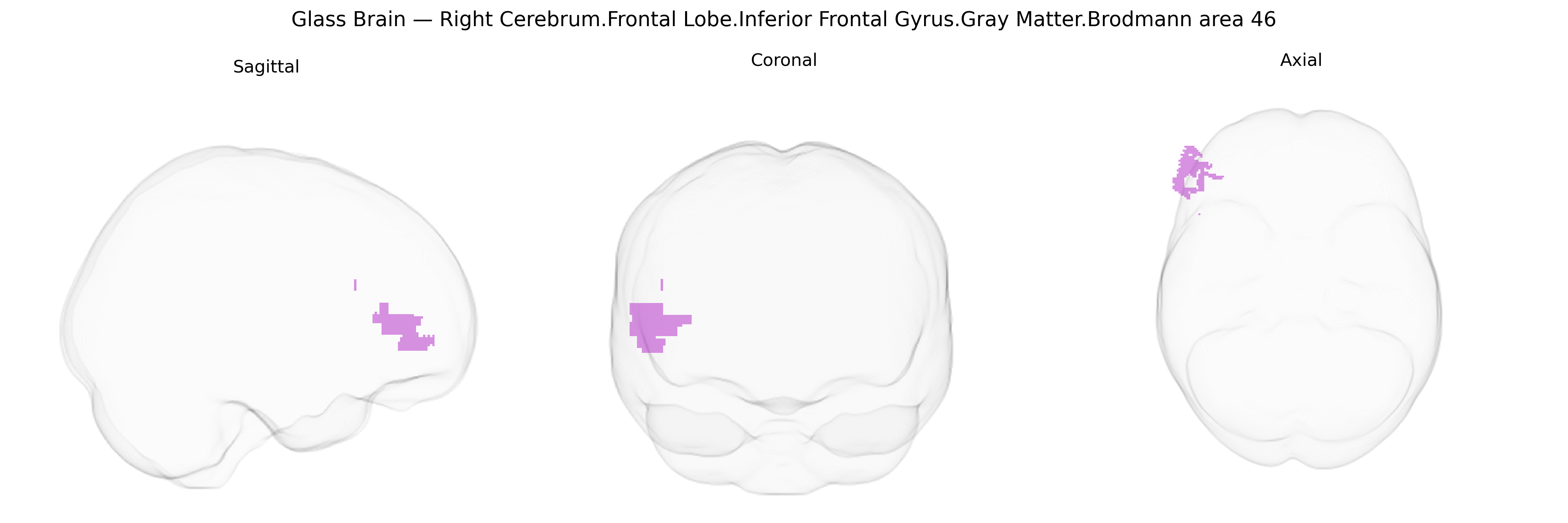
The bilateral Right Cerebrum.Frontal Lobe.Inferior Frontal Gyrus.Gray Matter.Brodmann area 46 corresponds to a dorsolateral prefrontal cortical field located in the middle–inferior frontal region, associated with high-level executive functions, working memory, sustained attention, and the regulation of goal-directed behavior. Brodmann area 46 receives convergent multimodal inputs and is involved in the manipulation and monitoring of information in short-term memory, decision-making, and cognitive control processes such as planning and response inhibition. This region shows strong connectivity with other prefrontal, parietal, and limbic structures, supporting its role in integrating sensory, mnemonic, and emotional information to guide complex behavior. There is no direct link specifically for this Talairach label; a related structure is Dorsolateral prefrontal cortex.
The bilateral right inferior frontal gyrus (IFG) in Brodmann area 46—part of the dorsolateral prefrontal circuitry indexed in the Talairach 1 mm atlas—has been repeatedly implicated in genetic and GWAS-based studies of cognitive control, working memory, response inhibition, and psychiatric vulnerability, although associations are typically at the network or prefrontal-lobe level rather than this parcel alone. Polygenic scores for educational attainment and general cognitive ability show positive associations with right DLPFC/IFG cortical thickness and volume, while schizophrenia, bipolar disorder, and major depressive disorder polygenic risk scores are often linked to reduced prefrontal gray matter, including BA46-related regions. Candidate-gene and imaging-genetics work (e.g., COMT Val158Met, BDNF Val66Met, and dopaminergic/serotonergic variants) has associated allelic variation with altered IFG activation during working memory and inhibition tasks, consistent with a role in executive control and emotion regulation. Large-scale ENIGMA and UK Biobank GWAS of cortical morphology identify multiple loci (e.g., in genes related to neurodevelopment, synaptic function, and extracellular matrix such as HMGA2, MIR2113, and several 3p21, 6q21, and 17q loci) that influence global and frontal cortical thickness or surface area, with downstream effects encompassing BA46/IFG. Right IFG structural and functional variation influenced by these genetic factors has been linked to disorders such as ADHD, obsessive–compulsive disorder, substance-use disorders, and impulsivity-related traits, supporting a genetically modulated role for this region in inhibitory control and higher-order executive functions.
Overview generated by GPT-4o (2026).
Region ID: 608
Hemisphere: bilateral
Atlas: Talairach labels 1mm
Full Quality Version: Download MP4
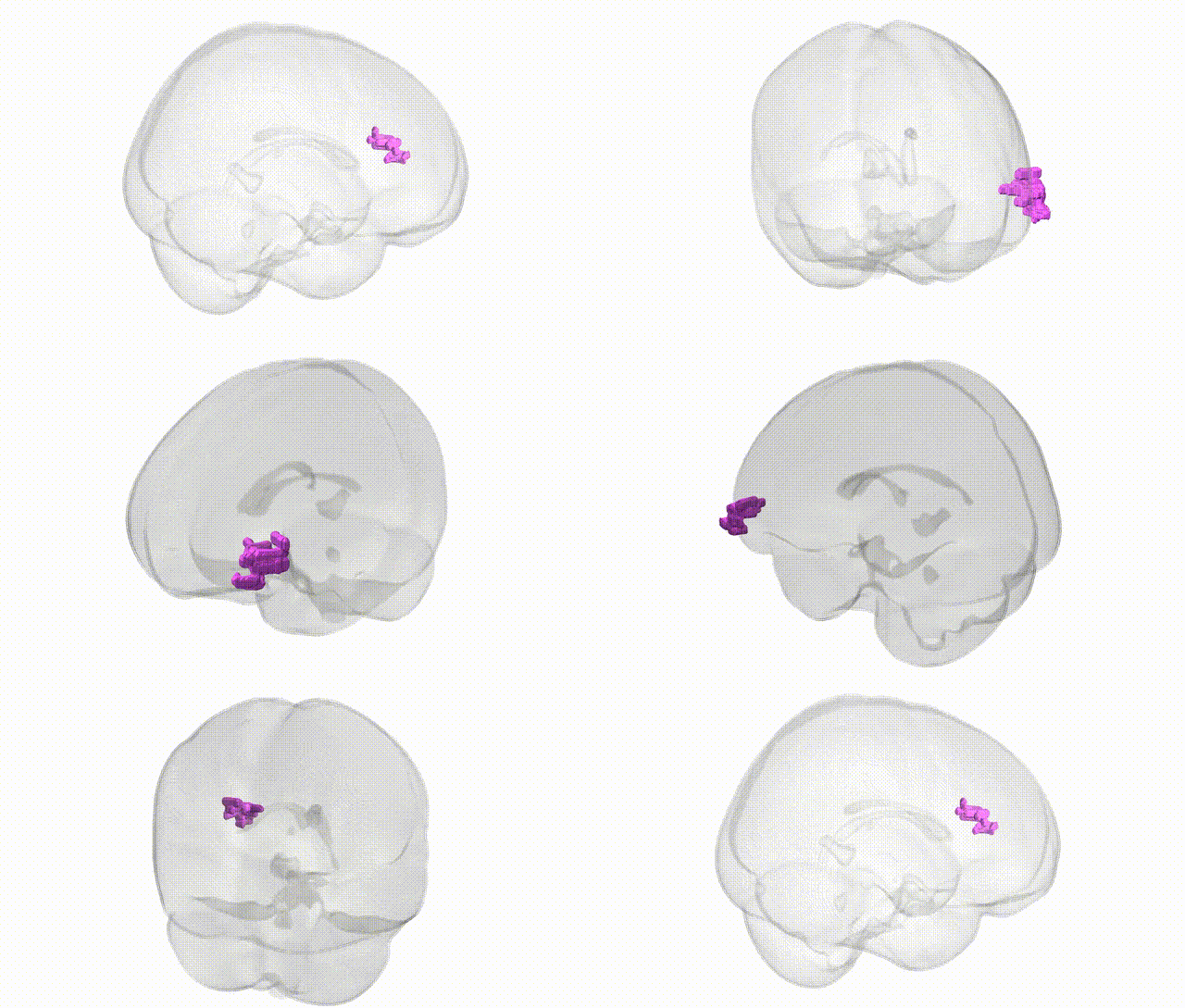
Full Quality Version: Download MP4
Wali Sidiqyar*, Gaurav Rudravaram*, Elyssa M. McMaster, Trent M. Schwartz, Adam M. Saunders, Kurt G. Schilling, Bennett A. Landman "Introducing SPINS: A Shared Public Visualization Library of Neuroanatomical Structures." Medical Imaging with Deep Learning- short paper
This resource is licensed under CC0 1.0 Universal (Public Domain).