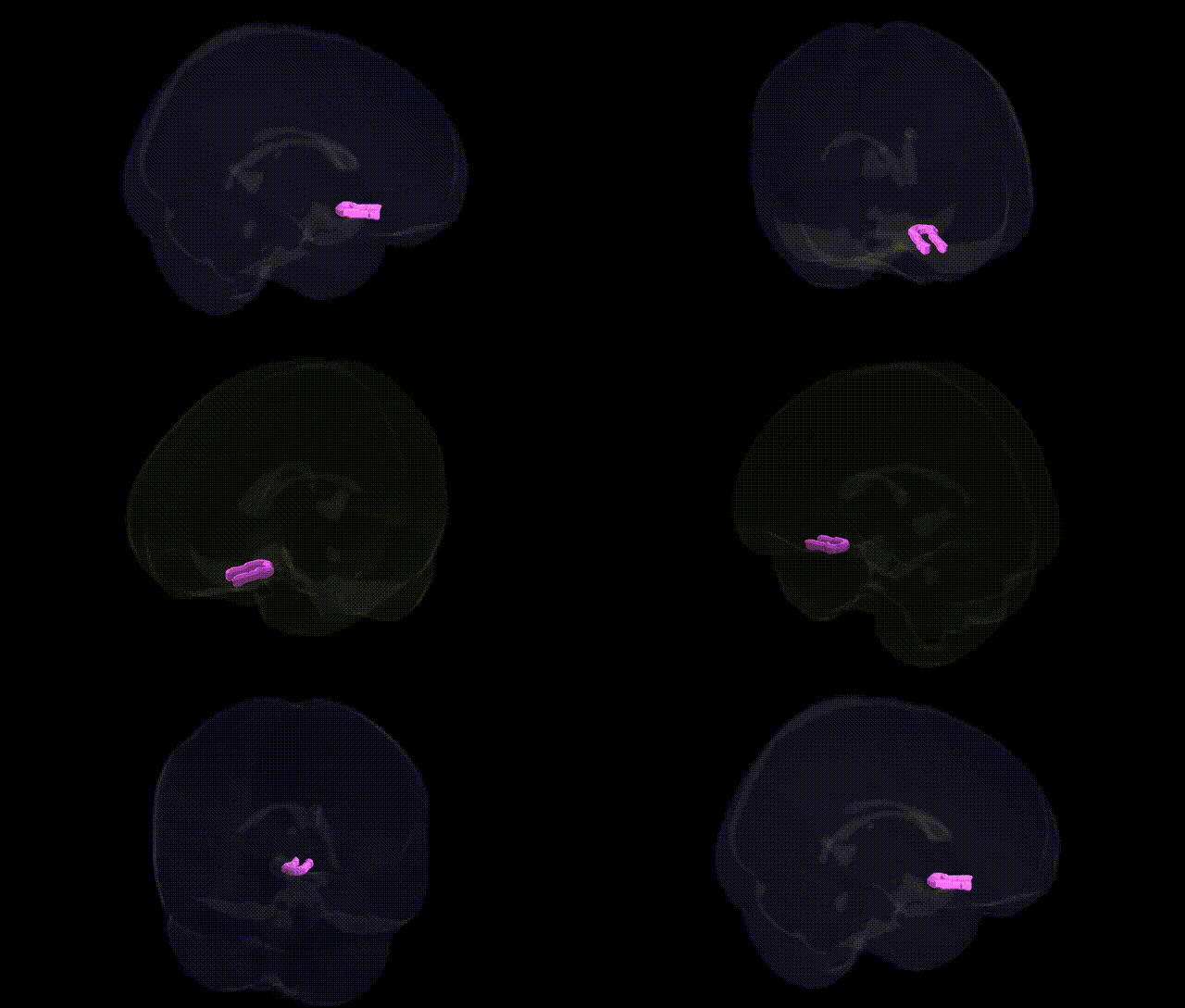
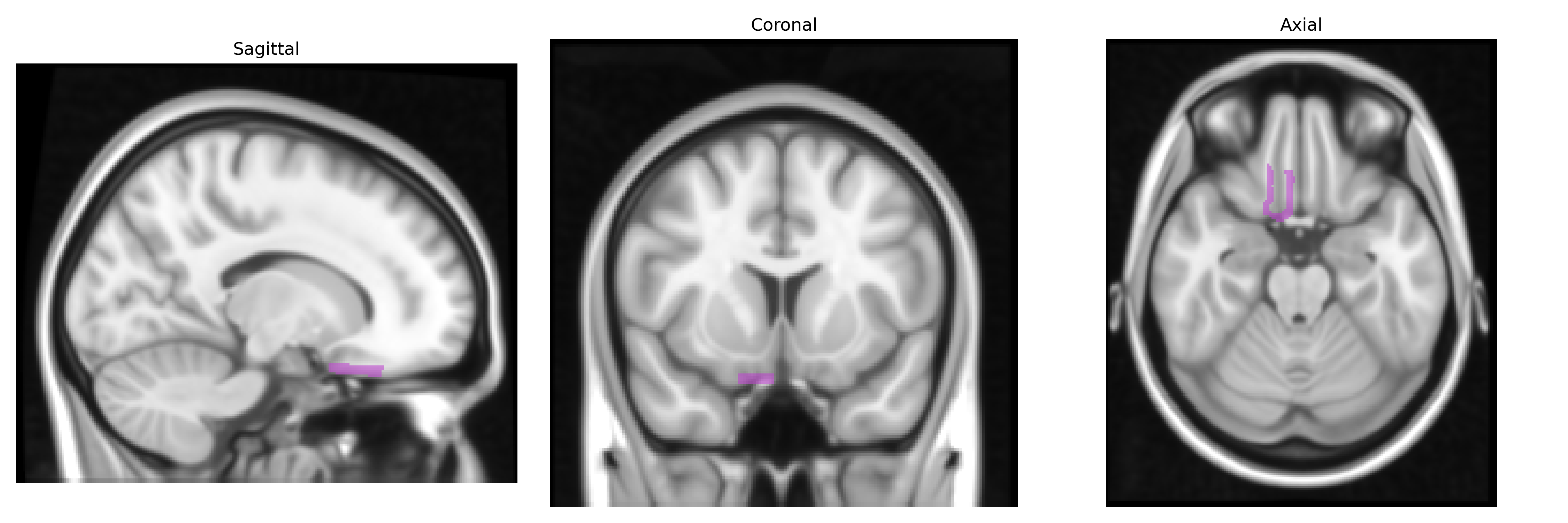
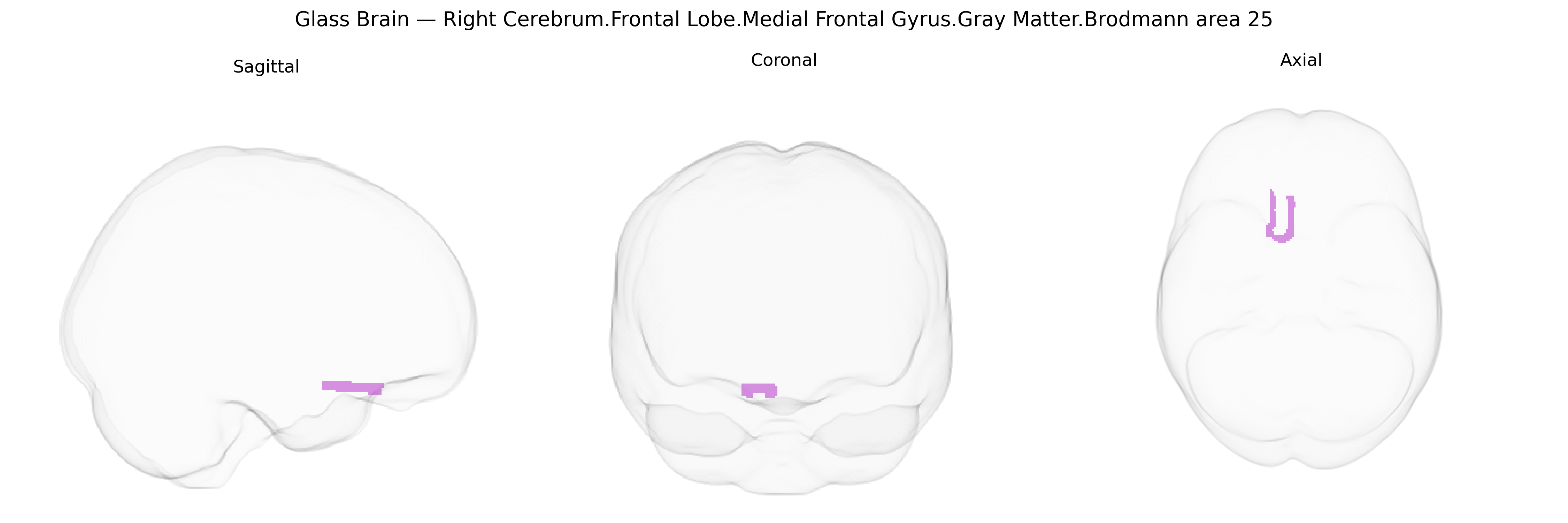
The bilateral Right Cerebrum.Frontal Lobe.Medial Frontal Gyrus.Gray Matter.Brodmann area 25, as defined in the Talairach 1 mm Atlas, corresponds to a ventromedial prefrontal/medial frontal region commonly identified with the subgenual area (subgenual cingulate cortex). This agranular frontal cortex lies inferior to the genu of the corpus callosum and is heavily interconnected with limbic and autonomic structures, including the hypothalamus, amygdala, and brainstem nuclei, positioning it as a key node in emotional regulation, mood control, and visceromotor integration. Functional imaging and clinical studies implicate this region in the pathophysiology of major depressive disorder and related mood disturbances, with abnormal activity and connectivity patterns observed in affective disorders and targeted in neuromodulatory treatments such as deep brain stimulation. There is no dedicated Wikipedia article specifically titled “Brodmann area 25,” but this region is closely related to the Subgenual area.
The medial frontal gyrus portion of Brodmann area 25 (subgenual/subgenual cingulate region) has been repeatedly implicated in genetic and genomic studies of mood and stress-related psychopathology, particularly major depressive disorder (MDD) and bipolar disorder, where risk variants in genes related to serotonergic function (e.g., SLC6A4), neurotrophic signaling (e.g., BDNF), and hypothalamic–pituitary–adrenal (HPA) axis regulation (e.g., FKBP5, CRHR1) have been associated with altered structure, connectivity, or activity in this region. Imaging–genetics and transcriptomic mapping studies show that polygenic risk scores for MDD, bipolar disorder, and schizophrenia, as well as specific loci from large GWAS (for example variants near genes such as GRM3, DRD2, CACNA1C, and other synaptic and calcium-channel genes) correlate with volume, cortical thickness, or functional activation in medial prefrontal/subgenual cingulate areas that closely overlap BA25. This region has also emerged in genetic studies of treatment response and neuromodulation targets, where variation in serotonin transporter and BDNF genes moderates the impact of antidepressants and deep brain stimulation on BA25 activity. Beyond mood disorders, GWAS of neuroticism, anxiety-related traits, and stress reactivity highlight convergent genetic influences on medial prefrontal circuits, and developmental and connectivity studies linking risk variants for autism spectrum disorder and schizophrenia to default mode and limbic networks often map expression-enriched risk genes to the medial prefrontal/subgenual cingulate cortex, underscoring a broad polygenic contribution to structural and functional variation in Brodmann area 25.
Overview generated by GPT-4o (2026).
Region ID: 227
Hemisphere: bilateral
Atlas: Talairach labels 1mm
Full Quality Version: Download MP4
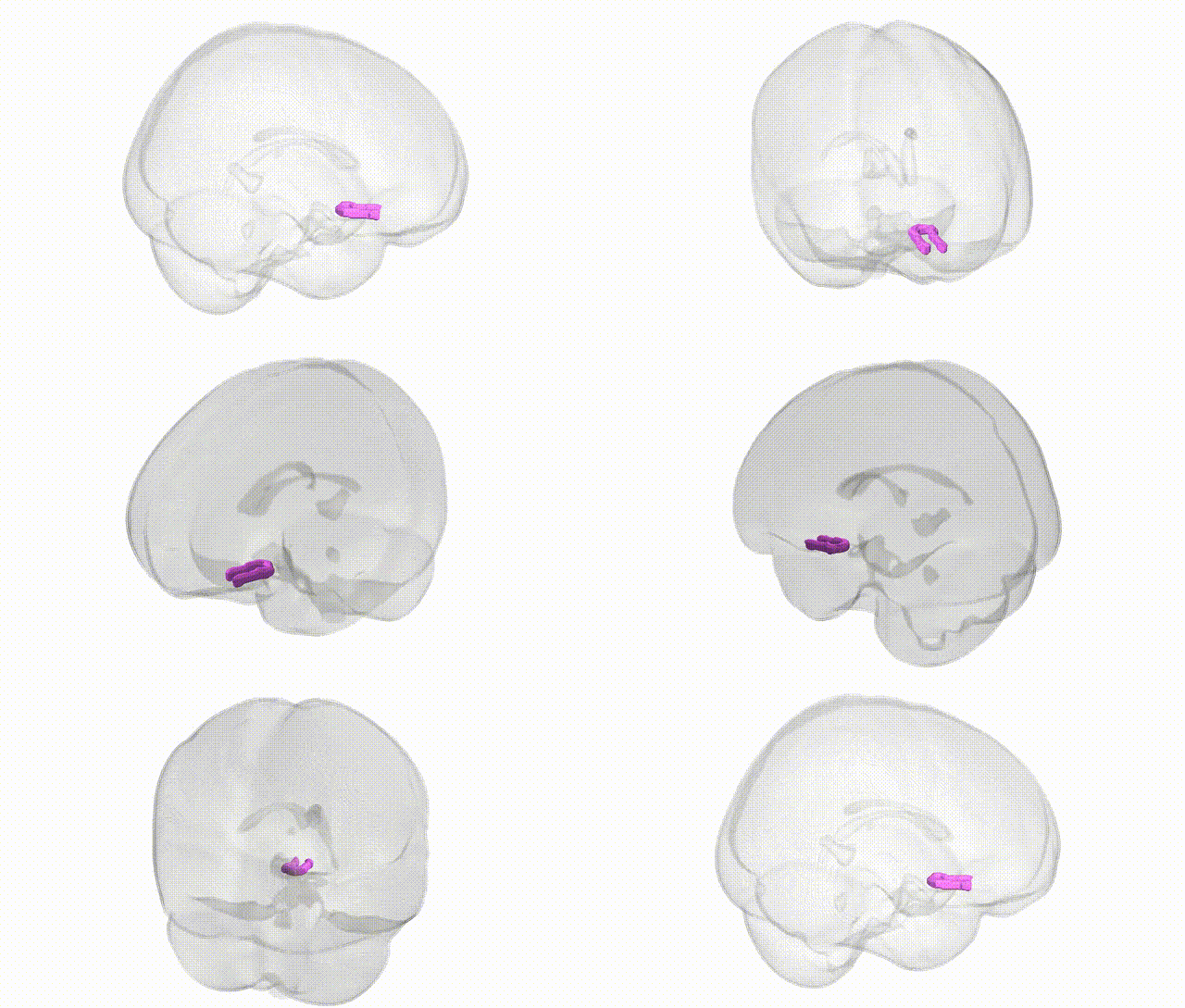
Full Quality Version: Download MP4
Wali Sidiqyar*, Gaurav Rudravaram*, Elyssa M. McMaster, Trent M. Schwartz, Adam M. Saunders, Kurt G. Schilling, Bennett A. Landman "Introducing SPINS: A Shared Public Visualization Library of Neuroanatomical Structures." Medical Imaging with Deep Learning- short paper
This resource is licensed under CC0 1.0 Universal (Public Domain).