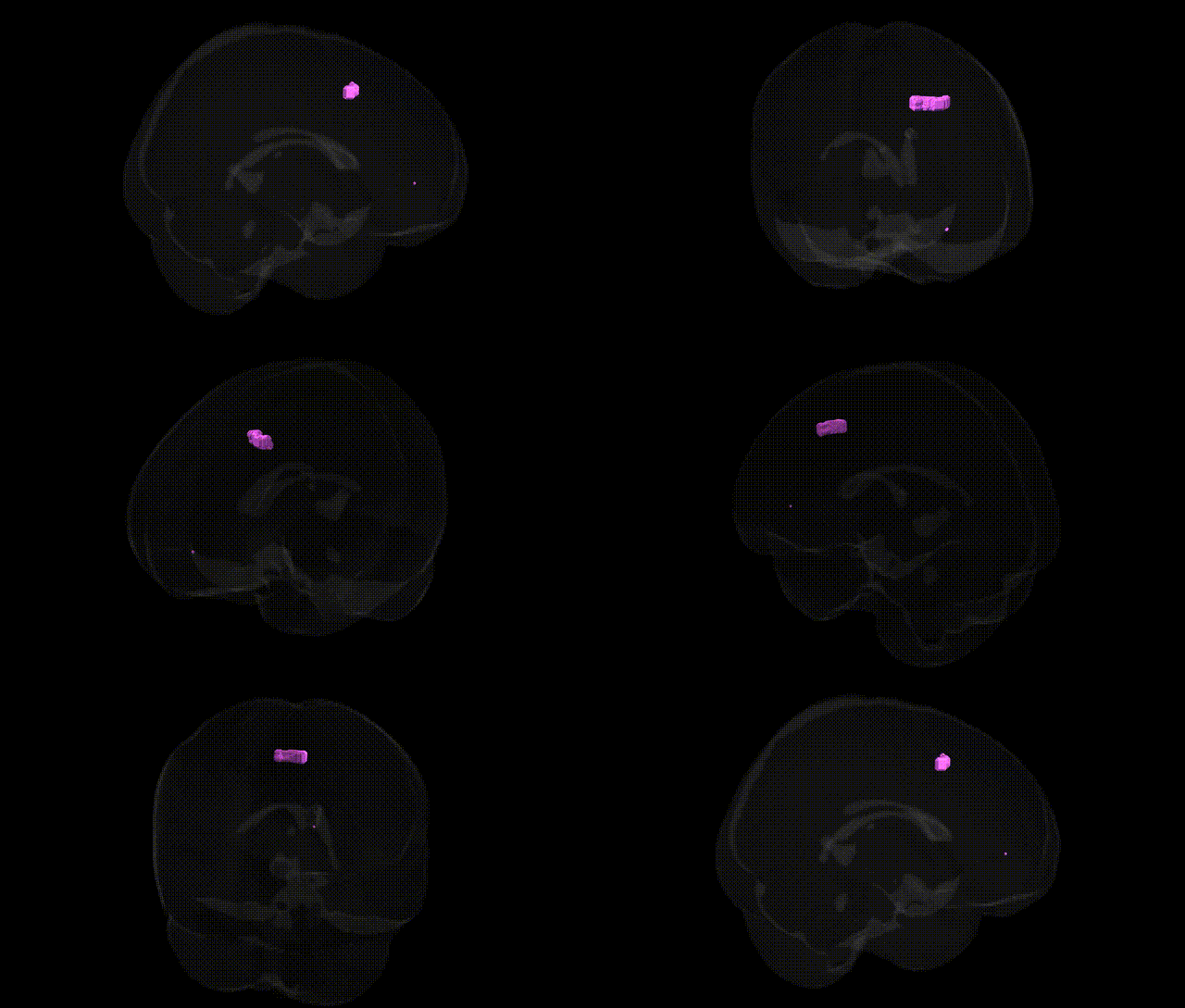
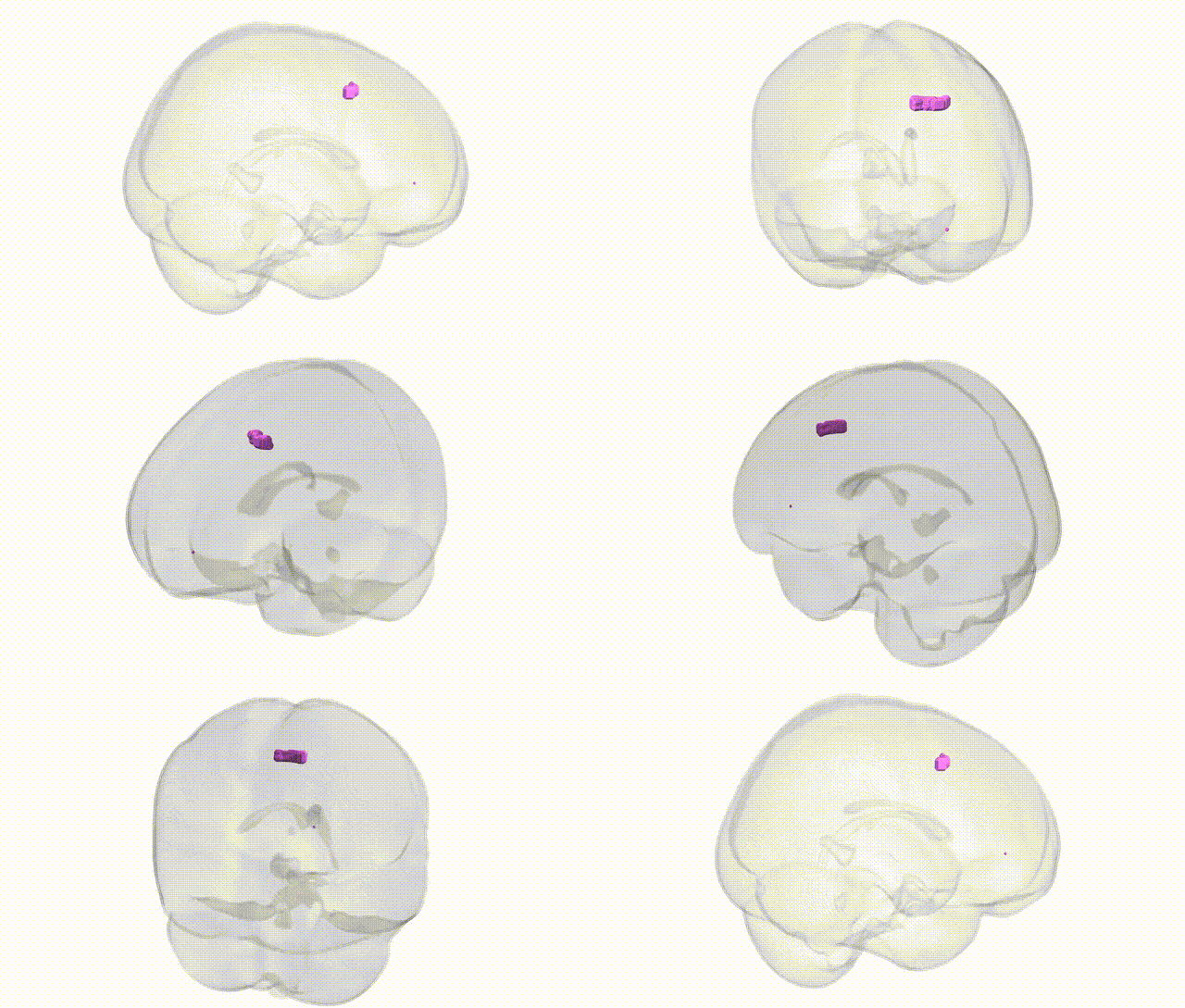
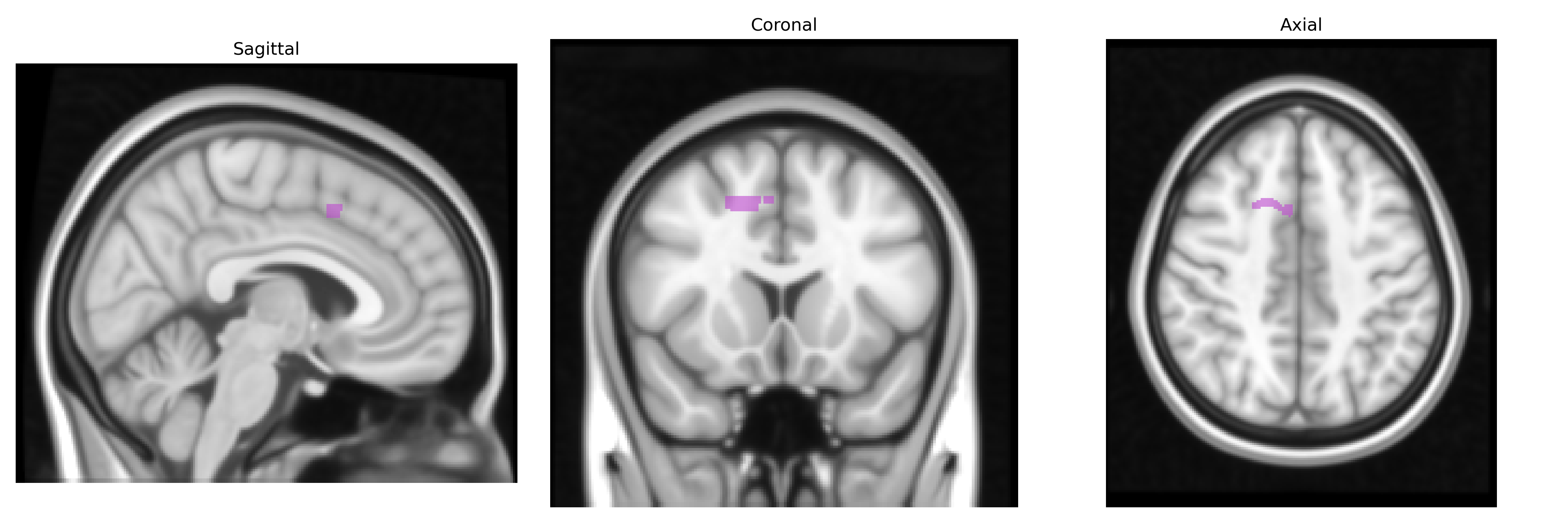
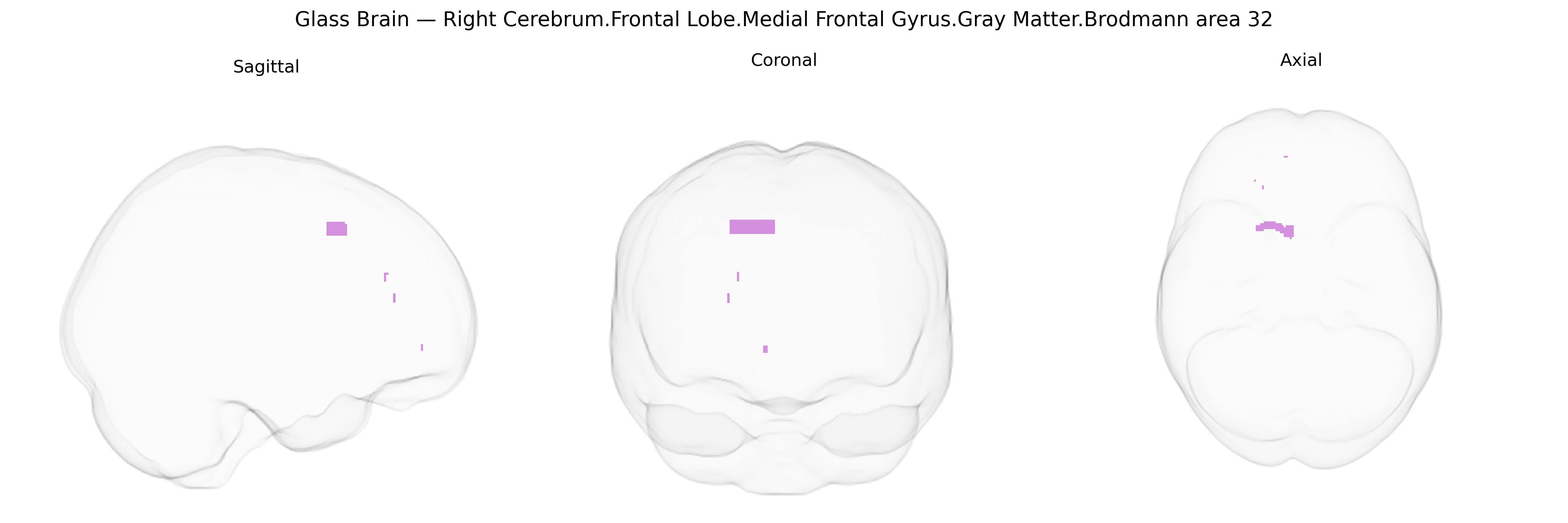
The bilateral Right Cerebrum.Frontal Lobe.Medial Frontal Gyrus.Gray Matter.Brodmann area 32 corresponds to a medial prefrontal/anterior cingulate sector implicated in higher-order cognitive, affective, and autonomic regulation. Cytoarchitectonically, Brodmann area 32 lies on the medial frontal surface, bordering other medial prefrontal and anterior cingulate fields, and is characterized by an agranular to dysgranular cortical pattern typical of limbic-associated cortex. Functionally, this region participates in emotion processing, conflict monitoring, decision-making under uncertainty, and modulation of autonomic responses, contributing to networks supporting cognitive control and valuation processes. There is no direct link for this precise Talairach label; see the related structure Brodmann area 32.
The medial frontal gyrus gray matter in Brodmann area 32 (dorsal/rostral anterior cingulate–medial prefrontal region) shows convergent genetic associations from GWAS and imaging-genetics studies implicating neurodevelopmental, psychiatric, and cognitive traits. Variants in genes involved in synaptic plasticity and neurodevelopment (for example in glutamatergic and GABAergic pathways) have been linked to gray-matter thickness and surface area in medial prefrontal and anterior cingulate regions, including BA32, with large consortia such as ENIGMA and UK Biobank identifying loci near genes like MIR137, GRIN2A, and others influencing cortical morphology in this area. Polygenic risk for schizophrenia, major depressive disorder, bipolar disorder, ADHD, and autism spectrum disorder shows associations with altered volume, cortical thickness, or activation in BA32/medial frontal cortex, and specific schizophrenia- and depression-associated loci (including those near CACNA1C, ZNF804A, and DRD2) have been linked to structure or function in this region in candidate and follow-up studies. BA32 has also emerged in GWAS-informed imaging studies of traits such as neuroticism, cognitive control, and risk-taking, where common variants in large-scale brain–behavior datasets correlate with medial frontal/anterior cingulate morphology and connectivity. Additionally, genetic variants related to default mode and salience network organization, including those in genes affecting myelination and axon guidance, have been associated with connectivity patterns centered on medial BA32, supporting a heritable contribution to individual differences in emotion regulation, conflict monitoring, and higher-order cognition mediated by this region.
Overview generated by GPT-4o (2026).
Region ID: 612
Hemisphere: bilateral
Atlas: Talairach labels 1mm
Full Quality Version: Download MP4
Full Quality Version: Download MP4
Wali Sidiqyar*, Gaurav Rudravaram*, Elyssa M. McMaster, Trent M. Schwartz, Adam M. Saunders, Kurt G. Schilling, Bennett A. Landman "Introducing SPINS: A Shared Public Visualization Library of Neuroanatomical Structures." Medical Imaging with Deep Learning- short paper
This resource is licensed under CC0 1.0 Universal (Public Domain).