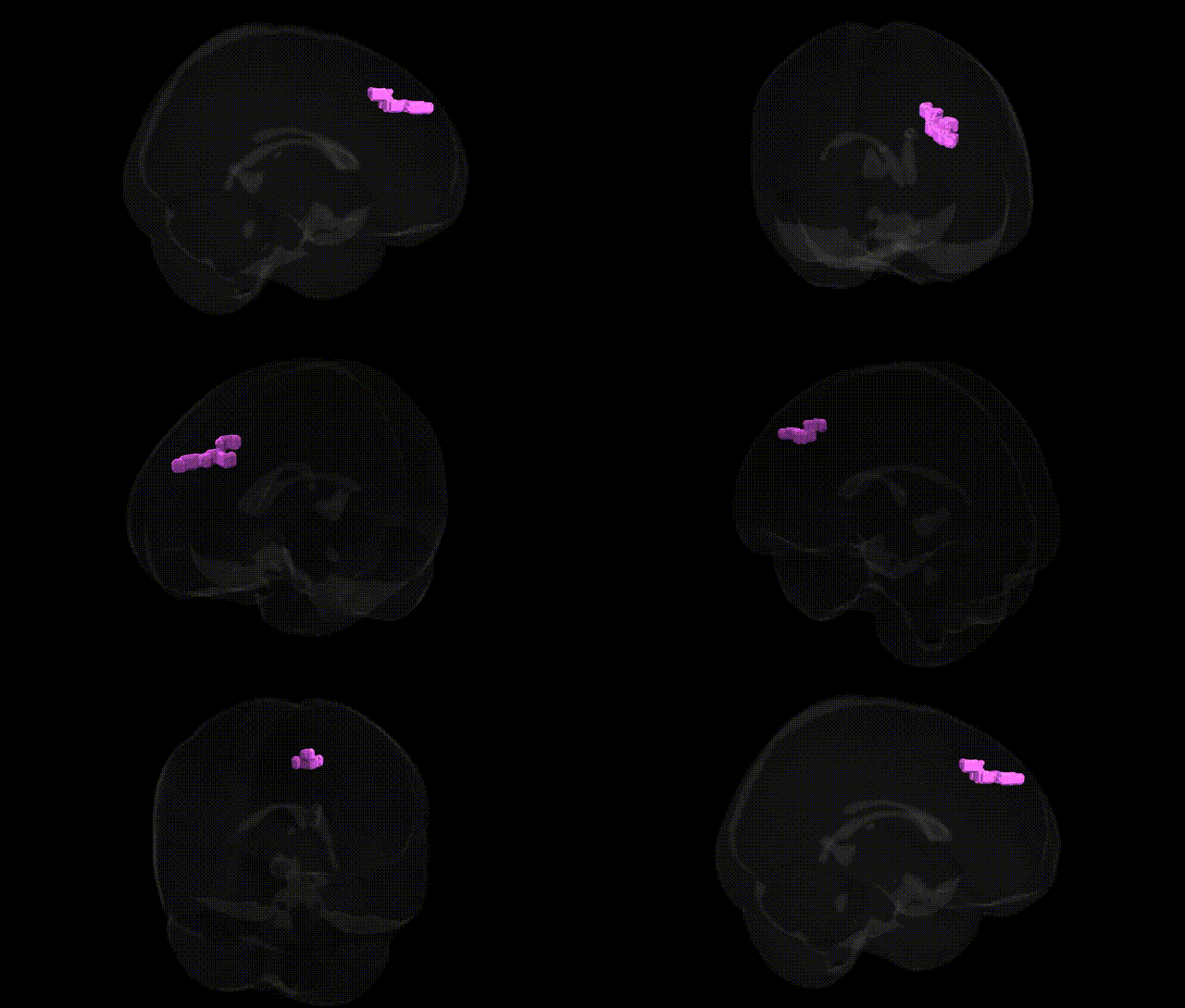
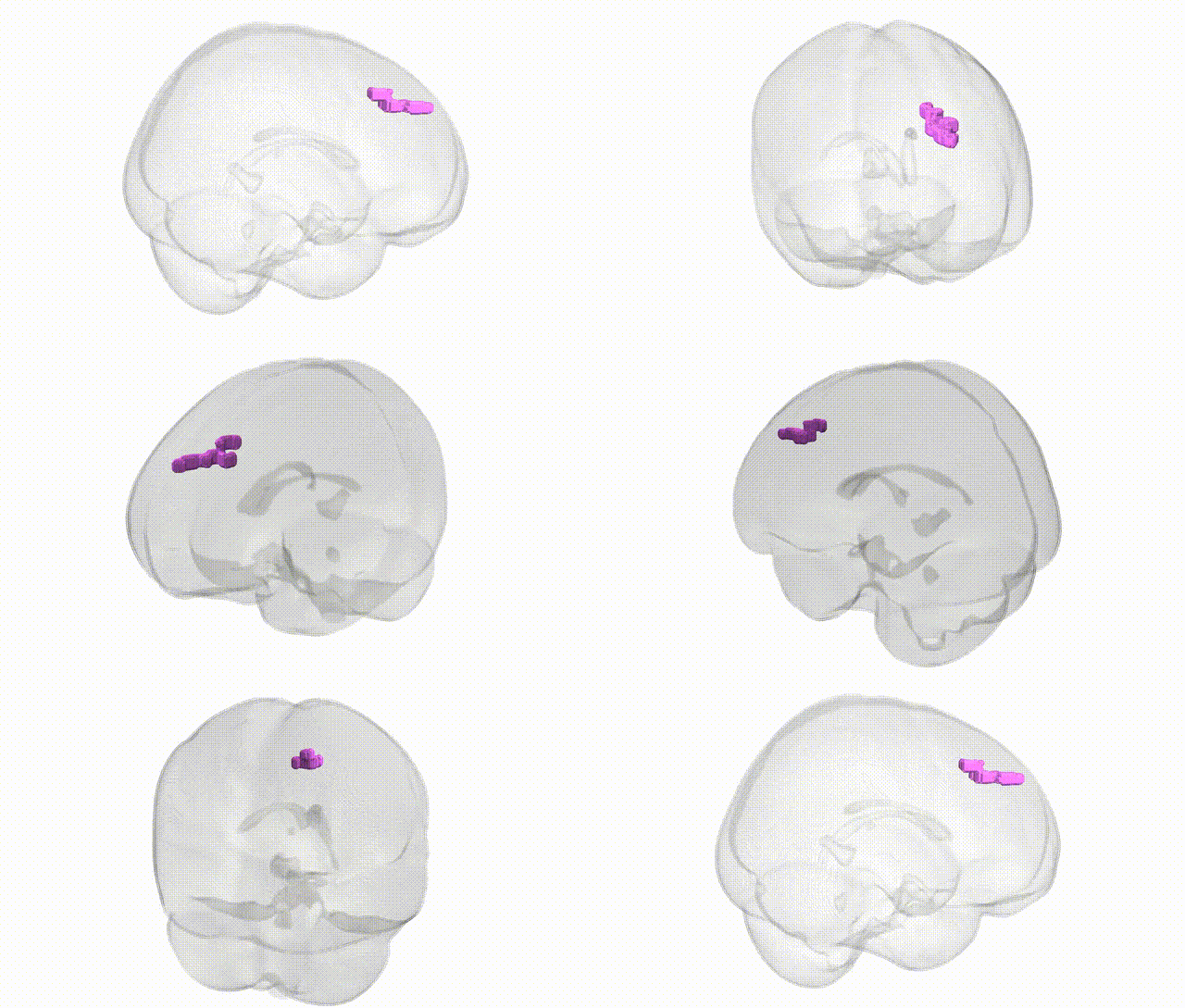
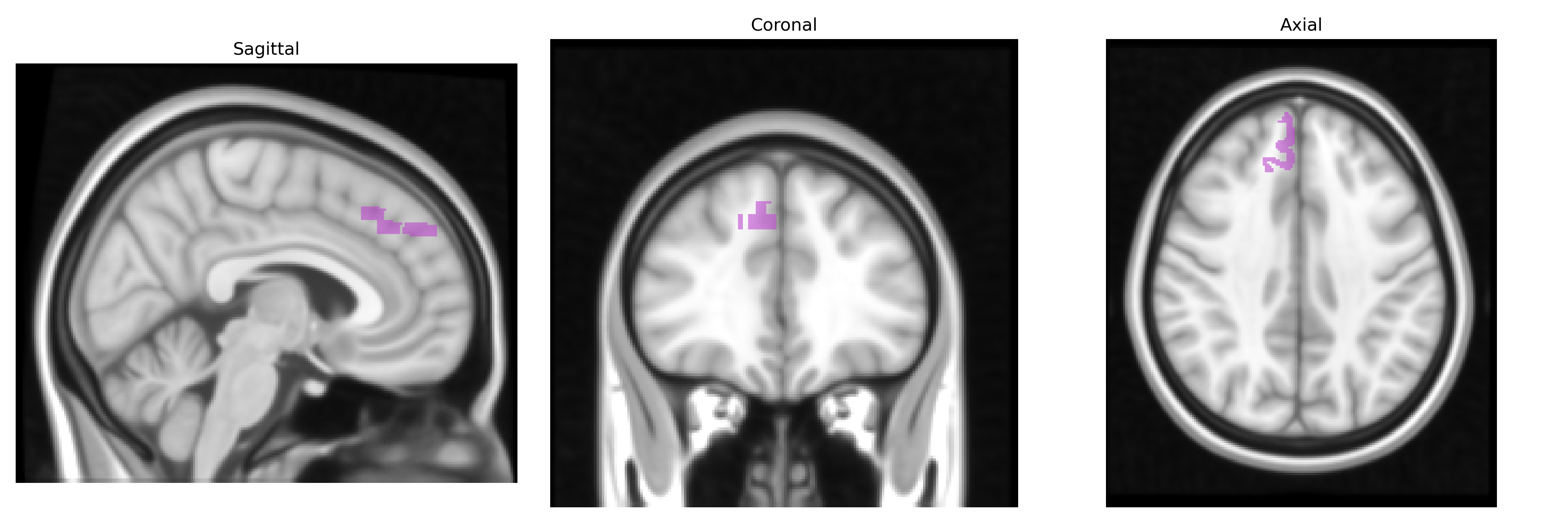
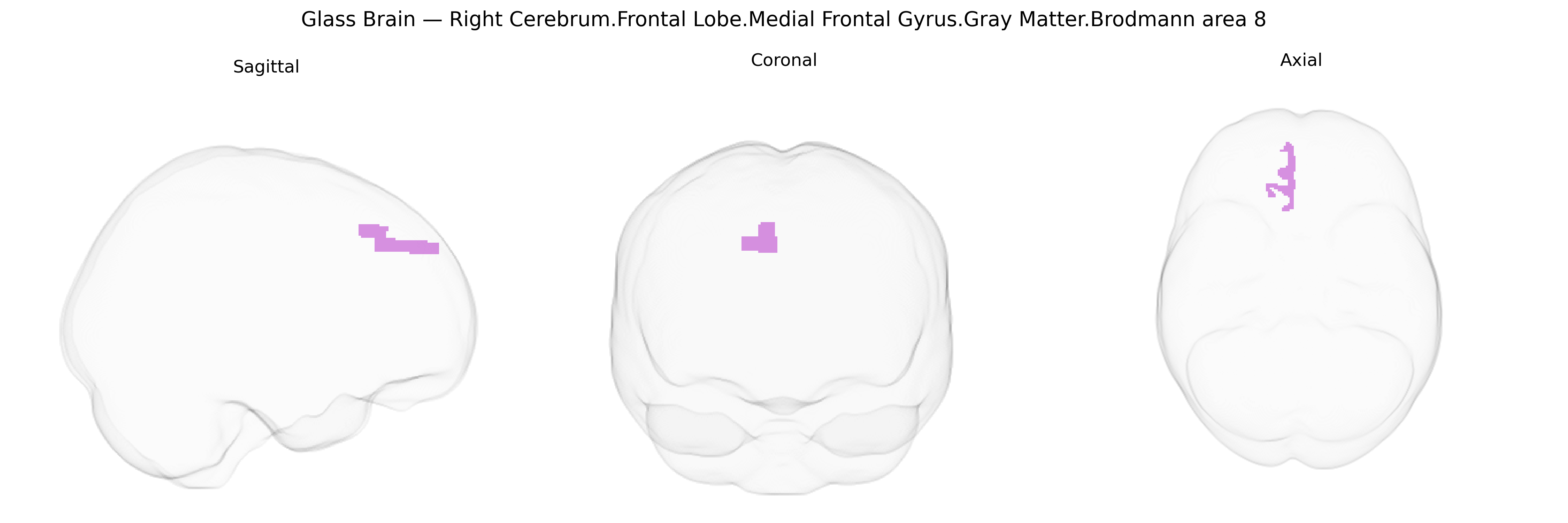
The bilateral Right Cerebrum.Frontal Lobe.Medial Frontal Gyrus.Gray Matter.Brodmann area 8, as defined in the Talairach 1 mm Atlas, corresponds to a portion of the dorsomedial prefrontal cortex located anterior to the premotor areas and superior to the cingulate sulcus, extending along the medial surface of the frontal lobe. Brodmann area 8 is traditionally associated with the frontal eye fields and participates in the control of voluntary saccadic eye movements, orienting attention, and higher-order executive processes, including decision-making and the planning of complex behaviors. It receives multimodal sensory input and projects to premotor and subcortical motor structures, thereby integrating cognitive signals with motor output. Functionally, this area is implicated in working memory, response selection, and aspects of cognitive control, as well as in networks supporting goal-directed behavior and the regulation of action based on internal plans and external cues. There is no direct link for this exact Talairach-defined subdivision; a related structure is Brodmann area 8.
The bilateral right medial frontal gyrus (Brodmann area 8) has been implicated in multiple genetic and GWAS findings through its roles in cognitive control, eye movements, and higher-order executive functions. Imaging genetics and large-scale GWAS meta-analyses of cortical thickness and surface area (e.g., ENIGMA and UK Biobank–based studies) have linked common variants in neurodevelopmental and synaptic genes (such as those near HMGA2, MIR2113, and other loci influencing global and frontal lobe morphology) to structural variation in medial frontal cortex, including BA8. Polygenic risk for schizophrenia, major depressive disorder, bipolar disorder, and ADHD has been associated with altered gray matter volume or cortical thickness in medial frontal regions encompassing BA8, with risk loci in genes related to glutamatergic signaling, synaptic scaffolding, and neuronal migration (e.g., CACNA1C, GRIN2A, DRD2) showing convergent effects on frontal circuitry. GWAS of cognitive traits (general intelligence, working memory, educational attainment) and personality dimensions (e.g., neuroticism) indicate that polygenic scores for these traits correlate with structural and functional measures in medial frontal/BA8 regions, consistent with a genetic influence on executive and attentional networks. Moreover, variants associated with obsessive–compulsive disorder, autism spectrum disorder, and anxiety have been linked to altered activation or connectivity in medial prefrontal–BA8 circuits, suggesting that genetically driven differences in this area contribute to vulnerability for a spectrum of neuropsychiatric conditions and individual variation in cognitive control.
Overview generated by GPT-4o (2026).
Region ID: 1034
Hemisphere: bilateral
Atlas: Talairach labels 1mm
Full Quality Version: Download MP4
Full Quality Version: Download MP4
Wali Sidiqyar*, Gaurav Rudravaram*, Elyssa M. McMaster, Trent M. Schwartz, Adam M. Saunders, Kurt G. Schilling, Bennett A. Landman "Introducing SPINS: A Shared Public Visualization Library of Neuroanatomical Structures." Medical Imaging with Deep Learning- short paper
This resource is licensed under CC0 1.0 Universal (Public Domain).