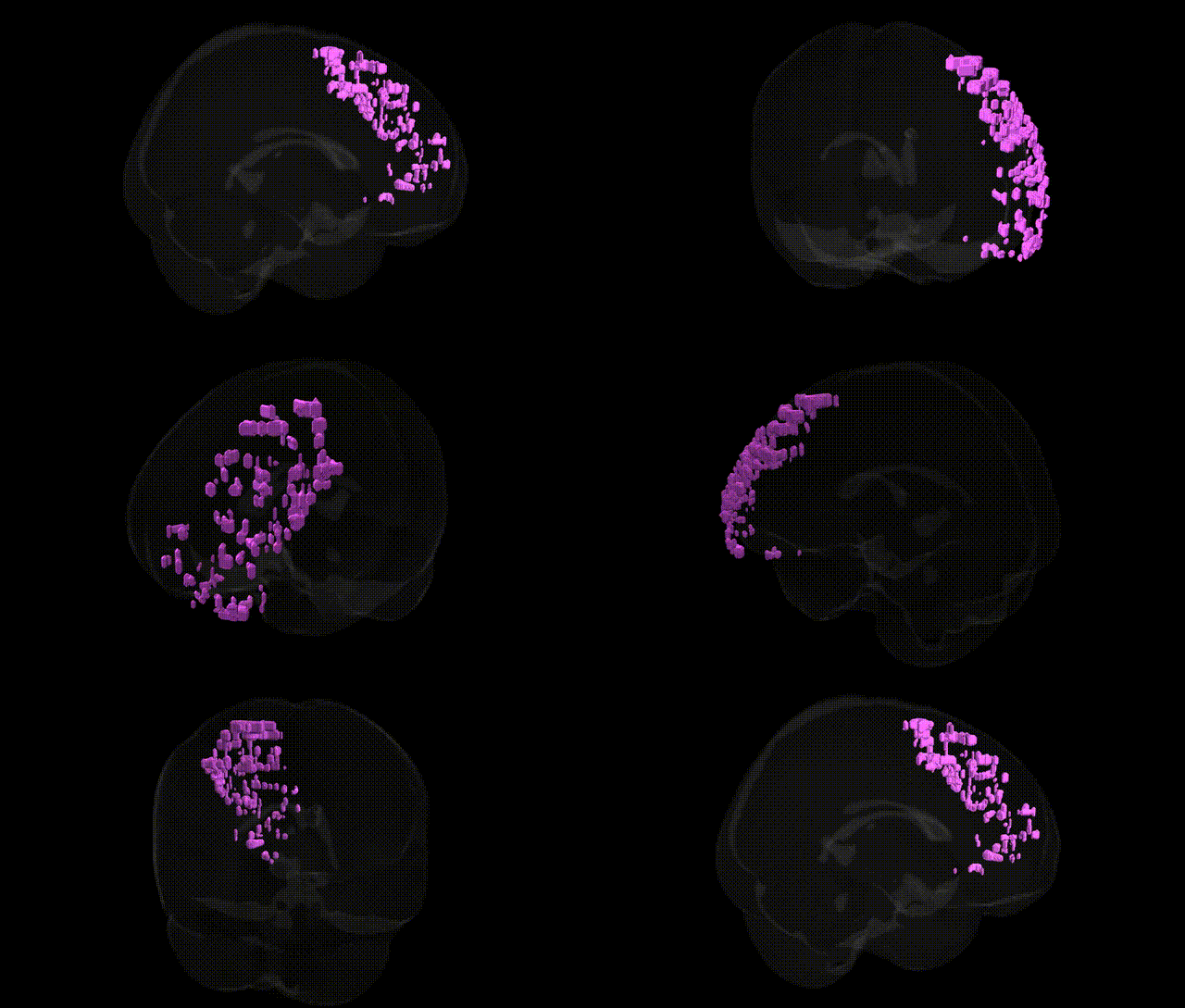
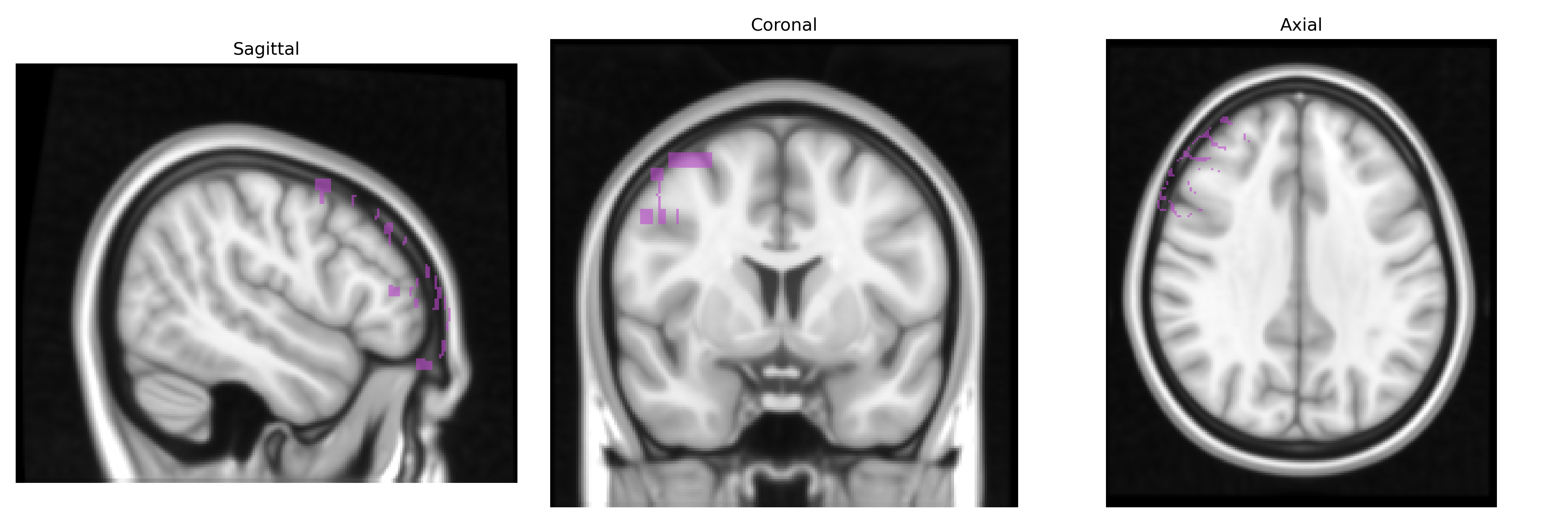
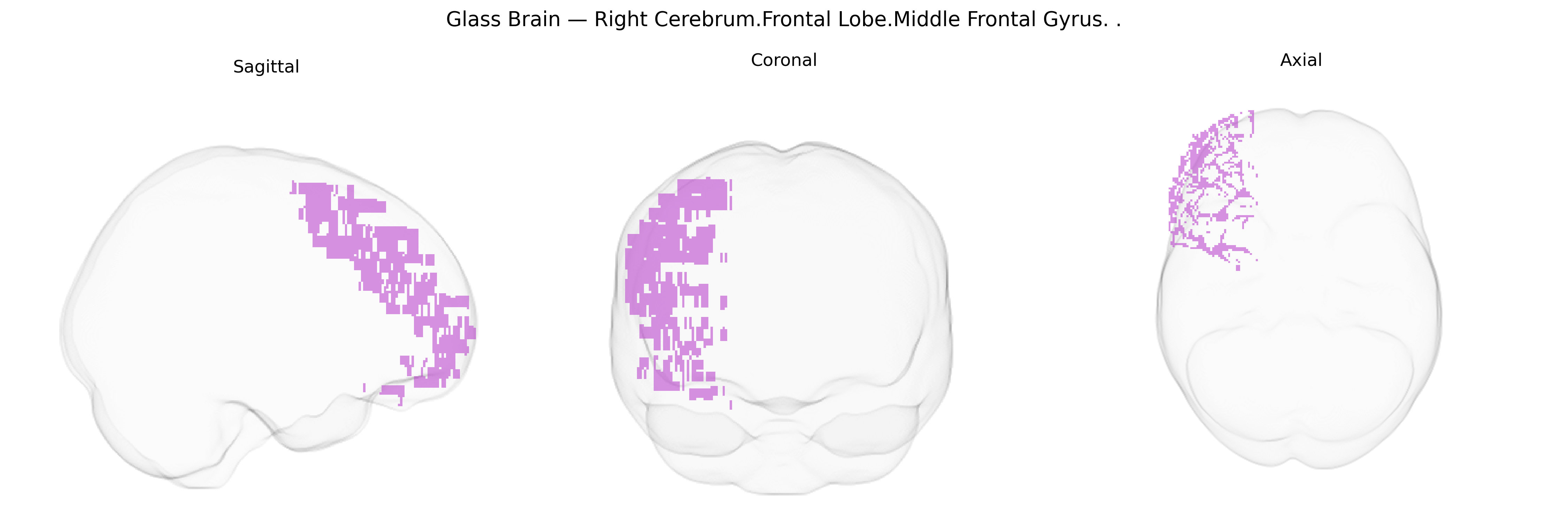
The bilateral Right Cerebrum.Frontal Lobe.Middle Frontal Gyrus (Talairach labels 1 mm Atlas) corresponds to the right middle frontal gyrus, a longitudinally oriented cortical region situated between the superior and inferior frontal gyri in the dorsolateral frontal lobe. This gyrus participates in higher-order executive functions, including working memory, attentional control, planning, decision-making, and aspects of cognitive flexibility, and it contributes to the dorsal attention and frontoparietal control networks. Functionally, it is involved in integrating sensory and contextual information to guide goal-directed behavior and in modulating motor output via connections with premotor and motor regions. The right hemisphere component is particularly implicated in sustained attention, response inhibition, and spatial processing. Middle frontal gyrus
Genetic associations involving the bilateral right middle frontal gyrus (Right Cerebrum.Frontal Lobe.Middle Frontal Gyrus in the Talairach 1 mm atlas) largely derive from imaging‑genetics and GWAS of cortical morphology, cognition, and psychiatric traits rather than region‑specific gene studies. Large MRI–GWAS consortia (e.g., ENIGMA, UK Biobank) have identified multiple loci associated with cortical thickness, surface area, and volume in middle frontal and adjacent dorsolateral prefrontal regions, implicating genes involved in neurodevelopment (e.g., MCPH1, HMGA2), synaptic function (e.g., GRIN2B), and cell adhesion (e.g., CAMKMT, CDH13). Polygenic risk scores for schizophrenia, bipolar disorder, major depressive disorder, autism spectrum disorder, and ADHD show correlations with structural and functional variation in this region, consistent with its role in working memory, cognitive control, and emotion regulation. GWAS of general cognitive ability and educational attainment have linked widespread frontal cortical measures—including the middle frontal gyrus—to variants near genes such as MAPT, CNTNAP2, and CHRNA2, as well as pathways related to synaptic plasticity and neuronal differentiation. Additional associations include links between middle frontal morphology or activation and genetic risk for substance use, anxiety, and neurodegenerative disorders, although these findings are typically part of distributed cortico‑subcortical networks and not specific to this single gyrus.
Overview generated by GPT-4o (2026).
Region ID: 199
Hemisphere: bilateral
Atlas: Talairach labels 1mm
Full Quality Version: Download MP4
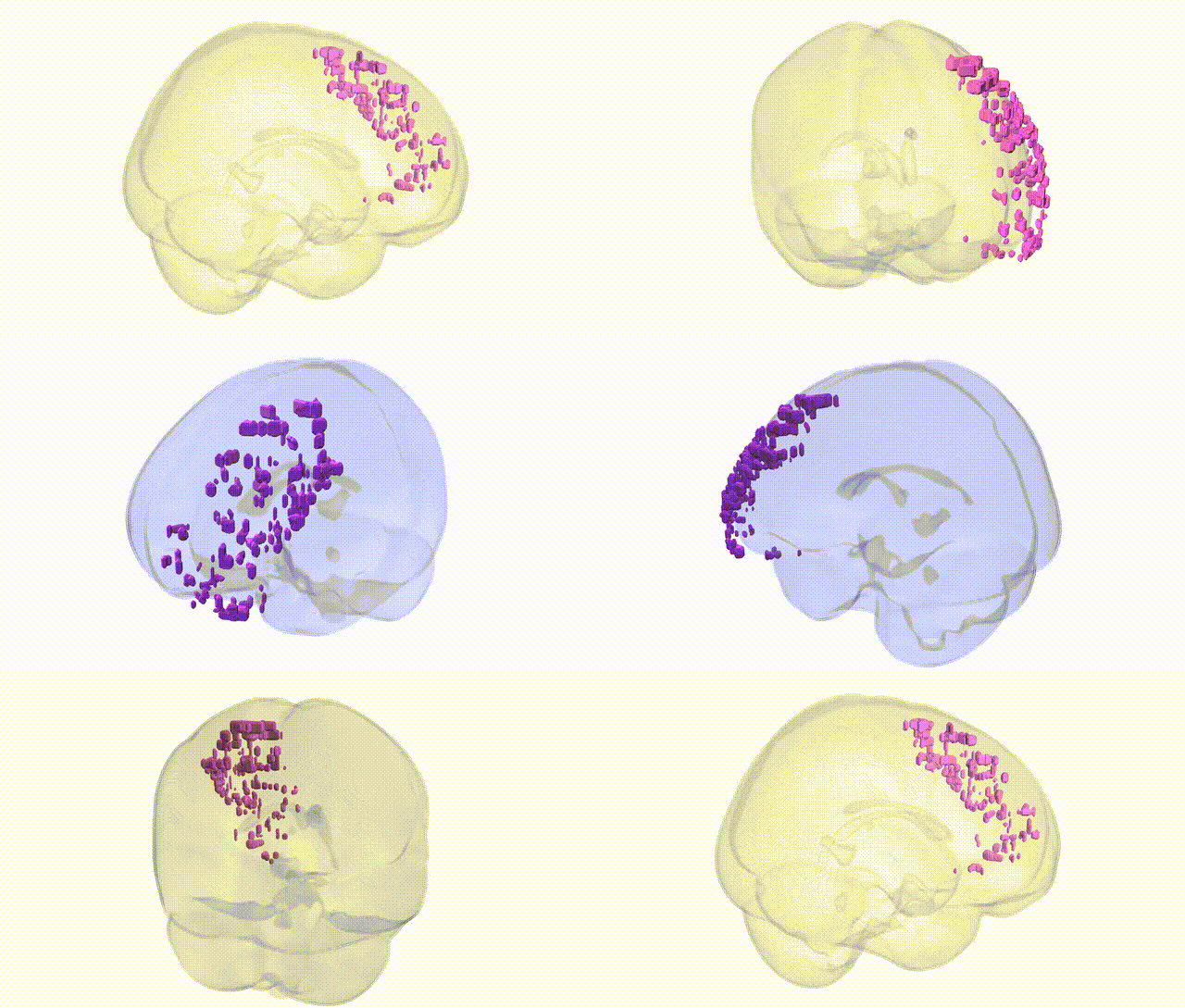
Full Quality Version: Download MP4
Wali Sidiqyar*, Gaurav Rudravaram*, Elyssa M. McMaster, Trent M. Schwartz, Adam M. Saunders, Kurt G. Schilling, Bennett A. Landman "Introducing SPINS: A Shared Public Visualization Library of Neuroanatomical Structures." Medical Imaging with Deep Learning- short paper
This resource is licensed under CC0 1.0 Universal (Public Domain).