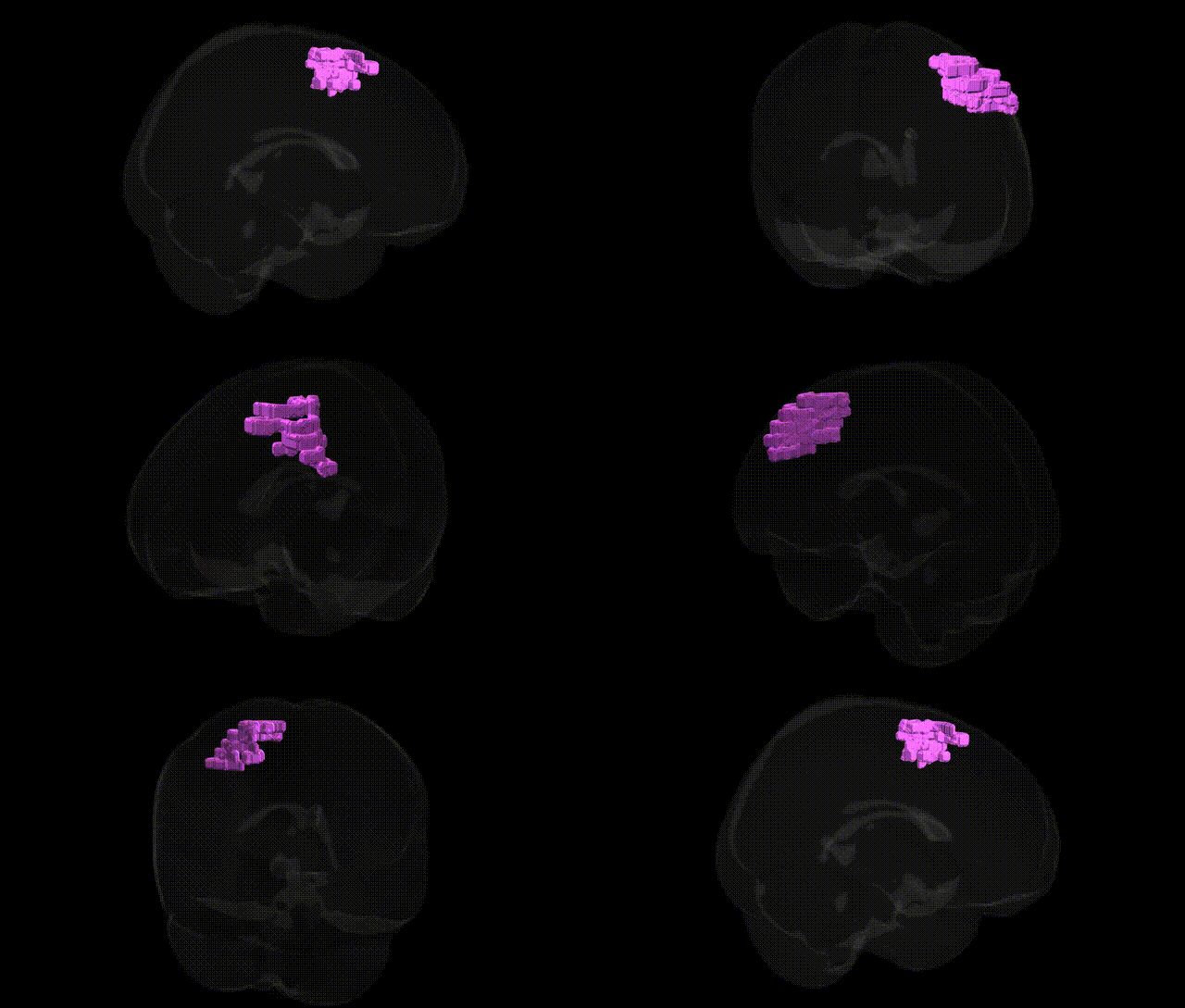
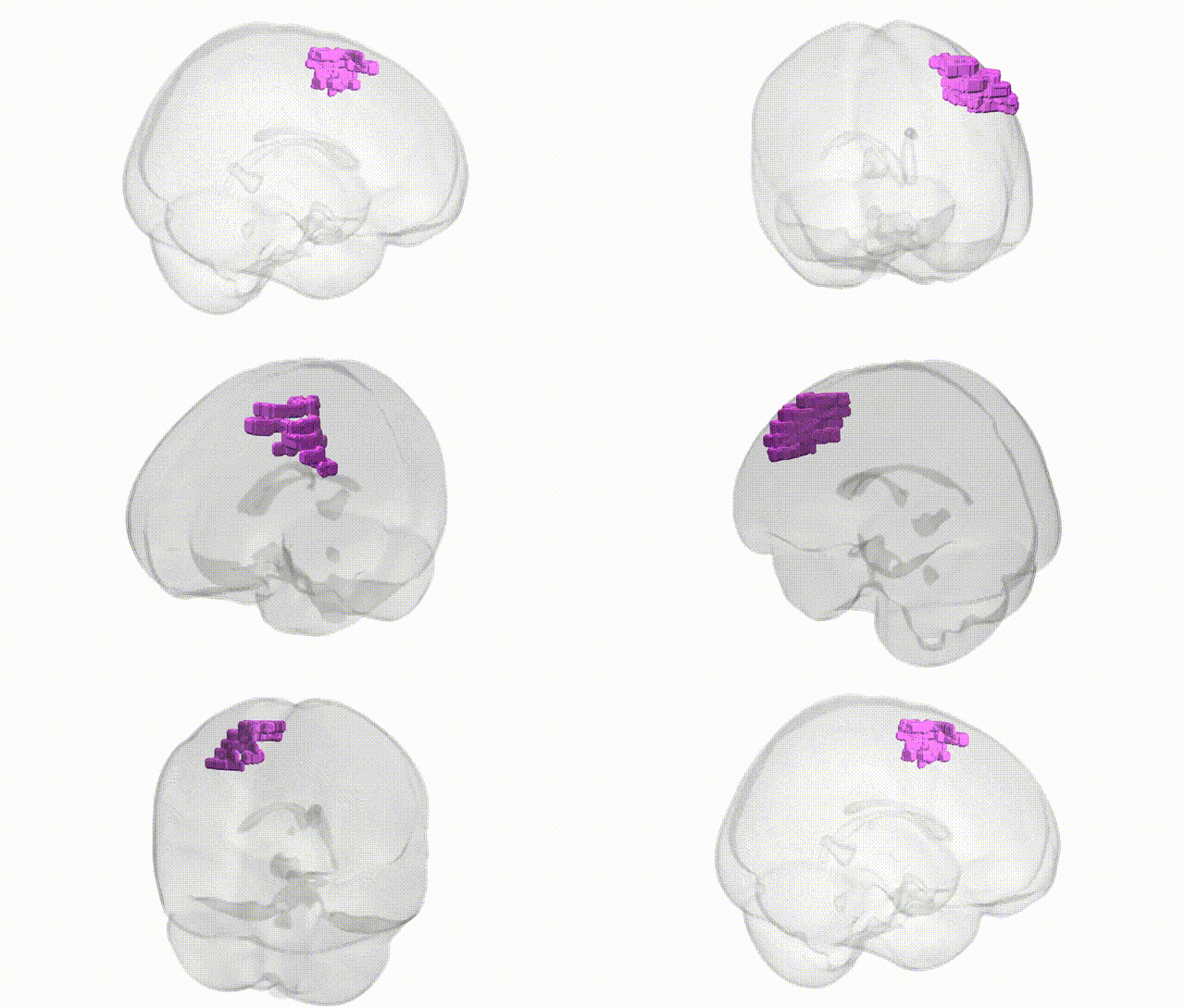
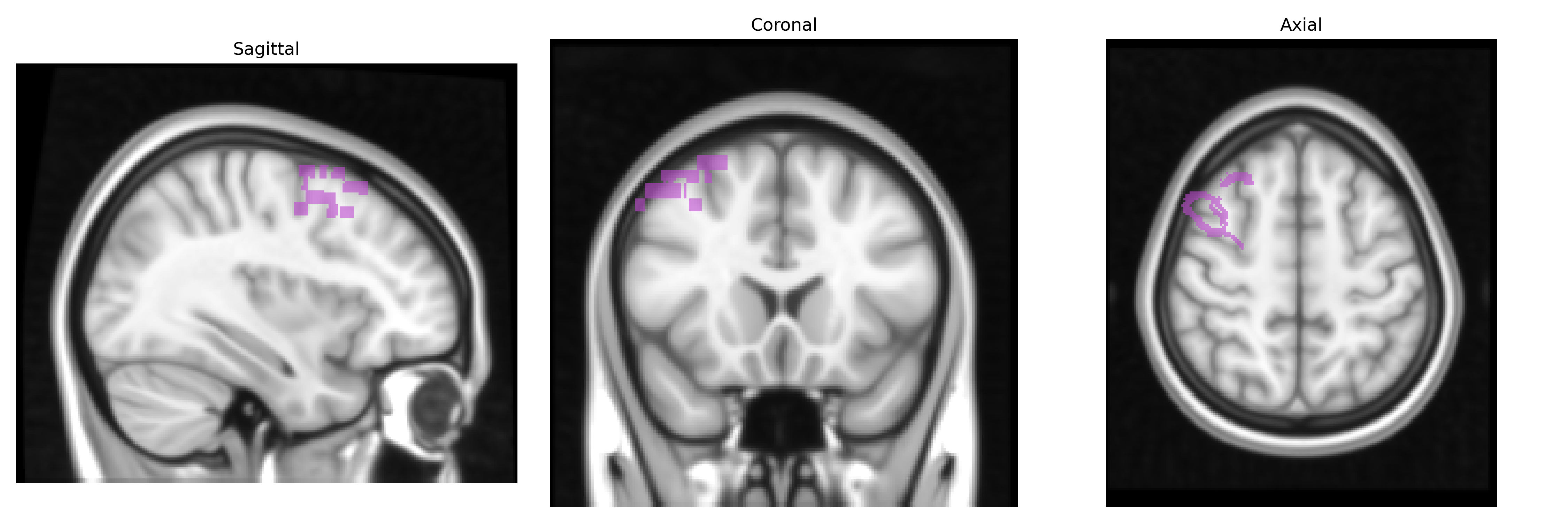
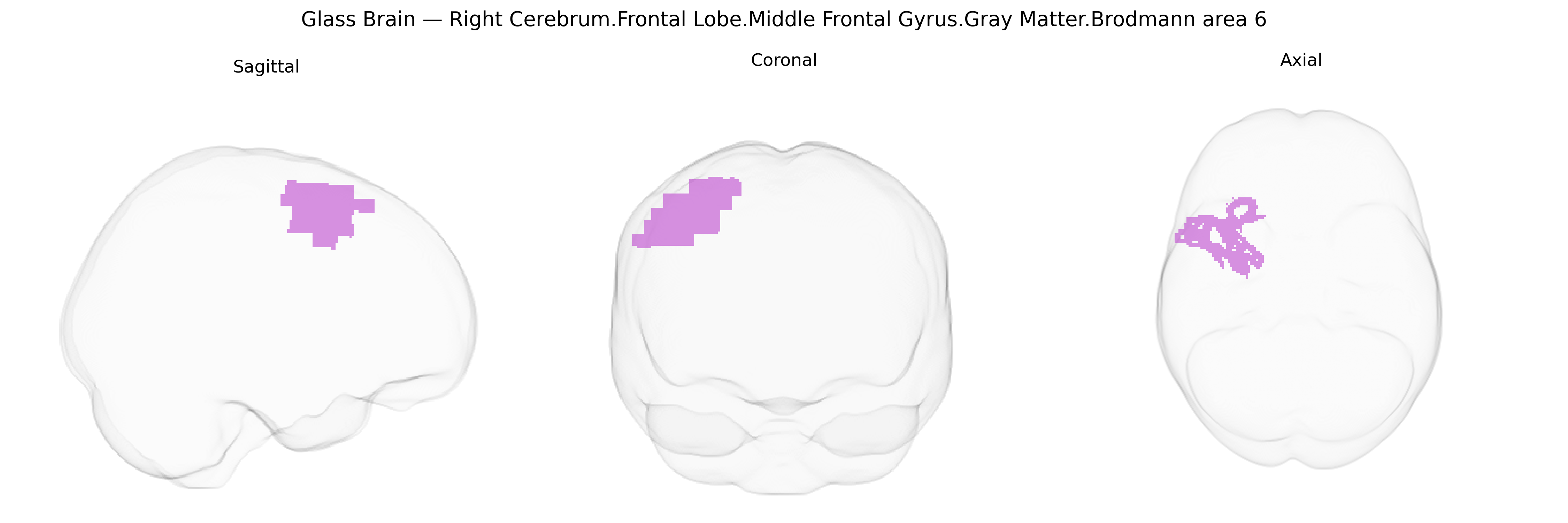
The bilateral Right Cerebrum.Frontal Lobe.Middle Frontal Gyrus.Gray Matter.Brodmann area 6 corresponds primarily to the premotor cortex and supplementary motor areas located anterior to the primary motor cortex in the frontal lobe, within the middle frontal gyrus of the right hemisphere. This agranular cortical region is involved in planning, preparation, and coordination of voluntary movements, integration of sensory information for motor output, and the organization of complex motor sequences, including those related to posture, eye movements, and bimanual coordination. It receives inputs from parietal and prefrontal areas and projects to primary motor cortex and subcortical motor structures, contributing to motor readiness and the transformation of intentions into motor programs. There is no direct link for this exact composite label; a closely related structure is Brodmann area 6.
Genetic associations involving the bilateral right middle frontal gyrus (Brodmann area 6, premotor/supplementary motor–adjacent frontal cortex) chiefly emerge from imaging‑genetics and large‑scale GWAS of cortical morphology, functional networks, and neuropsychiatric traits rather than from region‑specific candidate gene studies. Variants in genes regulating neurodevelopmental patterning, synaptic plasticity, and myelination (for example in pathways involving microtubule dynamics, axon guidance, and neuronal migration) have been linked to cortical thickness, surface area, and gray‑matter volume in premotor and middle frontal regions that include BA6; polygenic scores for general cognitive ability and educational attainment also correlate with structural and functional measures in this area. GWAS of attention‑deficit/hyperactivity disorder, schizophrenia, bipolar disorder, major depression, and autism spectrum disorder consistently implicate frontal control networks, with risk loci mapping to genes involved in dopamine and glutamate signaling and synaptic organization that show altered activation or structure in right middle frontal/premotor cortex, particularly during tasks of response inhibition and working memory. Motor and movement‑related disorders, including dystonia and Parkinson’s disease, show genetic influences on networks involving BA6, where variants affecting basal ganglia–thalamocortical circuitry and motor planning (for example in genes like LRRK2 and others influencing cortical–subcortical connectivity) modulate activity or atrophy patterns. Large consortia such as ENIGMA and UK Biobank have further identified widespread polygenic influences on BA6‑adjacent morphology, but the associations are highly distributed and pleiotropic, with no single gene uniquely or specifically defining the bilateral right middle frontal gyrus; instead, this region appears as a convergent node where many small‑effect common variants, acting via general neurodevelopmental and synaptic pathways, contribute to individual differences in executive control, motor planning, susceptibility to psychiatric illness, and related cognitive traits.
Overview generated by GPT-4o (2026).
Region ID: 1024
Hemisphere: bilateral
Atlas: Talairach labels 1mm
Full Quality Version: Download MP4
Full Quality Version: Download MP4
Wali Sidiqyar*, Gaurav Rudravaram*, Elyssa M. McMaster, Trent M. Schwartz, Adam M. Saunders, Kurt G. Schilling, Bennett A. Landman "Introducing SPINS: A Shared Public Visualization Library of Neuroanatomical Structures." Medical Imaging with Deep Learning- short paper
This resource is licensed under CC0 1.0 Universal (Public Domain).