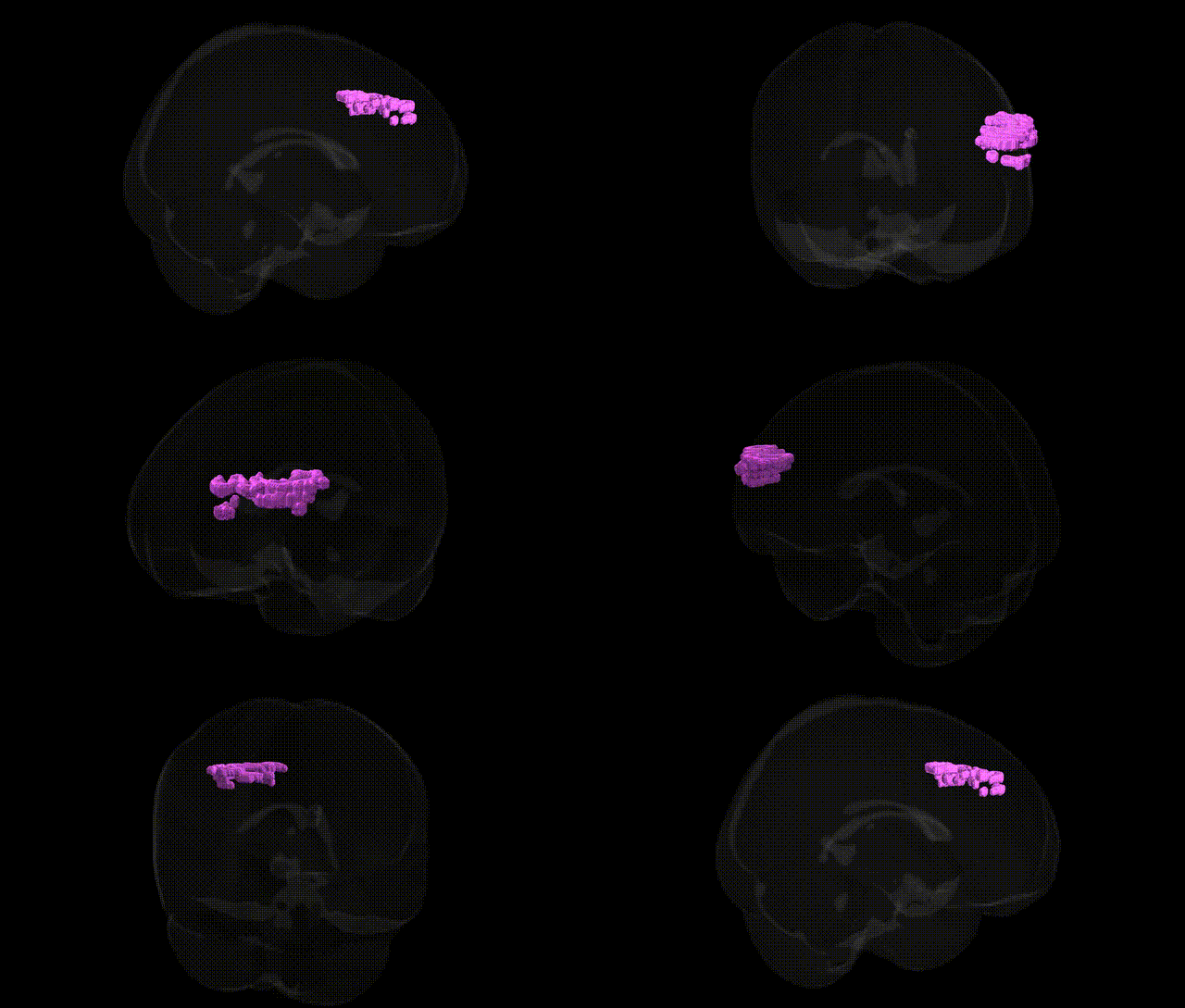
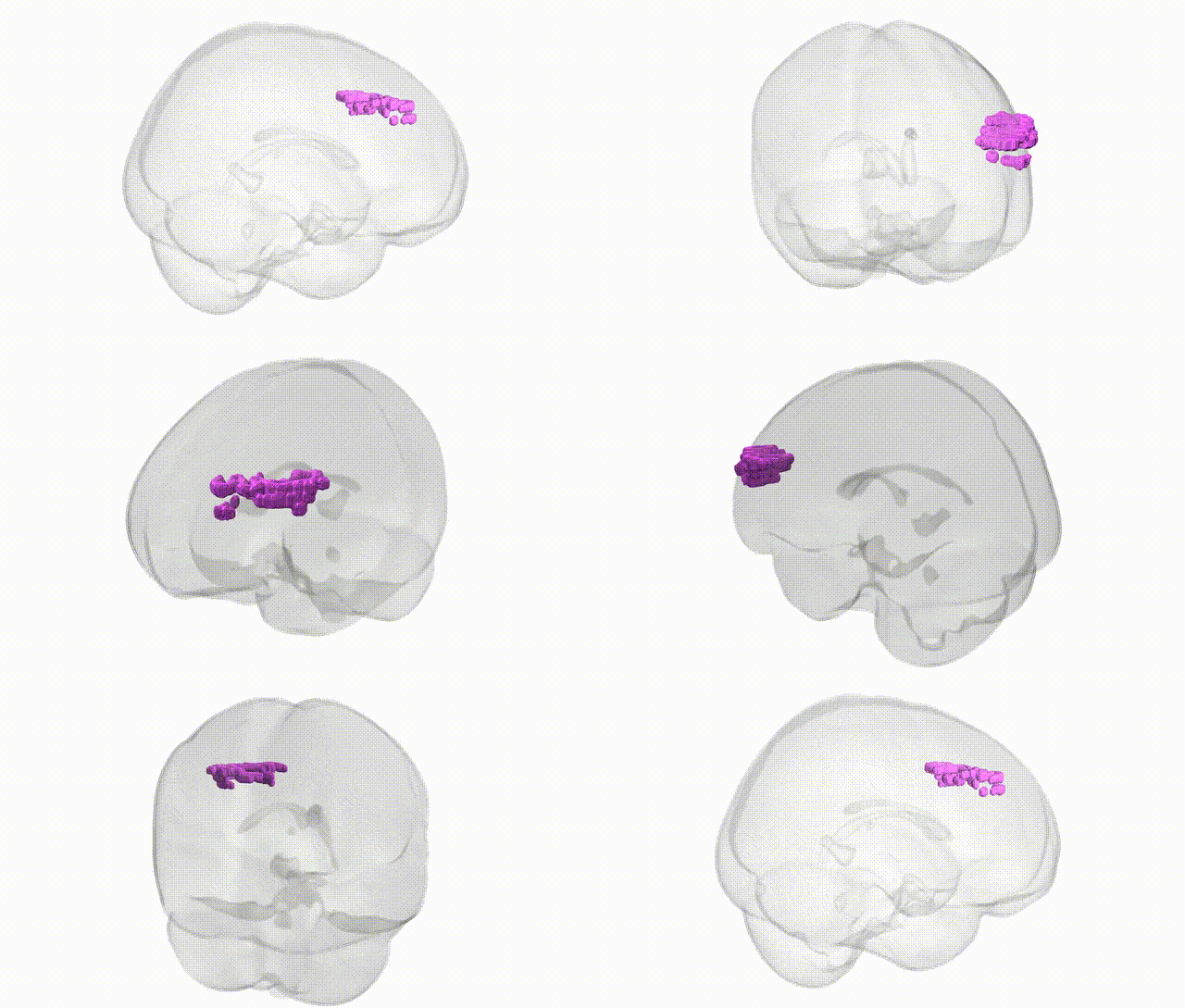
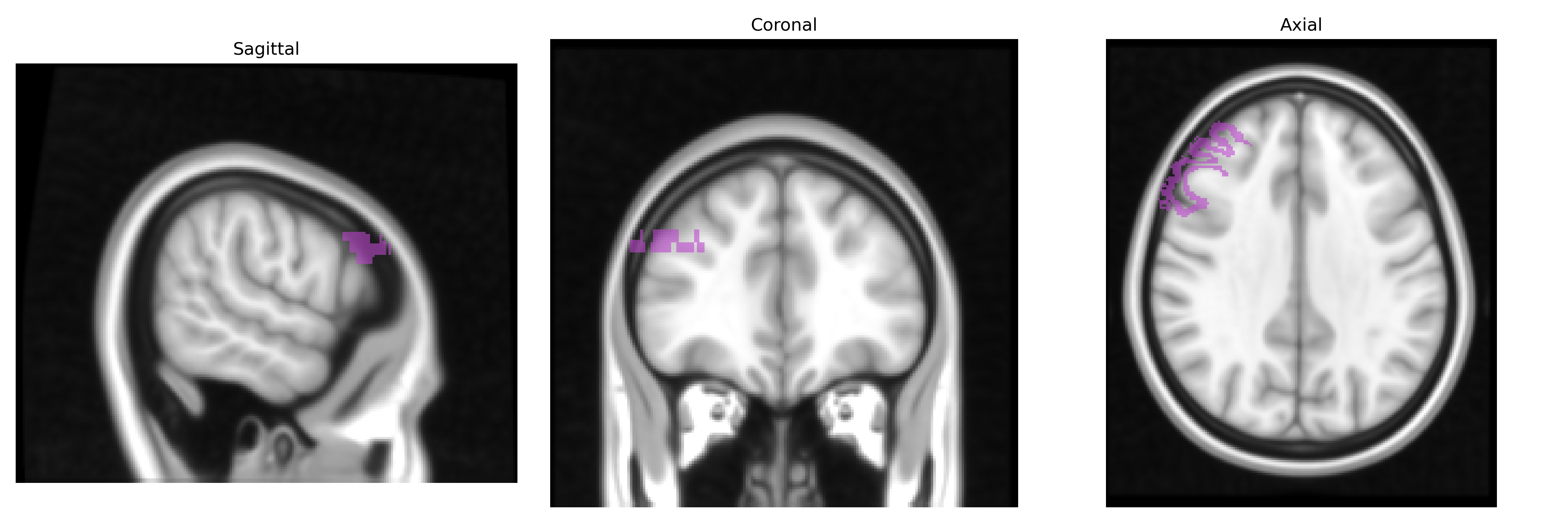
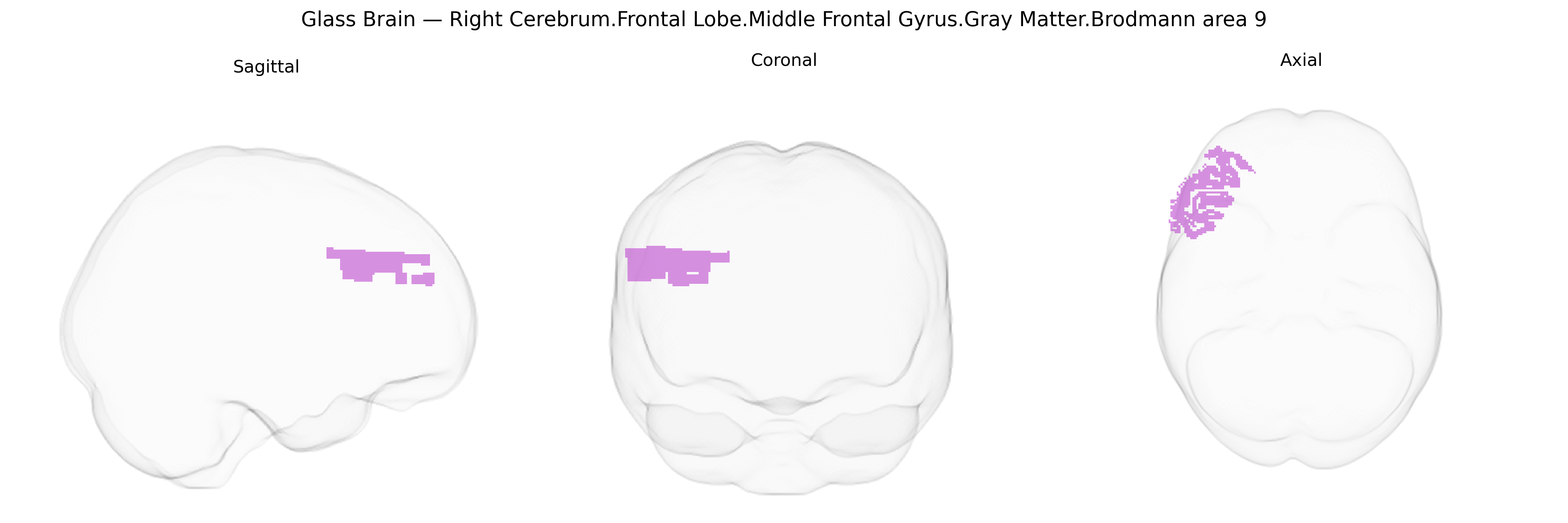
Bilateral Right Cerebrum.Frontal Lobe.Middle Frontal Gyrus.Gray Matter.Brodmann area 9 corresponds to a dorsolateral prefrontal cortical region implicated in higher-order executive functions, including working memory, planning, reasoning, and cognitive control. Cytoarchitectonically defined by Brodmann as area 9, it occupies part of the middle frontal gyrus anterior to the premotor regions and dorsal to more ventral prefrontal areas, with dense interconnections to other prefrontal areas, parietal association cortex, and limbic structures. Functionally, BA9 contributes to maintenance and manipulation of information in working memory, rule-based behavior, decision making, and aspects of social cognition such as mentalizing and evaluation of others’ intentions, and it is frequently activated in tasks requiring abstract thought and goal-directed behavior. There is no direct link for this specific composite Talairach label; a closely related structure is Brodmann area 9.
Genetic associations involving the bilateral right middle frontal gyrus (Brodmann area 9) implicate this region in multiple neuropsychiatric and cognitive phenotypes, with converging evidence from GWAS, imaging genetics, and transcriptomic studies. Variants in genes related to synaptic plasticity, dopamine and glutamate signaling, and neurodevelopment—such as DRD2, COMT, BDNF, GRIN2B, CACNA1C, and NRGN—have been associated with structural or functional differences in BA9, often via altered gray matter volume, cortical thickness, or activation during working memory and executive tasks. Large-scale GWAS meta-analyses of cortical morphology (e.g., ENIGMA and UK Biobank) have identified loci affecting frontal lobe thickness and surface area that overlap with BA9, implicating genes involved in neuronal migration and axon guidance (such as genes near PCDH and ROBO clusters). In psychiatric genetics, schizophrenia, bipolar disorder, major depressive disorder, ADHD, and autism spectrum disorder show robust frontal involvement, with polygenic risk scores and risk loci (e.g., in ZNF804A, MIR137, and CACNA1C) associated with altered BA9 connectivity or activity. BA9 also emerges in genetic studies of cognitive traits, including general intelligence and educational attainment, where risk alleles for higher cognitive performance correlate with greater frontal cortical volume or more efficient activation patterns in this region. Collectively, these findings support BA9 as a convergence hub where common genetic variation influencing synaptic function, neurodevelopment, and neuromodulatory pathways contributes to individual differences in executive control, working memory, and vulnerability to major neuropsychiatric disorders.
Overview generated by GPT-4o (2026).
Region ID: 944
Hemisphere: bilateral
Atlas: Talairach labels 1mm
Full Quality Version: Download MP4
Full Quality Version: Download MP4
Wali Sidiqyar*, Gaurav Rudravaram*, Elyssa M. McMaster, Trent M. Schwartz, Adam M. Saunders, Kurt G. Schilling, Bennett A. Landman "Introducing SPINS: A Shared Public Visualization Library of Neuroanatomical Structures." Medical Imaging with Deep Learning- short paper
This resource is licensed under CC0 1.0 Universal (Public Domain).