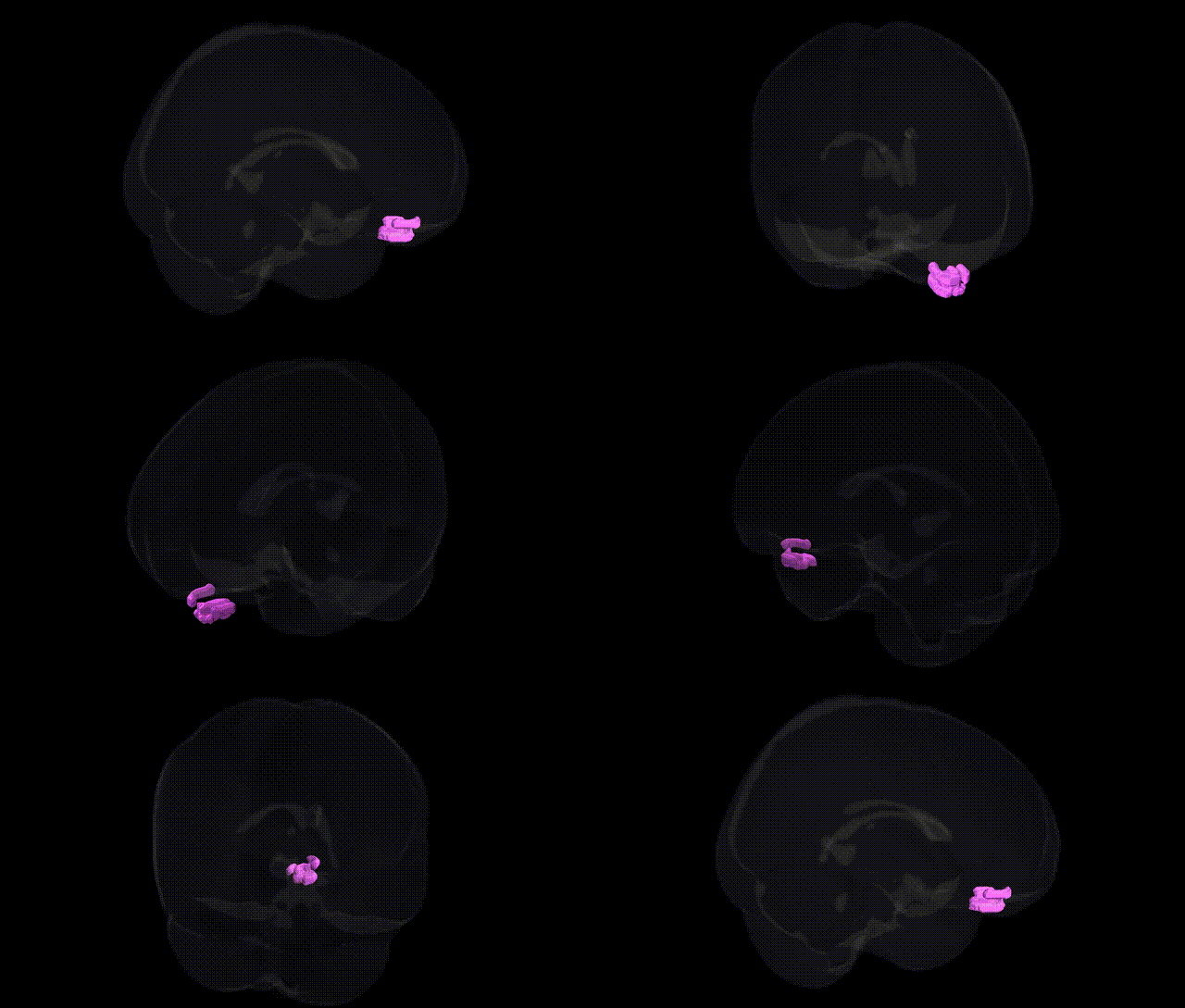
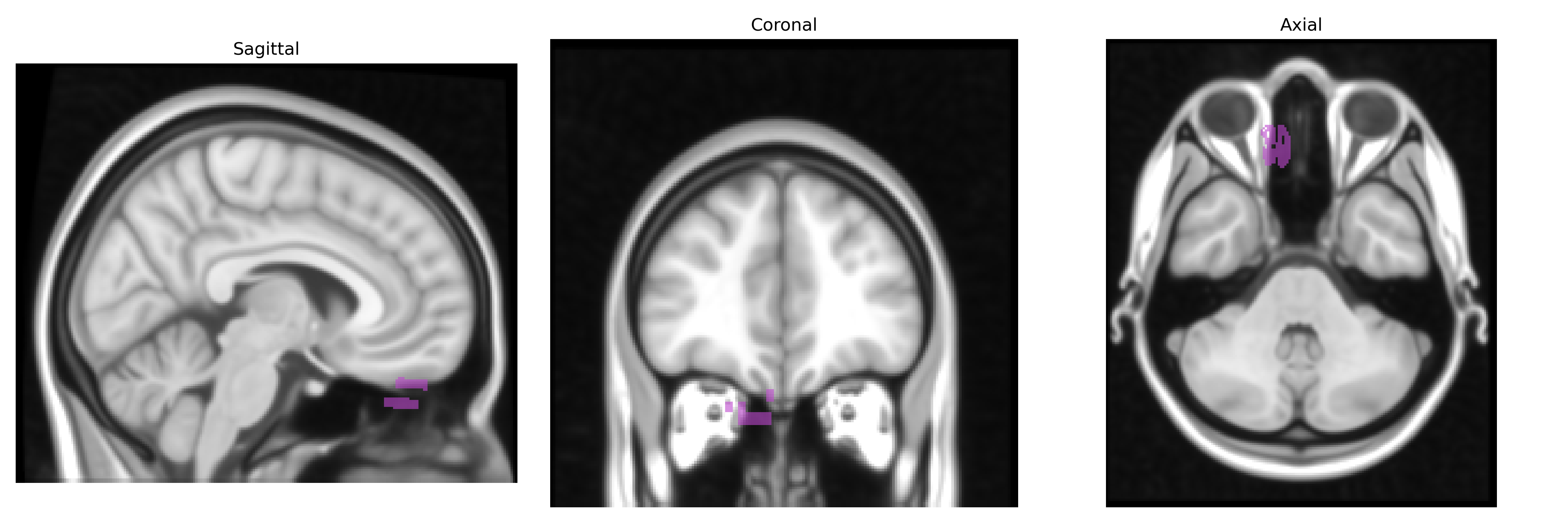
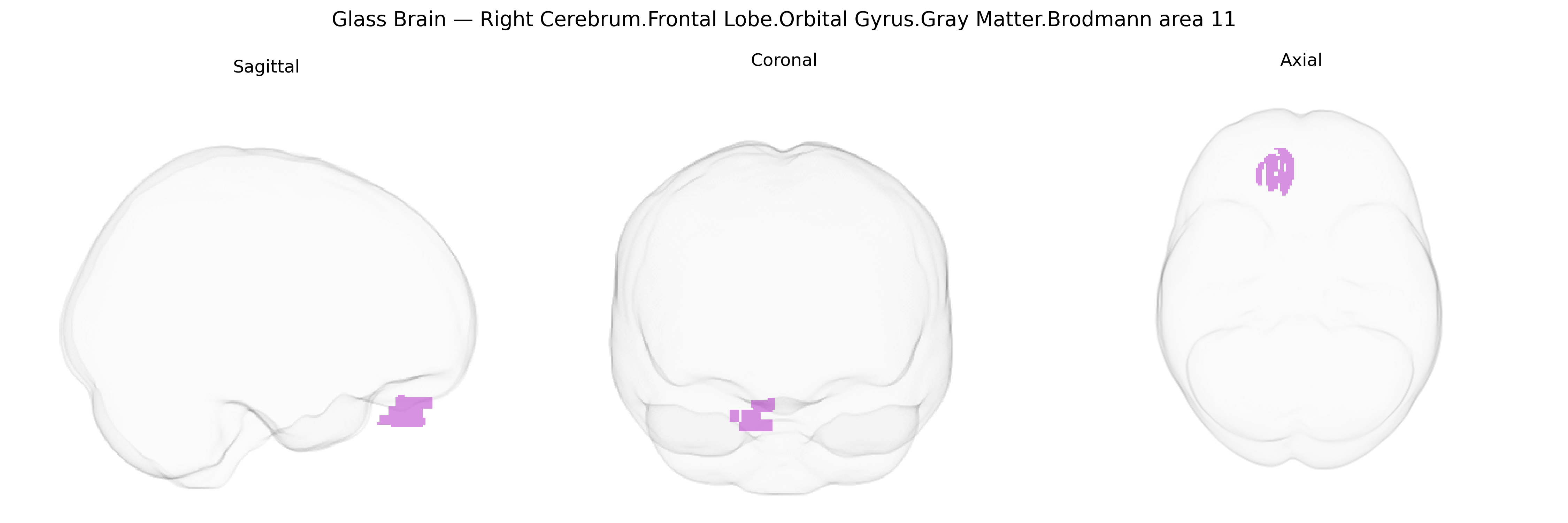
The bilateral Right Cerebrum.Frontal Lobe.Orbital Gyrus.Gray Matter.Brodmann area 11 corresponds to a portion of the orbitofrontal cortex (OFC) located on the ventral surface of the frontal lobe, directly above the orbits. Brodmann area 11 in this region is composed of granular and dysgranular agranular cortex and is heavily interconnected with limbic, sensory, and associative cortices, as well as subcortical structures such as the amygdala and ventral striatum. Functionally, this area is implicated in reward-based decision-making, valuation of stimuli, outcome prediction, and adaptive social behavior, integrating affective and sensory information to guide goal-directed actions and evaluate consequences. It is also involved in emotional regulation and behavioral inhibition, and lesions in this region have been associated with disinhibition, altered judgment, and changes in personality. There is no direct Wikipedia article for this exact Talairach label; a related structure is the Orbitofrontal cortex.
The bilateral right orbitofrontal cortex corresponding to Brodmann area 11 (Talairach “Right Cerebrum.Frontal Lobe.Orbital Gyrus.Gray Matter.BA11”) has been repeatedly implicated in genetic and GWAS-based studies of psychiatric and behavioral traits, particularly within the broader orbitofrontal and ventromedial prefrontal cortex. Large-scale imaging–genetics consortia (e.g., ENIGMA, UK Biobank) report heritable variation in cortical thickness and surface area in orbitofrontal regions, with common variants in genes related to neurodevelopment, synaptic function, and cell adhesion (such as BDNF, GRM3, NRG1, and CACNA1C in some cohorts) contributing to structural differences, though associations are often at the level of orbitofrontal or medial prefrontal ROIs rather than BA11 specifically. Polygenic risk scores for major depressive disorder, schizophrenia, bipolar disorder, and attention-deficit/hyperactivity disorder have been associated with altered orbitofrontal morphology and activity, consistent with BA11’s role in reward valuation and affect regulation. GWAS of personality and behavioral traits, including neuroticism, impulsivity, risk-taking, and substance use, also show that higher polygenic liability is linked to functional and structural variation in orbitofrontal areas, and some addiction-related GWAS point to genes affecting dopaminergic and glutamatergic signaling that modulate activity in this region. While few studies isolate right BA11 with 1-mm Talairach precision, convergent genetic evidence supports this orbitofrontal sector as a key node where common genetic variation influences vulnerability to mood, psychotic, and externalizing disorders, as well as individual differences in decision-making and emotional control.
Overview generated by GPT-4o (2026).
Region ID: 109
Hemisphere: bilateral
Atlas: Talairach labels 1mm
Full Quality Version: Download MP4
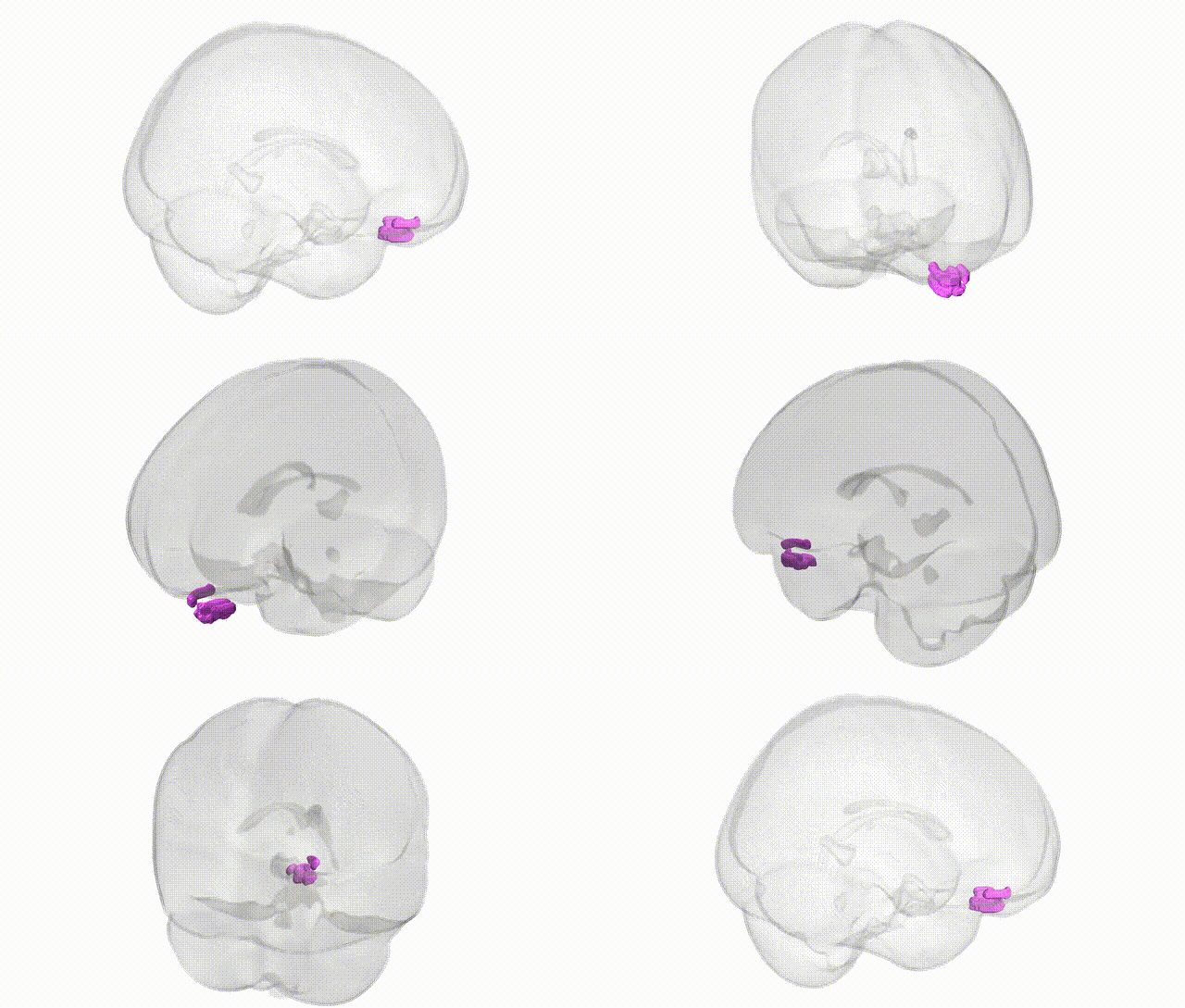
Full Quality Version: Download MP4
Wali Sidiqyar*, Gaurav Rudravaram*, Elyssa M. McMaster, Trent M. Schwartz, Adam M. Saunders, Kurt G. Schilling, Bennett A. Landman "Introducing SPINS: A Shared Public Visualization Library of Neuroanatomical Structures." Medical Imaging with Deep Learning- short paper
This resource is licensed under CC0 1.0 Universal (Public Domain).