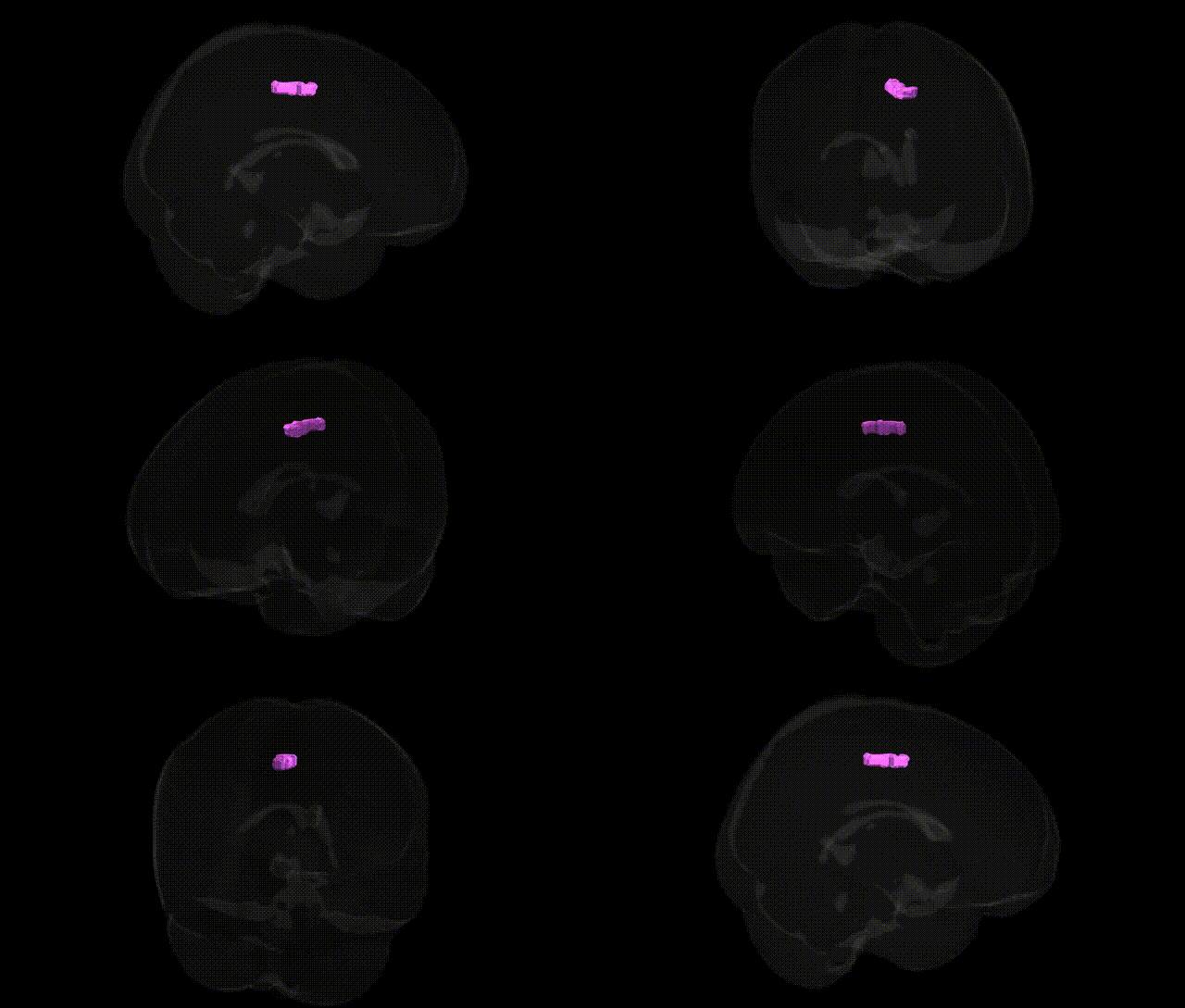
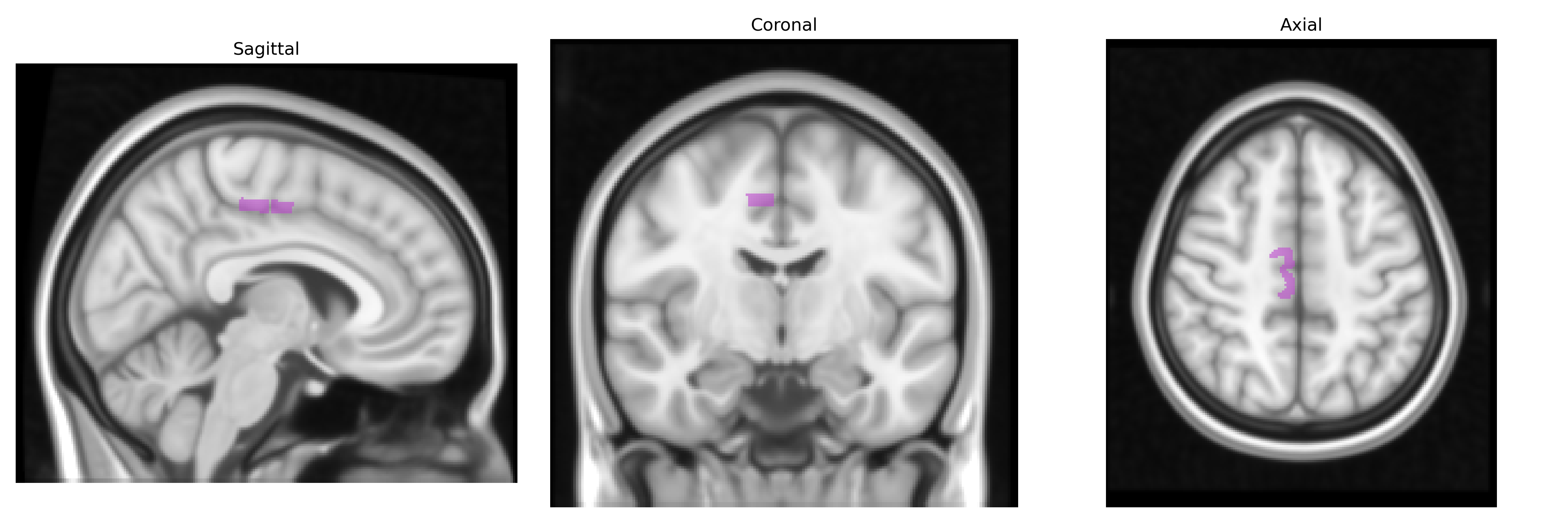
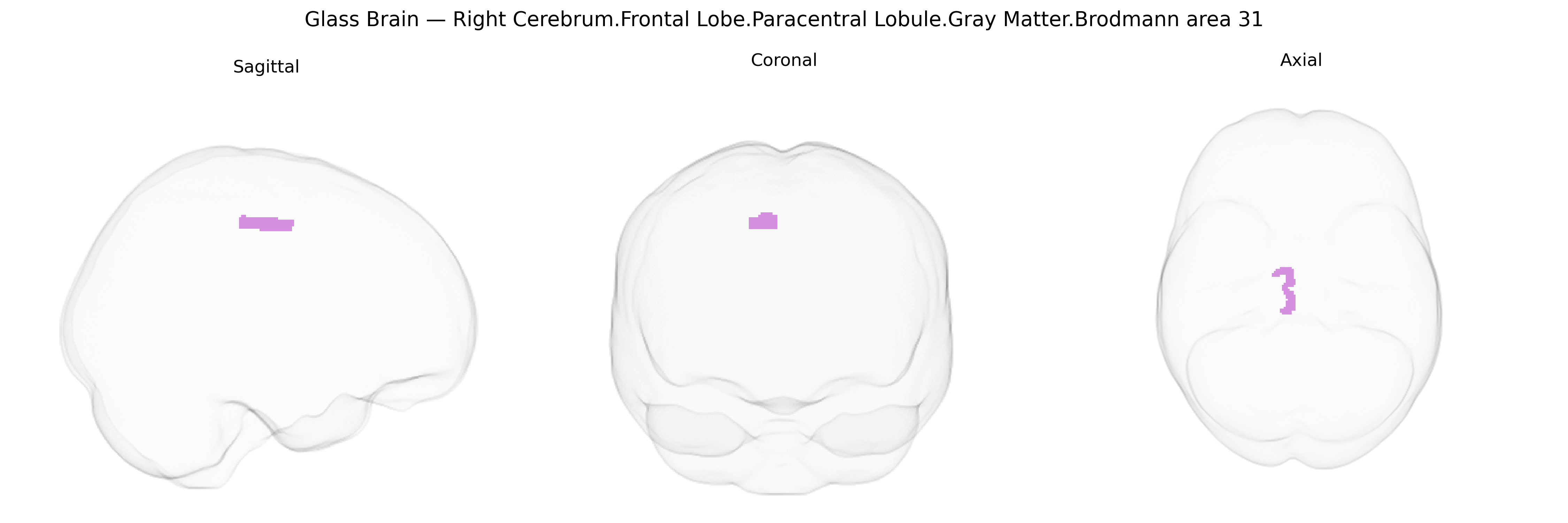
The bilateral Right Cerebrum.Frontal Lobe.Paracentral Lobule.Gray Matter.Brodmann area 31, as labeled in the Talairach 1 mm atlas, corresponds to gray matter in the medial aspect of the hemisphere where atlas parcellation assigns Brodmann area 31 to a region overlapping the paracentral lobule and adjacent medial frontal cortex, though classically BA31 is described in the posterior cingulate/retrosplenial region. Functionally, this territory is associated with higher-order associative processing, integrating multimodal sensory information with internally generated states, and participating in networks related to attention, memory, and self-referential or default-mode activity. In the Talairach framework, this region lies near the boundary of frontal and parietal midline cortex and maintains reciprocal connections with cingulate, parietal, and other limbic-related association areas, supporting roles in motor-related awareness, somatosensory integration, and cognitive control. There is no direct Wikipedia article for this exact composite region; a closely related structure is Brodmann area 31.
Genetic associations involving the bilateral right paracentral lobule’s gray matter in or near Brodmann area 31, as defined in the Talairach 1 mm atlas, emerge primarily from imaging‑genetics and GWAS studies of cortical morphology and brain connectivity rather than from region‑exclusive findings. Large-scale MRI GWAS consortia (e.g., ENIGMA, UK Biobank) have identified common variants in loci near genes such as HMGA2, IGF1, TCF4, MAPT, and others that influence regional cortical thickness, surface area, or volume in medial frontal and paracentral regions, which often include or border BA31 in atlas-based parcellations. These structural traits in the paracentral/medial frontal cortex have been genetically correlated with neurodevelopmental and psychiatric conditions (including schizophrenia, major depressive disorder, attention‑deficit/hyperactivity disorder, and autism spectrum disorder), as well as with cognitive performance, educational attainment, and general intelligence, suggesting partially shared genetic architectures. Additional imaging-genetics work links polymorphisms in dopaminergic, glutamatergic, and neurotrophin-related genes (e.g., COMT, BDNF) to altered frontal–parietal and default‑mode network activity and connectivity, which frequently involves medial posterior frontal regions overlapping atlas-defined BA31. However, no single gene or variant has been uniquely or consistently tied specifically and exclusively to the right BA31 paracentral lobule; instead, this region participates in broader, polygenic networks influencing sensorimotor integration, attention, and higher-order cognitive and affective traits.
Overview generated by GPT-4o (2026).
Region ID: 1049
Hemisphere: bilateral
Atlas: Talairach labels 1mm
Full Quality Version: Download MP4
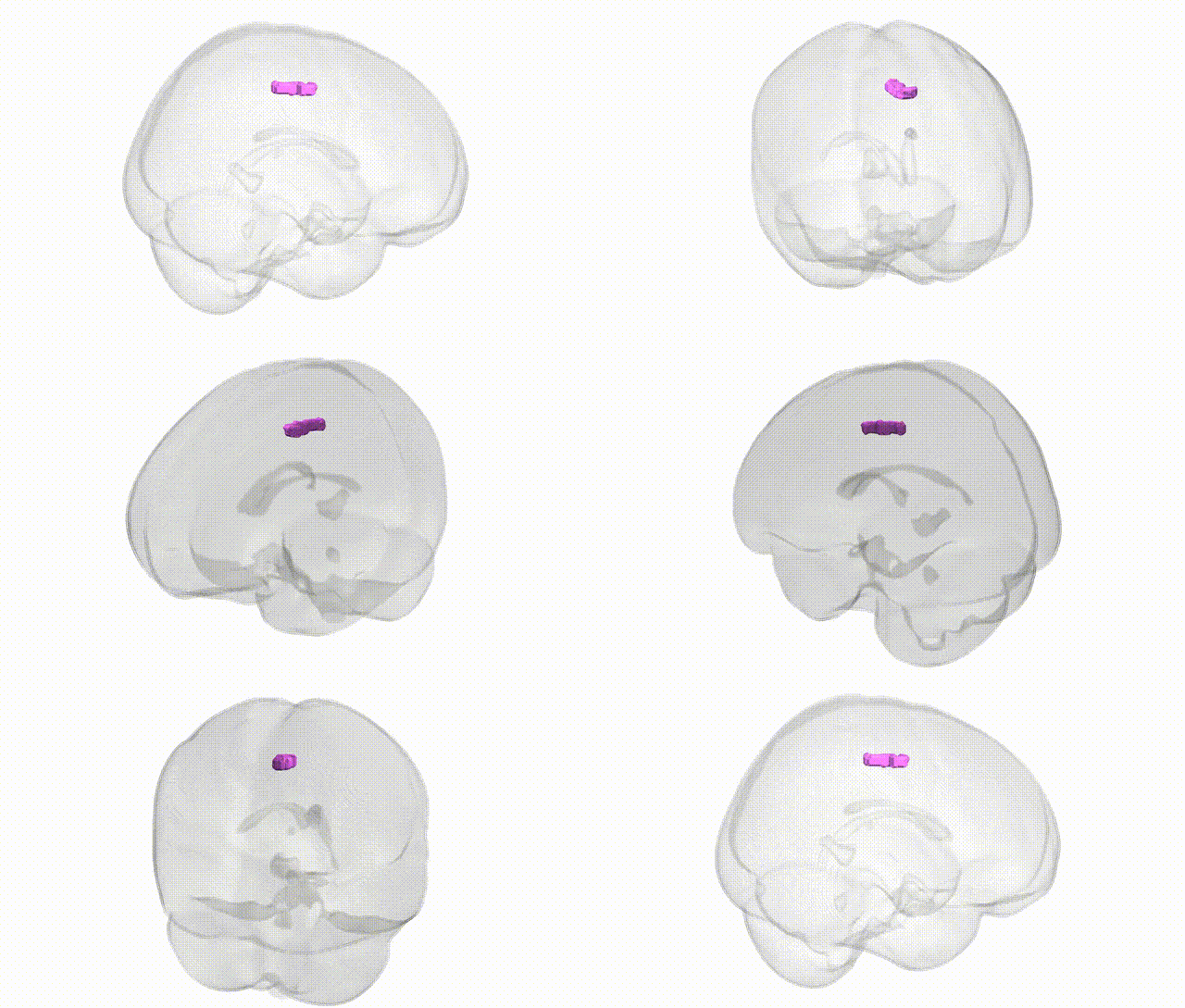
Full Quality Version: Download MP4
Wali Sidiqyar*, Gaurav Rudravaram*, Elyssa M. McMaster, Trent M. Schwartz, Adam M. Saunders, Kurt G. Schilling, Bennett A. Landman "Introducing SPINS: A Shared Public Visualization Library of Neuroanatomical Structures." Medical Imaging with Deep Learning- short paper
This resource is licensed under CC0 1.0 Universal (Public Domain).