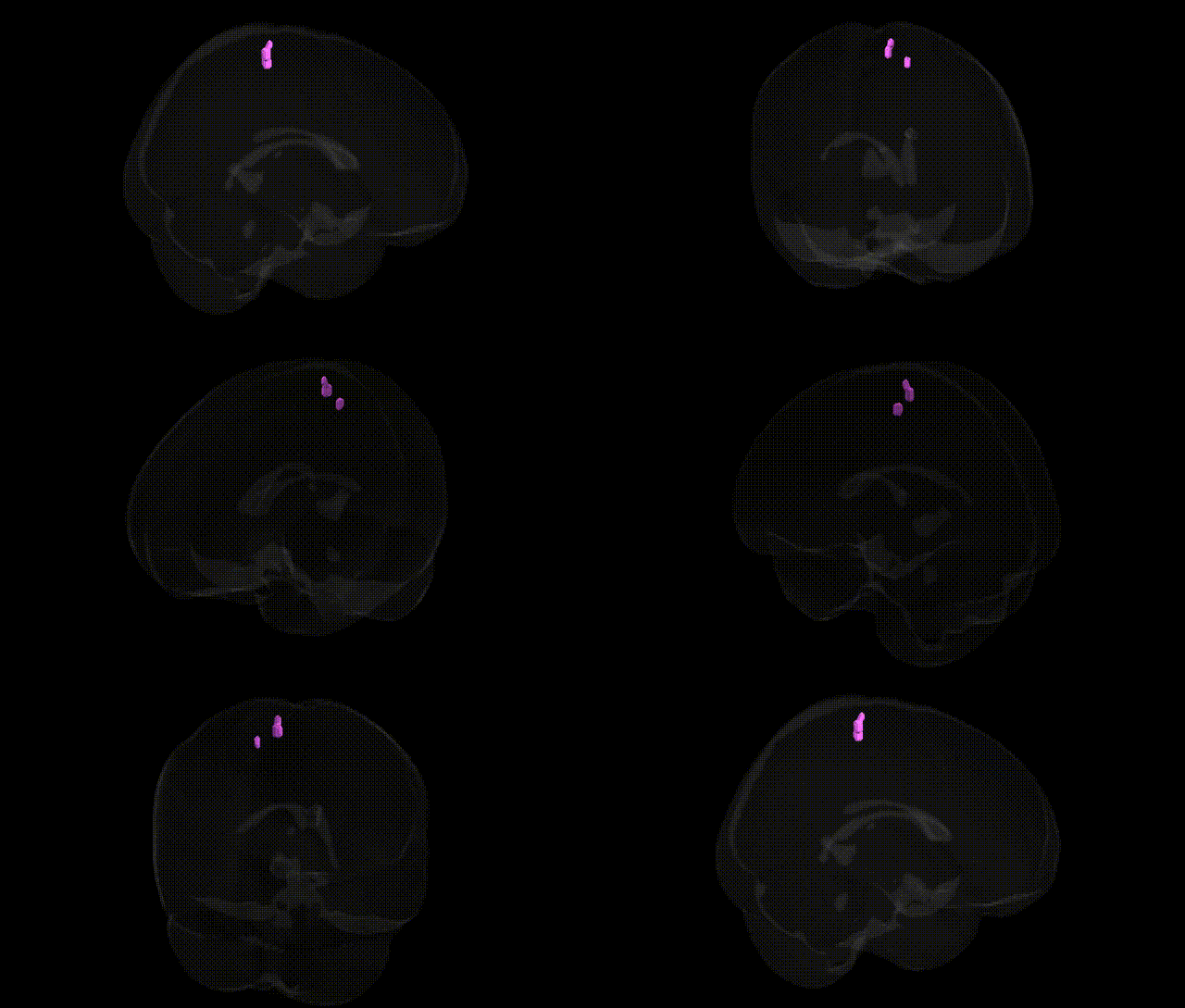
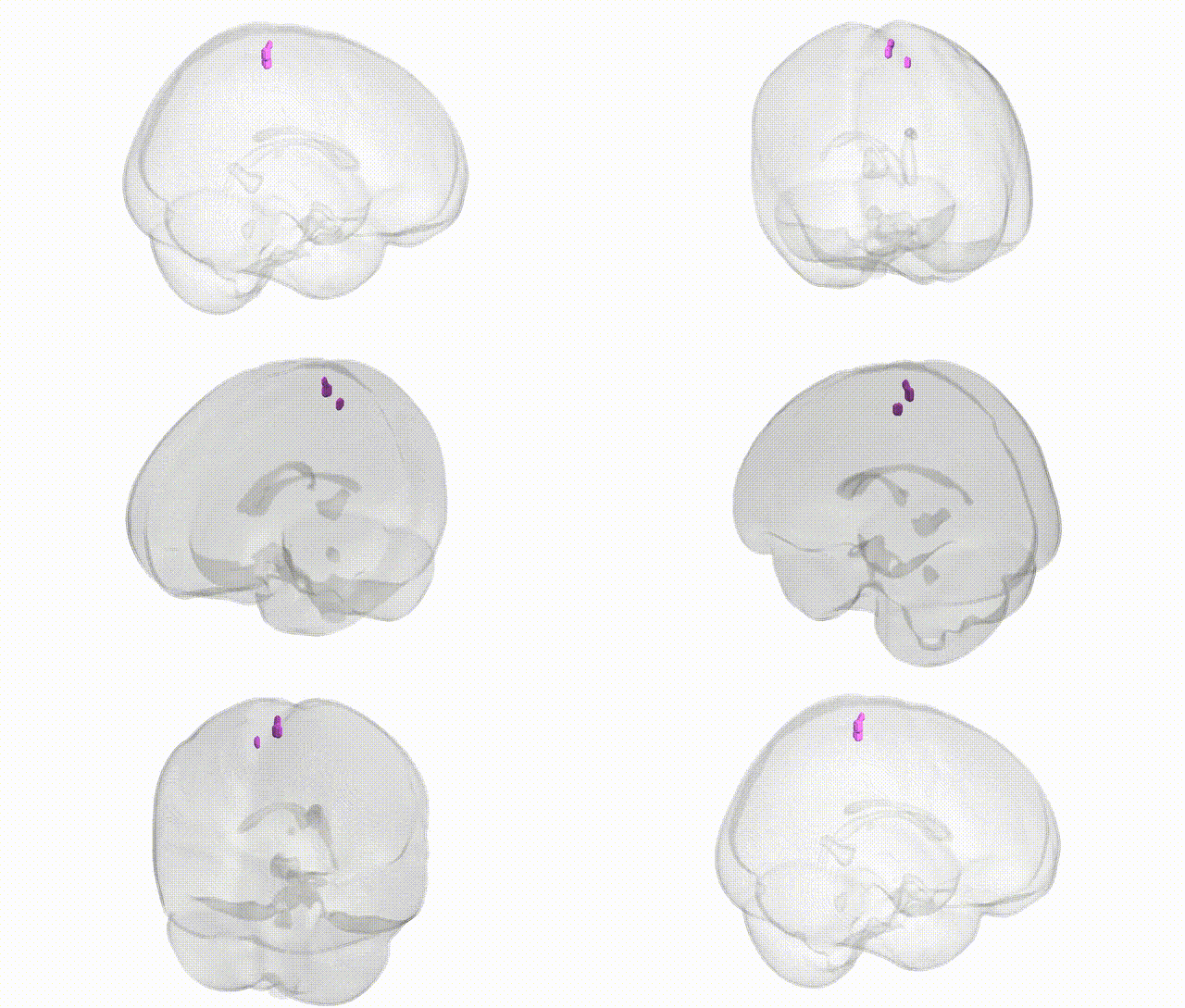
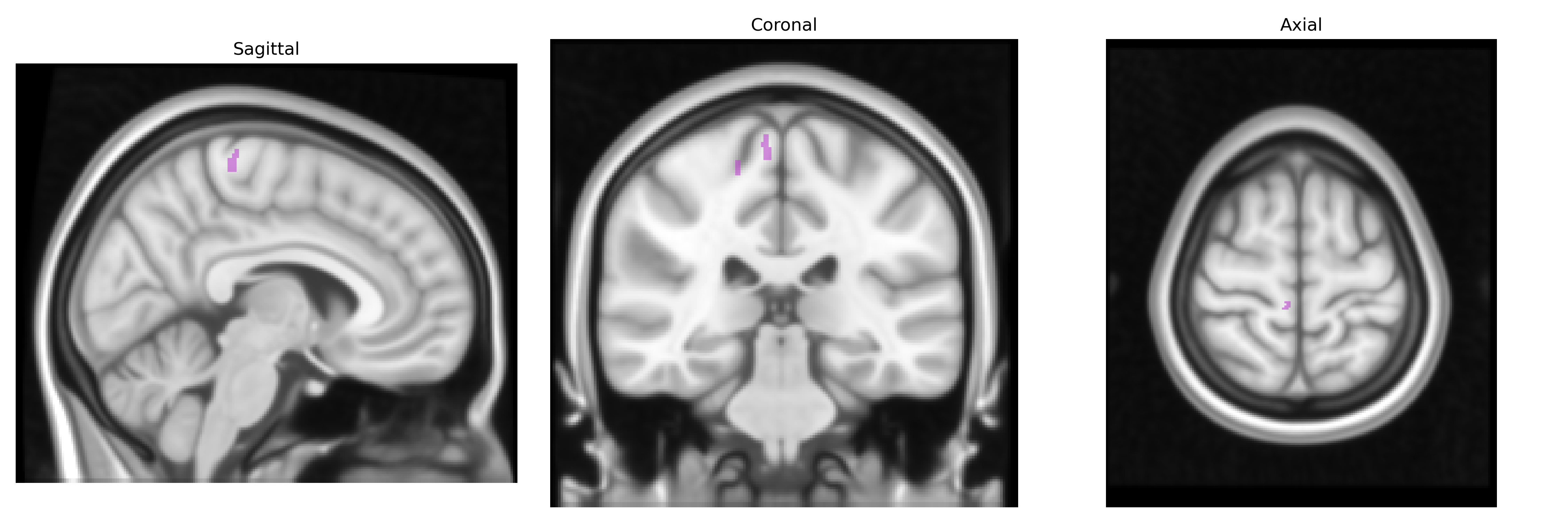
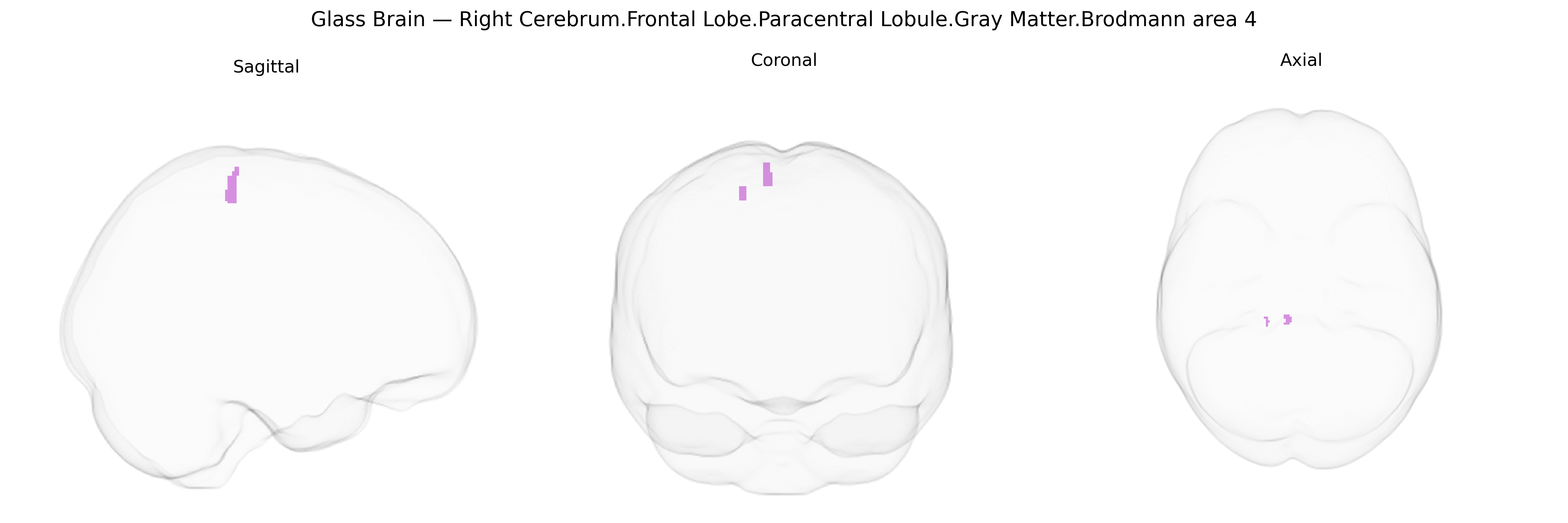
The bilateral Right Cerebrum.Frontal Lobe.Paracentral Lobule.Gray Matter.Brodmann area 4 corresponds to the portion of the primary motor cortex (M1) located along the medial aspect of the frontal lobe within the paracentral lobule, encompassing the cortical representation of the lower limb and part of the trunk. This agranular cortex is characterized by large pyramidal Betz cells in layer V and is a principal origin of the corticospinal (pyramidal) tract, exerting direct and precise control over voluntary movement, particularly of contralateral leg musculature. Functionally, it participates in execution (rather than planning) of motor commands, integrates somatotopically organized inputs, and contributes to posture and locomotion control. Lesions in this area often result in contralateral motor deficits predominantly affecting the lower extremity, including weakness, spasticity, and impaired fine motor control. There is no direct Wikipedia article for this exact composite label; a closely related structure is the Primary motor cortex.
The bilateral right paracentral lobule gray matter in Brodmann area 4 (primary motor cortex) has been implicated in multiple genetic and GWAS-based associations, primarily via its roles in motor control, somatosensory integration, and large-scale brain networks rather than via this specific Talairach-defined parcel alone. Variants in genes affecting motor system development and corticospinal pathways (for example, BDNF, CNTNAP2, and genes involved in axon guidance and myelination) have been linked to structural or functional differences in primary motor regions that include or overlap the paracentral lobule, often in the context of motor neuron diseases, multiple sclerosis, and movement disorders. Imaging-genetics studies using cortical thickness and surface area GWAS (such as those from ENIGMA and UK Biobank) have reported heritable variation and polygenic influences on sensorimotor cortex morphology, with loci near genes involved in neurodevelopment, synaptic function, and neuronal proliferation showing associations to motor cortex regions encompassing BA4. Functional and structural alterations in the paracentral lobule and adjacent BA4 have also been reported in GWAS-informed studies of traits such as handedness, general motor performance, and disorders including amyotrophic lateral sclerosis, Parkinson’s disease, schizophrenia, and autism spectrum disorders, often interpreted as reflecting genetically influenced changes in motor network organization and connectivity rather than a single gene–single region effect.
Overview generated by GPT-4o (2026).
Region ID: 1090
Hemisphere: bilateral
Atlas: Talairach labels 1mm
Full Quality Version: Download MP4
Full Quality Version: Download MP4
Wali Sidiqyar*, Gaurav Rudravaram*, Elyssa M. McMaster, Trent M. Schwartz, Adam M. Saunders, Kurt G. Schilling, Bennett A. Landman "Introducing SPINS: A Shared Public Visualization Library of Neuroanatomical Structures." Medical Imaging with Deep Learning- short paper
This resource is licensed under CC0 1.0 Universal (Public Domain).