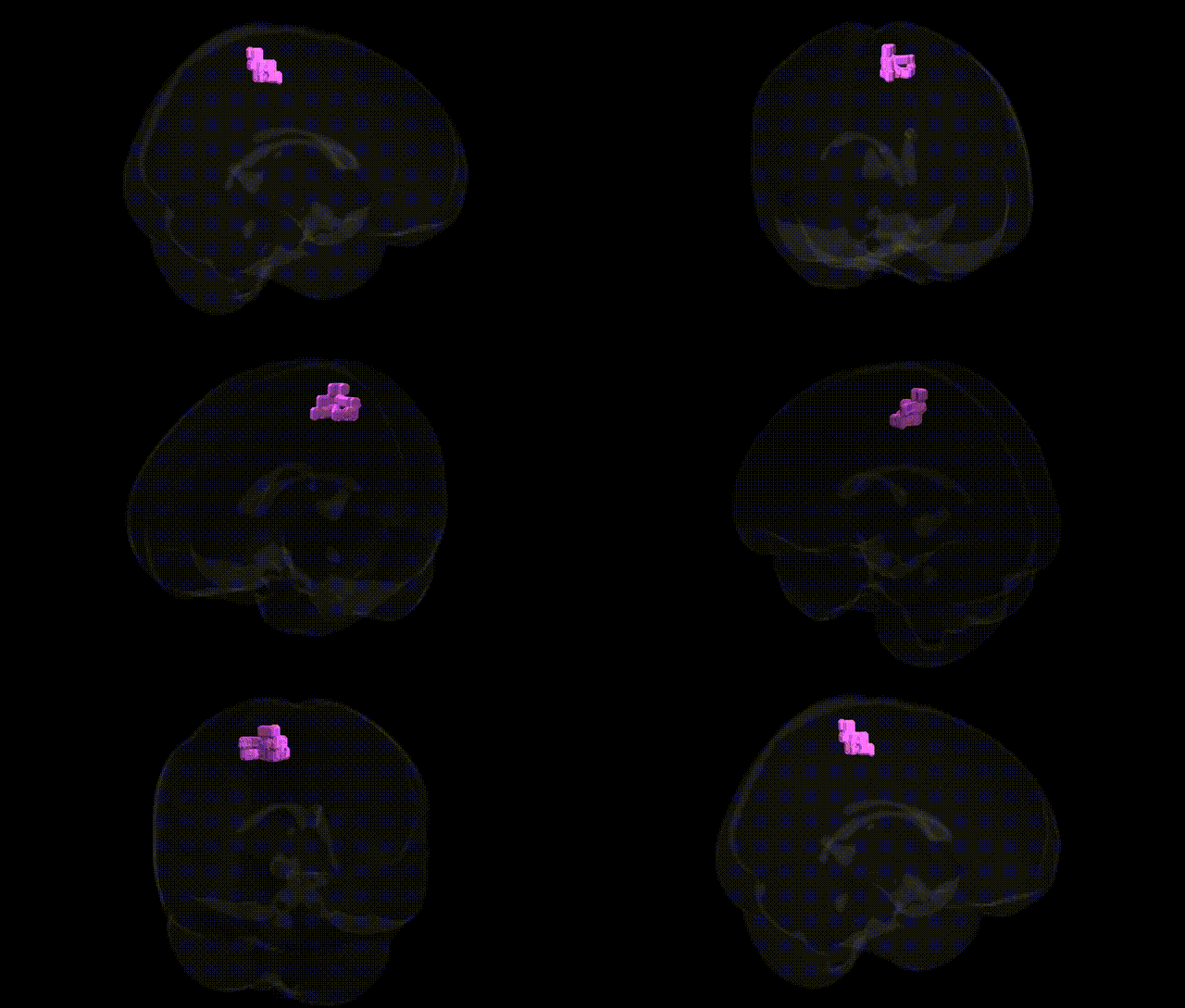
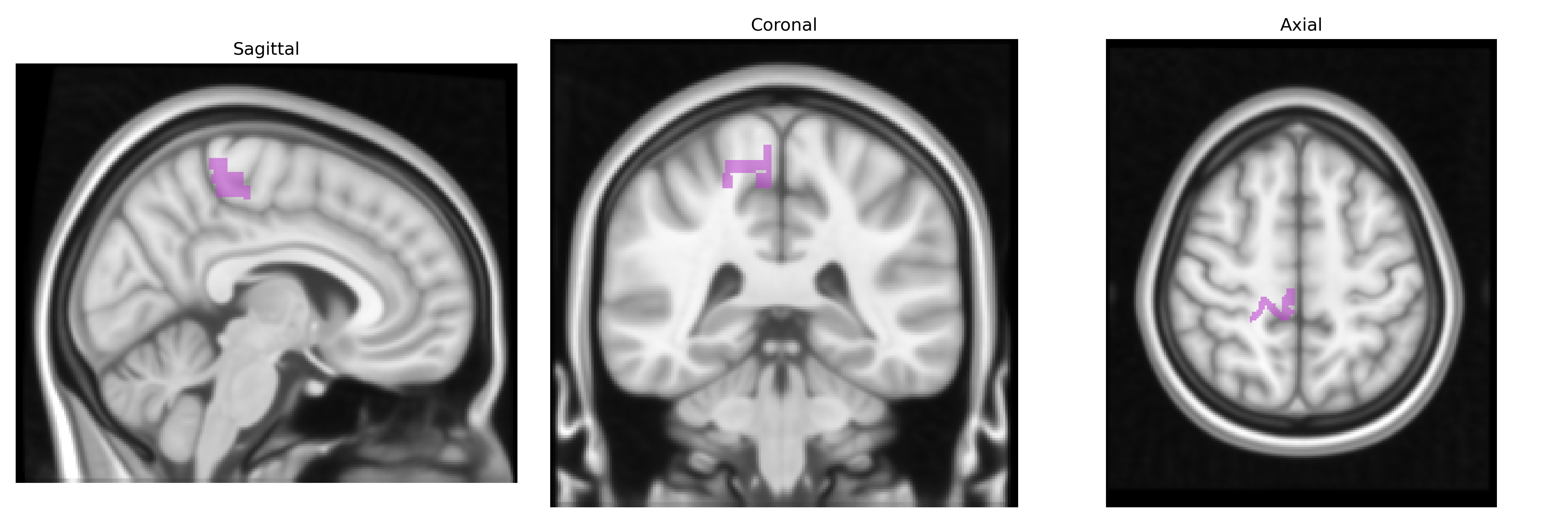
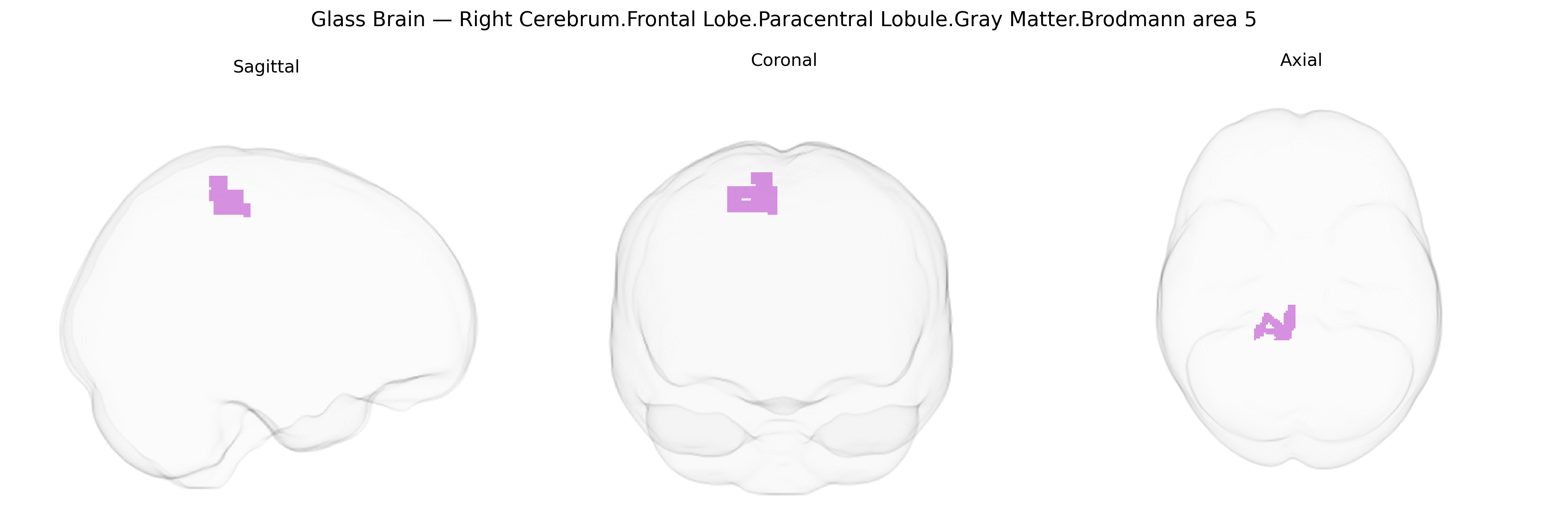
The bilateral Right Cerebrum.Frontal Lobe.Paracentral Lobule.Gray Matter.Brodmann area 5 corresponds to a portion of the superior medial frontal cortex bordering the parietal lobe along the medial wall, within the paracentral lobule and extending into the posterior part of the frontal lobe. Brodmann area 5 is classically considered part of the superior parietal lobule and is associated with higher-order somatosensory integration, contributing to the processing of tactile, proprioceptive, and kinesthetic information necessary for complex sensorimotor coordination and body schema representation. Functionally, this region participates in the integration of sensory inputs from the skin, muscles, and joints with motor planning signals, supporting the guidance of limb movements and spatial aspects of motor control; its bilateral organization allows for coordinated representation of both sides of the body. There is no direct Wikipedia article for this exact Talairach-labeled region; a related structure is Brodmann area 5.
The bilateral right paracentral lobule gray matter in or overlapping Brodmann area 5, as defined in the Talairach 1 mm atlas, has been implicated in multiple genetic and GWAS-based associations through its roles in somatosensory integration and motor control. Large-scale imaging-genetics consortia (e.g., ENIGMA, UK Biobank) report heritable variation in cortical thickness and surface area of the medial sensorimotor/paracentral region, with common variants in genes involved in neurodevelopment, axon guidance, and synaptic function (such as those near MAPT, HMGA2, and microtubule- or growth cone–related loci) influencing regional morphology and connectivity. GWAS of motor phenotypes and gait, as well as traits like hand/foot motor performance and lower-limb strength, show associations with structural and functional measures in the paracentral lobule. Neurodevelopmental and psychiatric disorder genetics indirectly implicate this area: schizophrenia, autism spectrum disorder, attention-deficit/hyperactivity disorder, and major depressive disorder polygenic risk scores correlate with altered cortical measures or activation in medial frontal and paracentral regions, with risk loci enriched in genes affecting cortical patterning and synaptic plasticity. In neurodegenerative and movement disorders, including amyotrophic lateral sclerosis, hereditary spastic paraplegia, and some forms of familial motor neuron disease, genetic variants impacting corticospinal neurons correspond to atrophy or dysfunction in the paracentral lobule, while polygenic risk for Alzheimer’s disease and frontotemporal dementia has been linked to subtle changes in adjacent medial sensorimotor cortex. Overall, although few loci are uniquely specific to right BA5 paracentral cortex, convergent genetic evidence from structural, functional, and disease GWAS highlights this region as a heritable and genetically modulated hub for sensorimotor and higher-order somatosensory processes.
Overview generated by GPT-4o (2026).
Region ID: 1070
Hemisphere: bilateral
Atlas: Talairach labels 1mm
Full Quality Version: Download MP4
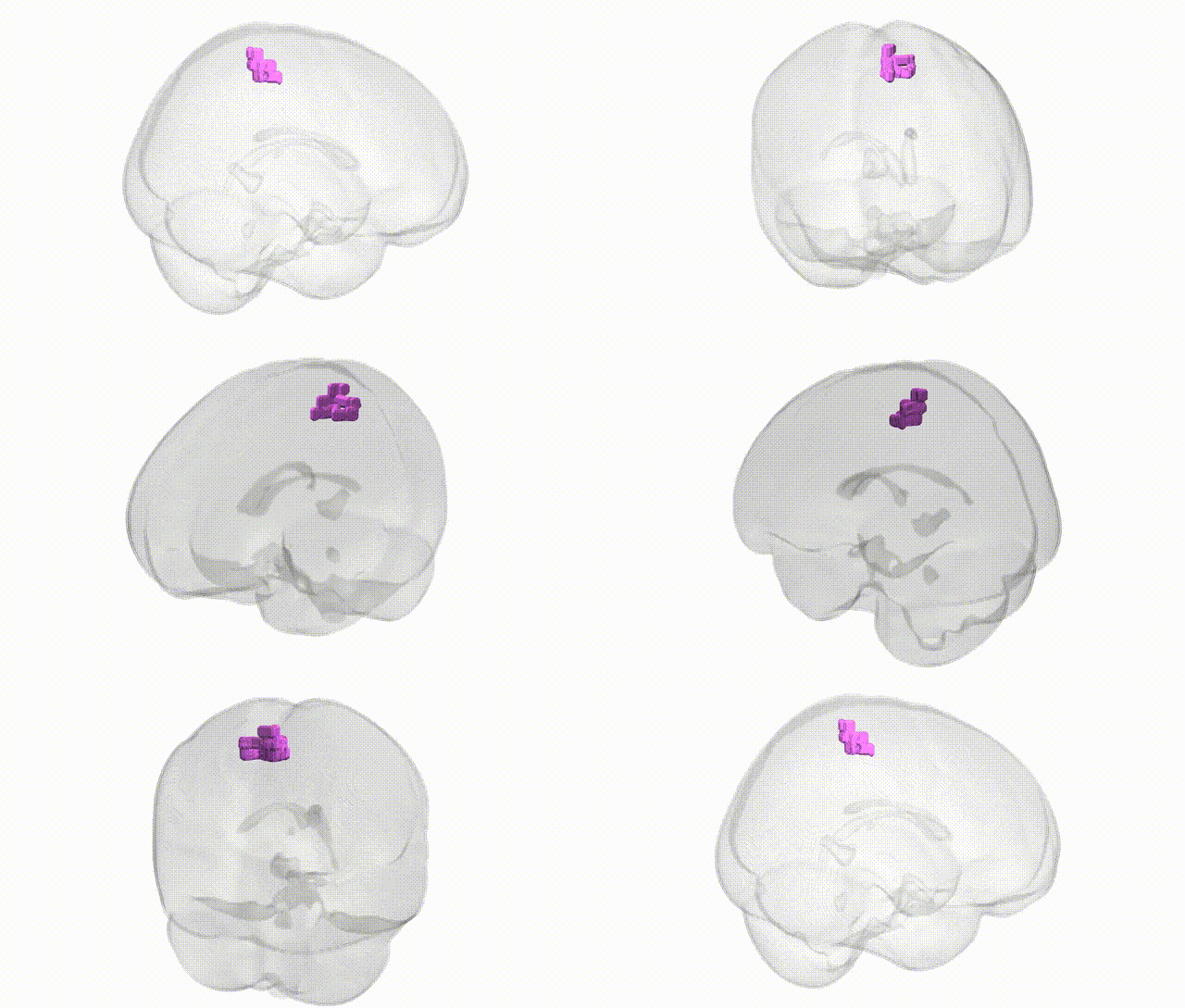
Full Quality Version: Download MP4
Wali Sidiqyar*, Gaurav Rudravaram*, Elyssa M. McMaster, Trent M. Schwartz, Adam M. Saunders, Kurt G. Schilling, Bennett A. Landman "Introducing SPINS: A Shared Public Visualization Library of Neuroanatomical Structures." Medical Imaging with Deep Learning- short paper
This resource is licensed under CC0 1.0 Universal (Public Domain).