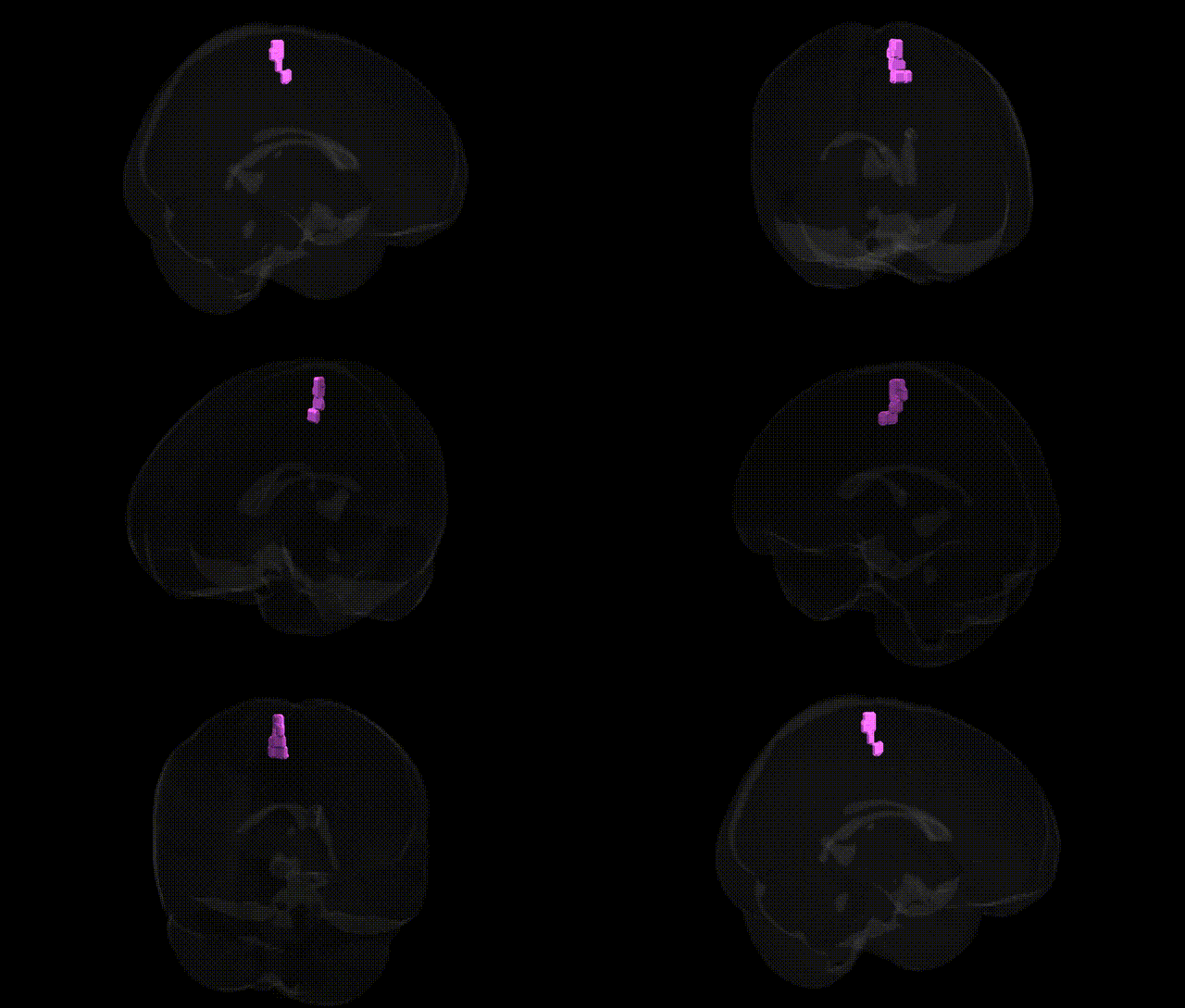
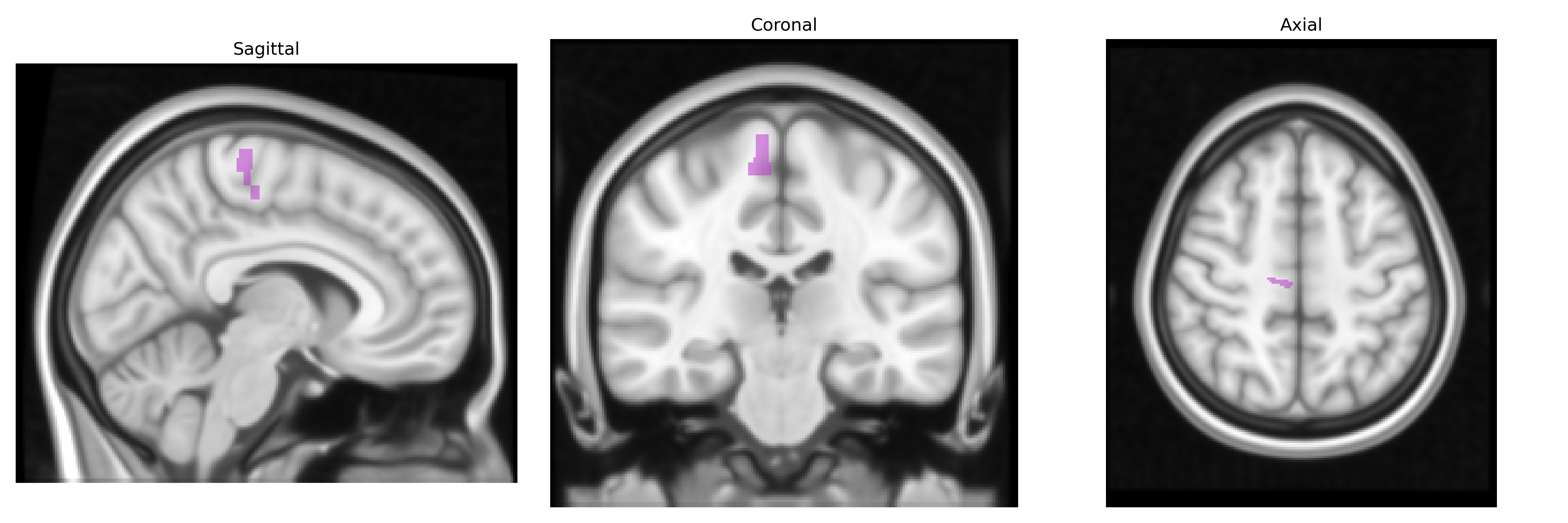
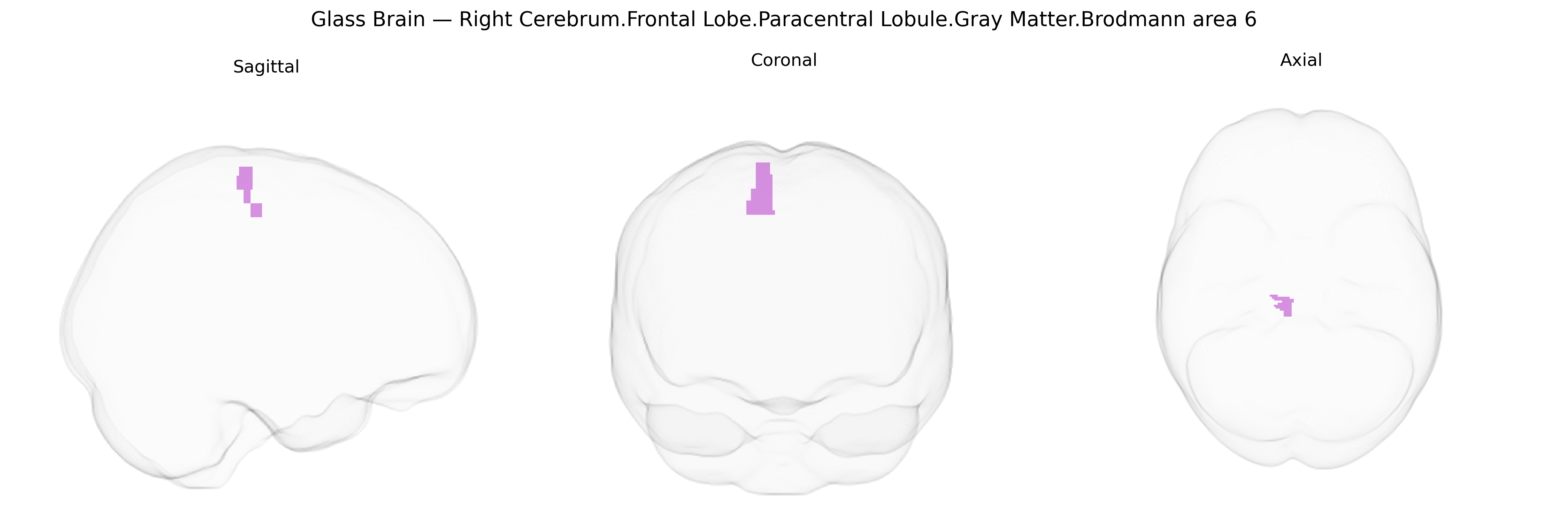
The bilateral Right Cerebrum.Frontal Lobe.Paracentral Lobule.Gray Matter.Brodmann area 6 corresponds to a portion of the premotor and supplementary motor cortex located in the medial frontal lobe around the paracentral lobule, anterior to the primary motor cortex (Brodmann area 4). This agranular cortical region is involved in the planning, preparation, and coordination of voluntary movements, including complex motor sequences and postural adjustments, and contributes to motor integration with sensory and higher-order cognitive signals. Neuronal activity here is particularly associated with the organization of movements rather than their direct execution, reflecting its role in motor programming and anticipatory control. Brodmann area 6
The bilateral right paracentral lobule gray matter in Brodmann area 6 (premotor/supplementary motor territory) has been implicated in several genetic and GWAS-derived associations, largely through imaging-genetics and neuropsychiatric studies rather than region-specific single-gene findings. Common variants influencing cortical thickness, surface area, and gray-matter volume in or near this region have been identified in large imaging GWAS (e.g., ENIGMA, UK Biobank), with loci involving genes related to neurodevelopment (such as HMGA2, MAPT, and other microtubule or synaptic genes) and general brain morphometry. Polygenic risk scores for schizophrenia, bipolar disorder, major depressive disorder, and autism spectrum disorder have shown associations with structural and functional alterations in medial premotor and paracentral regions, including BA6, consistent with findings of altered motor planning and self-initiated movement networks in these conditions. GWAS of motor-related traits—such as gait parameters, motor coordination, and Parkinson’s disease—have indirectly linked genetic variation in dopaminergic and cortico-striatal pathway genes to functional changes in premotor and paracentral cortex activation, while genome-wide studies of chronic pain, especially low back pain and neuropathic pain, have associated risk variants with altered structure or connectivity in sensorimotor/paracentral areas. Overall, genetic associations for this specific Talairach-defined BA6 paracentral region are distributed across polygenic architectures underlying brain morphometry, motor function, and major psychiatric and neurological disorders, rather than being driven by a small set of region-unique genes.
Overview generated by GPT-4o (2026).
Region ID: 1076
Hemisphere: bilateral
Atlas: Talairach labels 1mm
Full Quality Version: Download MP4
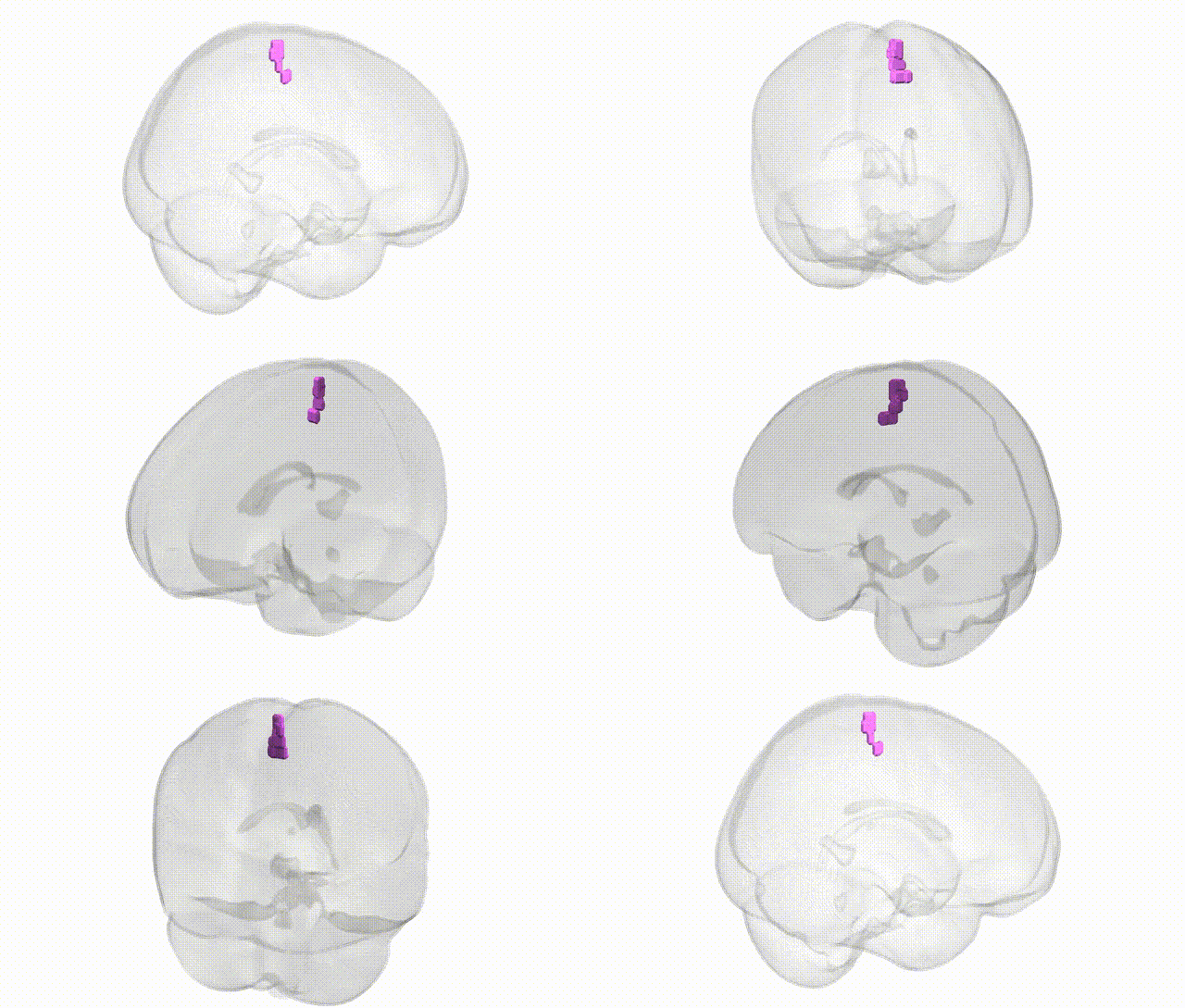
Full Quality Version: Download MP4
Wali Sidiqyar*, Gaurav Rudravaram*, Elyssa M. McMaster, Trent M. Schwartz, Adam M. Saunders, Kurt G. Schilling, Bennett A. Landman "Introducing SPINS: A Shared Public Visualization Library of Neuroanatomical Structures." Medical Imaging with Deep Learning- short paper
This resource is licensed under CC0 1.0 Universal (Public Domain).