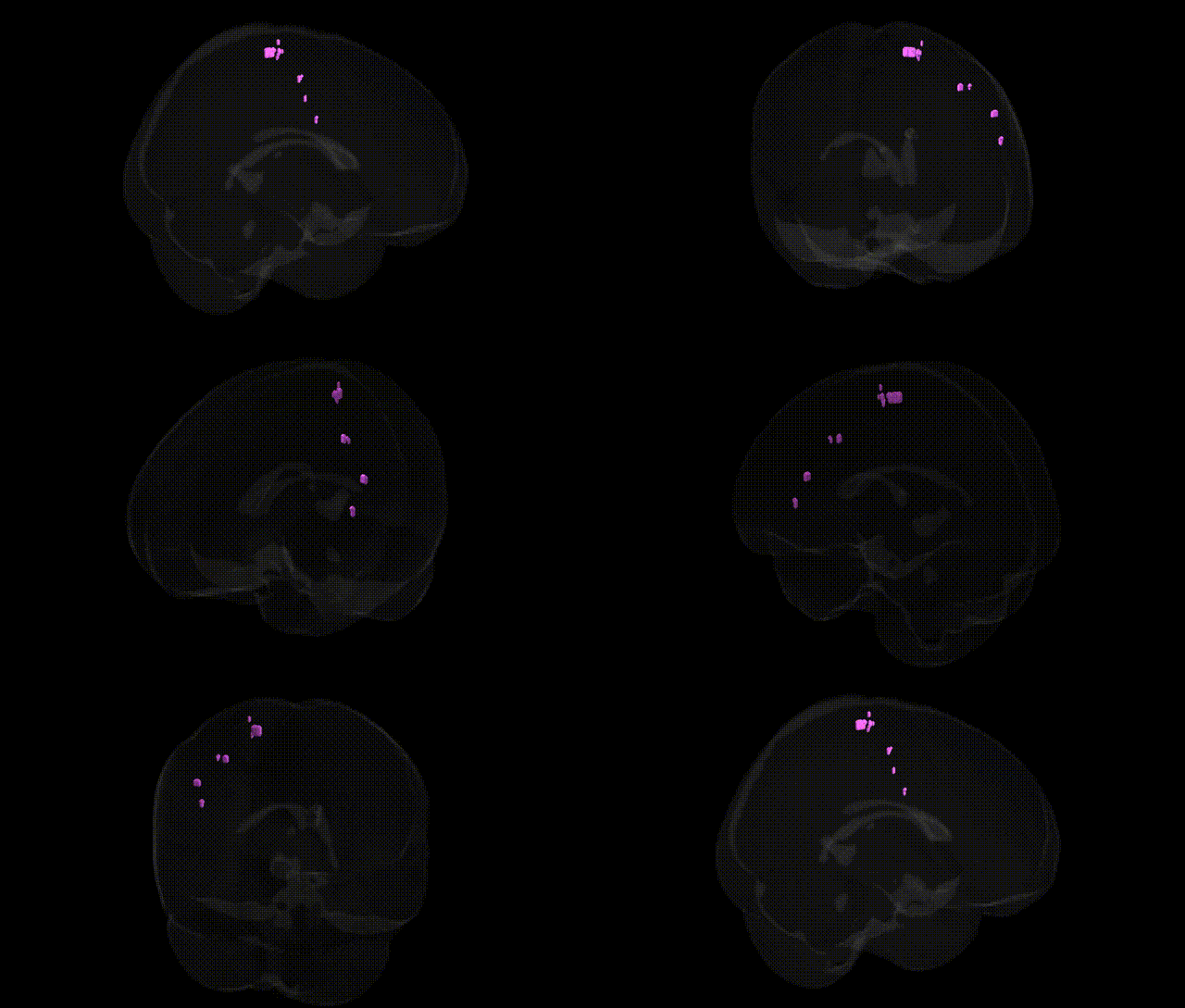
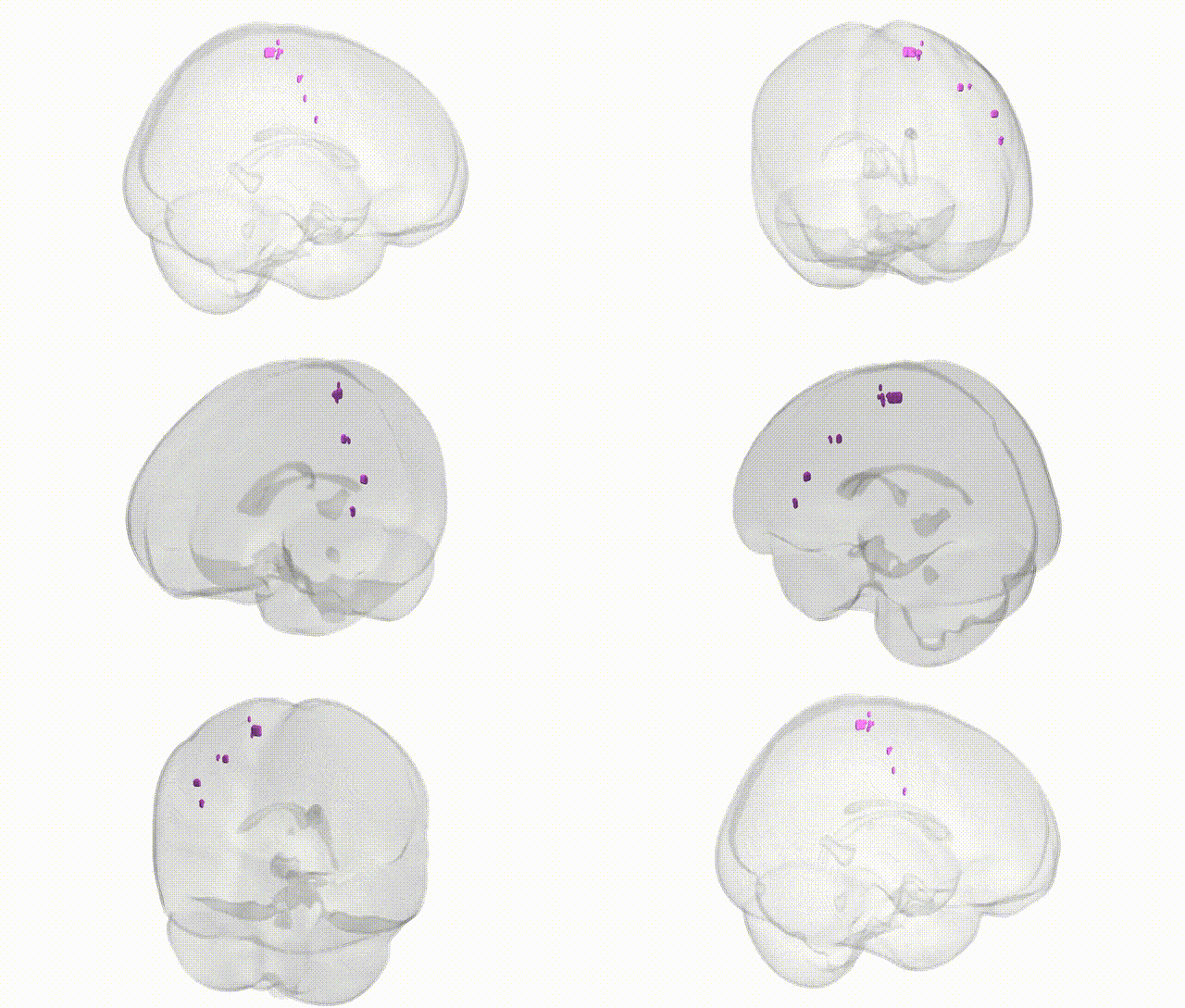
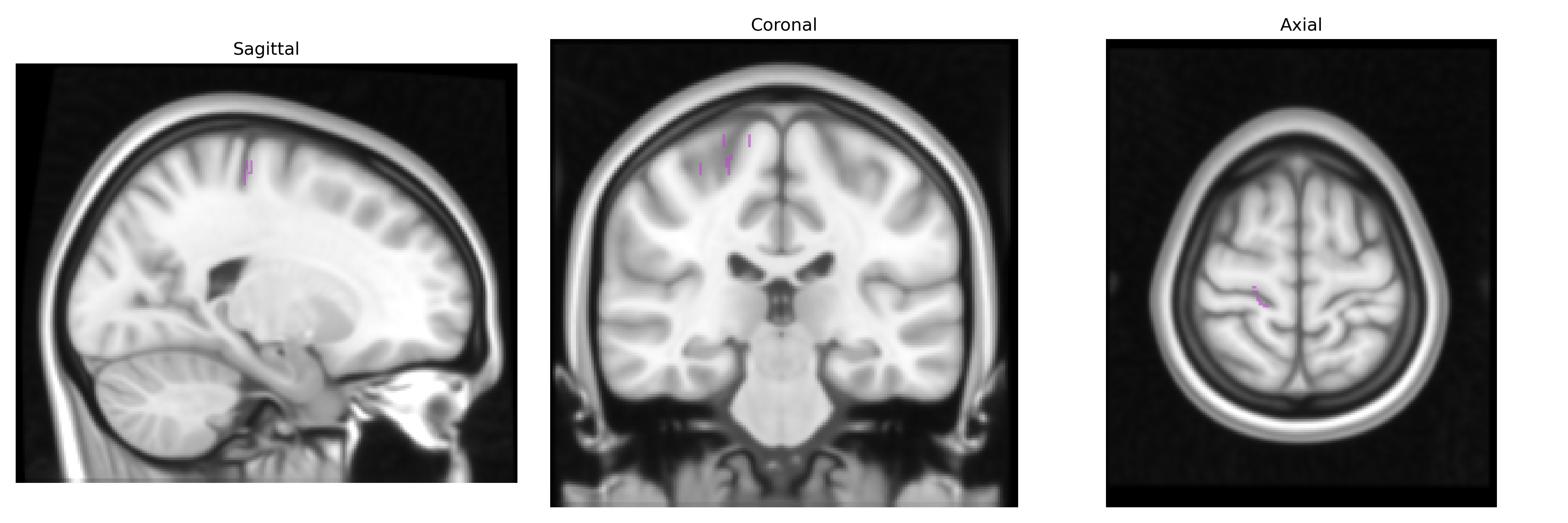
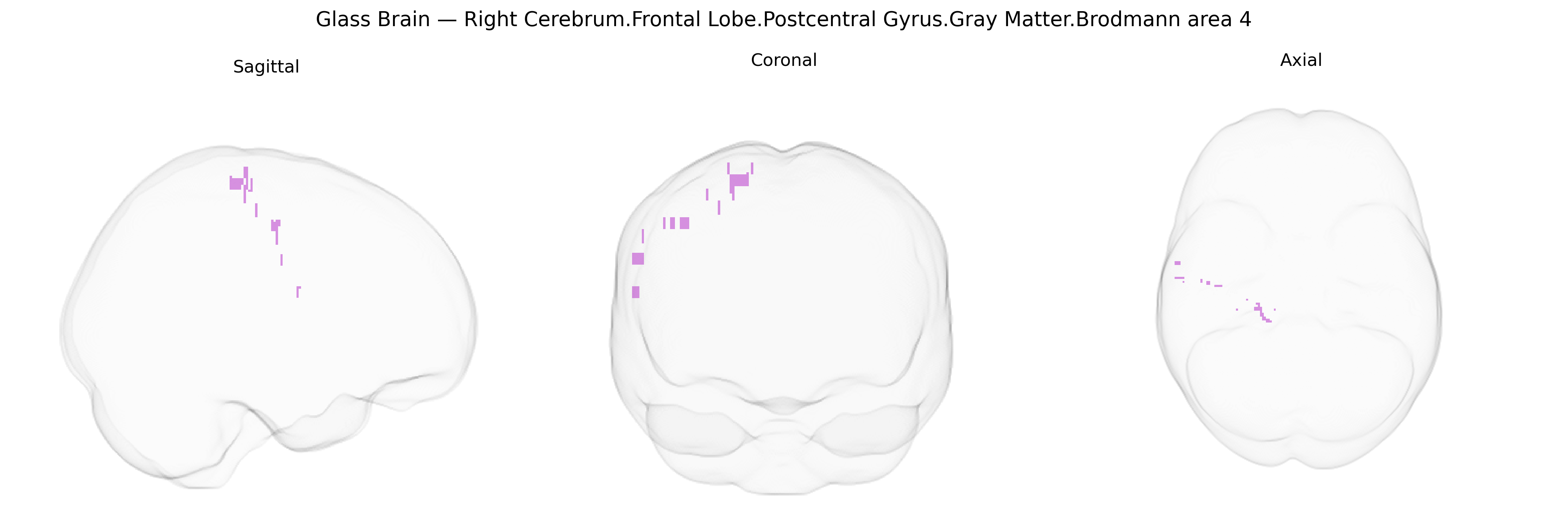
The bilateral Right Cerebrum.Frontal Lobe.Postcentral Gyrus.Gray Matter.Brodmann area 4, as labeled in the Talairach 1 mm Atlas, corresponds neuroanatomically to the primary motor cortex, a cytoarchitectonically defined region critical for the initiation and execution of voluntary movement. Located in the precentral gyrus of the frontal lobe and composed predominantly of agranular cortical gray matter with large pyramidal neurons (including Betz cells in layer V), Brodmann area 4 gives rise to major corticospinal and corticobulbar projections that innervate motor neurons in the brainstem and spinal cord, thereby controlling fine, fractionated movements of the contralateral body. Functionally, this region is organized somatotopically into a “motor homunculus,” with distinct sectors representing different body parts, and it integrates inputs from premotor, supplementary motor, and somatosensory areas to modulate motor output and reflexive adjustments during movement.
The bilateral right frontal lobe/postcentral gyrus gray matter in Brodmann area 4 (primary motor cortex, approximated in the Talairach 1 mm atlas label) has been indirectly implicated in genetic studies through its role in motor control, cortical thickness, and structural/functional connectivity rather than via locus-specific GWAS hits. Large neuroimaging GWAS consortia (e.g., ENIGMA, UK Biobank) have identified common variants in genes involved in neurodevelopment and synaptic function (such as variants near HMGA2, CENPW, TESC, and multiple chromatin‑regulating loci) that influence global and regional cortical surface area and thickness, including motor/frontal regions encompassing BA4. Motor cortex structure and function linked to this area are affected in monogenic and complex motor disorders such as amyotrophic lateral sclerosis (e.g., C9orf72, SOD1, TARDBP, FUS), hereditary spastic paraplegia (ATL1, SPAST, KIF5A), and dystonias (TOR1A, THAP1), where genetic risk influences degeneration or abnormal excitability of primary motor cortex. Polygenic risk scores for neuropsychiatric conditions (schizophrenia, ADHD, bipolar disorder, autism) have been associated with alterations in frontal/motor cortical morphology and connectivity, and GWAS of motor-related traits (grip strength, physical activity, fine motor skills, reaction time) have identified loci in neurodevelopmental and neuromuscular pathways that likely impact BA4 function, although no widely accepted, highly specific genetic association is currently restricted to the bilateral right BA4 Talairach label itself.
Overview generated by GPT-4o (2026).
Region ID: 836
Hemisphere: bilateral
Atlas: Talairach labels 1mm
Full Quality Version: Download MP4
Full Quality Version: Download MP4
Wali Sidiqyar*, Gaurav Rudravaram*, Elyssa M. McMaster, Trent M. Schwartz, Adam M. Saunders, Kurt G. Schilling, Bennett A. Landman "Introducing SPINS: A Shared Public Visualization Library of Neuroanatomical Structures." Medical Imaging with Deep Learning- short paper
This resource is licensed under CC0 1.0 Universal (Public Domain).