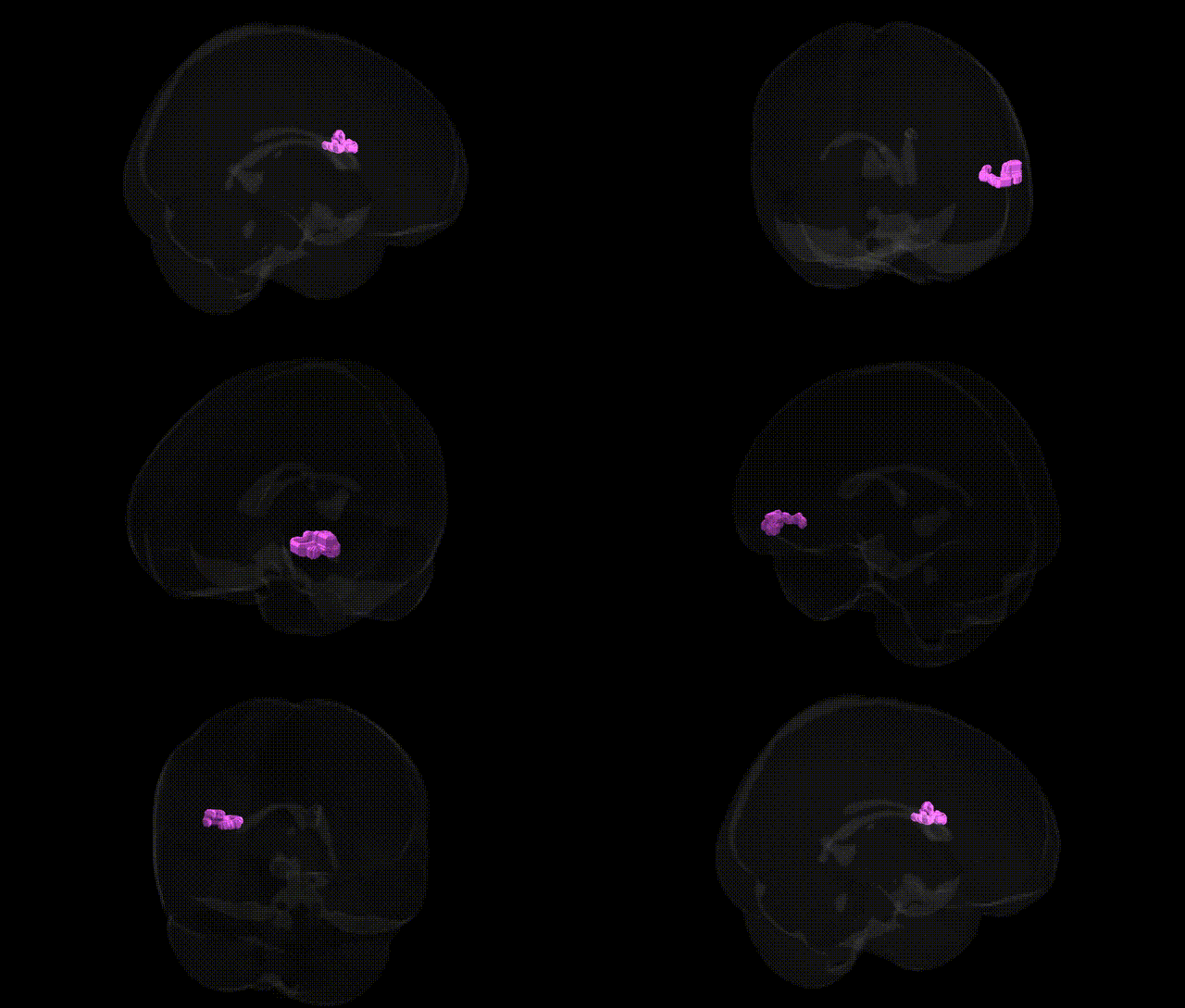
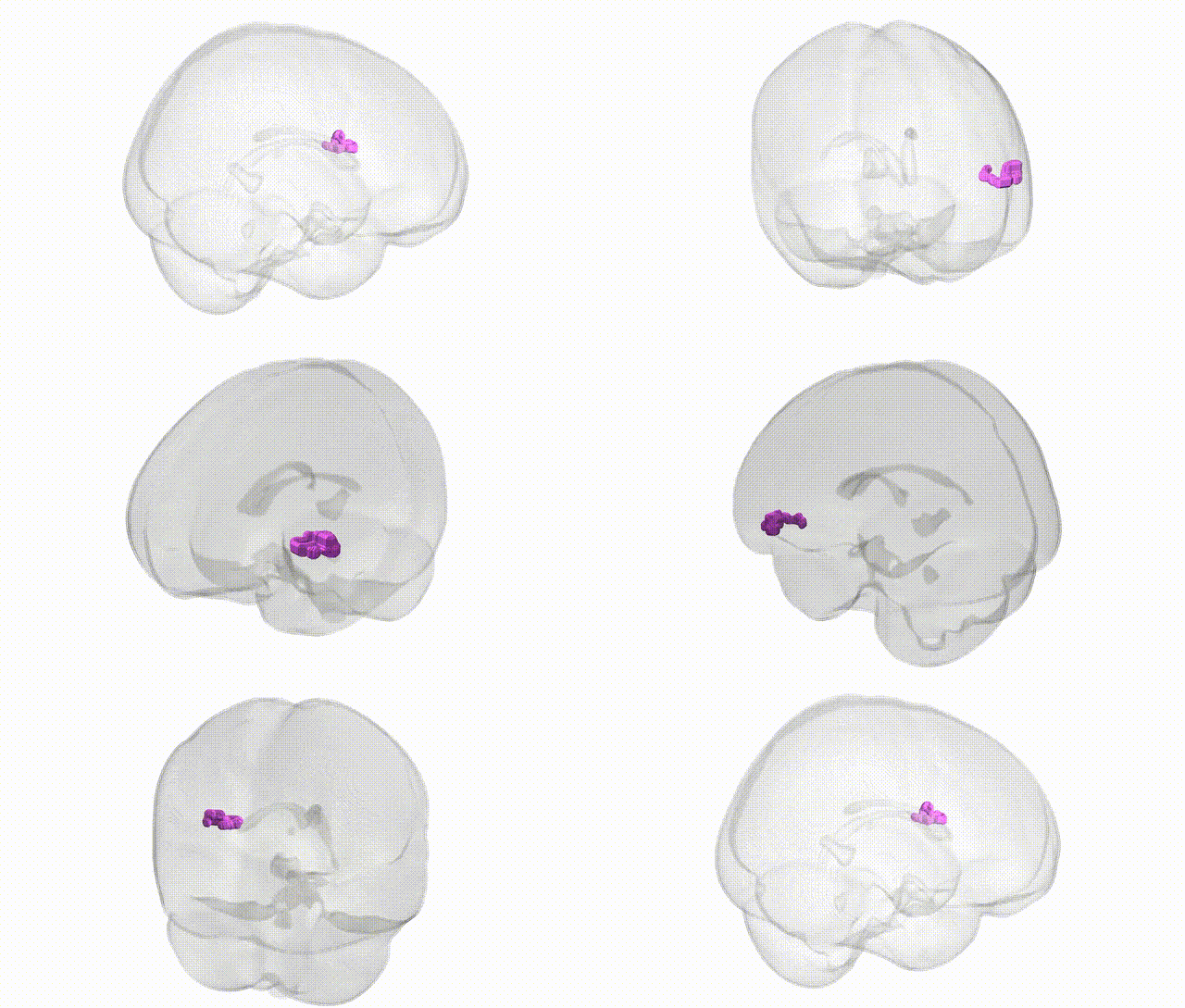
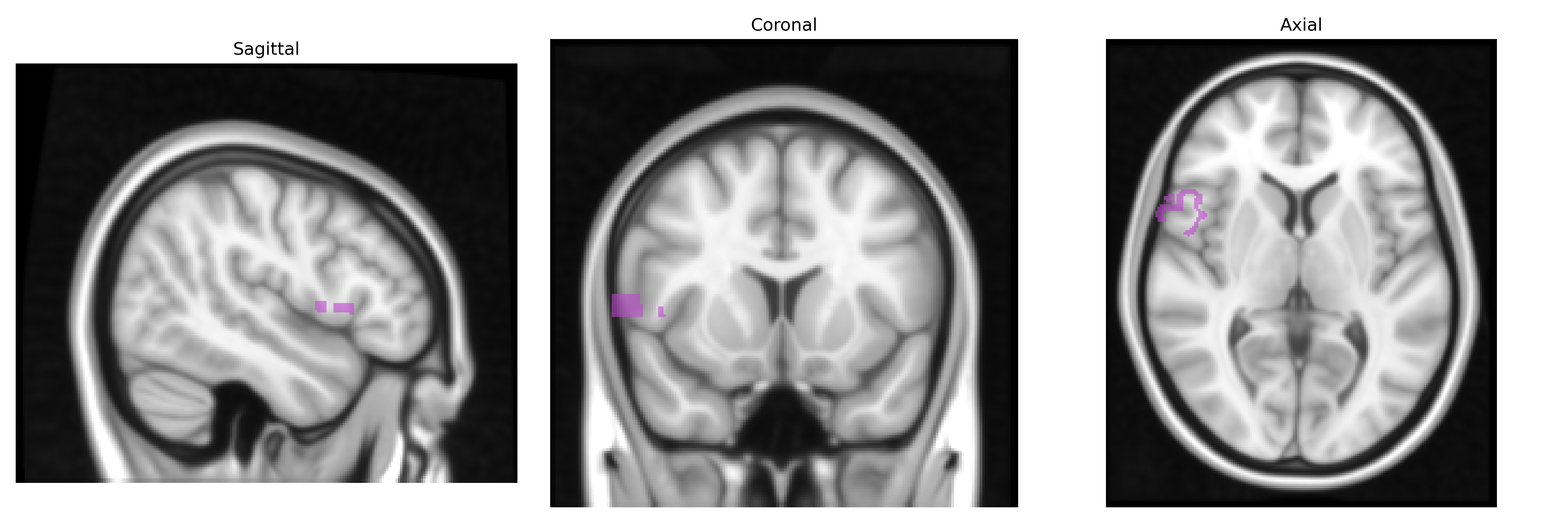
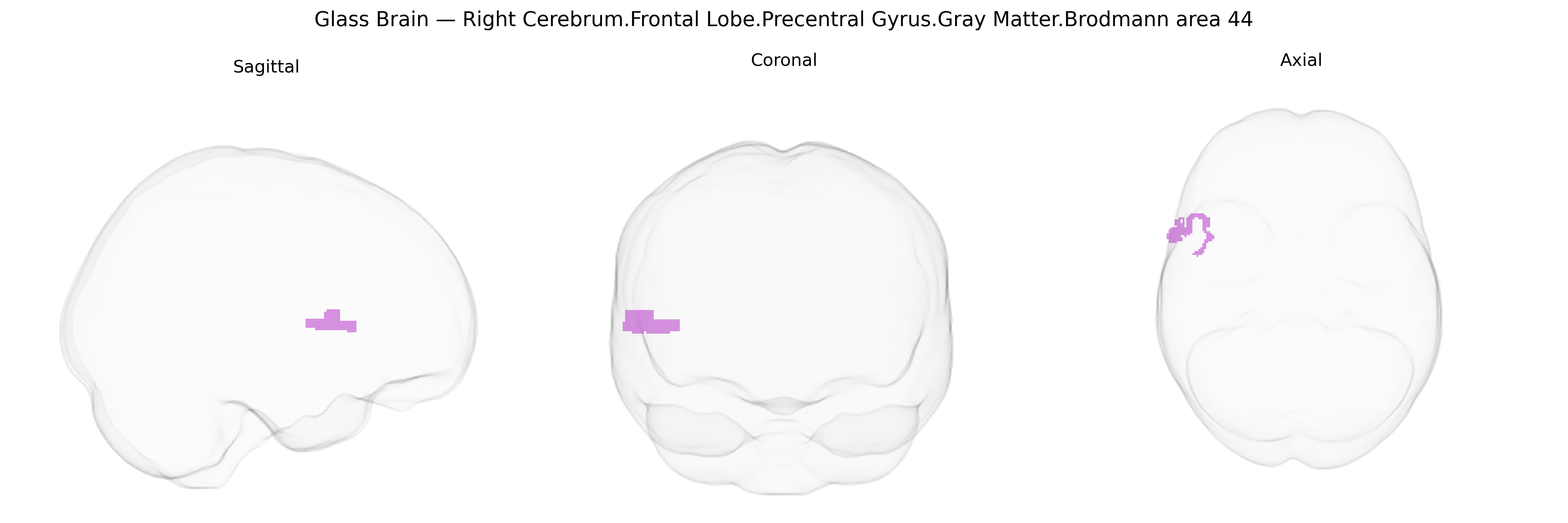
The bilateral Right Cerebrum.Frontal Lobe.Precentral Gyrus.Gray Matter.Brodmann area 44 corresponds to a right-hemispheric sector of the inferior frontal region overlapping the posterior precentral and adjacent inferior frontal gyri, classically associated with Brodmann area 44. Histologically, it is a dysgranular agranular cortex distinguished by its prominent pyramidal neurons in layers III and V, and functionally, in the dominant (typically left) hemisphere it forms a core component of Broca’s region, critical for speech production and language-related motor planning. In the right hemisphere, this area is more strongly implicated in nonverbal functions such as prosodic modulation of speech, aspects of motor inhibition, and higher-order motor control, including complex orofacial and hand movements, with dense connectivity to premotor, motor, temporal, and subcortical structures supporting sensorimotor integration and cognitive control.
Brodmann area 44 (BA44) in the right precentral/inferior frontal region, classically part of the inferior frontal gyrus, has been implicated in multiple genetic and genome-wide association studies through its roles in language, motor planning, and cognitive control. Polygenic and GWAS-based imaging genetics work (e.g., ENIGMA, UK Biobank) has shown that gray matter volume, cortical thickness, and surface area in BA44 or closely overlapping inferior frontal regions are heritable and associated with variants in genes involved in neurodevelopment, synaptic function, and axon guidance (such as FOXP2-related pathways, CNTNAP2, ROBO1/2, and general neurodevelopmental loci), although effects are typically small and distributed. Genetic variants influencing risk for language and speech disorders (developmental language disorder, stuttering, dyslexia), autism spectrum disorder, and schizophrenia have been linked to altered structure or activation in BA44, particularly in inferior frontal language and articulatory networks. GWAS of cognitive traits (verbal fluency, general intelligence, educational attainment) and of motor-related phenotypes have also reported associations with structural and functional variation in this region or its homologous left-hemisphere counterpart, with many loci showing bilateral or network-level effects rather than BA44-specific signals. Overall, current evidence suggests that BA44’s morphology and activation patterns are shaped by highly polygenic influences that overlap with susceptibility loci for neurodevelopmental, psychiatric, and cognitive traits, but no single gene or variant uniquely defines the bilateral right BA44 region in existing Talairach-based GWAS analyses.
Overview generated by GPT-4o (2026).
Region ID: 689
Hemisphere: bilateral
Atlas: Talairach labels 1mm
Full Quality Version: Download MP4
Full Quality Version: Download MP4
Wali Sidiqyar*, Gaurav Rudravaram*, Elyssa M. McMaster, Trent M. Schwartz, Adam M. Saunders, Kurt G. Schilling, Bennett A. Landman "Introducing SPINS: A Shared Public Visualization Library of Neuroanatomical Structures." Medical Imaging with Deep Learning- short paper
This resource is licensed under CC0 1.0 Universal (Public Domain).