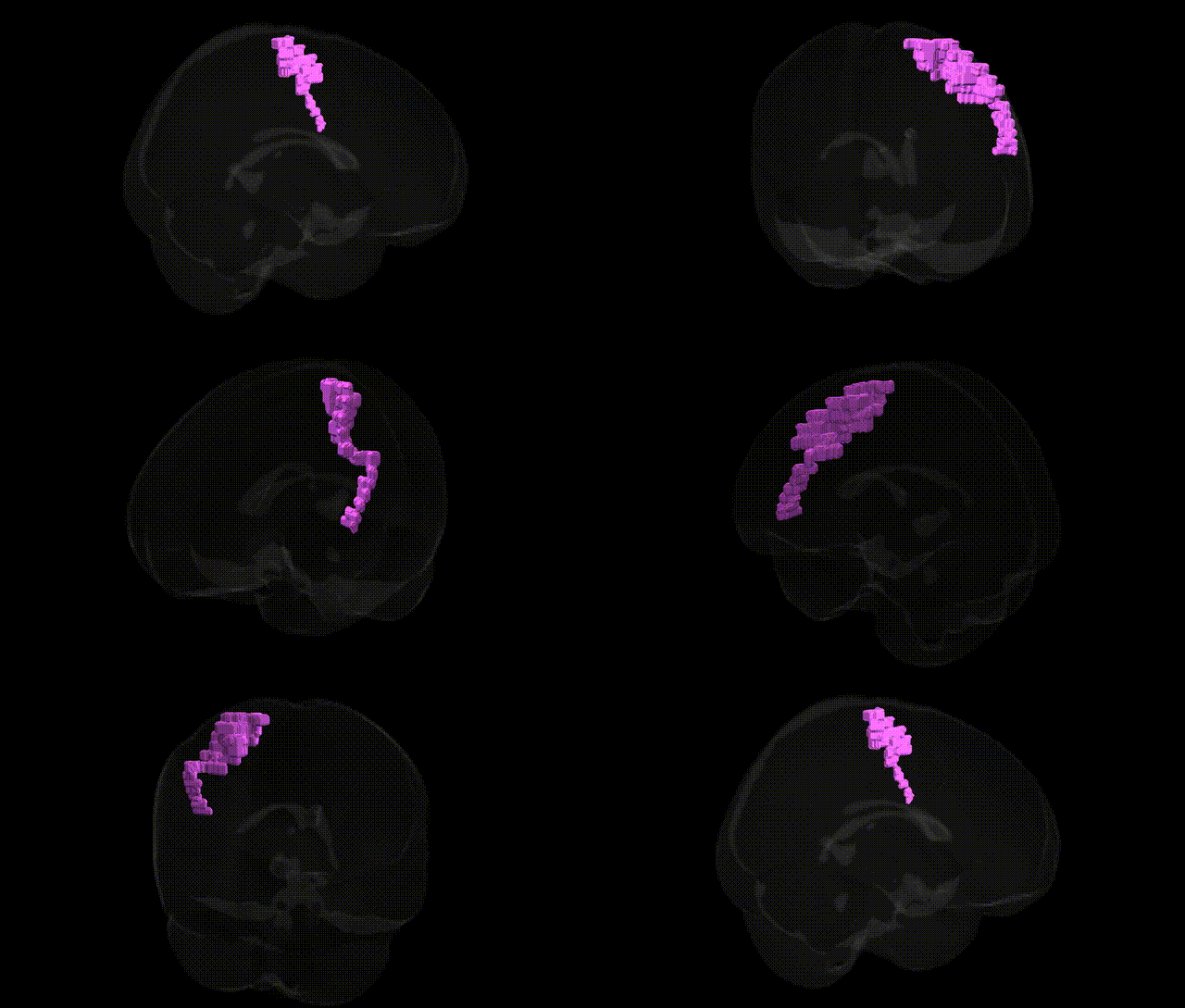
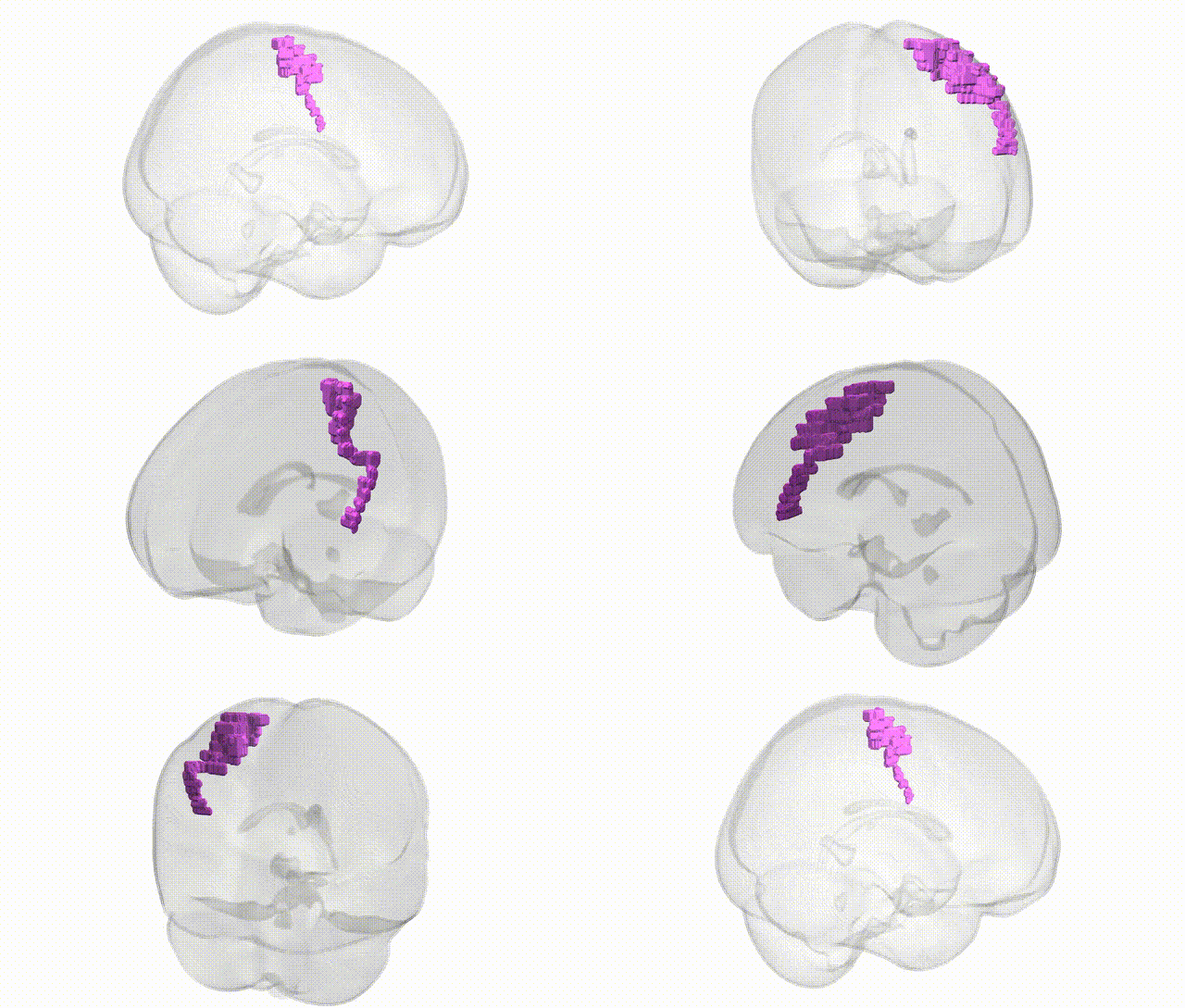
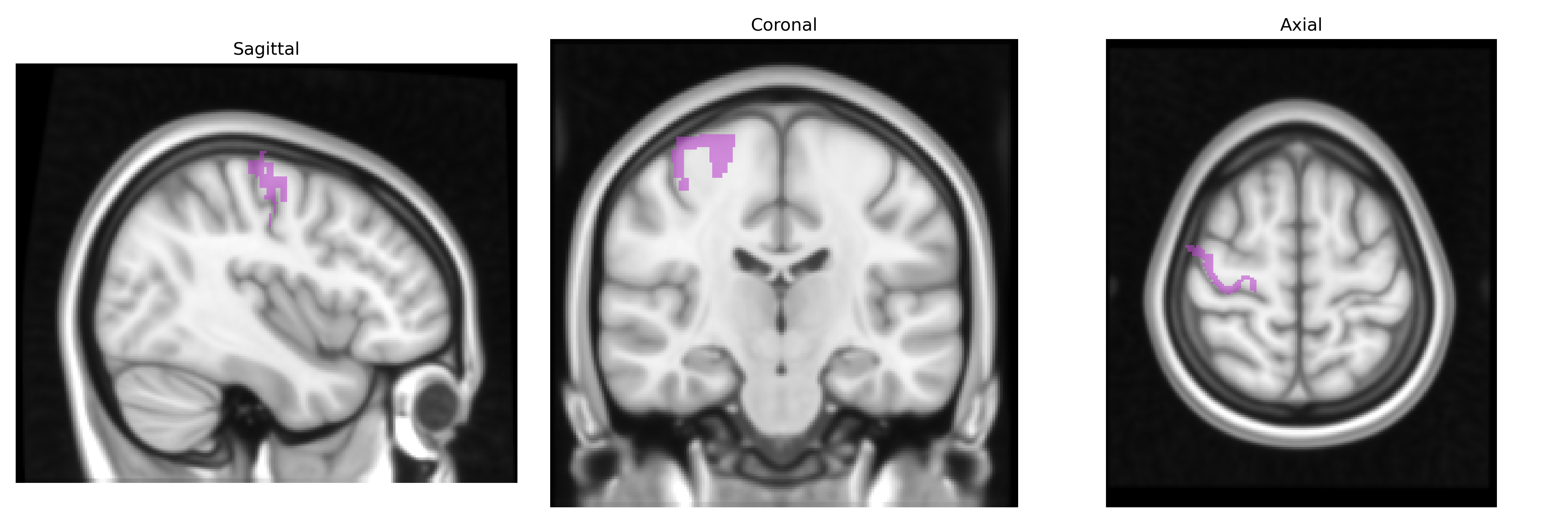
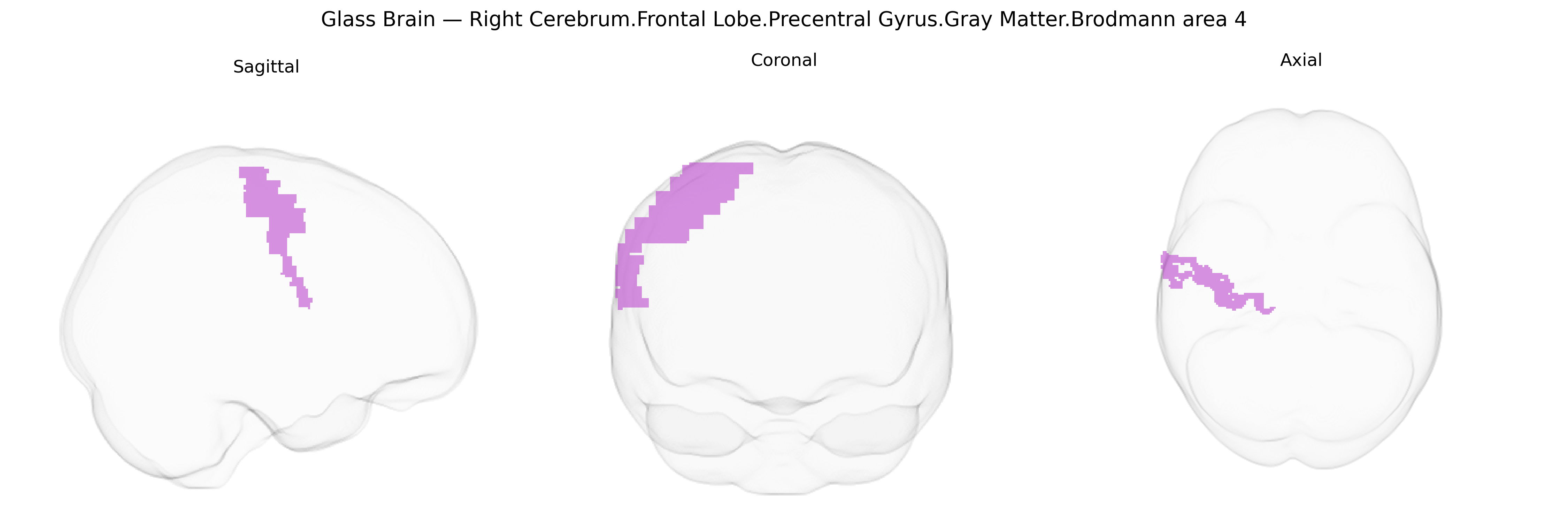
The bilateral Right Cerebrum.Frontal Lobe.Precentral Gyrus.Gray Matter.Brodmann area 4 corresponds to the primary motor cortex located on the precentral gyrus of the frontal lobe, representing the main cortical output region for voluntary motor control via corticospinal and corticobulbar projections. Neurons in this agranular cortical area are somatotopically organized, forming a motor homunculus in which different body parts are represented in a medial-to-lateral and dorsal-to-ventral gradient, with large pyramidal (Betz) cells projecting to spinal and brainstem motor nuclei. This region integrates descending motor commands and contributes to the initiation, force, and precision of contralateral limb and facial movements, with lesions producing characteristic upper motor neuron signs such as weakness, spasticity, and loss of fine motor control. Brodmann area 4
The bilateral precentral gyrus (primary motor cortex, Brodmann area 4) has been repeatedly implicated in genetic studies examining motor function, neurodevelopmental and neuropsychiatric traits, and structural brain variation, though most associations are indirect via imaging genetics or disorder-focused GWAS rather than locus-specific studies of Talairach BA4. Variants influencing cortical thickness and surface area in frontal motor regions, including precentral gyrus, have been identified in large MRI-based GWAS (e.g., ENIGMA and UK Biobank), highlighting genes involved in neurodevelopment, synaptic function, and cytoskeletal regulation such as those near HMGA2, DACH1, MEF2C, and microtubule-related loci. Motor cortex structure and activation in this region show heritability and genetic correlations with general motor ability, hand skill, and reaction time, as well as with neurodevelopmental conditions such as attention-deficit/hyperactivity disorder and autism spectrum disorder, where common variants (e.g., near FOXP1, CNTNAP2, and other synaptic/axon guidance genes) have been linked to altered frontal motor circuitry. In movement disorders, risk alleles for Parkinson’s disease and dystonia affect networks that prominently involve BA4, and polygenic risk for these conditions has been associated with precentral gyrus functional and structural changes, though specific locus-to-region mappings are still emerging. GWAS of stroke, cerebral palsy risk, and motor recovery after brain injury also implicate genetic variants in pathways for axonal growth, myelination, and plasticity that modulate BA4 integrity and reorganization, while polygenic scores for educational attainment and intelligence show weaker but detectable associations with frontal cortical morphology that include motor areas. Overall, genetic influences on the precentral gyrus reflect broad neurodevelopmental and neuroplasticity pathways rather than a small set of region-exclusive loci, with this primary motor region serving as a key structural and functional endpoint for diverse heritable traits and brain disorders.
Overview generated by GPT-4o (2026).
Region ID: 805
Hemisphere: bilateral
Atlas: Talairach labels 1mm
Full Quality Version: Download MP4
Full Quality Version: Download MP4
Wali Sidiqyar*, Gaurav Rudravaram*, Elyssa M. McMaster, Trent M. Schwartz, Adam M. Saunders, Kurt G. Schilling, Bennett A. Landman "Introducing SPINS: A Shared Public Visualization Library of Neuroanatomical Structures." Medical Imaging with Deep Learning- short paper
This resource is licensed under CC0 1.0 Universal (Public Domain).