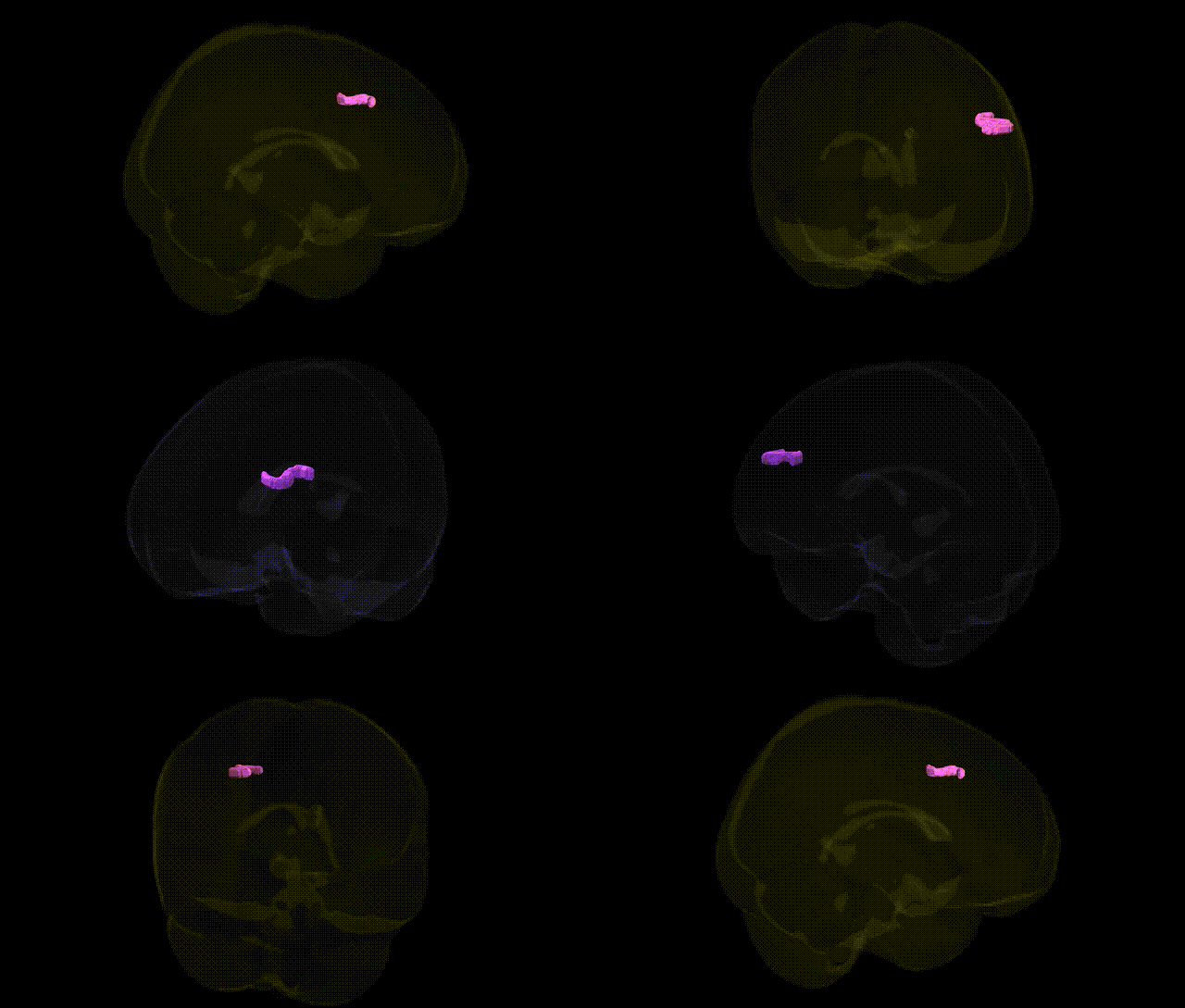
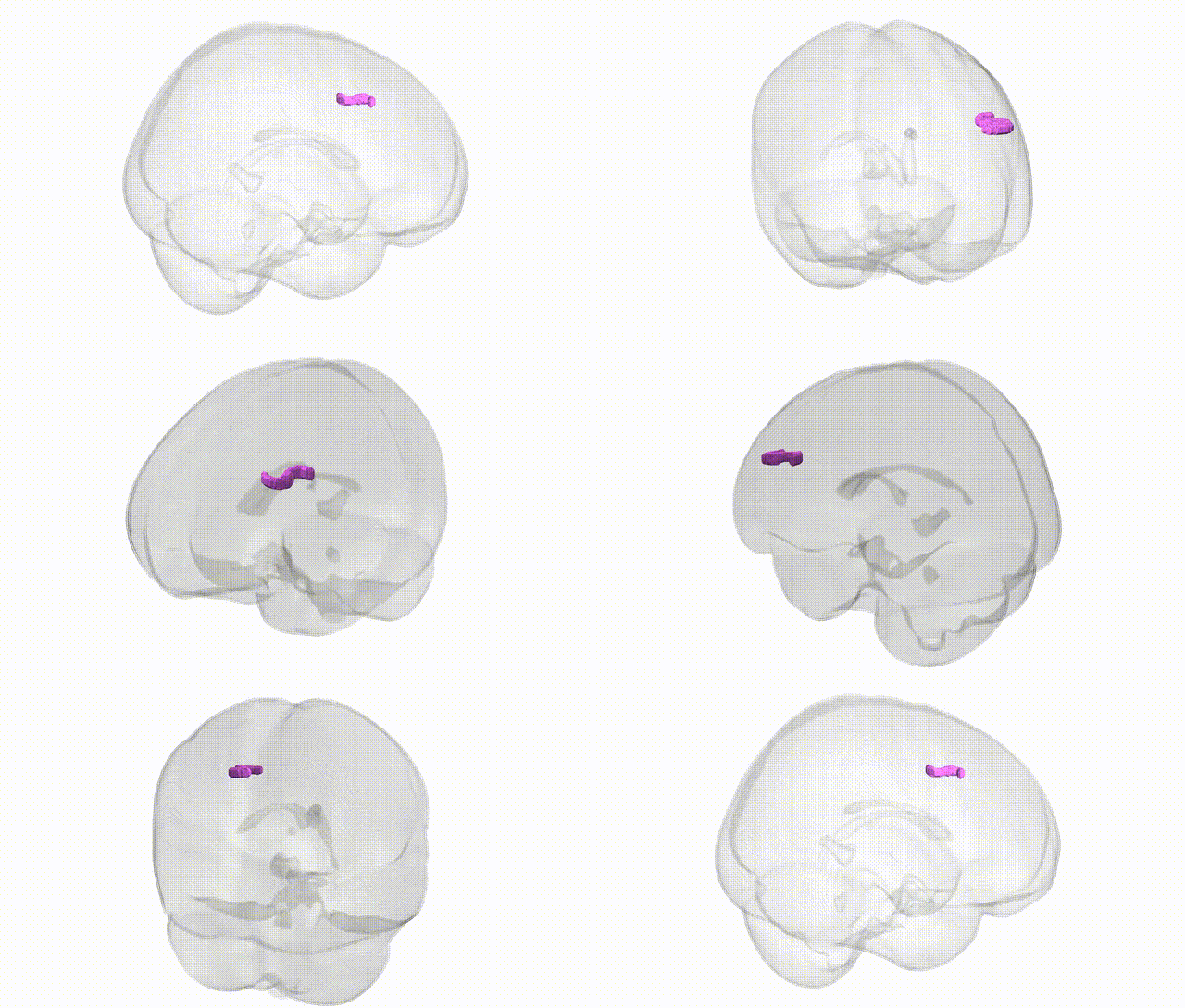
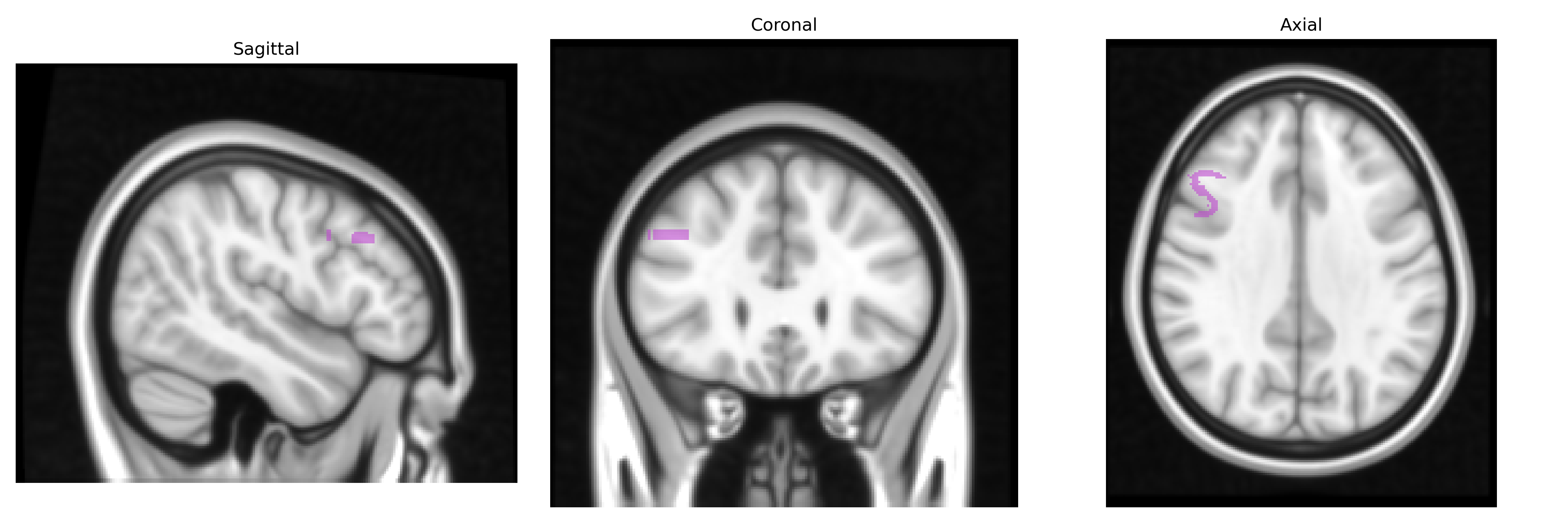
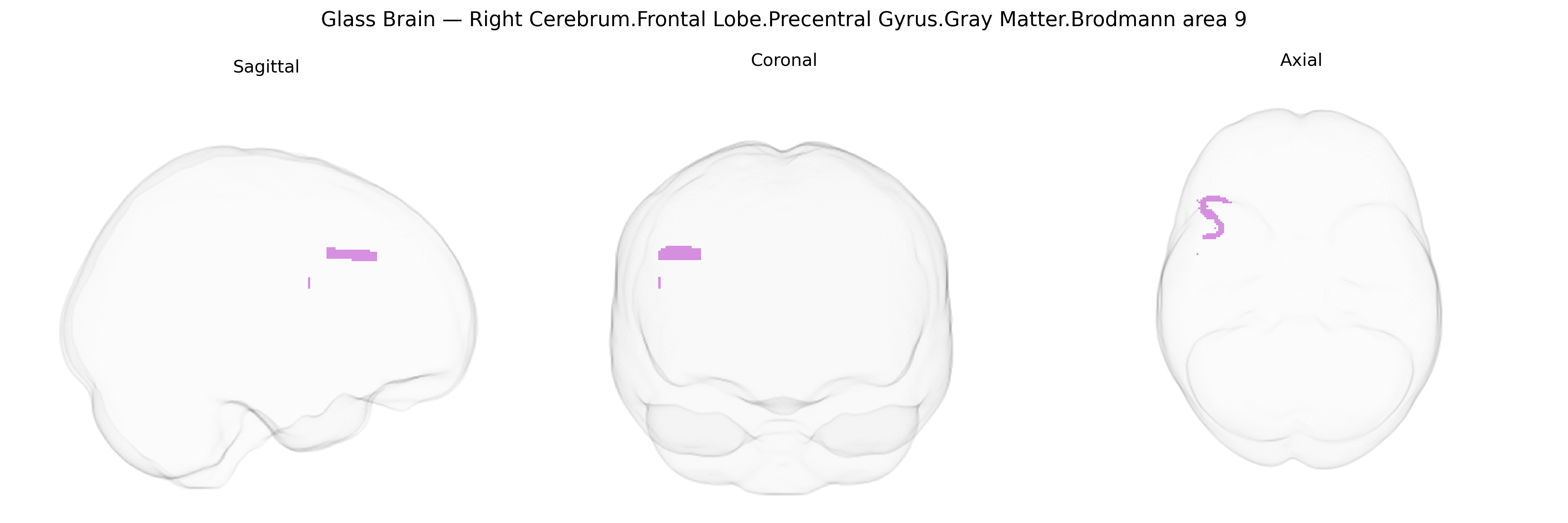
The bilateral Right Cerebrum.Frontal Lobe.Precentral Gyrus.Gray Matter.Brodmann area 9 corresponds to a dorsal segment of the frontal cortex situated anterior to the primary motor representations in the precentral gyrus, overlapping superior and middle frontal regions involved in higher-order cognitive and premotor functions. Cytoarchitectonically defined as part of Brodmann area 9, this territory is characterized by a granular prefrontal lamination pattern and dense reciprocal connectivity with other prefrontal fields, premotor cortex, and association thalamic nuclei. Functionally, it participates in working memory, executive control, attention, and motor planning, including the integration of cognitive context with impending motor output, and contributes to networks subserving decision-making, response selection, and the regulation of behavior based on internal goals and rules. No direct link exists for this exact Talairach label; a related structure is Brodmann area 9.
Genetic associations involving the bilateral Right Cerebrum.Frontal Lobe.Precentral Gyrus.Gray Matter.Brodmann area 9 (a dorsolateral prefrontal/premotor region) are largely inferred from GWAS and imaging-genetics studies that link this territory to cortical thickness, surface area, and functional traits rather than to a single locus. Large-scale consortia such as ENIGMA and UK Biobank implicate common variants in genes involved in neurodevelopment, synaptic function, and cortical patterning (for example, loci near HMGA2, MIR2113, and CENPW for global and frontal cortical measures; and variants in genes such as FOXP2 and NRGN in broader frontal and motor-prefrontal networks) in determining structural variation and activation patterns that include BA9/precentral zones. This region frequently appears in GWAS-based imaging phenotypes associated with general cognitive ability, working memory, intelligence, educational attainment, and motor planning, and is also implicated in polygenic risk architectures for schizophrenia, major depressive disorder, attention-deficit/hyperactivity disorder, and autism spectrum disorder via altered frontal cortical thickness or connectivity. Moreover, risk variants in dopaminergic, glutamatergic, and GABAergic pathway genes (for instance, DRD2, GRIN2B, and GABA receptor subunits) have been associated with altered activation or structure in adjacent dorsolateral prefrontal and premotor areas during tasks requiring cognitive control, response inhibition, and motor preparation, suggesting that BA9 in the precentral gyrus participates in the distributed genetic architecture underlying executive dysfunction and related psychiatric and neurodevelopmental phenotypes.
Overview generated by GPT-4o (2026).
Region ID: 901
Hemisphere: bilateral
Atlas: Talairach labels 1mm
Full Quality Version: Download MP4
Full Quality Version: Download MP4
Wali Sidiqyar*, Gaurav Rudravaram*, Elyssa M. McMaster, Trent M. Schwartz, Adam M. Saunders, Kurt G. Schilling, Bennett A. Landman "Introducing SPINS: A Shared Public Visualization Library of Neuroanatomical Structures." Medical Imaging with Deep Learning- short paper
This resource is licensed under CC0 1.0 Universal (Public Domain).