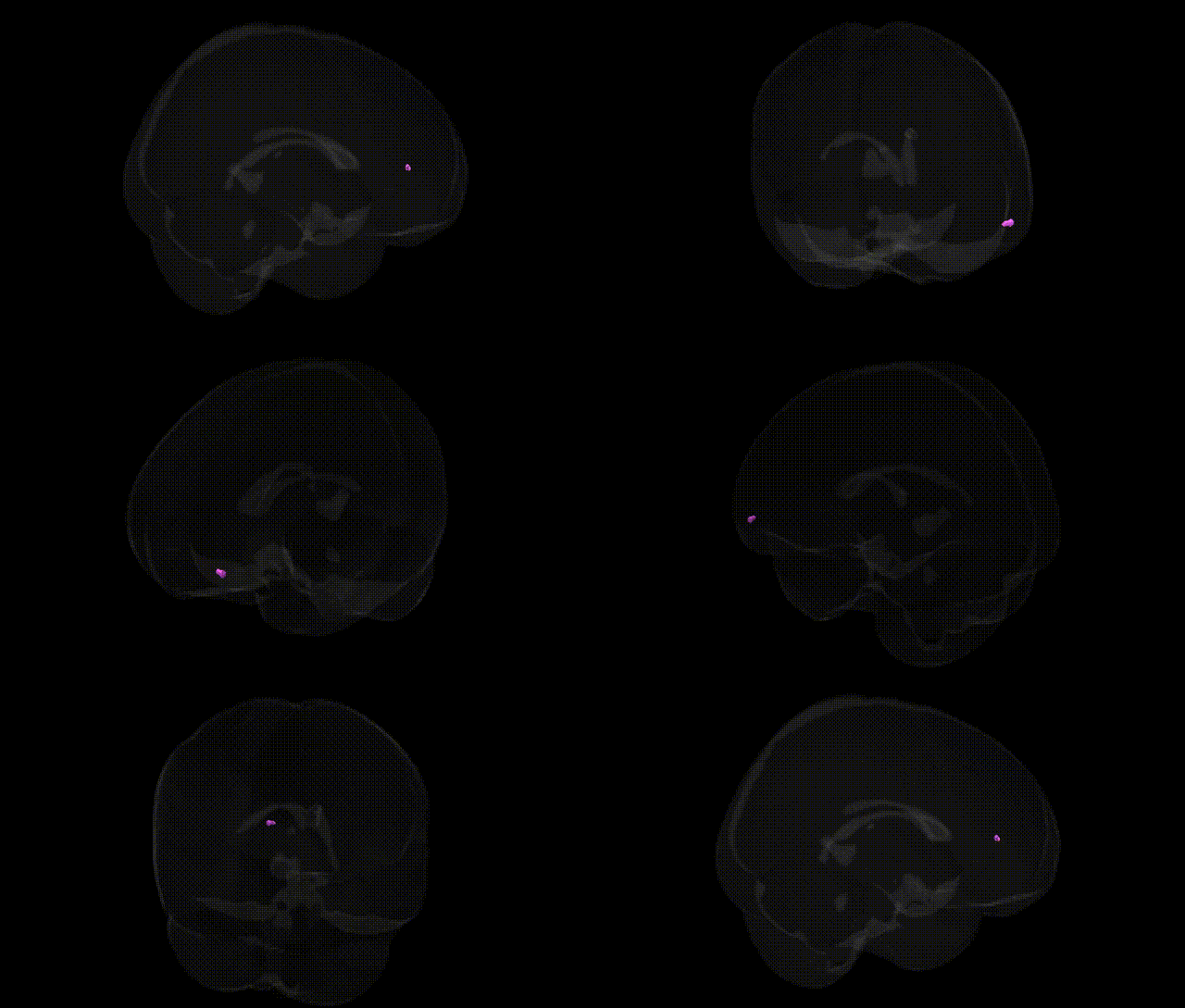
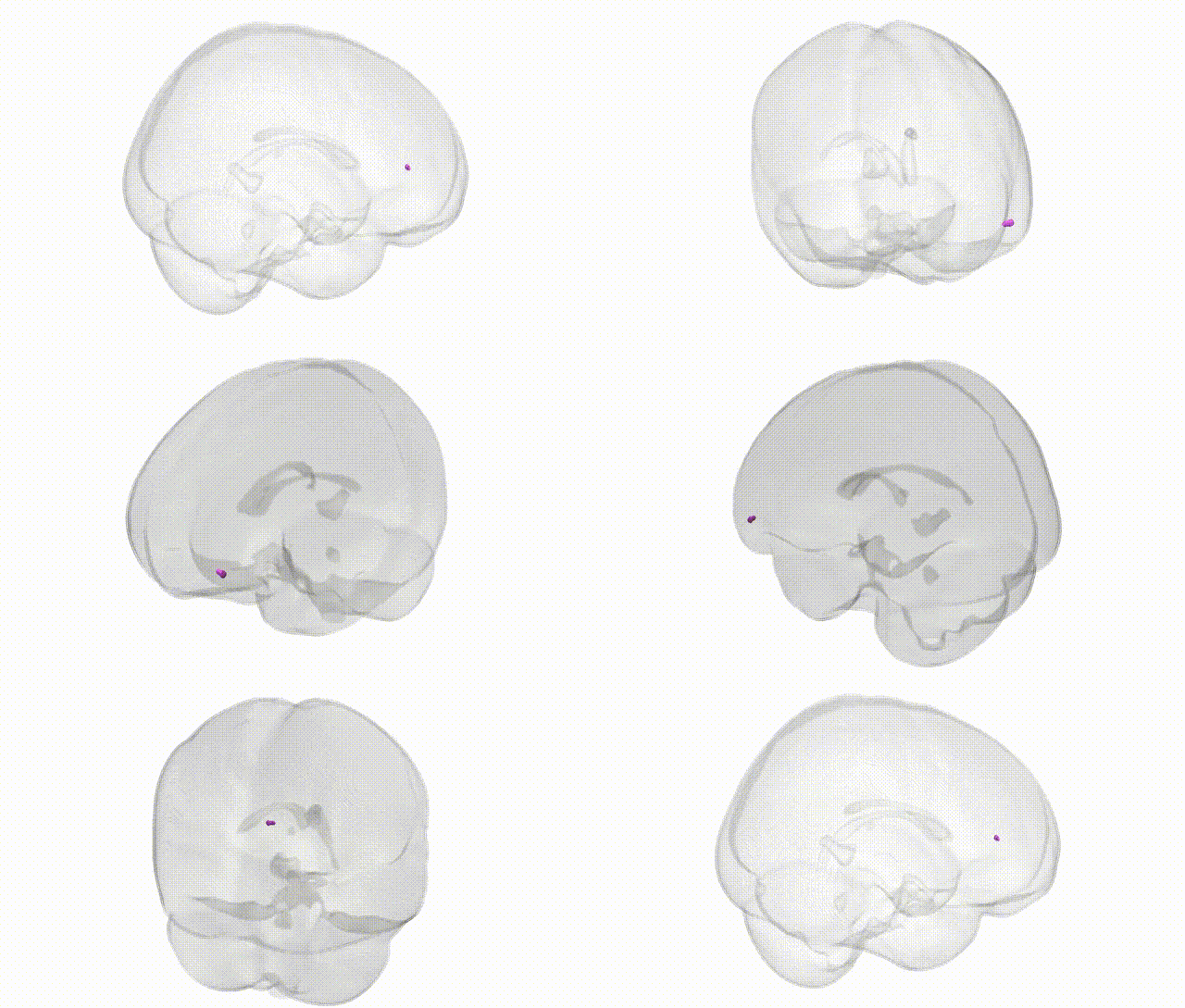
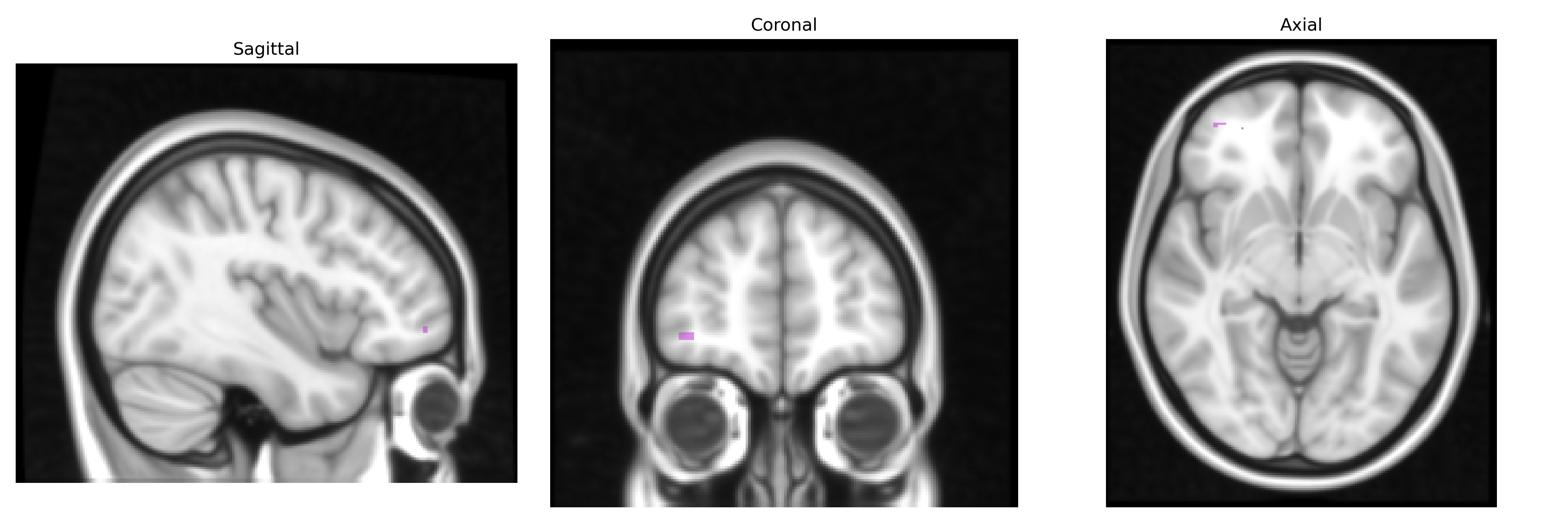
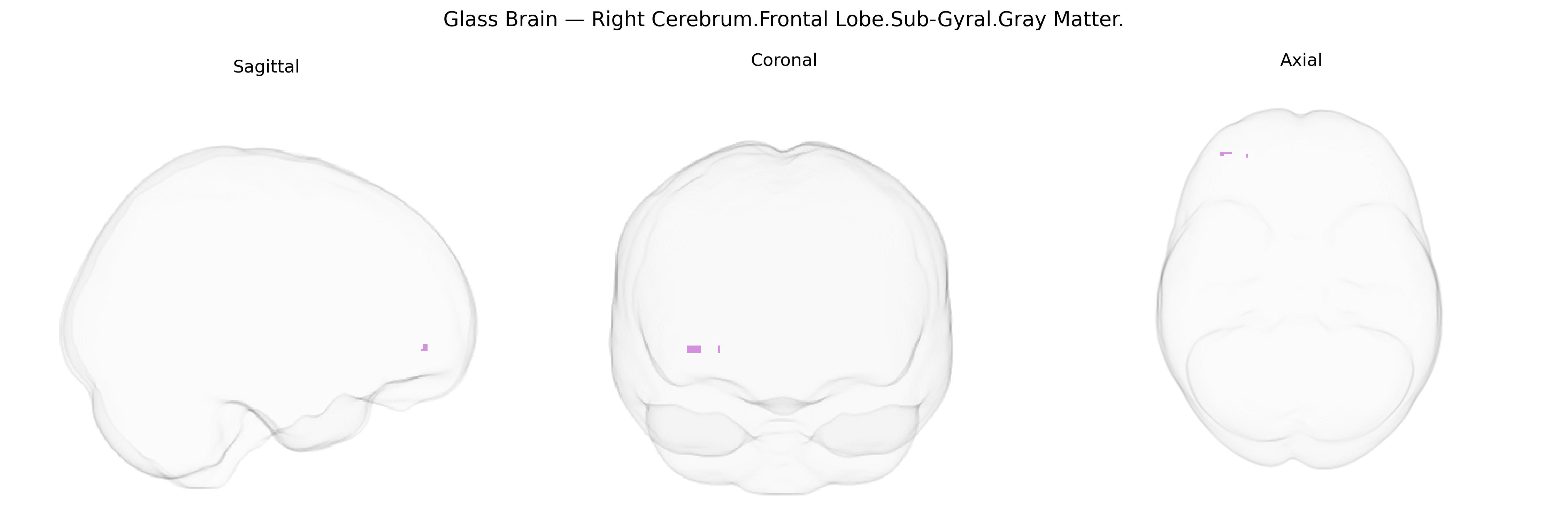
The bilateral Right Cerebrum.Frontal Lobe.Sub-Gyral.Gray Matter corresponds to gray matter located beneath the cortical gyri of the right frontal lobe, encompassing portions of prefrontal and premotor territories involved in higher-order cognitive control, planning, decision-making, working memory, and aspects of social and emotional processing. This sub-gyral region includes segments of the dorsolateral and ventrolateral prefrontal cortices, as well as adjacent frontal association areas, which integrate multimodal sensory information and modulate behavior via extensive reciprocal connections with parietal, temporal, limbic, and subcortical structures. Functionally, this gray matter participates in executive functions, response selection and inhibition, and context-dependent modulation of motor output, contributing to goal-directed behavior and adaptive cognitive flexibility. There is no direct link for “Right Cerebrum.Frontal Lobe.Sub-Gyral.Gray Matter”; a closely related structure is the Frontal lobe.
The bilateral right frontal sub-gyral gray matter (inferior/mid frontal and prefrontal territories as indexed by the Talairach 1 mm atlas) has been implicated in multiple genetic association studies, particularly in large-scale GWAS of brain structure and function. Variants in genes related to neurodevelopment (e.g., MIR137, DRD2, NRGN, CNTNAP2, GRIN2B) and synaptic plasticity have been associated with regional frontal gray matter volume, cortical thickness, and surface area, especially in dorsolateral and inferior frontal subregions. Polygenic risk scores for schizophrenia, bipolar disorder, major depressive disorder, and autism spectrum disorder frequently correlate with altered frontal gray matter metrics in this area, while common variants identified in ENIGMA and UK Biobank–based GWAS (e.g., near genes such as HMGA2, IGF1, ZIC4, TBR1, and others involved in neuronal proliferation and cortical patterning) contribute to interindividual differences in frontal morphology. This sub-gyral frontal territory also shows genetic correlations with cognitive traits, including general intelligence, working memory, and educational attainment, with overlapping loci in pathways regulating glutamatergic signaling, dopamine transmission, and axonal guidance. Additionally, frontal sub-gyral gray matter structure and activation patterns have been linked via imaging-genetics to risk alleles for ADHD and impulse-control–related traits (e.g., in DAT1/SLC6A3, COMT, and MAOA), as well as to neurodegeneration-related variants (such as APOE ε4) that are associated with early atrophy or altered connectivity in right frontal networks.
Overview generated by GPT-4o (2026).
Region ID: 614
Hemisphere: bilateral
Atlas: Talairach labels 1mm
Full Quality Version: Download MP4
Full Quality Version: Download MP4
Wali Sidiqyar*, Gaurav Rudravaram*, Elyssa M. McMaster, Trent M. Schwartz, Adam M. Saunders, Kurt G. Schilling, Bennett A. Landman "Introducing SPINS: A Shared Public Visualization Library of Neuroanatomical Structures." Medical Imaging with Deep Learning- short paper
This resource is licensed under CC0 1.0 Universal (Public Domain).