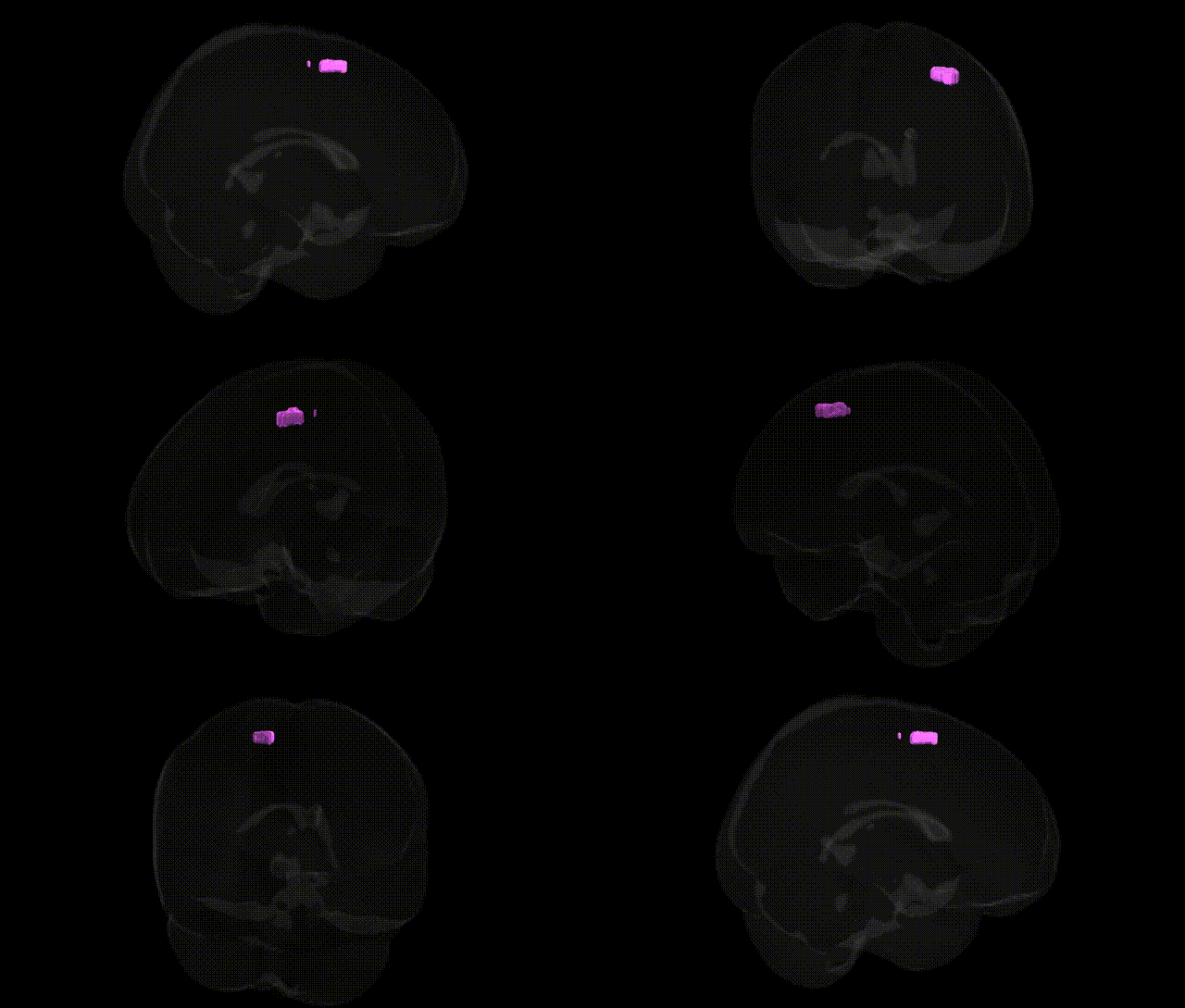
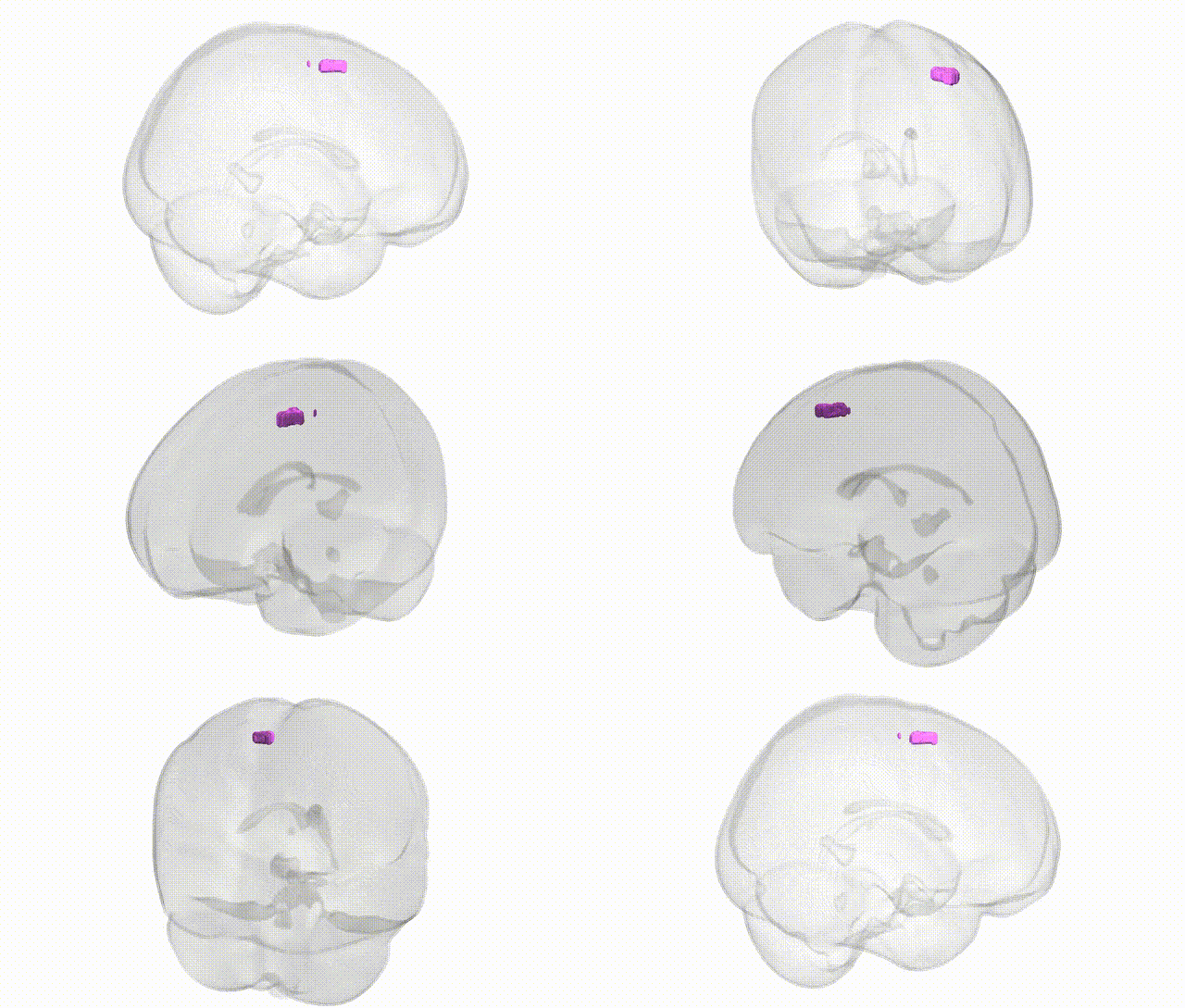
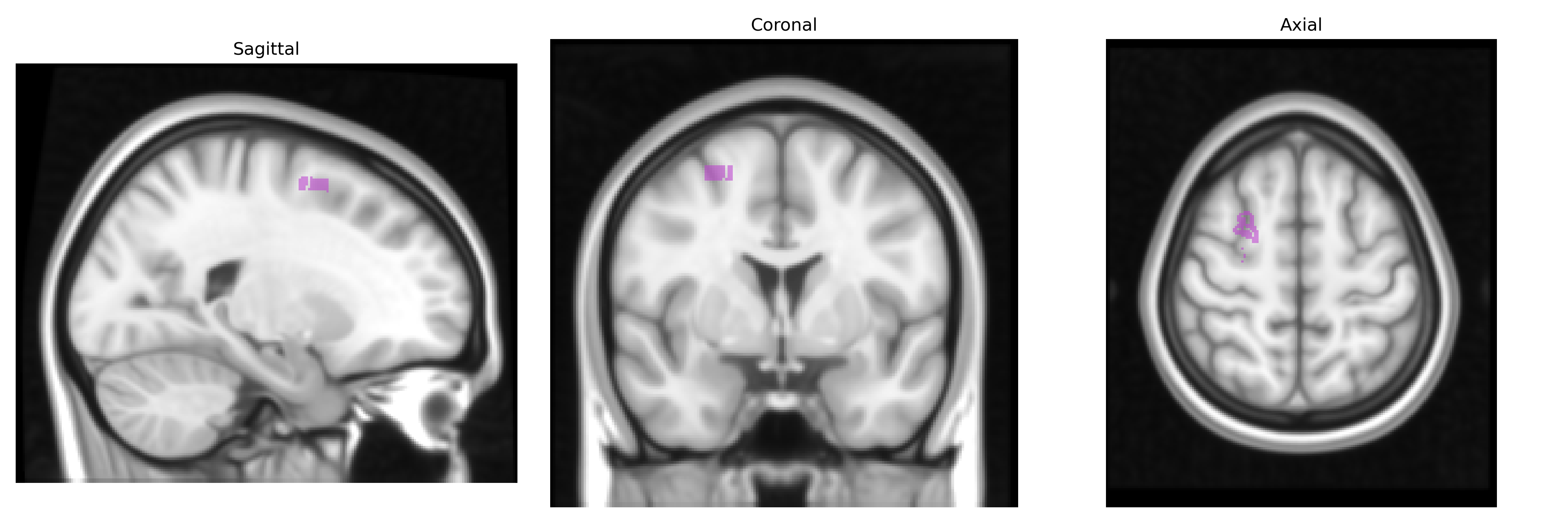
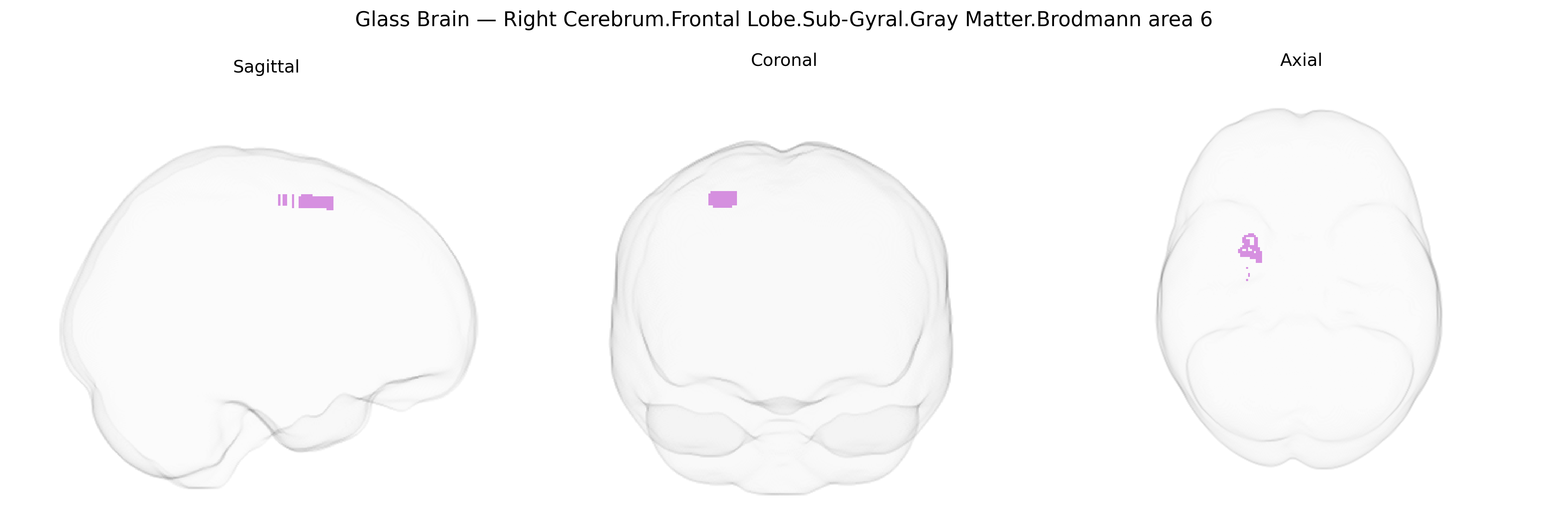
The bilateral Right Cerebrum.Frontal Lobe.Sub-Gyral.Gray Matter.Brodmann area 6 corresponds predominantly to the premotor and supplementary motor cortices located anterior to the primary motor cortex on the lateral and medial surfaces of the frontal lobe. This agranular cortical region plays a key role in the planning, selection, and sequencing of voluntary movements, sensorimotor integration, and the transformation of sensory information into motor programs, including externally guided actions and internally generated motor plans. Functionally, it contributes to motor preparation, posture and proximal limb control, and aspects of motor learning, with hemispheric specialization often related to the control of contralateral body movements. Brodmann area 6 is also implicated in higher-order cognitive–motor processes such as action representation, motor imagery, and the integration of attention and intention with motor output. Brodmann area 6
The bilateral right frontal sub-gyral gray matter of Brodmann area 6 (premotor/supplementary motor cortex), as defined in the Talairach 1 mm atlas, has been implicated in several genetic and genome-wide association studies that link its structure and function to diverse traits and disorders. GWAS of cortical thickness, surface area, and regional volume have associated variants in genes involved in neurodevelopment and synaptic function (for example, microtubule- and cytoskeleton-related genes such as MAPT and microtubule-associated loci on 17q21, as well as genes near loci for intracranial volume and global cortical measures) with morphometric variation encompassing premotor frontal regions, including BA6. Large imaging-genetics consortia (e.g., ENIGMA, UK Biobank) consistently report that polygenic scores for general cognitive ability, educational attainment, and motor function correlate with structural properties and activation in dorsal premotor and supplementary motor areas, suggesting distributed genetic influences rather than single-region–specific effects. In clinical genetics, risk variants for schizophrenia, bipolar disorder, and major depression, as well as autism spectrum conditions and ADHD, have been linked to abnormal activation or altered gray-matter measures in premotor and supplementary motor regions, including BA6, in case–control imaging-genetics analyses, reflecting this region’s participation in fronto-striatal and fronto-parietal networks affected by neuropsychiatric risk alleles. Additionally, GWAS of motor-related phenotypes (such as grip strength, gait and balance traits, and Parkinson’s disease risk) and polygenic burden for movement disorders have been associated with altered structural and functional measures in premotor/supplementary motor cortex, consistent with BA6’s role in motor planning and execution, though effects are typically reported at the level of broader frontal or motor networks rather than isolated to the specific Talairach-defined sub-gyral BA6 parcel.
Overview generated by GPT-4o (2026).
Region ID: 1094
Hemisphere: bilateral
Atlas: Talairach labels 1mm
Full Quality Version: Download MP4
Full Quality Version: Download MP4
Wali Sidiqyar*, Gaurav Rudravaram*, Elyssa M. McMaster, Trent M. Schwartz, Adam M. Saunders, Kurt G. Schilling, Bennett A. Landman "Introducing SPINS: A Shared Public Visualization Library of Neuroanatomical Structures." Medical Imaging with Deep Learning- short paper
This resource is licensed under CC0 1.0 Universal (Public Domain).