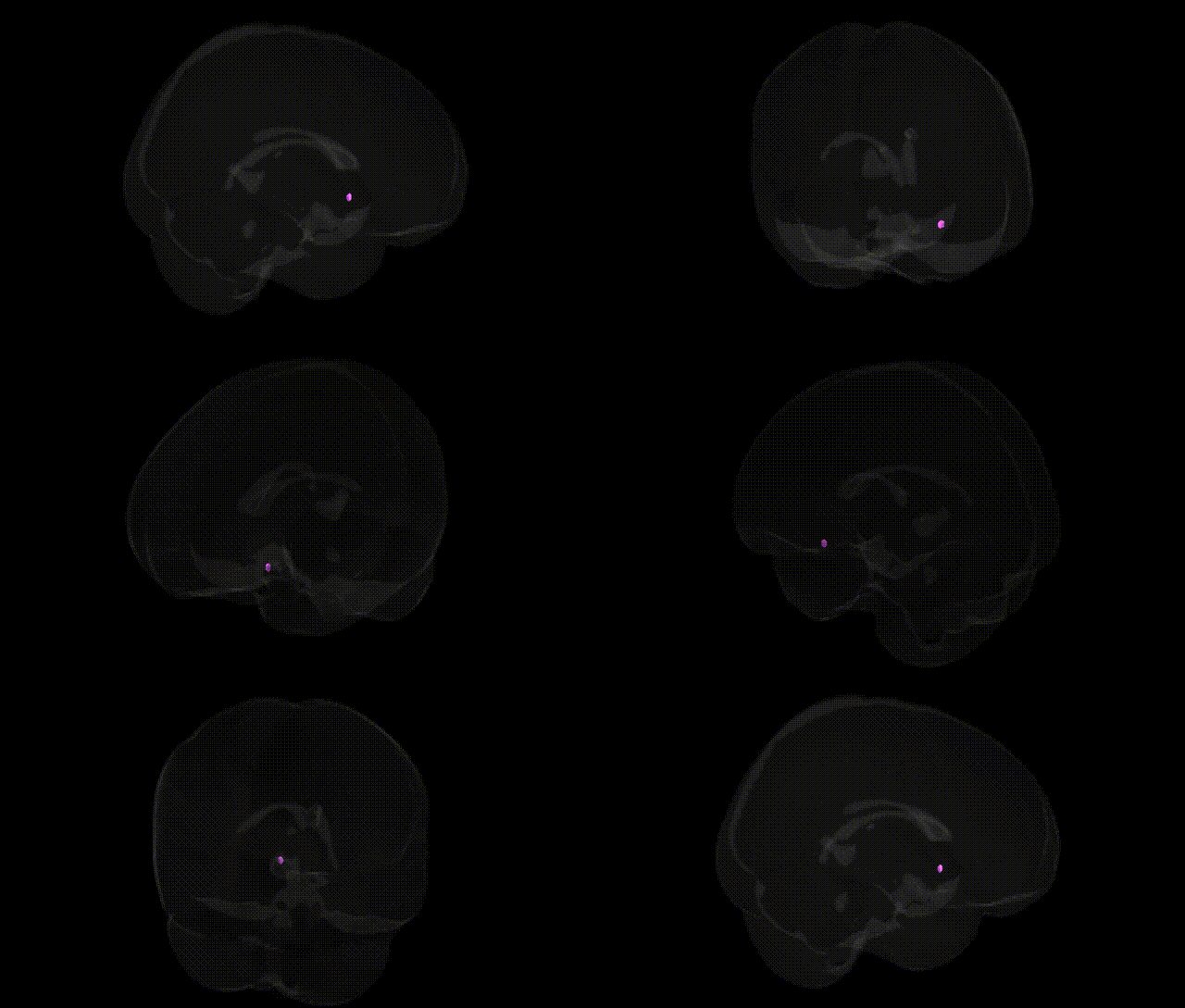
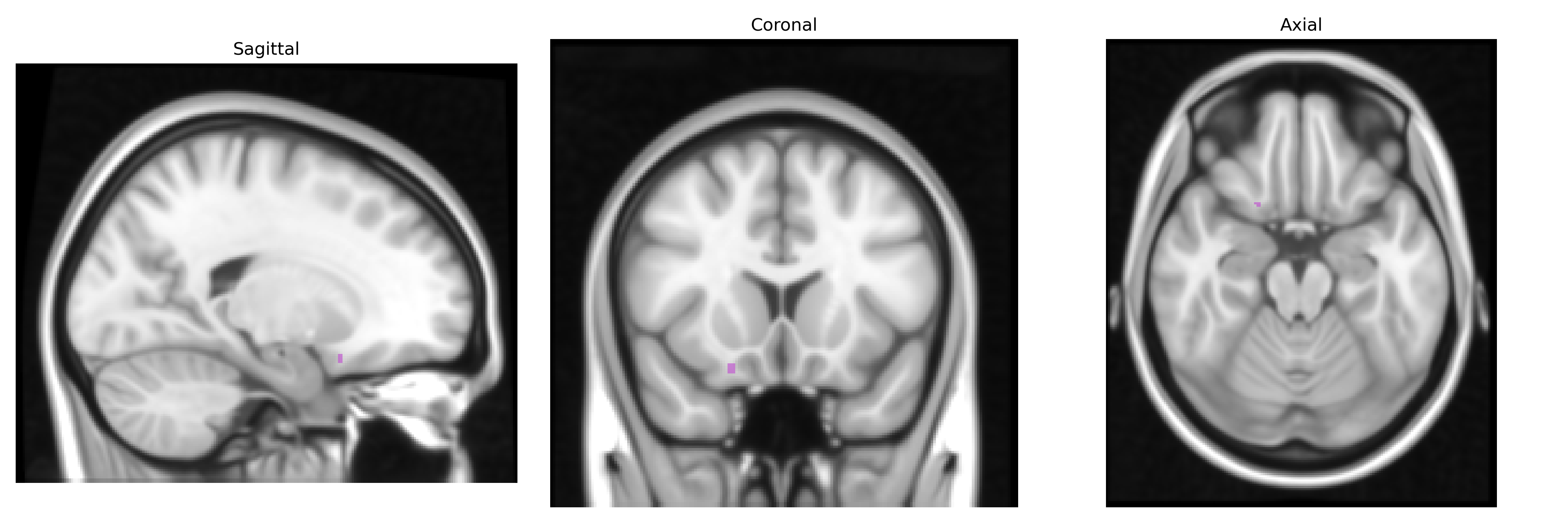
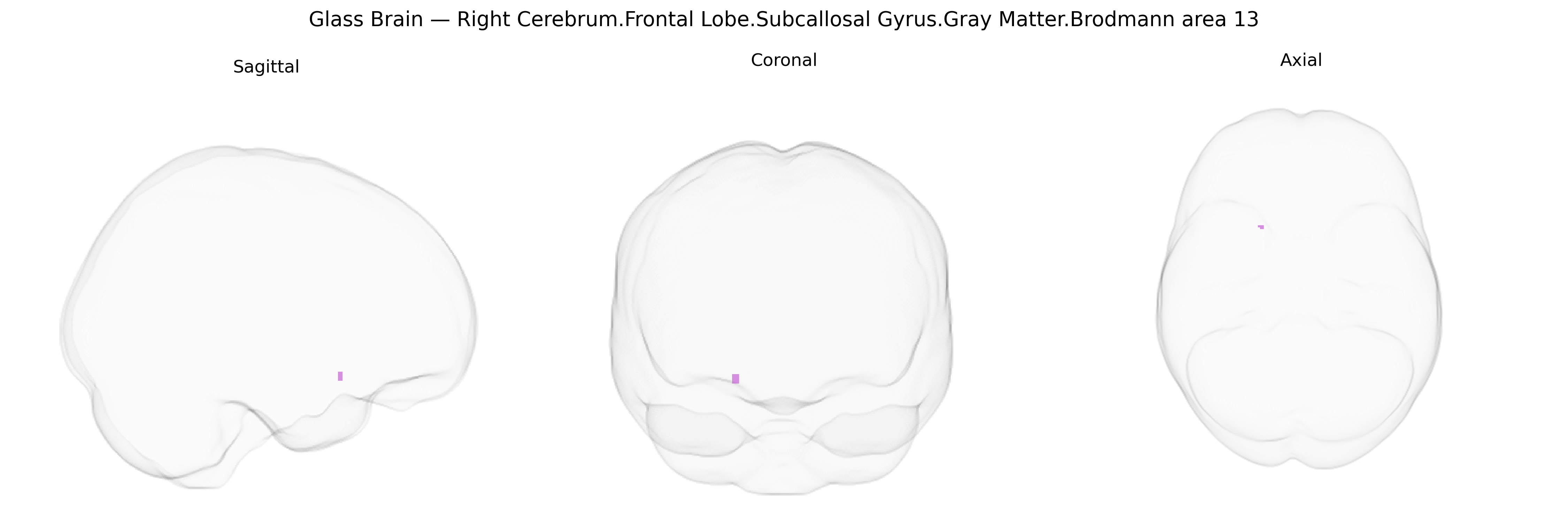
The bilateral Right Cerebrum.Frontal Lobe.Subcallosal Gyrus.Gray Matter.Brodmann area 13 corresponds to a portion of the ventromedial prefrontal and fronto-insular cortex that is often considered part of the insular/opercular region and the anterior limbic network. Brodmann area 13 is involved in integrating visceral, autonomic, and emotional information with higher-order cognitive processes, contributing to functions such as interoceptive awareness, affective evaluation, and decision-making under uncertainty. This region receives multimodal sensory and limbic inputs and projects to other prefrontal, limbic, and subcortical structures, supporting roles in reward processing, emotional regulation, and the modulation of autonomic responses to salient stimuli. There is no direct link for Brodmann area 13; a related structure is the Insular cortex.
Genetic associations involving the bilateral Right Cerebrum Frontal Lobe Subcallosal Gyrus Gray Matter Brodmann area 13 (subgenual/anterior cingulate–orbitofrontal region) have been reported primarily through imaging-genetics and GWAS of psychiatric, affective, and reward-related traits, though most large-scale studies reference closely overlapping subgenual cingulate or ventromedial prefrontal areas rather than this exact Talairach label. Multiple risk loci for major depressive disorder (e.g., near SLC6A15, NKPD1, DRD2, and variants identified by the Psychiatric Genomics Consortium) and bipolar disorder show associations with altered subgenual cingulate volume, thickness, or activity, consistent with the well-known finding of reduced gray matter and metabolic abnormalities in this region in mood disorders. Variants in genes related to serotonergic (e.g., 5-HTTLPR/ SLC6A4), glutamatergic (e.g., GRM and GRIN family), and neurotrophic signaling (e.g., BDNF Val66Met) have been linked to structural and functional differences in subcallosal and adjacent Brodmann area 25/13 sectors, especially in the context of stress reactivity, treatment response to antidepressants, and susceptibility to recurrent depression. GWAS and polygenic risk score analyses for traits such as neuroticism, negative affect, and subjective well-being have also implicated ventromedial and subgenual frontal regions, with polygenic loading for depression and related traits correlating with smaller volume or heightened activation in subcallosal cingulate/subgenual Brodmann areas. While no single variant is uniquely specific to Brodmann area 13, convergent evidence from large imaging-GWAS consortia (e.g., ENIGMA, UK Biobank) indicates that common variants influencing cortical morphology, especially in medial and orbitofrontal frontal cortex, contribute to interindividual differences in gray matter within this subcallosal region and to genetic risk for mood and anxiety disorders.
Overview generated by GPT-4o (2026).
Region ID: 297
Hemisphere: bilateral
Atlas: Talairach labels 1mm
Full Quality Version: Download MP4
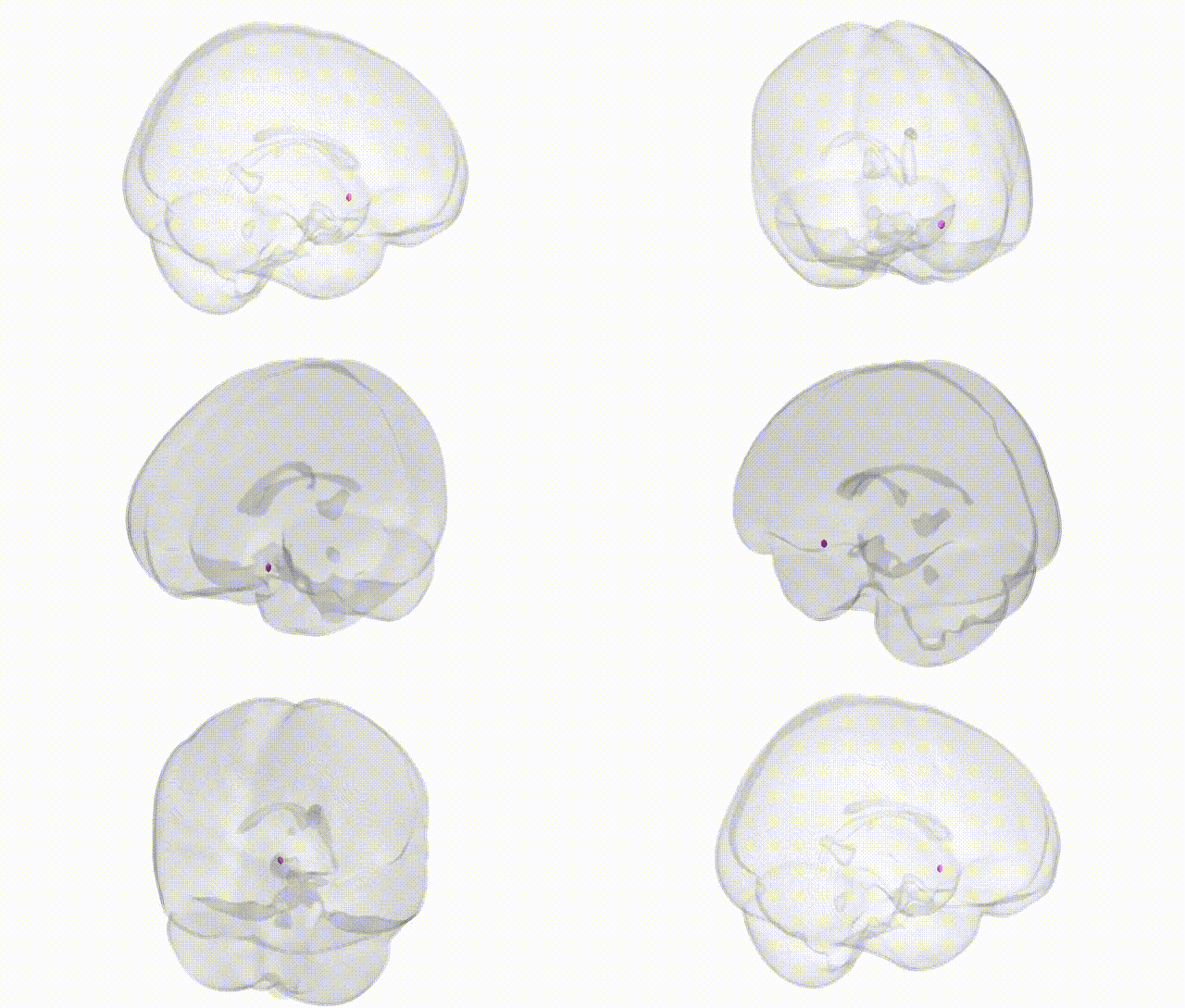
Full Quality Version: Download MP4
Wali Sidiqyar*, Gaurav Rudravaram*, Elyssa M. McMaster, Trent M. Schwartz, Adam M. Saunders, Kurt G. Schilling, Bennett A. Landman "Introducing SPINS: A Shared Public Visualization Library of Neuroanatomical Structures." Medical Imaging with Deep Learning- short paper
This resource is licensed under CC0 1.0 Universal (Public Domain).