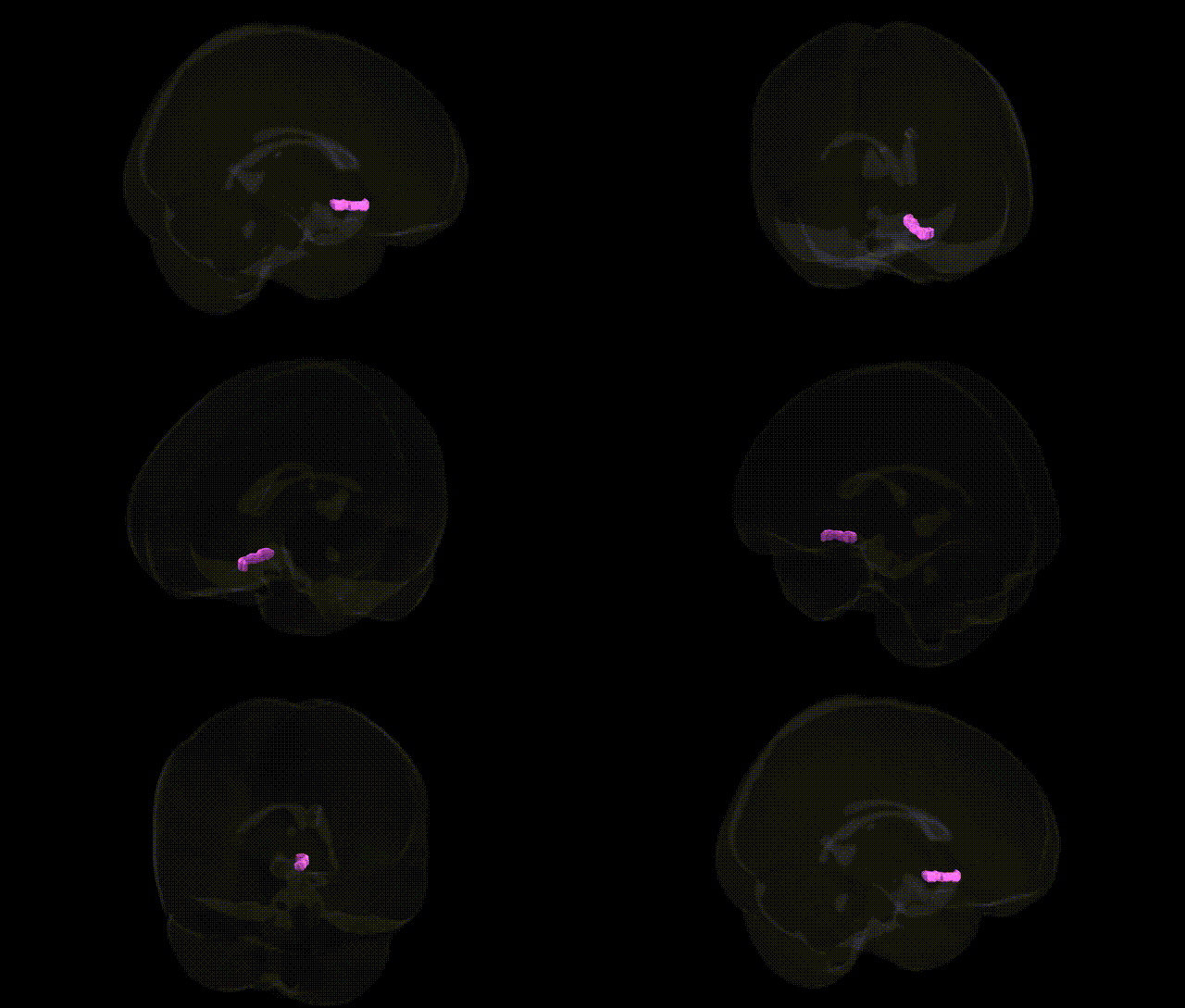
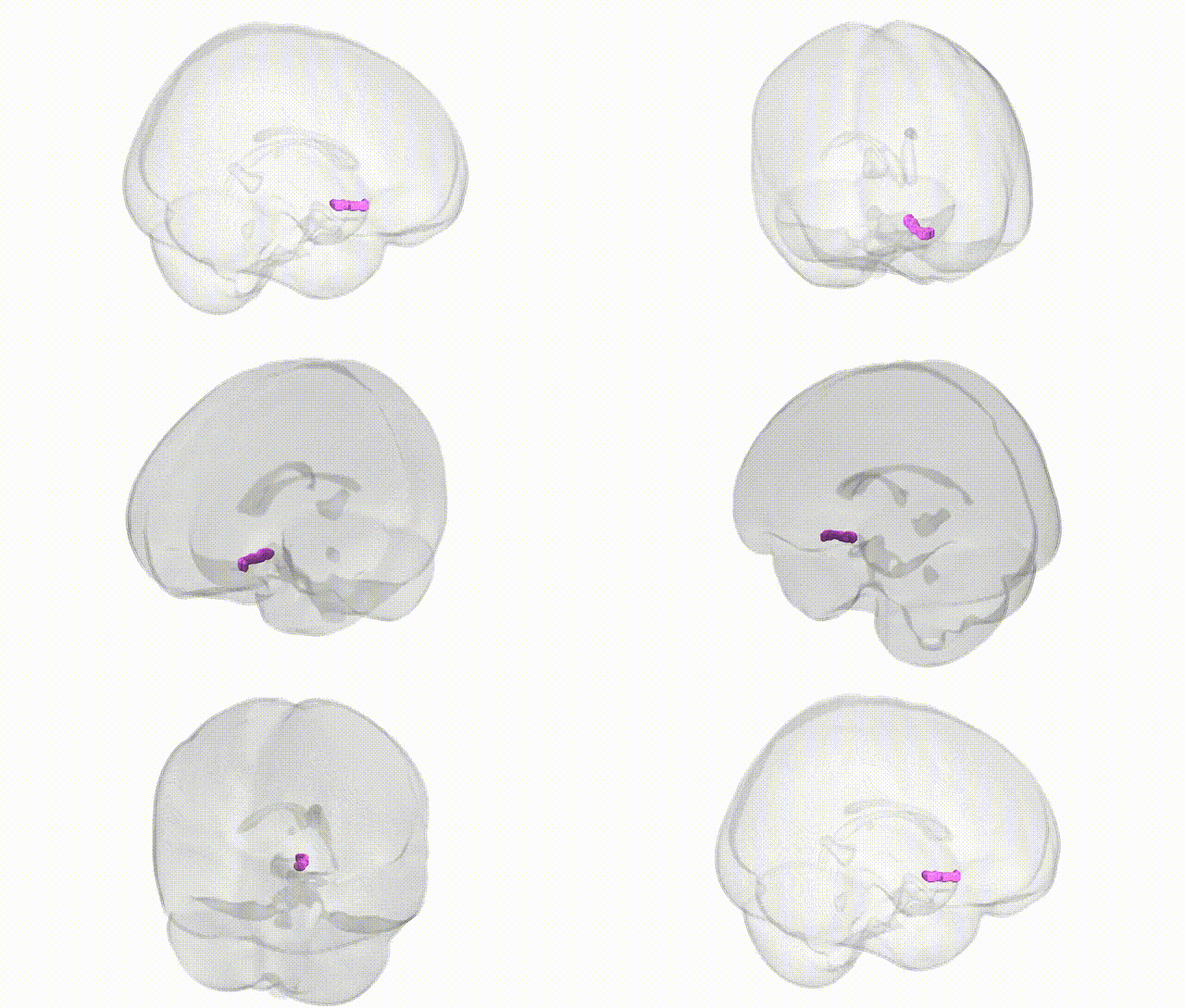
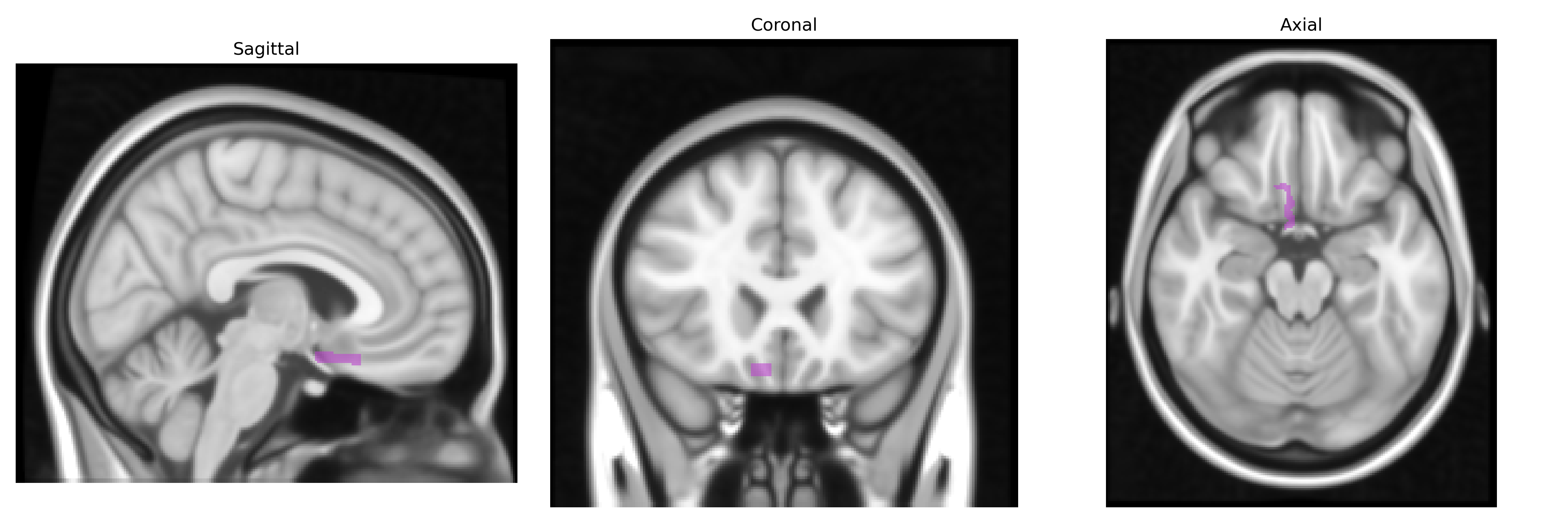
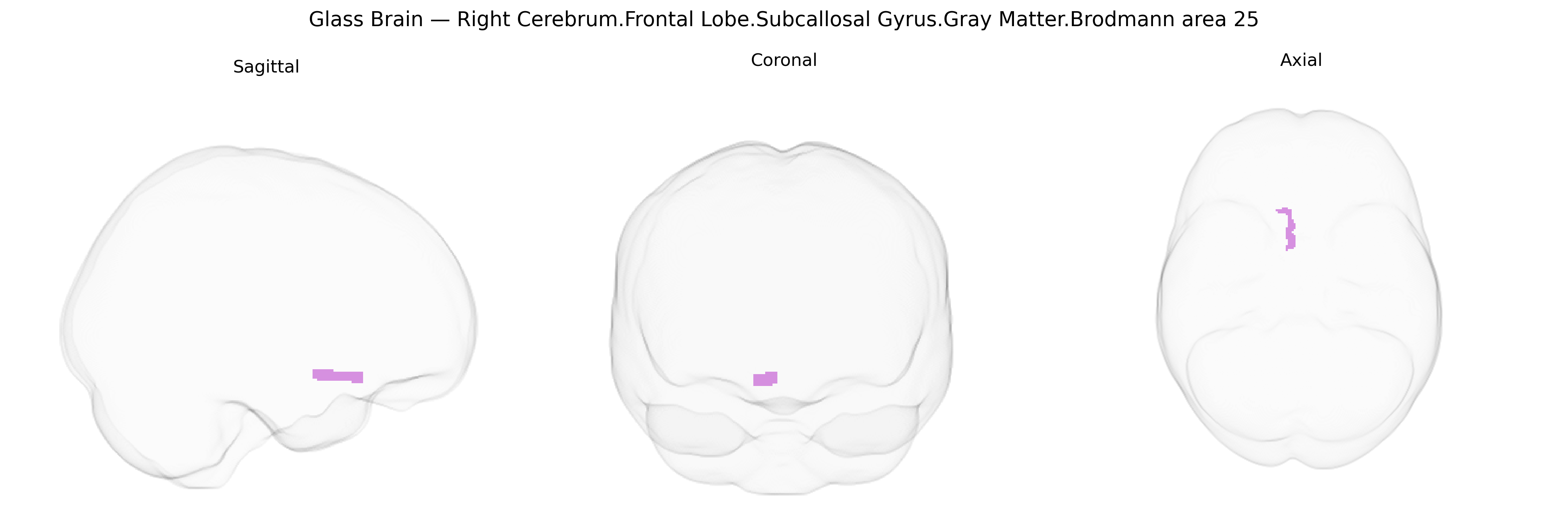
The bilateral Right Cerebrum.Frontal Lobe.Subcallosal Gyrus.Gray Matter.Brodmann area 25 corresponds to a ventromedial prefrontal/limbic cortical region located in the subcallosal gyrus, inferior to the genu of the corpus callosum and anterior to the hypothalamus. Histologically defined as Brodmann area 25, this region comprises agranular cortex with dense reciprocal connections to the amygdala, hypothalamus, ventral striatum, hippocampal formation, and other medial prefrontal and cingulate areas. Functionally, it plays a key role in mood regulation, visceromotor and autonomic control, and integration of emotional and interoceptive states, and has been strongly implicated in major depressive disorder and the mechanisms of deep brain stimulation for treatment-resistant depression. There is no direct link for this exact Talairach label; a closely related structure is Subcallosal gyrus.
The bilateral right subcallosal gyrus (Brodmann area 25), a ventromedial prefrontal region strongly implicated in mood regulation, has been repeatedly linked in genetic and imaging-genetics studies to depression-related traits, affective disorders, and stress reactivity, though often under broader labels such as subgenual anterior cingulate cortex or ventromedial prefrontal cortex rather than the specific Talairach-defined parcel. Structural and functional alterations in this region have been associated with polygenic risk scores for major depressive disorder and related phenotypes, with GWAS-implicated loci in serotonergic, glutamatergic, and synaptic plasticity pathways (for example, variants in SLC6A4, BDNF, and genes influencing hypothalamic–pituitary–adrenal axis regulation) showing convergent effects on subcallosal volume, activity, or connectivity in candidate and imaging-genetics studies. Large neuroimaging GWAS consortia such as ENIGMA and UK Biobank have identified common variants associated with prefrontal and cingulate cortical thickness or gray matter volume, some overlapping with BA25-containing parcels, and these genetic influences often co-localize with risk loci for major depressive disorder, bipolar disorder, anxiety, and neuroticism. Additionally, subcallosal/BA25 measures show genetic correlations with traits including negative affect, suicidality, and antidepressant treatment response, aligning with clinical findings that deep brain stimulation of this region can modulate severe, treatment-resistant depression. However, precise, region-specific GWAS for the exact Talairach 1 mm label “Right Cerebrum.Frontal Lobe.Subcallosal Gyrus.Gray Matter.Brodmann area 25” remain limited, and most evidence derives from broader regional definitions and polygenic influences on fronto-limbic circuits rather than single-locus effects.
Overview generated by GPT-4o (2026).
Region ID: 282
Hemisphere: bilateral
Atlas: Talairach labels 1mm
Full Quality Version: Download MP4
Full Quality Version: Download MP4
Wali Sidiqyar*, Gaurav Rudravaram*, Elyssa M. McMaster, Trent M. Schwartz, Adam M. Saunders, Kurt G. Schilling, Bennett A. Landman "Introducing SPINS: A Shared Public Visualization Library of Neuroanatomical Structures." Medical Imaging with Deep Learning- short paper
This resource is licensed under CC0 1.0 Universal (Public Domain).