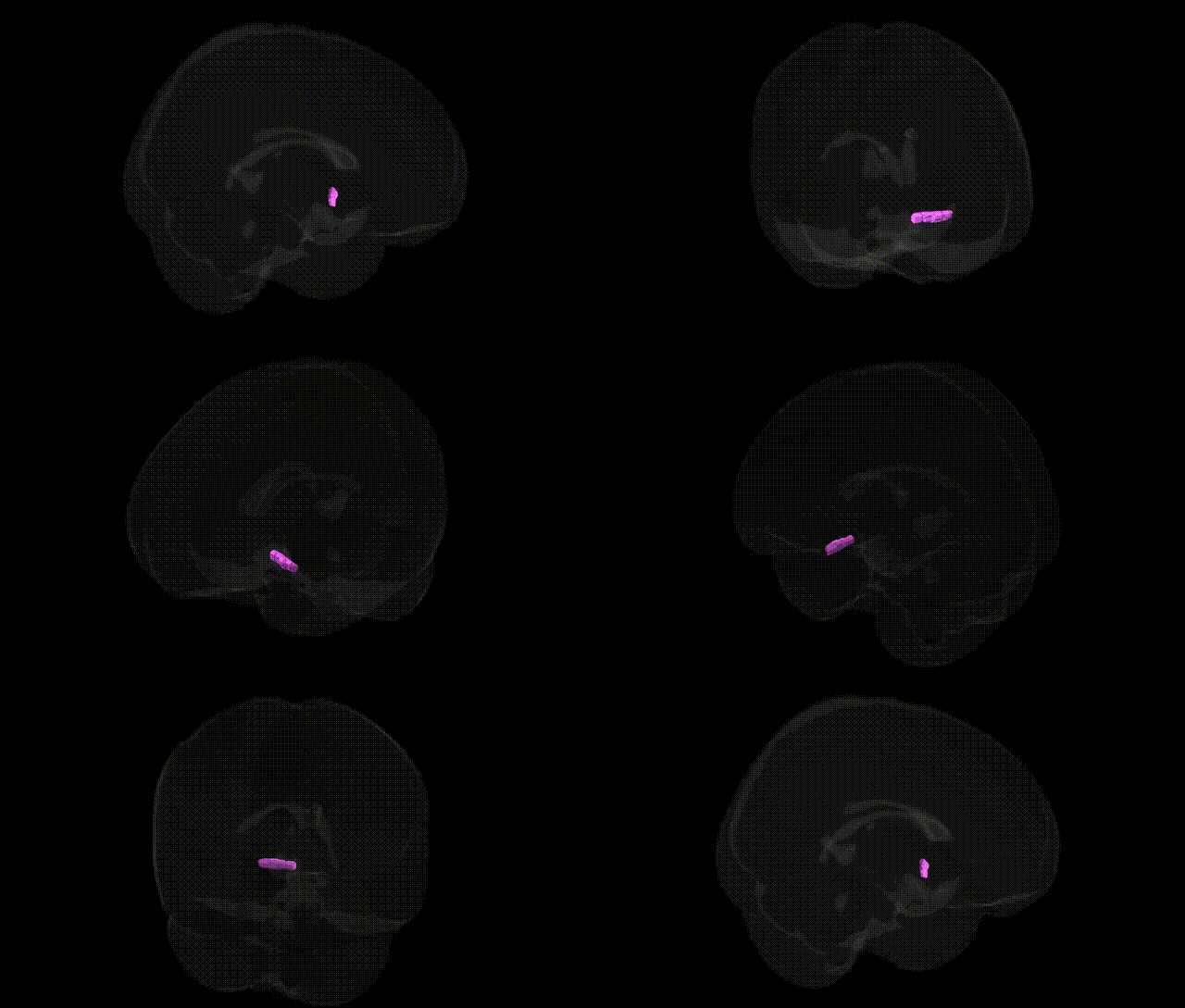
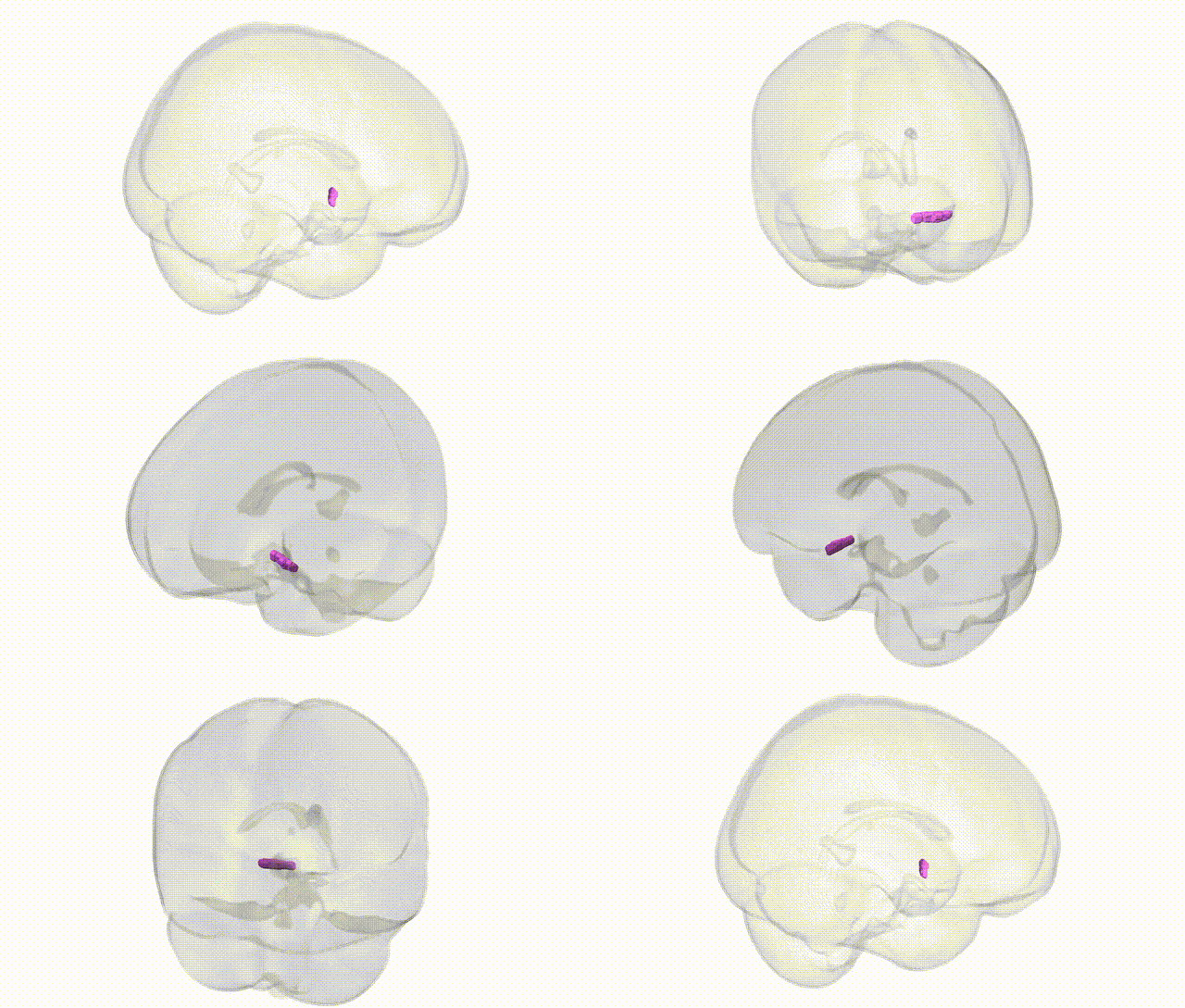
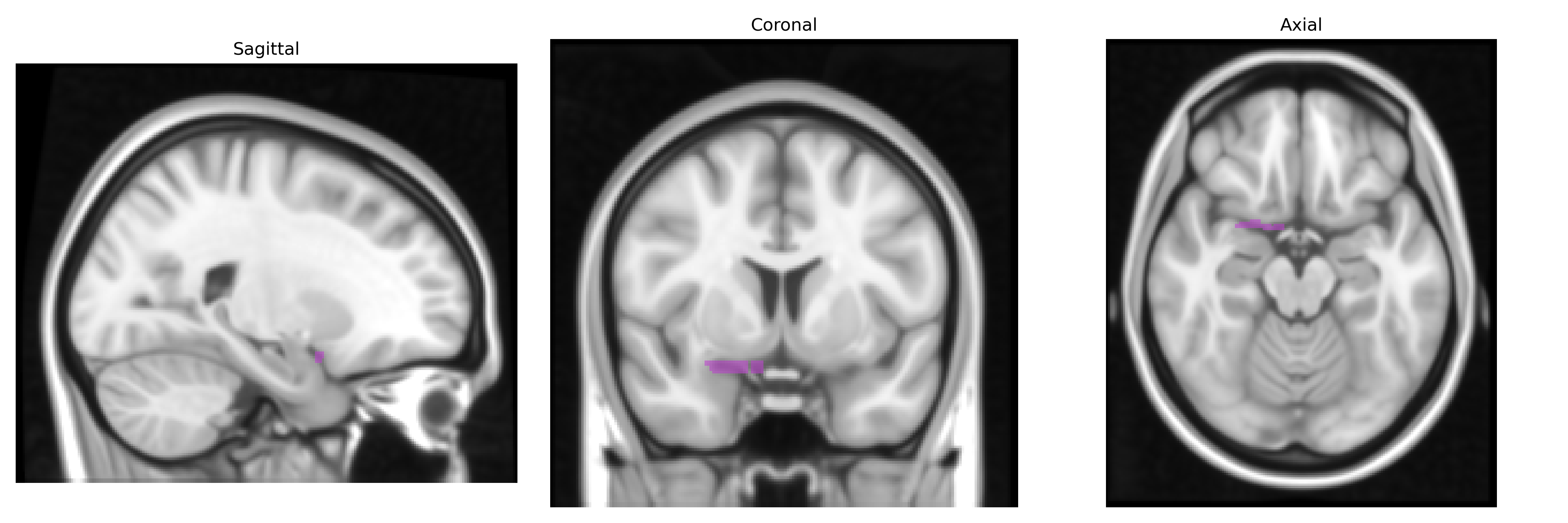
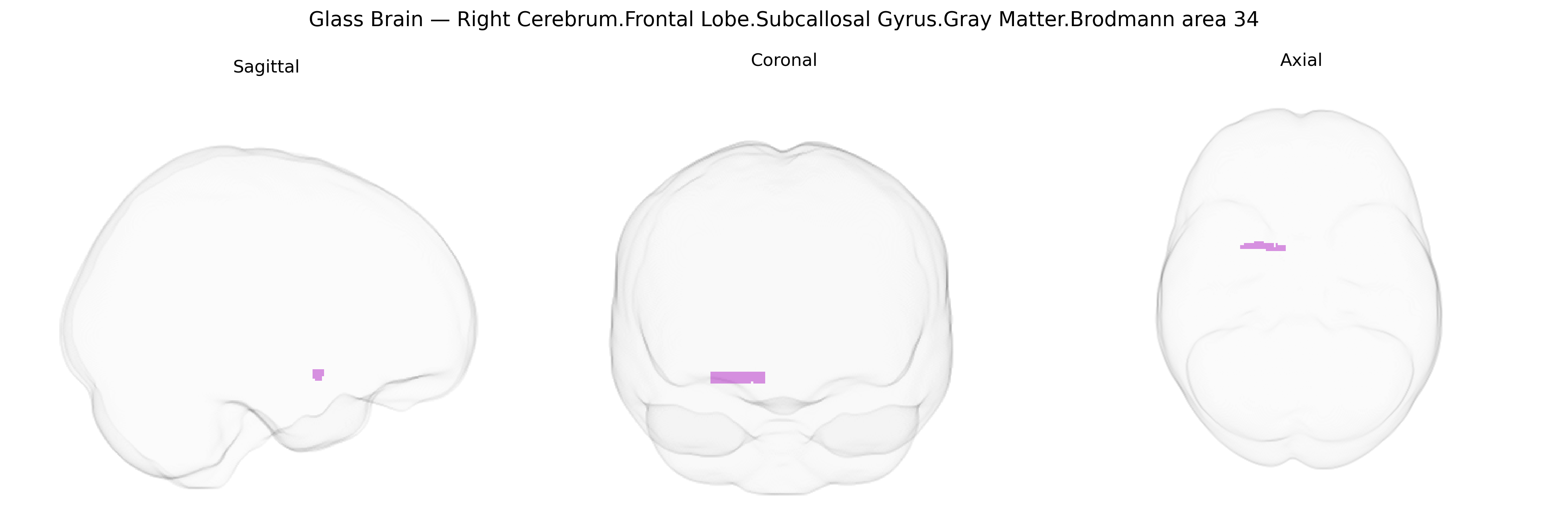
The bilateral Right Cerebrum.Frontal Lobe.Subcallosal Gyrus.Gray Matter.Brodmann area 34 corresponds to a ventromedial limbic cortical region located on the medial aspect of the frontal lobe, bordering the subcallosal (subgenual) gyrus and extending into the parahippocampal and entorhinal territories in some classifications. Functionally, this area is associated with olfactory processing, emotional and autonomic regulation, and integration of visceral states with affective and motivational behavior, reflecting its strong connectivity with the amygdala, hippocampal formation, hypothalamus, and other limbic structures. Brodmann area 34 is often grouped with adjacent limbic cortices as part of the anterior parahippocampal–subcallosal complex and is implicated in mood regulation and affective disorders due to its role in the limbic network. There is no direct Wikipedia article for “Brodmann area 34,” but it is commonly discussed in the context of the Entorhinal cortex.
The subcallosal gyrus (often overlapping with Brodmann area 25/ventral medial prefrontal regions and limbic anterior cingulate, adjacent to Brodmann area 34) has been repeatedly implicated in genetic studies of mood and affective regulation, particularly through imaging genetics and GWAS of brain structure and depression-related traits. Variants in genes involved in serotonergic signaling (e.g., SLC6A4), glutamatergic transmission, and neurotrophic pathways (e.g., BDNF Val66Met) have been associated with altered subcallosal/ventromedial frontal gray matter volume, functional activation, and connectivity, which in turn relate to major depressive disorder, anxiety, and stress reactivity. Large-scale neuroimaging GWAS from the ENIGMA consortium and UK Biobank have identified multiple common variants across the genome (notably within loci such as 12q24, 3p24, and others) associated with cortical thickness and surface area in medial frontal and limbic regions that include or border the subcallosal cortex, some of which overlap genetic risk loci for depression, neuroticism, and bipolar disorder. Additionally, polygenic risk scores for major depressive disorder, bipolar disorder, and schizophrenia show associations with structural and functional measures in the subcallosal/ventromedial frontal region, supporting a shared genetic architecture between subcallosal gyrus morphology/function and vulnerability to mood and psychotic disorders. While specific GWAS focused exclusively on the Talairach-defined “Right Cerebrum.Frontal Lobe.Subcallosal Gyrus.Gray Matter.Brodmann area 34” label are limited, convergent evidence from genetic, neuroimaging, and clinical studies indicates that common and rare variants affecting synaptic, neurodevelopmental, and stress-response pathways contribute to individual differences in this region and are linked to affective disorders, response to antidepressant treatment (including deep brain stimulation targeting the subcallosal cingulate), and trait neuroticism.
Overview generated by GPT-4o (2026).
Region ID: 283
Hemisphere: bilateral
Atlas: Talairach labels 1mm
Full Quality Version: Download MP4
Full Quality Version: Download MP4
Wali Sidiqyar*, Gaurav Rudravaram*, Elyssa M. McMaster, Trent M. Schwartz, Adam M. Saunders, Kurt G. Schilling, Bennett A. Landman "Introducing SPINS: A Shared Public Visualization Library of Neuroanatomical Structures." Medical Imaging with Deep Learning- short paper
This resource is licensed under CC0 1.0 Universal (Public Domain).