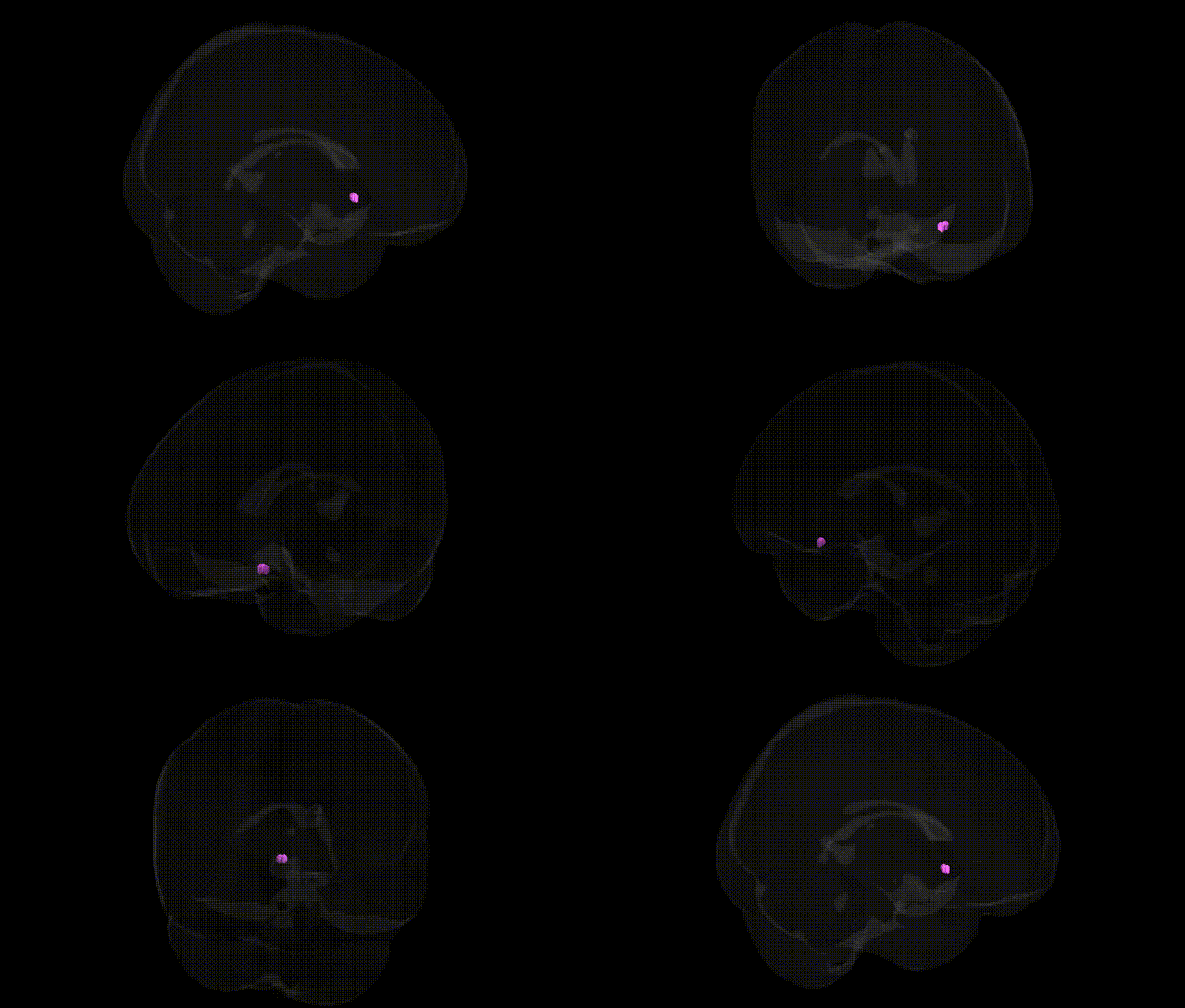
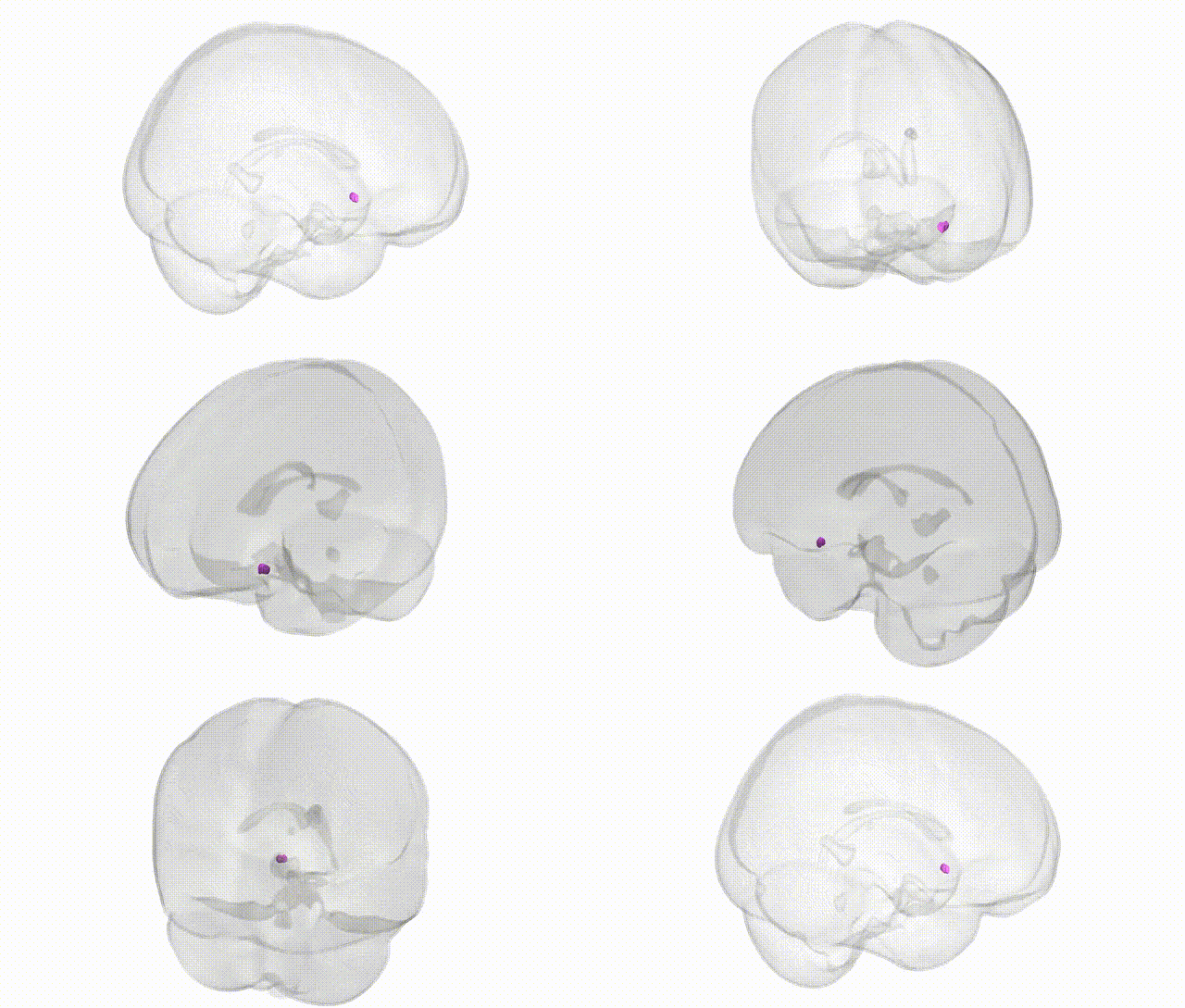
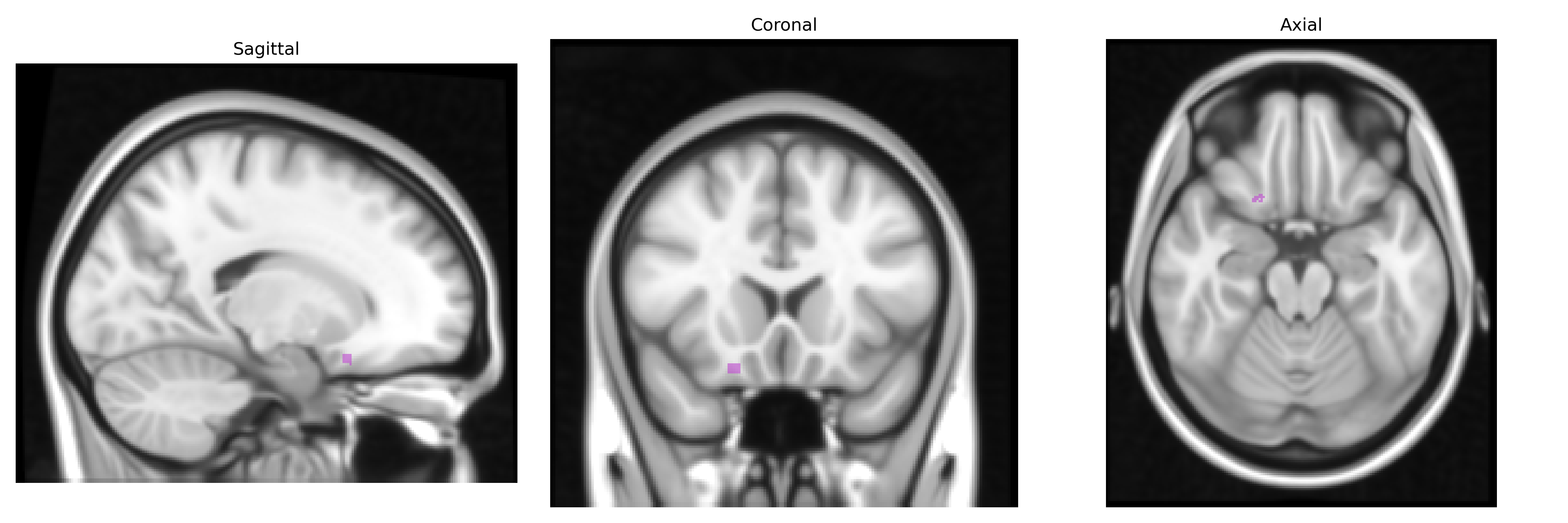
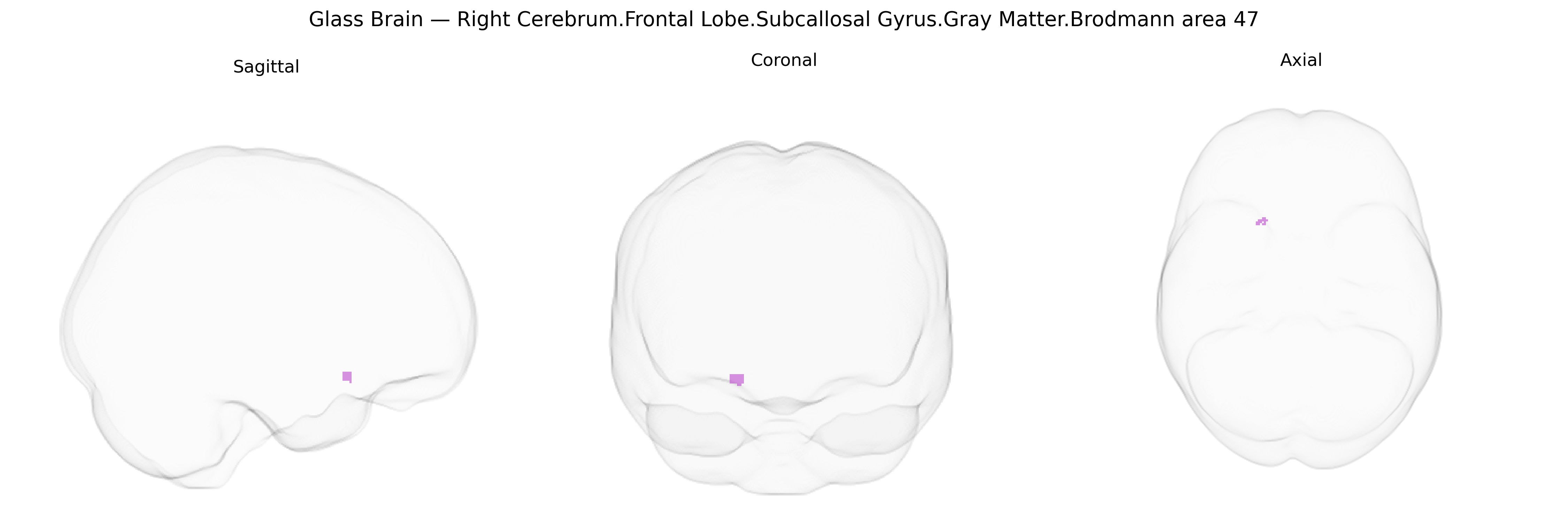
Bilateral Right Cerebrum.Frontal Lobe.Subcallosal Gyrus.Gray Matter.Brodmann area 47 corresponds to a ventrolateral prefrontal cortical region located in the frontal lobe, adjacent to the orbital surface and inferior frontal gyrus, and associated with higher-order cognitive and affective processing. Brodmann area 47 participates in semantic processing, language-related functions, and integration of emotional and reward-related information, receiving multimodal inputs from limbic and association cortices and projecting to other prefrontal and temporal regions. Functionally, it contributes to decision-making, evaluation of stimulus significance, and regulation of social and emotional behavior, and is implicated in neuropsychiatric conditions involving mood, anxiety, and obsessive-compulsive symptoms. There is no dedicated Wikipedia page for this exact Talairach label; a related structure is Brodmann area 47.
The bilateral right subcallosal gyrus of the frontal lobe (Brodmann area 47), part of ventromedial/ventrolateral prefrontal cortex and orbitofrontal networks, has been repeatedly implicated in genetic studies of mood, affect, and higher-order cognition, although few GWAS target this Talairach-defined parcel specifically. Imaging–genetics and large-scale GWAS of cortical morphology (e.g., ENIGMA and UK Biobank) show that surface area and thickness in orbitofrontal and BA47 regions are heritable and associated with common variants in genes involved in neurodevelopment, synaptic plasticity, and cell adhesion (such as NGR3, CNTNAP2, and genes in Wnt and calcium signaling pathways), as well as polygenic scores for intelligence and educational attainment. Subcallosal and adjacent ventromedial prefrontal regions consistently emerge in genetic and transcriptomic studies of major depressive disorder, where risk variants in loci including SLC6A15, TCF4, and those near the serotonin transporter gene (SLC6A4) relate to altered subcallosal volume, connectivity, or activity, and in polygenic risk analyses where higher depression or neuroticism burden predicts structural and functional changes in BA47–orbitofrontal circuits. Additional GWAS and imaging–genetic work link this area to schizophrenia and bipolar disorder through shared polygenic risk, to traits such as impulsivity and reward sensitivity via dopaminergic and glutamatergic genes, and to substance-use liability through variants affecting orbitofrontal-striatal reward circuitry, collectively indicating that genetic variation influencing subcallosal/BA47 structure and function contributes to vulnerability for mood and psychotic disorders, cognitive variation, and behavioral control traits.
Overview generated by GPT-4o (2026).
Region ID: 299
Hemisphere: bilateral
Atlas: Talairach labels 1mm
Full Quality Version: Download MP4
Full Quality Version: Download MP4
Wali Sidiqyar*, Gaurav Rudravaram*, Elyssa M. McMaster, Trent M. Schwartz, Adam M. Saunders, Kurt G. Schilling, Bennett A. Landman "Introducing SPINS: A Shared Public Visualization Library of Neuroanatomical Structures." Medical Imaging with Deep Learning- short paper
This resource is licensed under CC0 1.0 Universal (Public Domain).