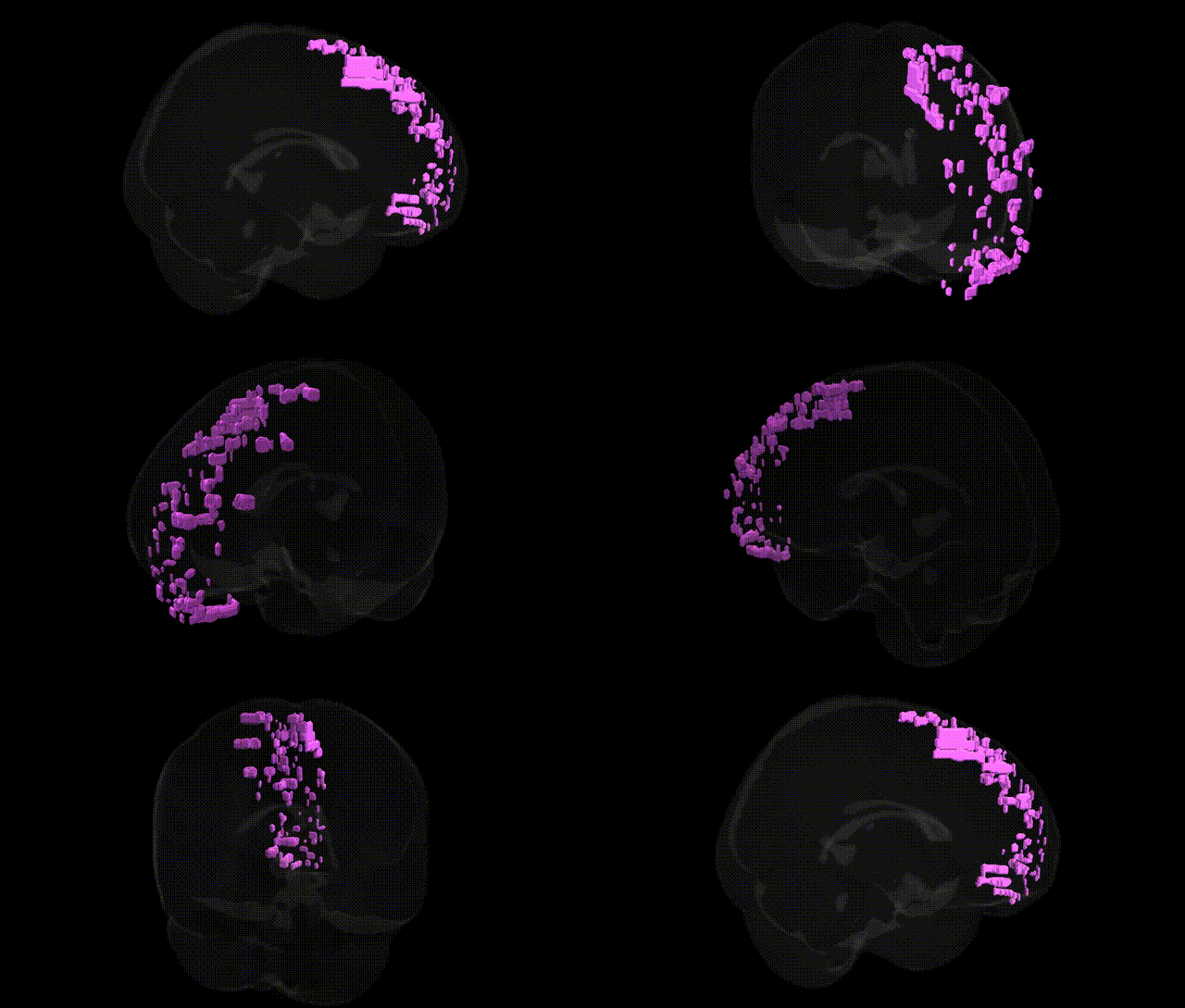
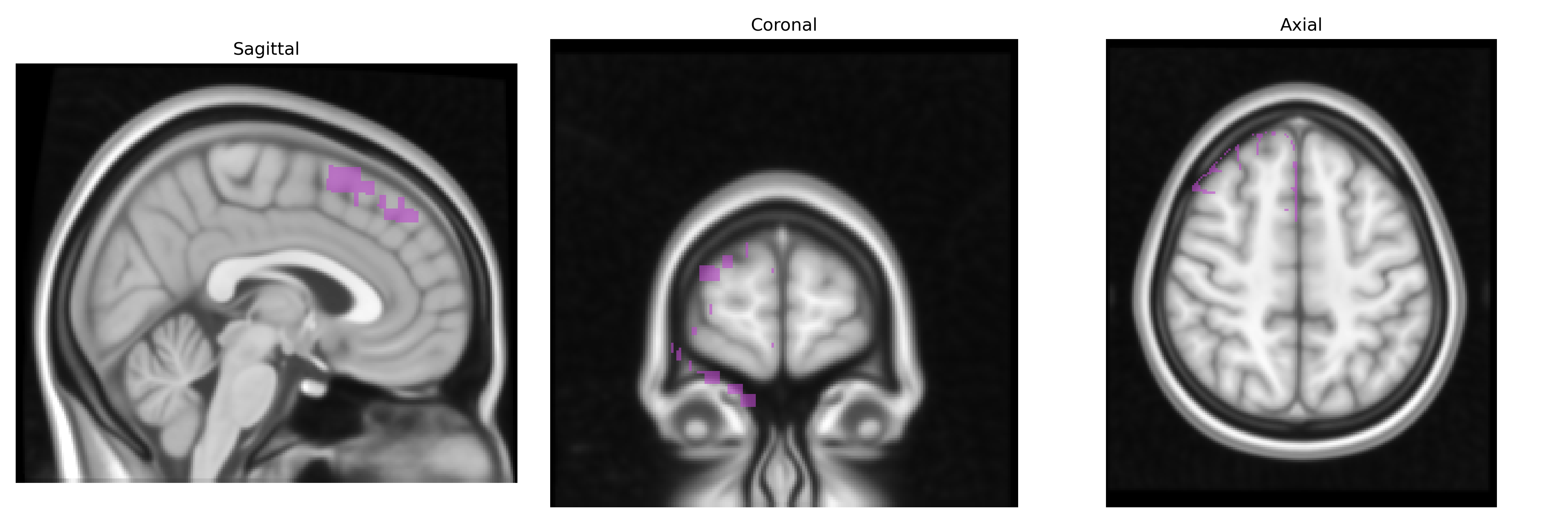
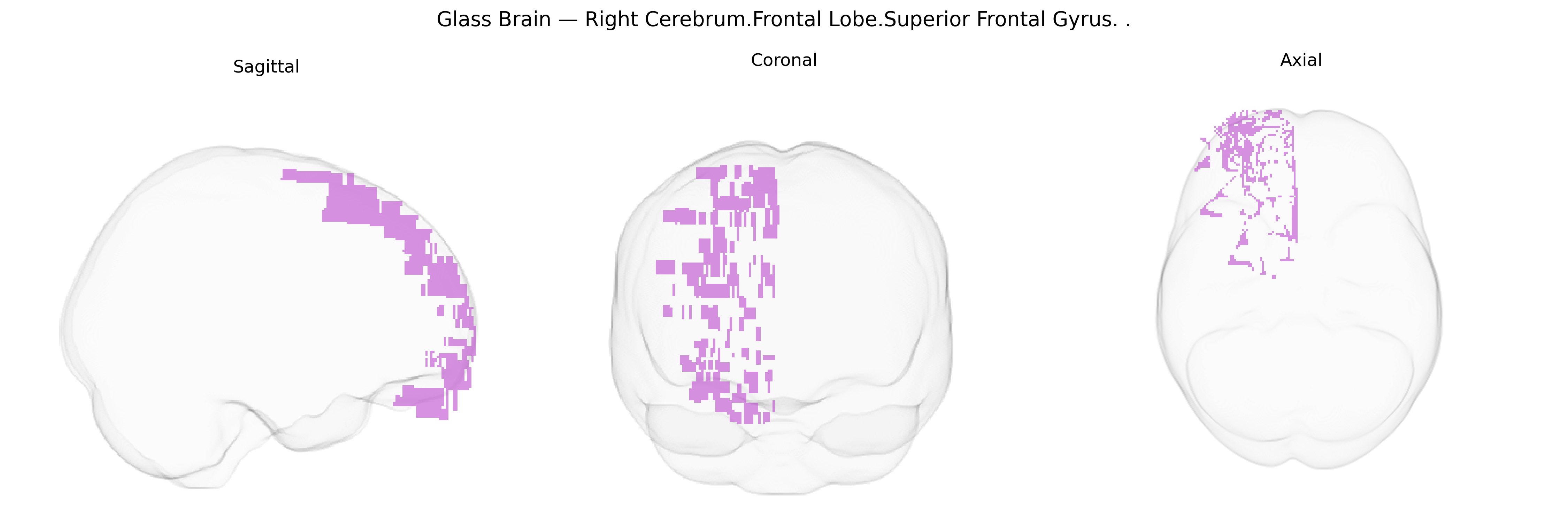
The bilateral Right Cerebrum.Frontal Lobe.Superior Frontal Gyrus, as defined in the Talairach 1 mm atlas, corresponds to the superior frontal gyrus located in the dorsal aspect of the frontal lobe, extending from anterior prefrontal regions toward premotor and supplementary motor territories. This region participates in higher-order executive functions, including working memory, attentional control, and aspects of decision-making, as well as in motor planning and coordination via its involvement in the supplementary motor area. It has extensive connectivity with other prefrontal, parietal, and cingulate areas, supporting integration of cognitive, motor, and motivational information. In functional imaging studies, activation in this region is frequently observed during tasks involving sustained attention, response selection, and complex cognitive control. Superior frontal gyrus
The bilateral Right Cerebrum.Frontal Lobe.Superior Frontal Gyrus, a core component of the dorsomedial and dorsolateral prefrontal cortex, has been repeatedly implicated in genetic imaging and GWAS studies of cortical morphology, cognition, and psychiatric risk. Large-scale ENIGMA and UK Biobank analyses have identified common variants in genes such as HMGA2, microtubule- and cytoskeleton-related genes (e.g., TESC, MAPT region), and loci near IGF1 and CENPW associated with superior frontal cortical thickness, surface area, and global frontal volume, indicating polygenic influences on its structure. Polygenic scores for intelligence, educational attainment, and working memory often correlate with superior frontal gyrus thickness or activation during executive tasks, implicating neurodevelopmental and synaptic genes involved in glutamatergic signaling and axon guidance. Psychiatric GWAS meta-analyses for schizophrenia, bipolar disorder, major depression, ADHD, and autism spectrum conditions have linked risk variants (e.g., in CACNA1C, GRIN2A, DRD2, and immune-related loci such as the MHC region) to structural and functional alterations in superior frontal regions, with convergent evidence for dysregulated excitatory–inhibitory balance and cortical maturation. Additional associations have been noted for neurodegenerative and motor disorders: APOE and MAPT haplotypes show modest relationships to superior frontal atrophy in Alzheimer’s and frontotemporal dementia, while variants in dopaminergic and basal ganglia-related genes modulate functional connectivity between the superior frontal gyrus and motor networks in Parkinson’s disease. Collectively, genetic findings suggest that this region serves as a convergence point for polygenic influences on higher-order cognition, mood regulation, and vulnerability to major neuropsychiatric and neurodegenerative disorders.
Overview generated by GPT-4o (2026).
Region ID: 154
Hemisphere: bilateral
Atlas: Talairach labels 1mm
Full Quality Version: Download MP4
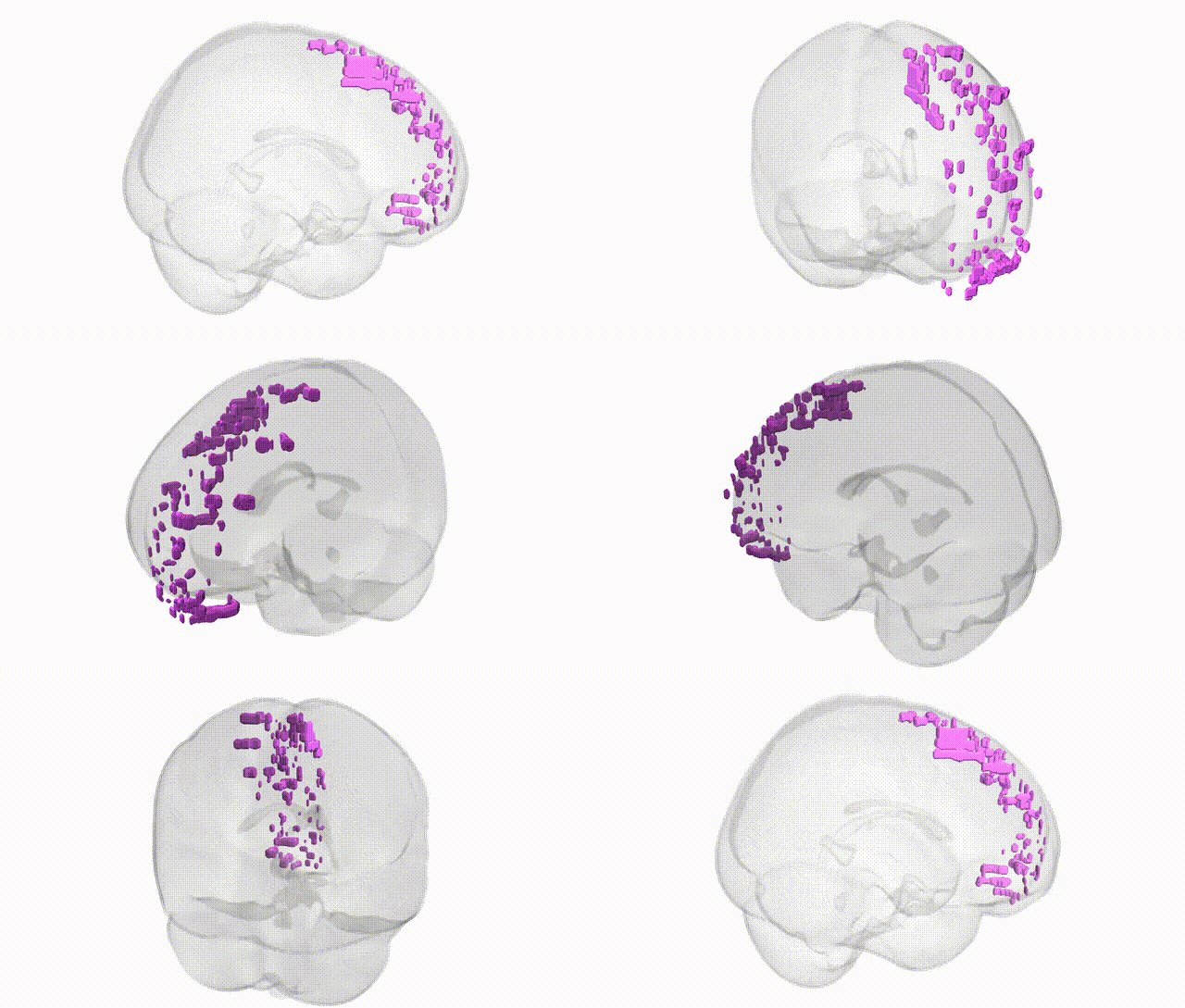
Full Quality Version: Download MP4
Wali Sidiqyar*, Gaurav Rudravaram*, Elyssa M. McMaster, Trent M. Schwartz, Adam M. Saunders, Kurt G. Schilling, Bennett A. Landman "Introducing SPINS: A Shared Public Visualization Library of Neuroanatomical Structures." Medical Imaging with Deep Learning- short paper
This resource is licensed under CC0 1.0 Universal (Public Domain).