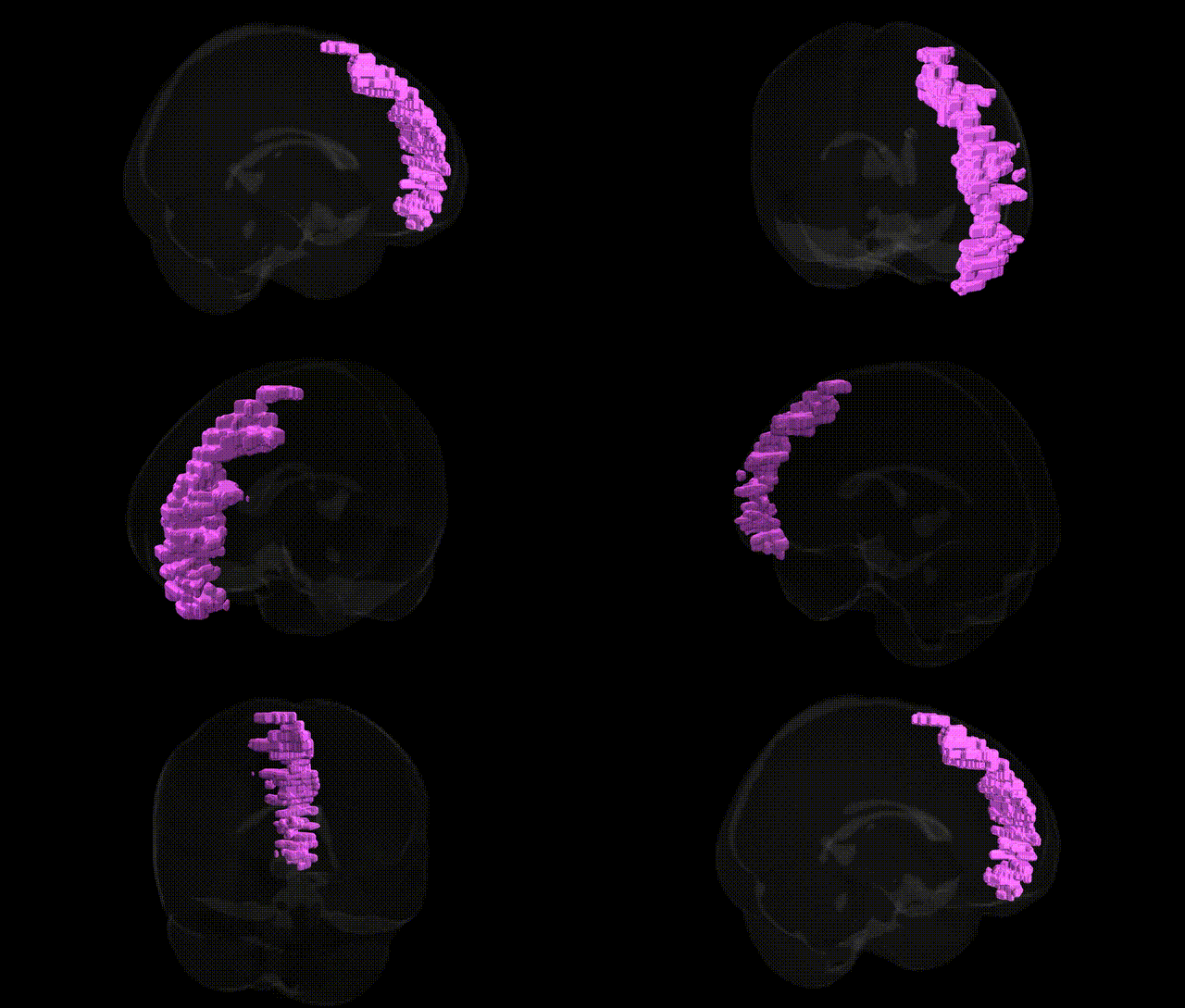
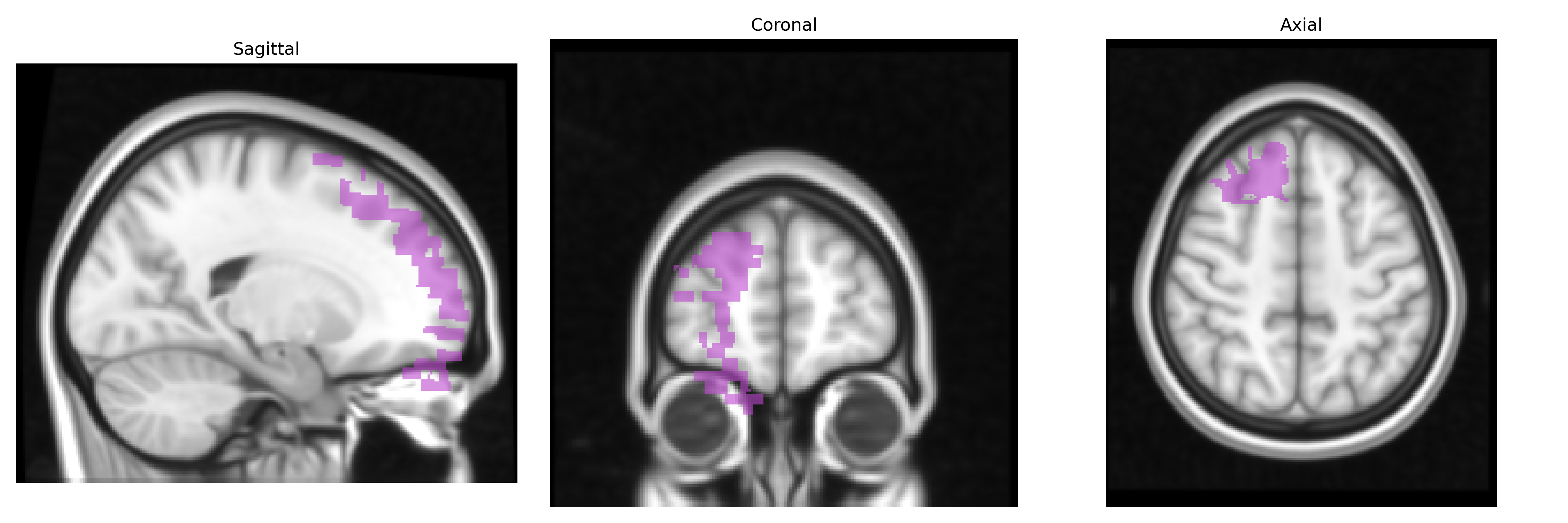
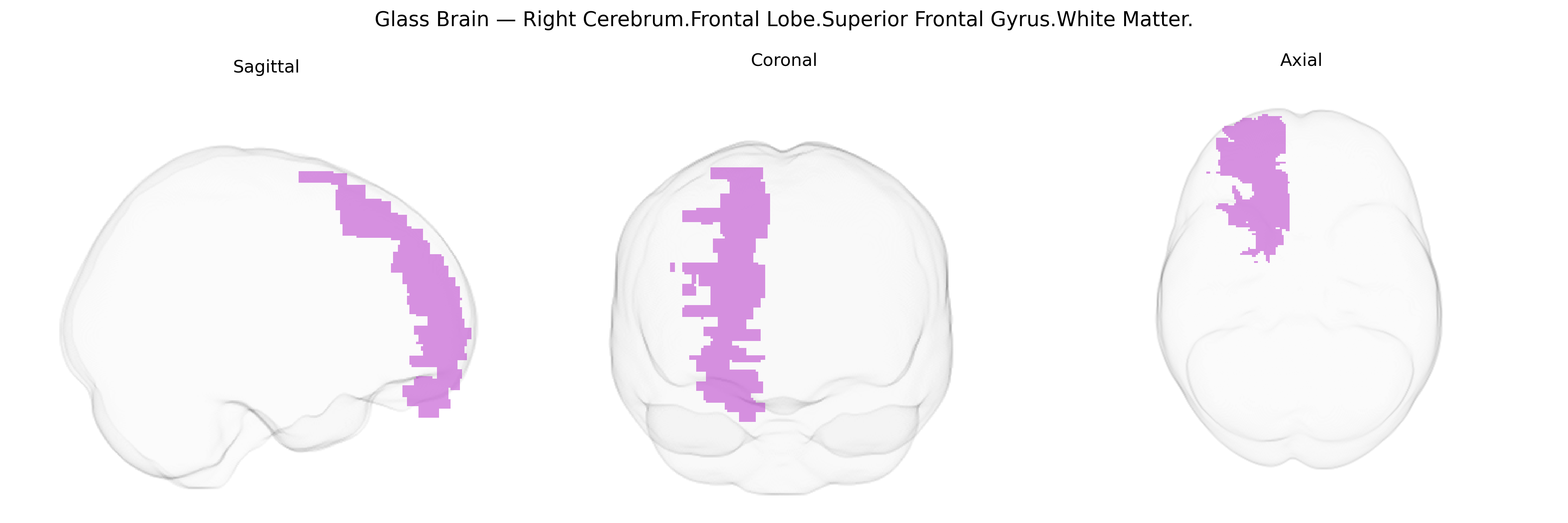
The bilateral Right Cerebrum.Frontal Lobe.Superior Frontal Gyrus.White Matter corresponds to the deep myelinated fiber pathways underlying the superior frontal gyrus in the right frontal lobe, forming part of the prefrontal and premotor white matter network. These fibers include short association fibers connecting adjacent frontal gyri and long association tracts that link frontal regions with parietal, temporal, and limbic areas, supporting higher-order executive processes such as working memory, attentional control, motor planning, and aspects of self-initiated behavior. As a subcortical component of the superior frontal region, this white matter participates in the integration and rapid transmission of information between dorsolateral prefrontal cortex, medial frontal areas, and other cortical and subcortical structures, thereby contributing to complex cognitive and motor control functions. There is no direct link for this specific white matter label; see the related cortical region: Superior frontal gyrus.
Genetic associations involving the bilateral Right Cerebrum.Frontal Lobe.Superior Frontal Gyrus.White Matter (as approximated by Talairach 1 mm labels) largely emerge from imaging‑genetics and GWAS of white‑matter microstructure and frontal cortical networks rather than region‑exclusive studies, with multiple loci implicated in traits reflecting superior frontal and adjacent medial prefrontal circuitry. Large diffusion MRI GWAS (e.g., UK Biobank) have identified common variants in genes involved in axon guidance, myelination, and oligodendrocyte function—such as NRG1/NRG3, CNTN4/6, MAG, MOG, and other myelin‑related or cell‑adhesion genes—associated with fractional anisotropy and related metrics in superior frontal and fronto‑parietal tracts that traverse this white matter, including portions of the superior longitudinal fasciculus and cingulum. Polygenic overlap has been observed between these white‑matter measures and psychiatric or cognitive phenotypes, including schizophrenia, bipolar disorder, major depression, ADHD, and general cognitive ability, with risk variants in genes like CACNA1C, ZNF804A, and DISC1 repeatedly linked to altered frontal white‑matter integrity in case‑control and candidate‑gene imaging studies. GWAS of executive function, educational attainment, and intelligence show enrichment in genes influencing frontal cortical and white‑matter development, and Mendelian‑randomization/pleiotropy analyses suggest that genetically driven variation in frontal white matter contributes to individual differences in working memory, processing speed, and higher‑order cognition. Additionally, rare or high‑impact variants affecting neurodevelopmental and myelination pathways (e.g., in PLP1, SOX10, and other leukodystrophy‑related genes) can produce pronounced structural abnormalities that include superior frontal white matter, though these are typically studied at a gross anatomical rather than fine parcellation scale. Overall, genetic findings converge on the role of superior frontal white matter as a heritable substrate integrating cognitive, affective, and psychiatric risk architecture, even though most studies do not isolate this Talairach‑defined region in strict anatomical terms.
Overview generated by GPT-4o (2026).
Region ID: 156
Hemisphere: bilateral
Atlas: Talairach labels 1mm
Full Quality Version: Download MP4
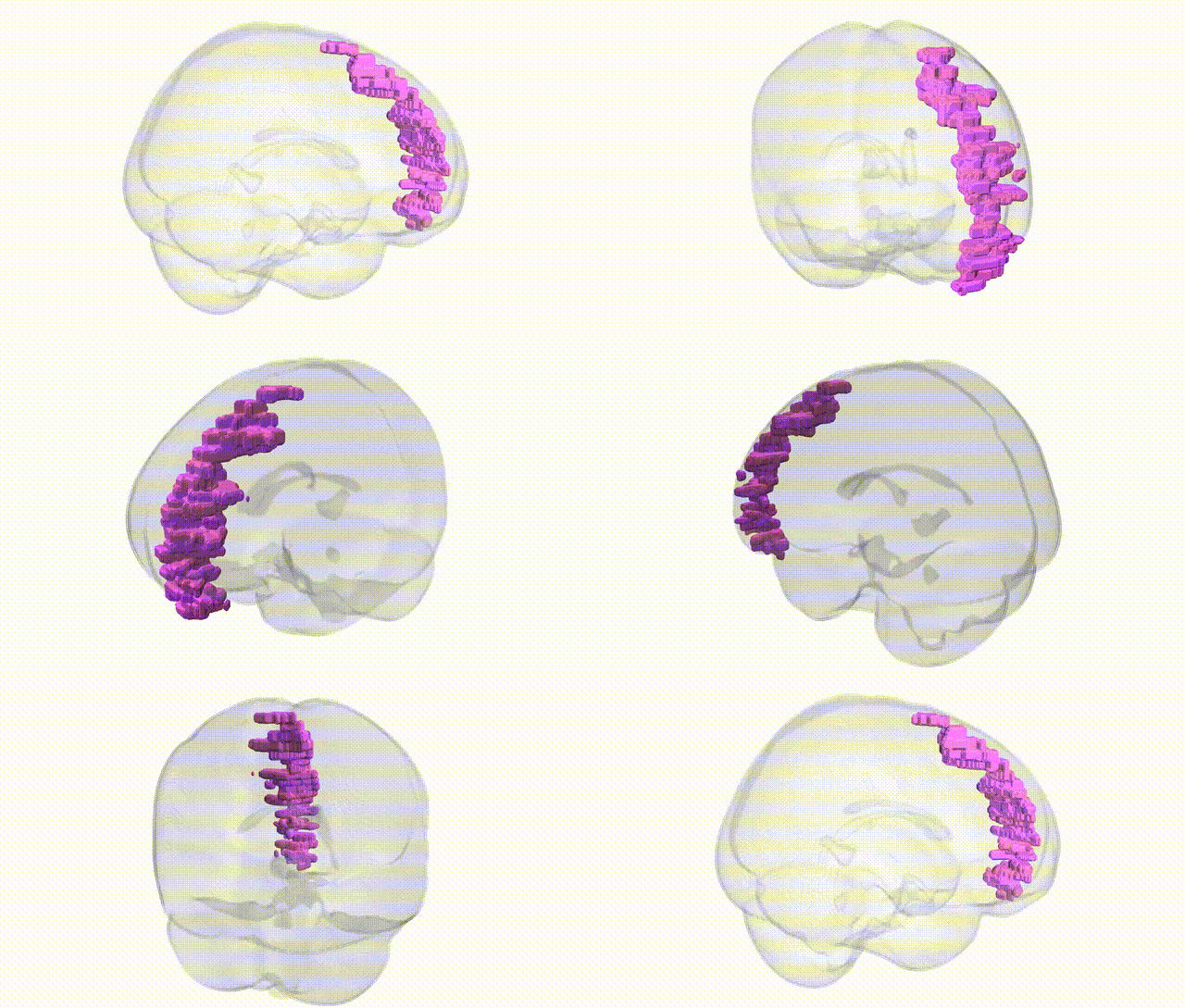
Full Quality Version: Download MP4
Wali Sidiqyar*, Gaurav Rudravaram*, Elyssa M. McMaster, Trent M. Schwartz, Adam M. Saunders, Kurt G. Schilling, Bennett A. Landman "Introducing SPINS: A Shared Public Visualization Library of Neuroanatomical Structures." Medical Imaging with Deep Learning- short paper
This resource is licensed under CC0 1.0 Universal (Public Domain).