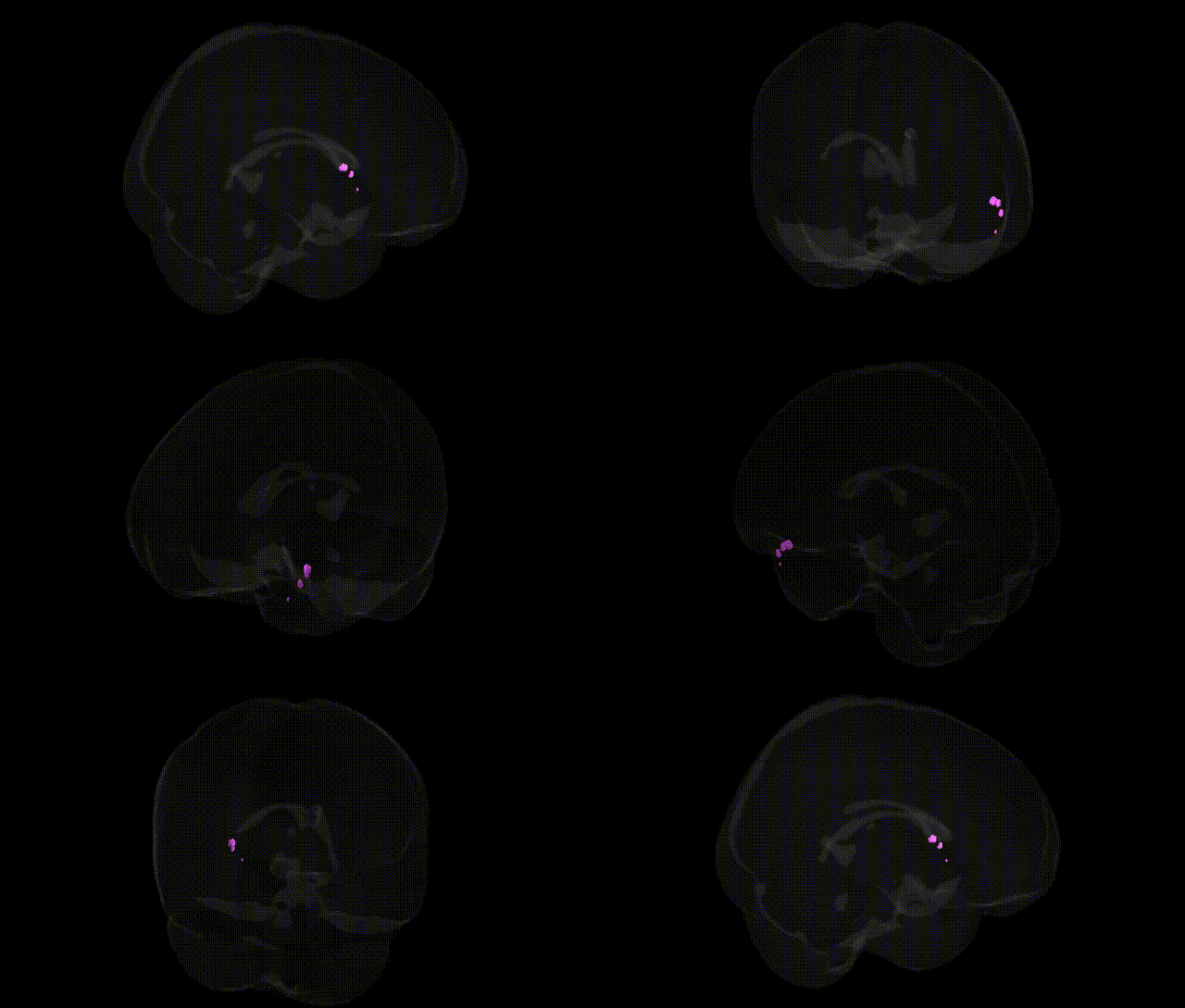
The bilateral Right cerebrum frontal lobe / superior temporal gyrus label in the Talairach 1 mm atlas reflects a combined or bordering territory between anterior frontal regions and the superior temporal gyrus, likely encompassing frontal opercular and adjacent temporal association cortex. Functionally, this zone participates in higher-order auditory and language processing, social cognition, and integration of multimodal sensory inputs with executive and motor planning processes, particularly on the right side in domains such as prosody, emotional intonation, and aspects of nonverbal communication. The superior temporal gyrus itself contains primary and secondary auditory cortices and forms part of the broader temporal lobe association network that connects with frontal and parietal regions to support complex perceptual and cognitive operations. Superior temporal gyrus
The bilateral right superior temporal gyrus (STG) of the frontal/temporal lobe region, as defined in the Talairach 1 mm atlas, has been repeatedly implicated in genetic and GWAS-based studies of language, social cognition, and psychopathology, although associations are typically indirect via imaging genetics and large-scale consortia rather than single-gene effects. ENIGMA and related MRI-GWAS efforts have identified common variants near genes involved in neurodevelopment (e.g., microtubule and synaptic genes) that influence right STG cortical thickness and surface area, with polygenic scores for educational attainment, cognitive performance, and schizophrenia showing associations with this region’s morphology. Right STG structure and function demonstrate heritability and have been linked to genetic risk for autism spectrum disorder, language and reading traits (including dyslexia-related loci such as KIAA0319 and DCDC2 in some imaging–genetics work), and to risk variants for schizophrenia and bipolar disorder that modulate auditory and social-perceptual processing, including hallucination-related activity. GWAS of resting-state networks and task-based fMRI have also connected polygenic risk for major depression, ADHD, and social anxiety traits to altered connectivity and activation in right STG, particularly in networks supporting speech perception, prosody, and theory of mind. Overall, genetic associations for this region converge on polygenic influences affecting cortical development, synaptic signaling, and myelination, which in turn modulate vulnerability to neurodevelopmental and psychiatric disorders involving language, social cognition, and auditory processing.
Overview generated by GPT-4o (2026).
Region ID: 228
Hemisphere: bilateral
Atlas: Talairach labels 1mm
Full Quality Version: Download MP4
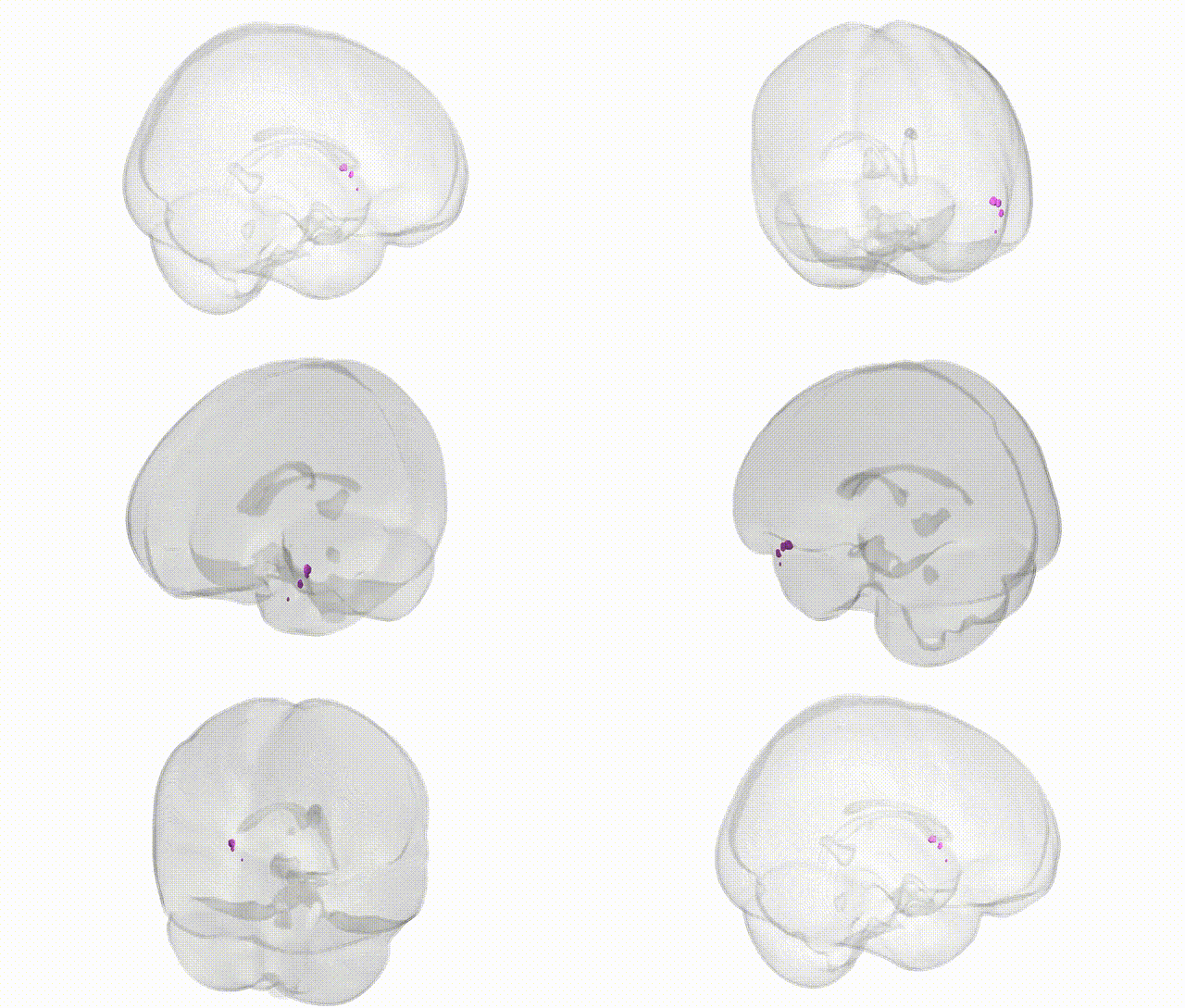
Full Quality Version: Download MP4
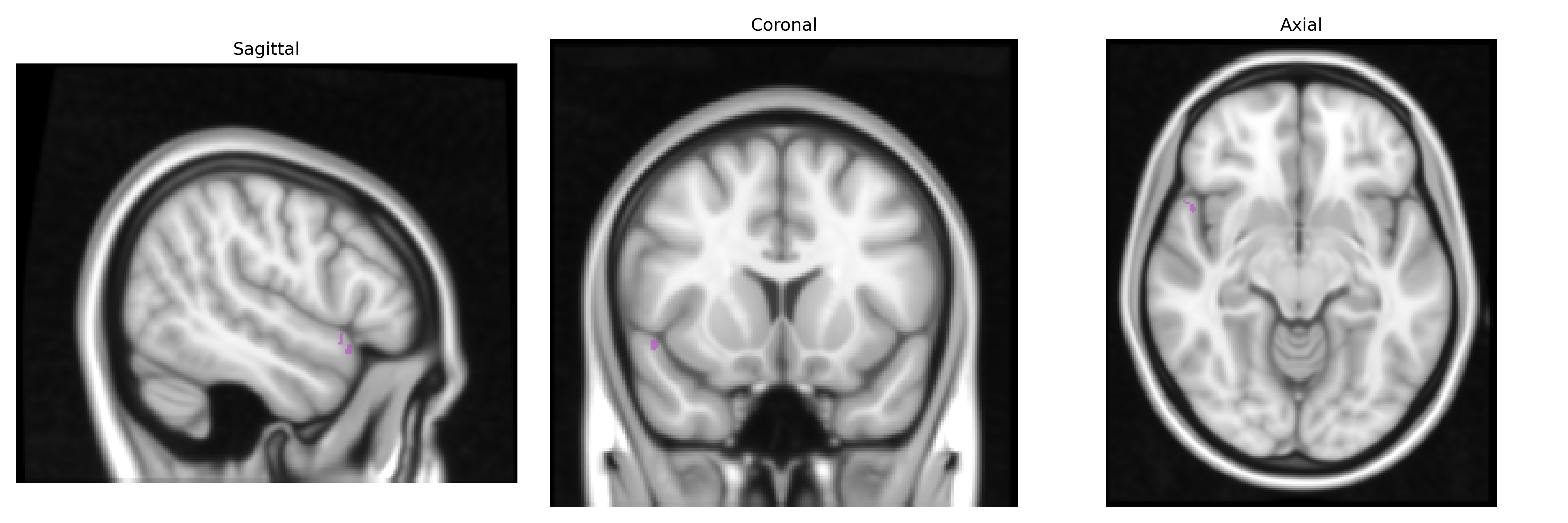
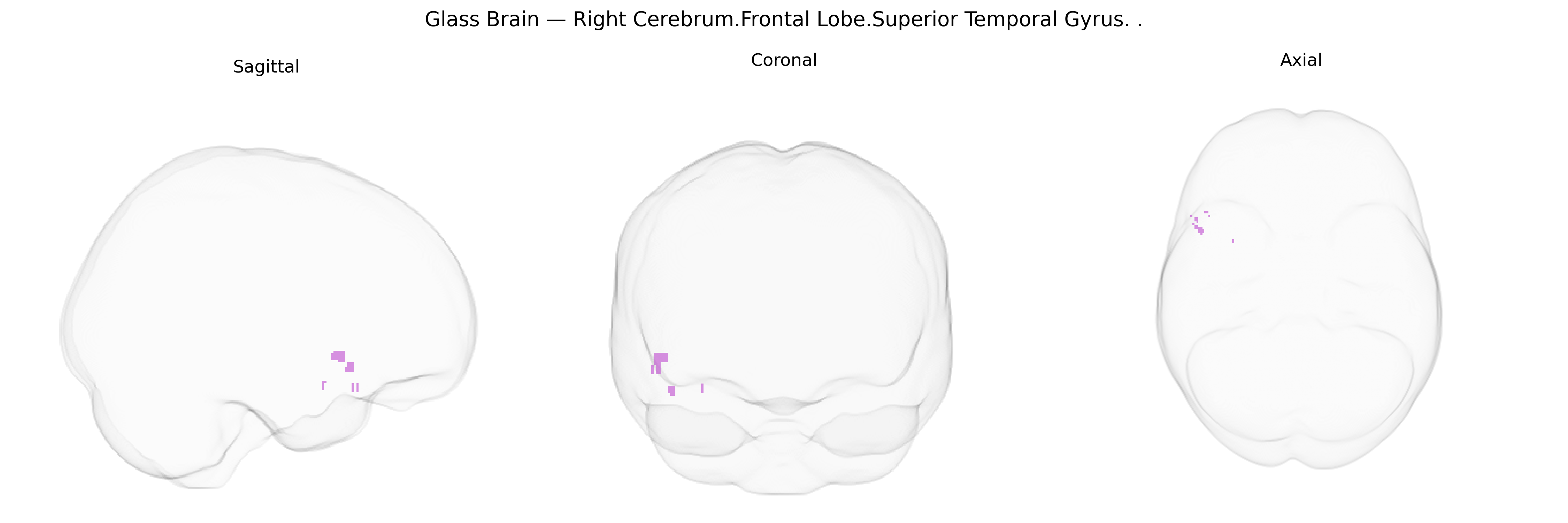
Wali Sidiqyar*, Gaurav Rudravaram*, Elyssa M. McMaster, Trent M. Schwartz, Adam M. Saunders, Kurt G. Schilling, Bennett A. Landman "Introducing SPINS: A Shared Public Visualization Library of Neuroanatomical Structures." Medical Imaging with Deep Learning- short paper
This resource is licensed under CC0 1.0 Universal (Public Domain).