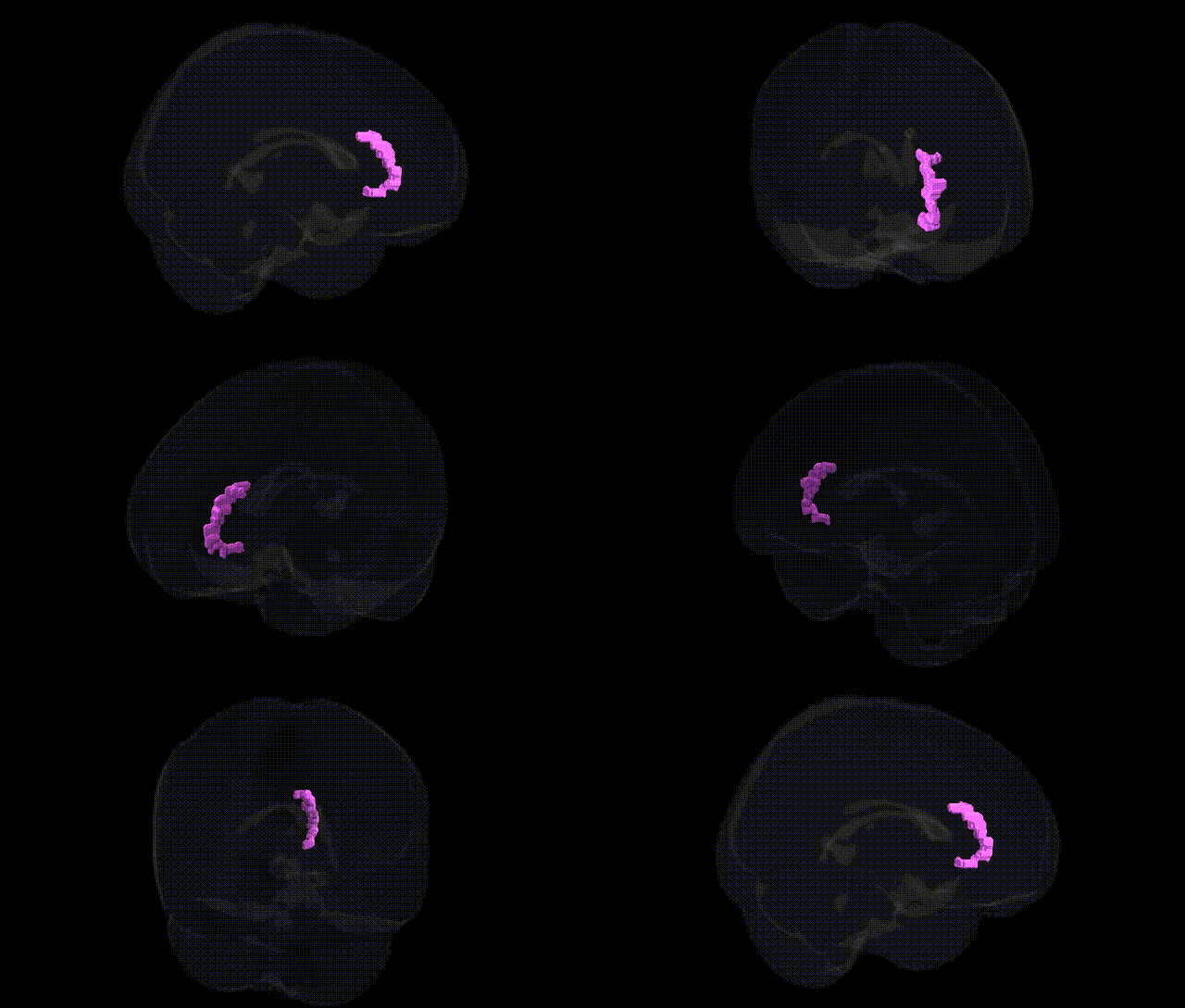
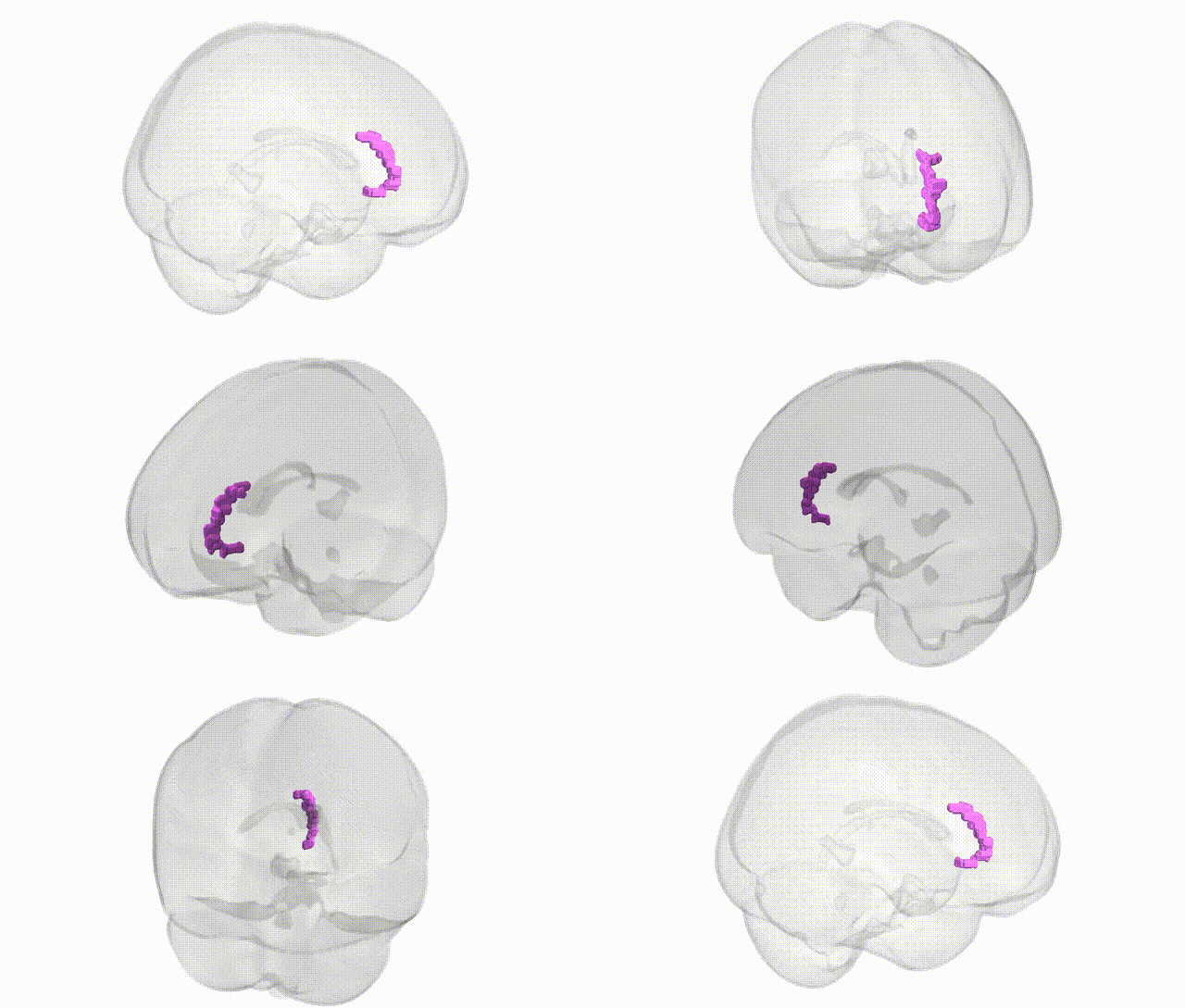
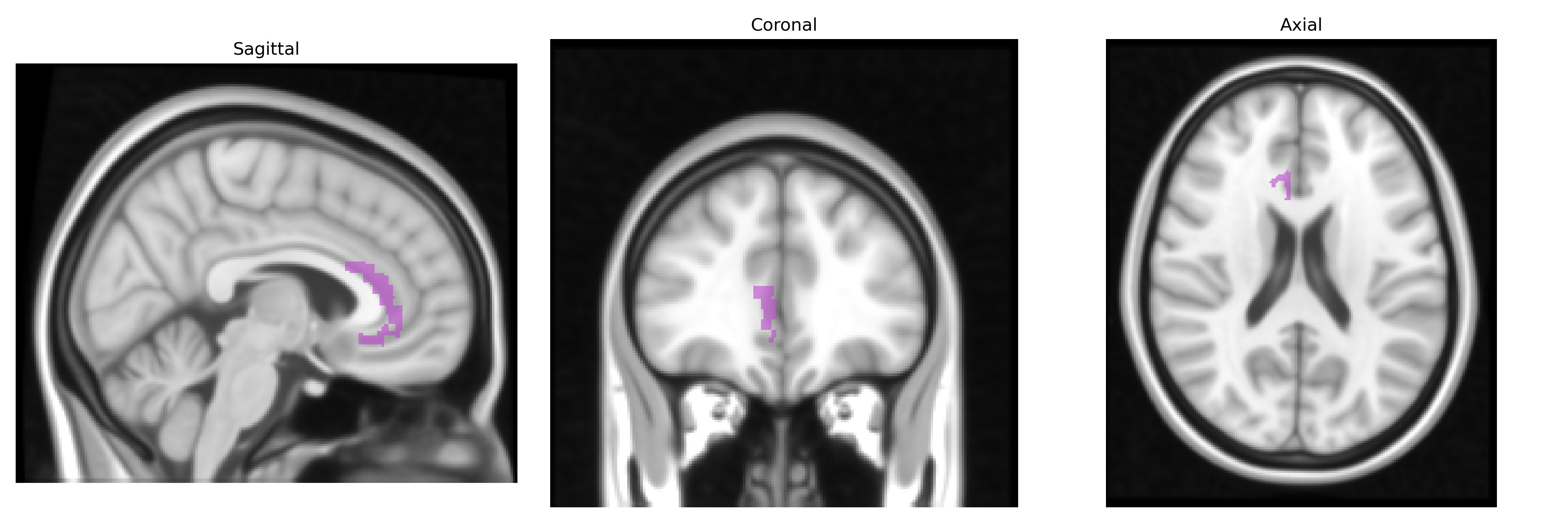
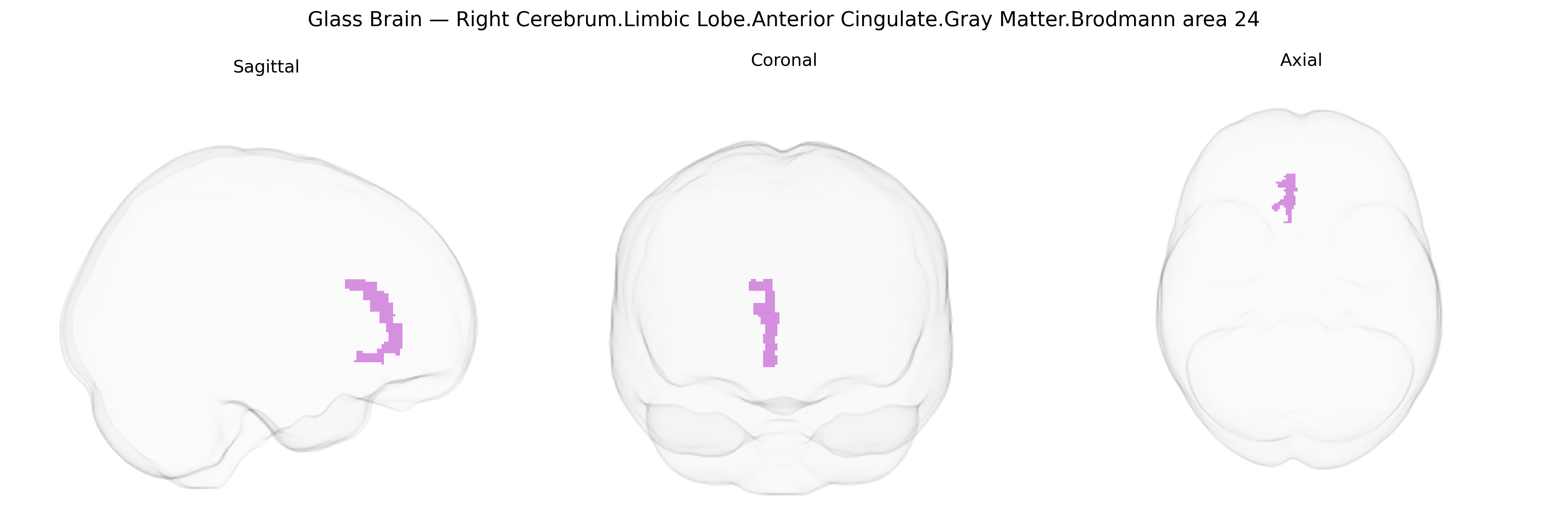
Bilateral Right Cerebrum.Limbic Lobe.Anterior Cingulate.Gray Matter.Brodmann area 24 corresponds to a midline cortical region in the anterior cingulate gyrus, forming part of the limbic lobe and extending along the dorsal and rostral aspects of the corpus callosum. Cytoarchitectonically defined as Brodmann area 24, this field comprises agranular to dysgranular cortex involved in integrating emotional, autonomic, and cognitive processes, including regulation of affect, visceromotor control, and components of attention and conflict monitoring. It maintains extensive reciprocal connections with prefrontal, premotor, limbic, and subcortical structures (such as the amygdala and thalamus), supporting roles in motivation, error detection, and the modulation of pain and other interoceptive signals. There is no direct link for “Brodmann area 24 (anterior cingulate),” but it is encompassed within the Anterior cingulate cortex.
The bilateral right anterior cingulate cortex (ACC; Brodmann area 24 in the limbic lobe) shows convergent genetic associations from GWAS and imaging–genetics studies, particularly in relation to psychiatric and cognitive traits: common variants in genes affecting glutamatergic and GABAergic signaling (e.g., GRM3, SLC6A4, GAD1), neurotrophic factors (BDNF), and synaptic plasticity (e.g., CACNA1C, NRG1) have been repeatedly implicated in structural and functional alterations of ACC gray matter, often via large-scale consortia such as ENIGMA. Polygenic risk scores for major depressive disorder, schizophrenia, bipolar disorder, and autism spectrum disorder correlate with ACC thickness, volume, or activity, consistent with the region’s role in emotion regulation, error monitoring, and cognitive control. Specific GWAS have linked ACC morphometry to loci near HMGA2, MIR-9 family regions, and other neurodevelopmentally relevant genes, while task- and resting-state fMRI genetics implicate dopaminergic and serotonin-related variants in ACC activation during conflict processing and reward-based decision-making. Clinically, genetic risk for disorders such as depression, anxiety, PTSD, ADHD, and obsessive–compulsive disorder shows partial mediation through ACC structural or functional differences, and variants in genes involved in inflammatory pathways (e.g., CRP-related loci) and HPA-axis regulation (e.g., FKBP5) have been associated with ACC changes in stress-related conditions, underscoring this region as a key intermediate phenotype linking genetic variation to affective and cognitive disorders.
Overview generated by GPT-4o (2026).
Region ID: 470
Hemisphere: bilateral
Atlas: Talairach labels 1mm
Full Quality Version: Download MP4
Full Quality Version: Download MP4
Wali Sidiqyar*, Gaurav Rudravaram*, Elyssa M. McMaster, Trent M. Schwartz, Adam M. Saunders, Kurt G. Schilling, Bennett A. Landman "Introducing SPINS: A Shared Public Visualization Library of Neuroanatomical Structures." Medical Imaging with Deep Learning- short paper
This resource is licensed under CC0 1.0 Universal (Public Domain).