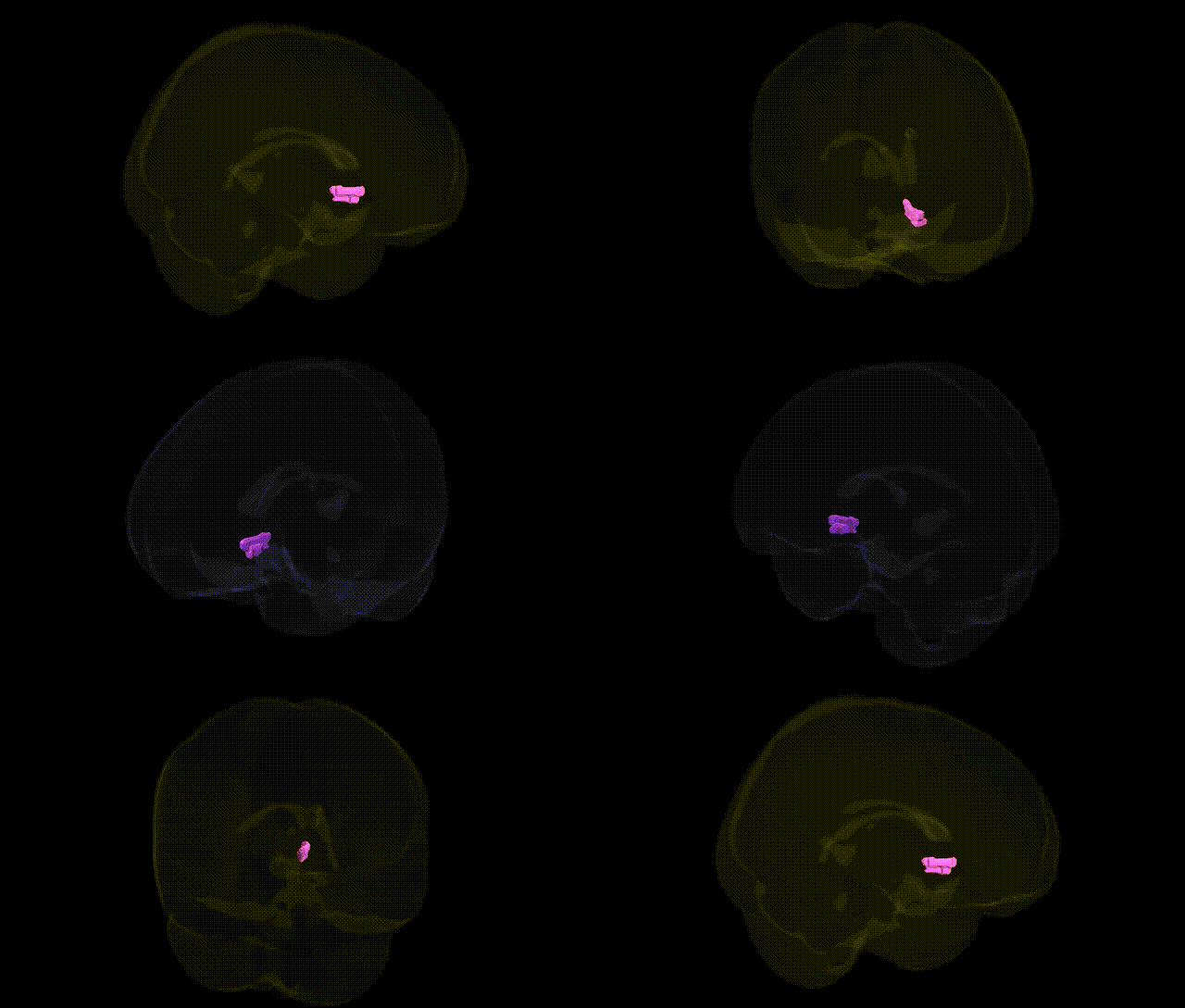
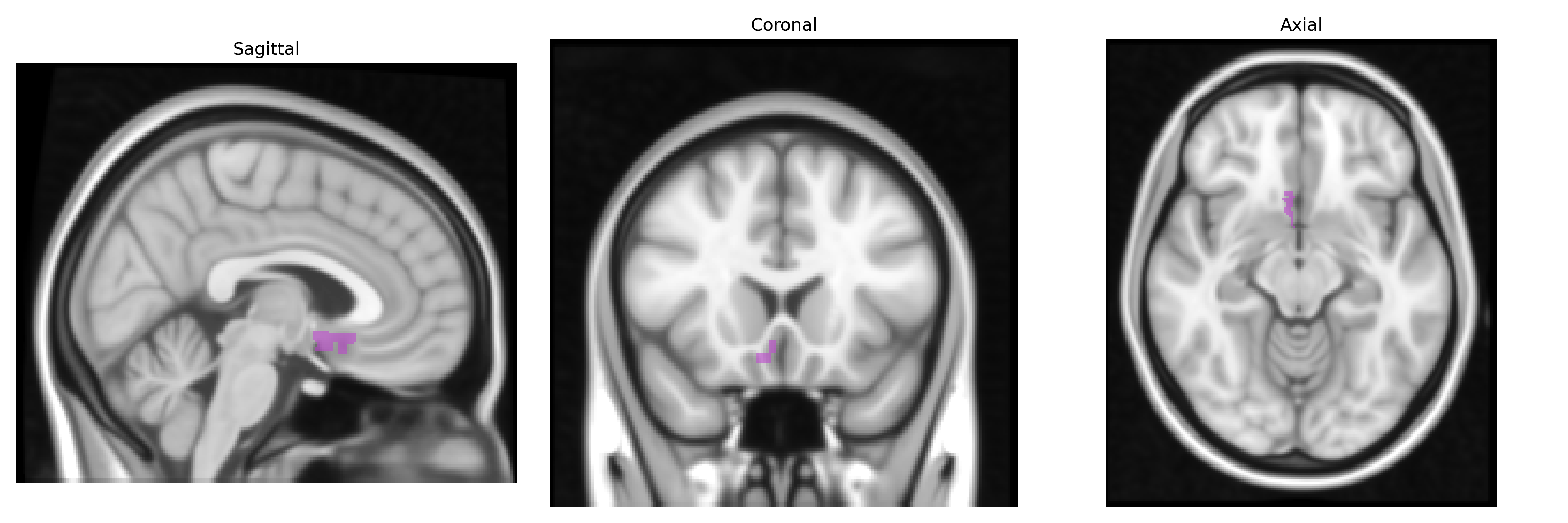
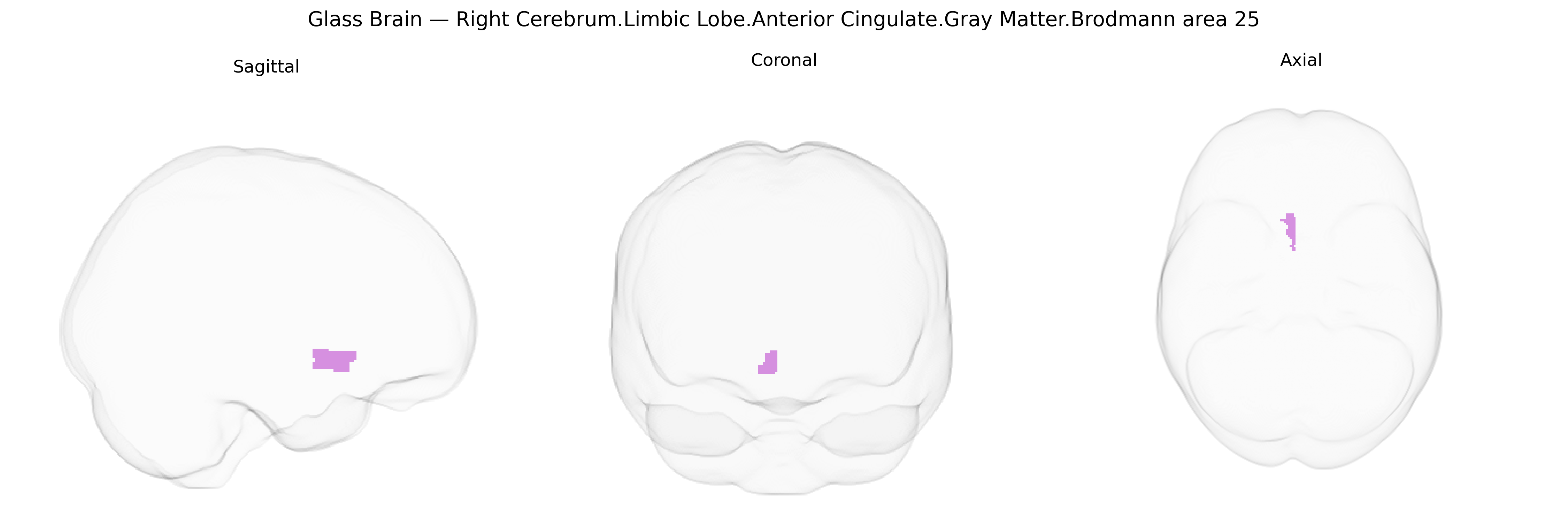
The bilateral Right Cerebrum.Limbic Lobe.Anterior Cingulate.Gray Matter.Brodmann area 25 corresponds to a ventral segment of the anterior cingulate cortex located in the subgenual region of the medial prefrontal cortex, arching beneath the genu of the corpus callosum. This region is characterized cytoarchitectonically by its agranular to dysgranular cortical layering and dense connections with limbic structures such as the amygdala, hippocampus, hypothalamus, and ventral striatum, as well as with other medial prefrontal areas. Functionally, Brodmann area 25 is implicated in mood regulation, autonomic and visceromotor control, and emotional processing, and has been strongly associated with major depressive disorder, particularly in studies of treatment-resistant depression and deep brain stimulation targets. There is no direct link for this exact Talairach label; a closely related structure is the subgenual anterior cingulate cortex: Subgenual anterior cingulate cortex.
Brodmann area 25 (subgenual anterior cingulate cortex) has been strongly implicated in mood and stress-related psychopathology through converging genetic and imaging–genetic evidence, though few GWAS pinpoint this region exclusively. Structural and functional alterations in this area have been associated with polygenic risk for major depressive disorder (MDD), with several large-scale GWAS implicating loci in genes such as SLC6A15, NEGR1, TCF4, and variants near the serotonin transporter gene SLC6A4 that influence subgenual cingulate volume or activity and, in turn, depressive symptomatology and antidepressant response. Imaging–genetic studies link BA25 morphology and activation to common variants in genes related to monoaminergic signaling (e.g., 5-HTTLPR/SLC6A4, MAOA), neurotrophic signaling (BDNF Val66Met), and stress-response pathways (FKBP5, CRHR1), often in the context of gene–environment interactions for depression, anxiety, and post-traumatic stress disorder. Large neuroimaging GWAS consortia (e.g., ENIGMA, UK Biobank) show that polygenic scores for MDD, bipolar disorder, and neuroticism correlate with gray matter differences in subgenual and broader anterior cingulate regions, and schizophrenia risk variants have also been associated with structural and functional changes encompassing BA25 within the limbic cingulate network. Overall, genetic associations with this Talairach-defined region mostly emerge through its central role in limbic–prefrontal circuits modulating mood, negative affect, and autonomic stress responses, rather than through single BA25-specific loci.
Overview generated by GPT-4o (2026).
Region ID: 381
Hemisphere: bilateral
Atlas: Talairach labels 1mm
Full Quality Version: Download MP4
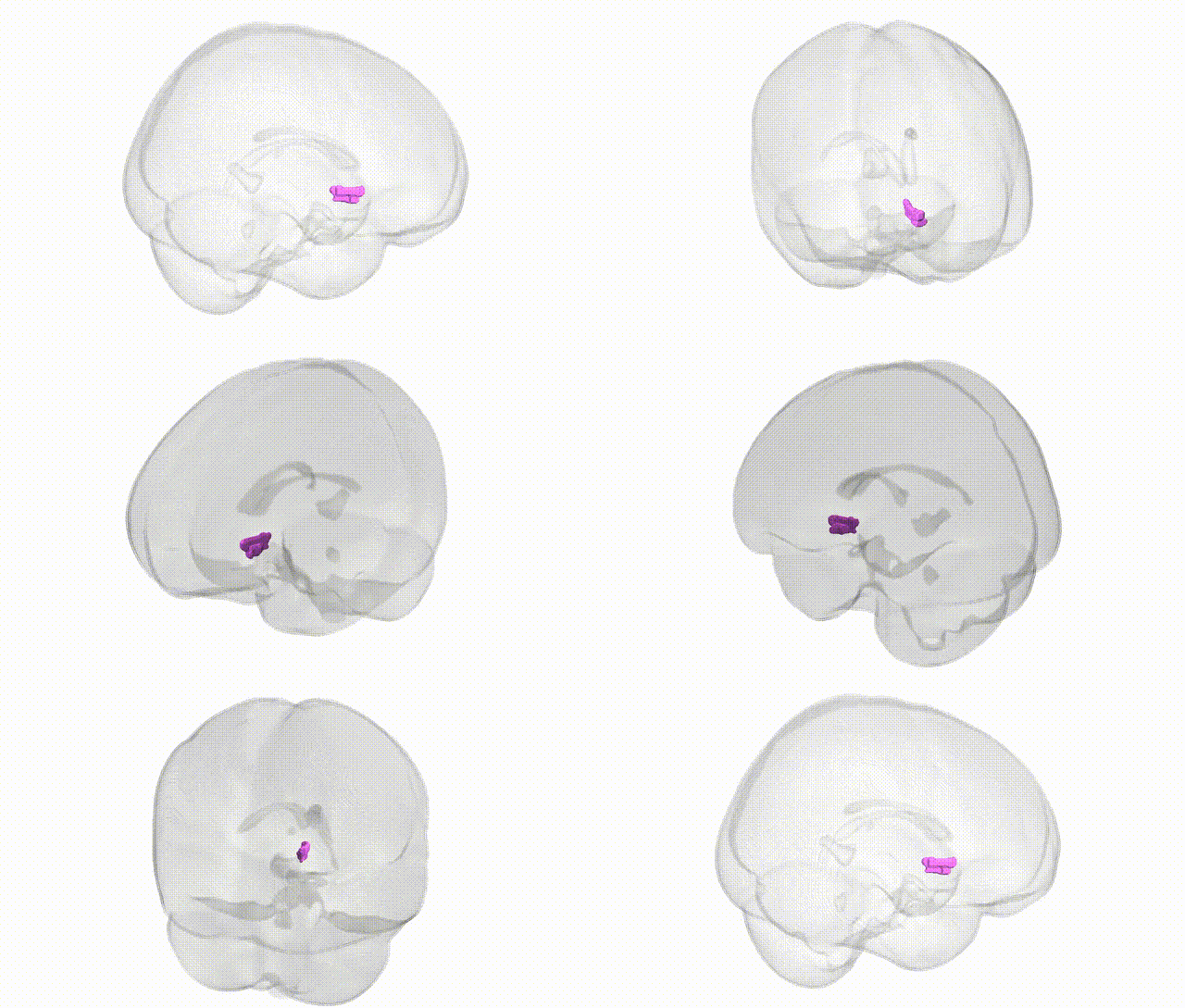
Full Quality Version: Download MP4
Wali Sidiqyar*, Gaurav Rudravaram*, Elyssa M. McMaster, Trent M. Schwartz, Adam M. Saunders, Kurt G. Schilling, Bennett A. Landman "Introducing SPINS: A Shared Public Visualization Library of Neuroanatomical Structures." Medical Imaging with Deep Learning- short paper
This resource is licensed under CC0 1.0 Universal (Public Domain).