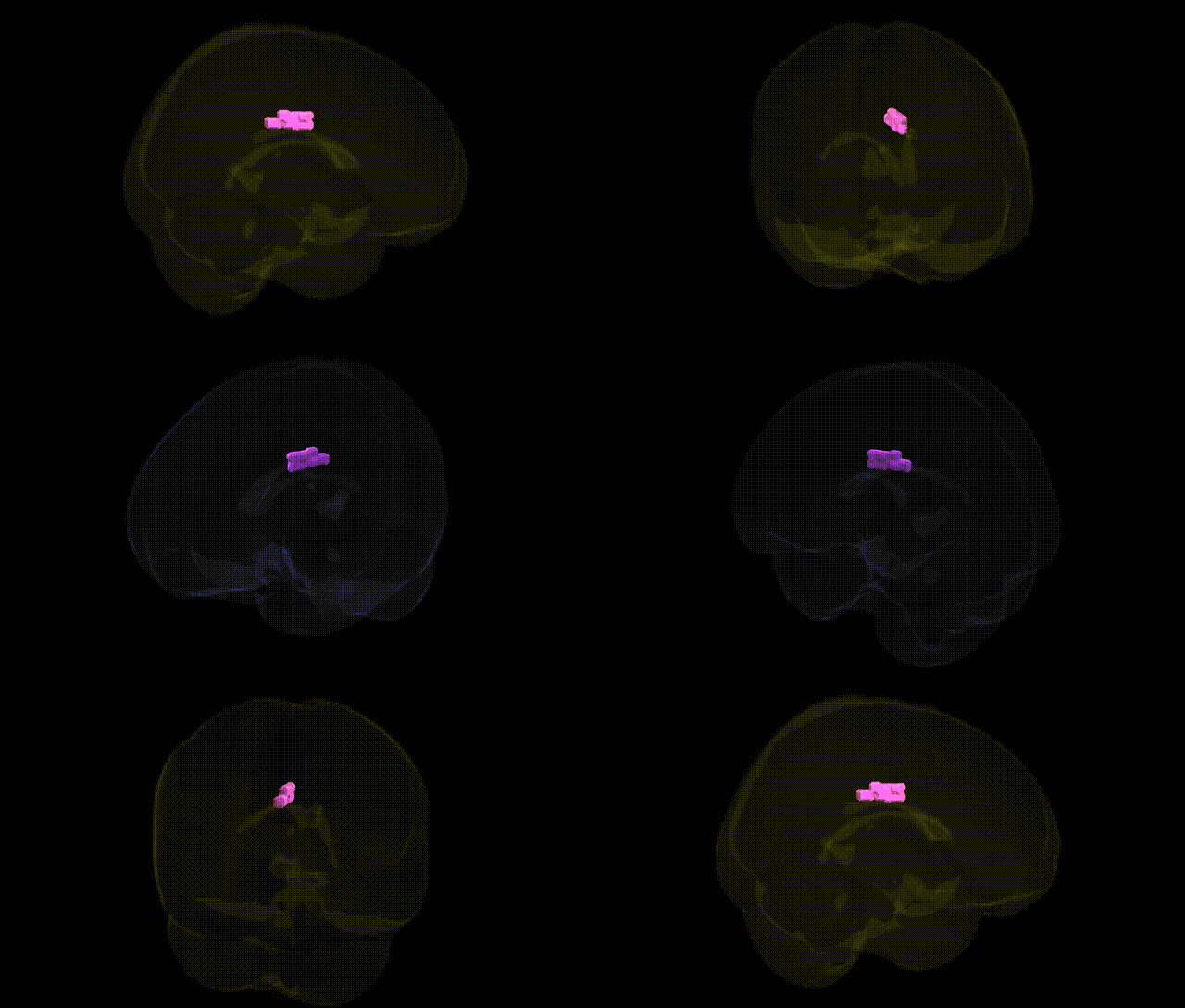
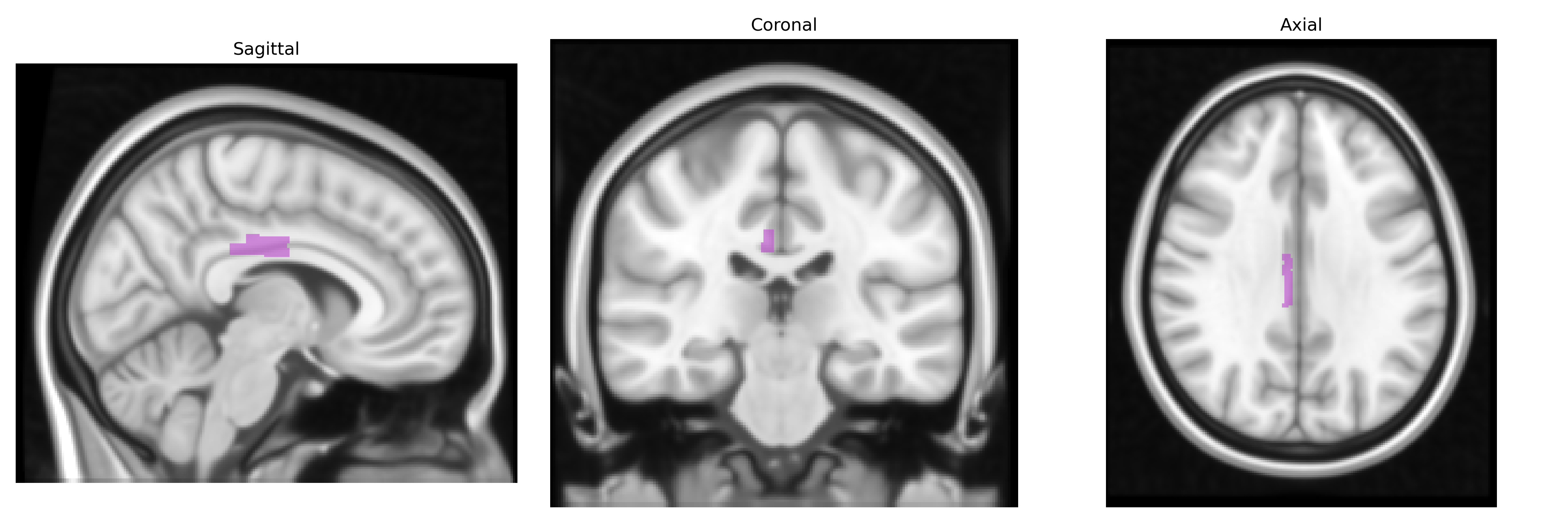
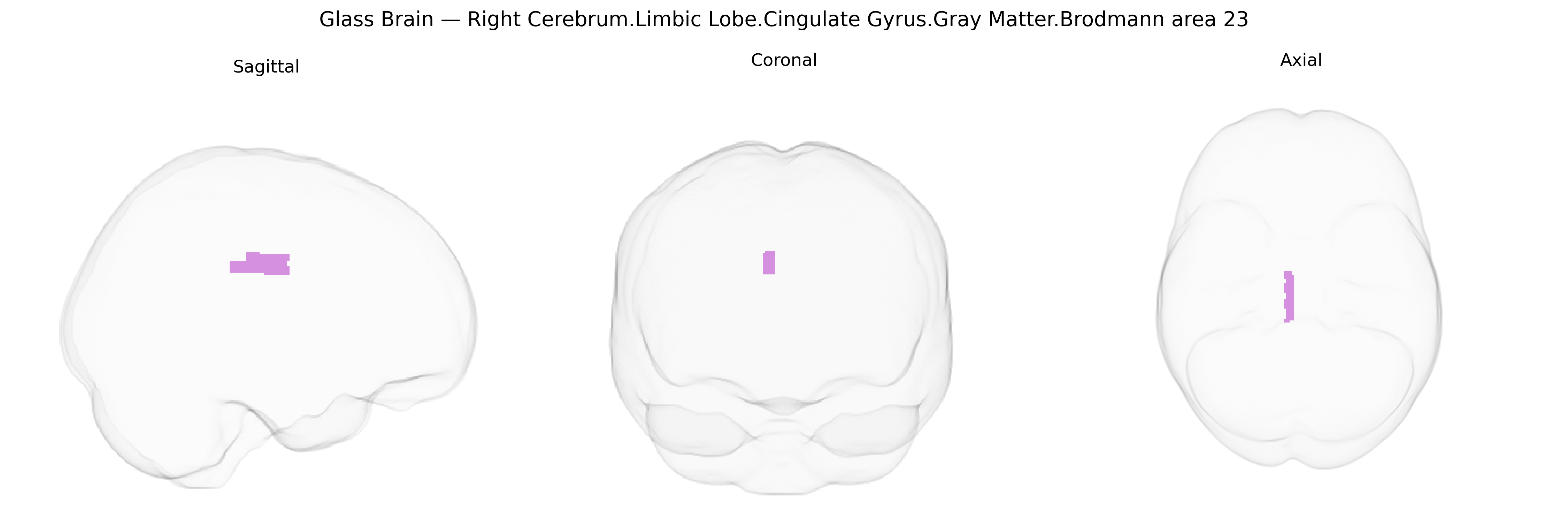
The bilateral Right Cerebrum.Limbic Lobe.Cingulate Gyrus.Gray Matter.Brodmann area 23 corresponds to a portion of the ventral posterior cingulate cortex within the limbic lobe, situated on the medial surface of the cerebral hemispheres adjacent to the corpus callosum. Brodmann area 23 is primarily associated with emotional processing, internally directed attention, and integration of autonomic and affective information, and it contributes to the default mode network and episodic memory functions through connections with the hippocampal formation, precuneus, and medial prefrontal cortex. Cytoarchitectonically, this gray matter region is characterized by a granular cortex pattern typical of association areas, and functionally it plays a role in evaluating the emotional salience of stimuli, regulating mood states, and supporting self-referential and autobiographical thought. There is no direct link for “Brodmann area 23,” but a closely related structure is the Posterior cingulate cortex.
Genetic associations involving the bilateral right cingulate gyrus gray matter in Brodmann area 23 (posterior cingulate/limbic lobe) arise largely from imaging genetics and GWAS of brain structure and connectivity rather than single-gene findings; variants in genes related to synaptic plasticity, neurodevelopment, and myelination (for example, BDNF, NRG1/ERBB signaling components, and genes influencing glutamatergic and GABAergic transmission) have been linked to inter-individual differences in posterior cingulate/cingulate gyrus volume, cortical thickness, and resting-state default mode network activity that encompass BA23. Large-scale brain MRI GWAS (such as ENIGMA and UK Biobank) have identified polygenic influences on cingulate morphology, with loci overlapping pathways for neuronal differentiation, axon guidance, and immune function, and these same loci often show pleiotropic associations with psychiatric and neurodegenerative disorders. Posterior cingulate/BA23 structure or function has been repeatedly implicated as an intermediate phenotype in schizophrenia, major depressive disorder, bipolar disorder, anxiety disorders, post-traumatic stress disorder, Alzheimer’s disease, and other dementias, where risk variants in genes like APOE (especially ε4), CLU, PICALM, and immune-related genes correlate with atrophy or hypometabolism in this region. Additionally, BA23-related metrics show genetic correlations with traits such as general cognitive ability, memory performance, conscientiousness and neuroticism, and susceptibility to internalizing psychopathology, suggesting that common variants collectively shape limbic–default mode circuitry in which the right posterior cingulate/BA23 is a key hub.
Overview generated by GPT-4o (2026).
Region ID: 935
Hemisphere: bilateral
Atlas: Talairach labels 1mm
Full Quality Version: Download MP4
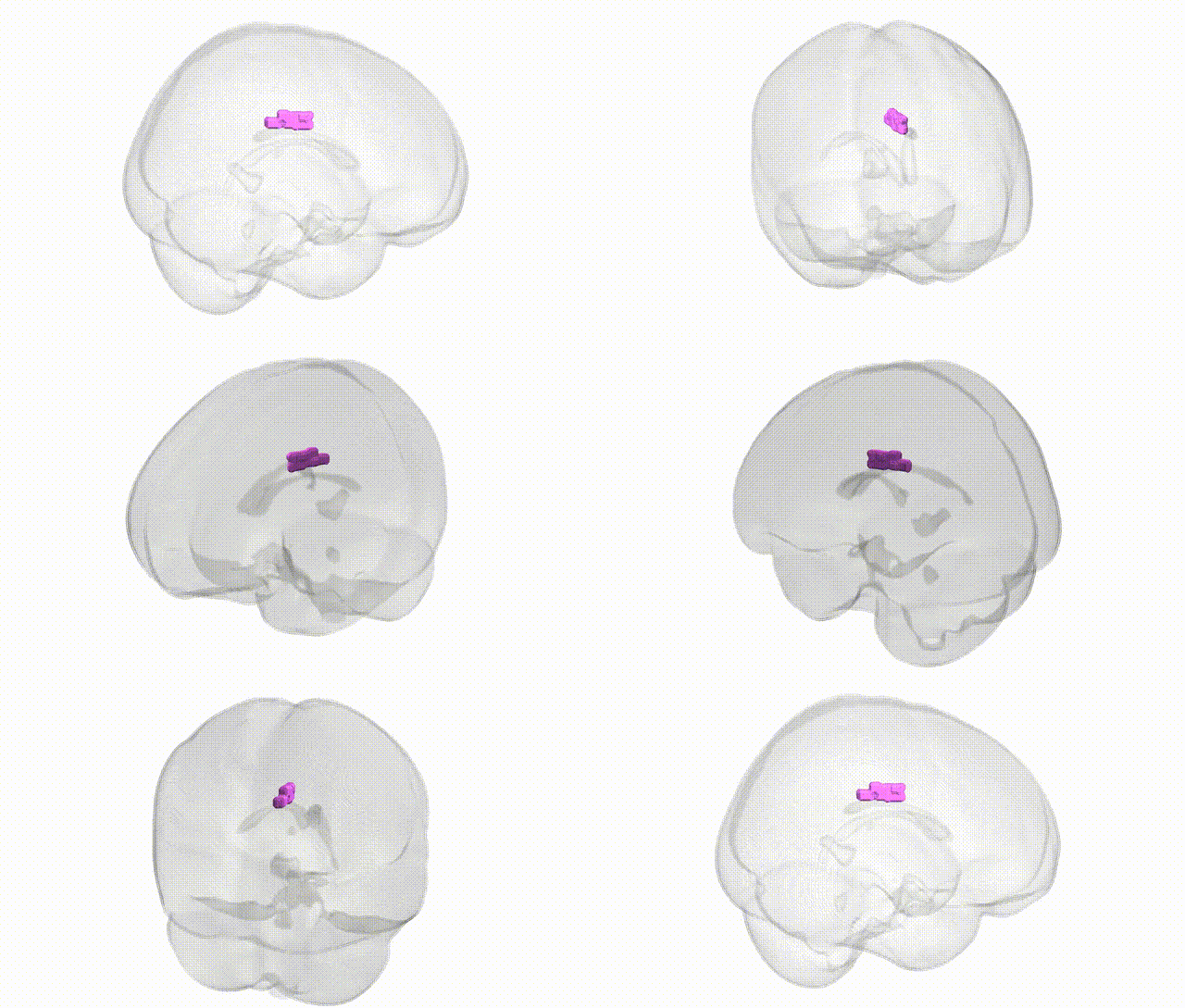
Full Quality Version: Download MP4
Wali Sidiqyar*, Gaurav Rudravaram*, Elyssa M. McMaster, Trent M. Schwartz, Adam M. Saunders, Kurt G. Schilling, Bennett A. Landman "Introducing SPINS: A Shared Public Visualization Library of Neuroanatomical Structures." Medical Imaging with Deep Learning- short paper
This resource is licensed under CC0 1.0 Universal (Public Domain).